
How to Plan a Pilgrimage Trip: Step-by-Step
This post contains affiliate links. As an Amazon Associate, we earn from qualifying purchases.
Planning a pilgrimage trip for Hajj 2026 means booking through Nusuk Hajj, the only platform Saudi authorities approved for 1447H, securing a valid Hajj permit, and completing vaccinations at least two weeks before travel. Knowing how to plan a pilgrimage trip matters because Saudi authorities expect over 1.5 million pilgrims, and pilgrims under 12 cannot take part.
The how to plan a pilgrimage trip permit requirement catches people who assume a tourist visa will carry them through. It won’t. The Saudi Ministry of Hajj and Umrah states plainly that an irregular visa prevents entry to the Holy Sites and exposes pilgrims to legal accountability and financial loss.
What follows is the sequencing: the medical window, the booking channel, the packing list the Saudi guide actually prescribes, and the two places where official government sources disagree with each other, so you can decide for yourself — much like planning a self-guided tour.
Key Takeaways
- Book through Nusuk Hajj only. It’s the sole platform the Saudi Ministry approved for 2026, and reservations are first-come, first-served with payment through the portal.
- See a physician 4-6 weeks out, and finish vaccinations at least two weeks before travel — that’s the Dubai Health Authority’s window, not a suggestion.
- Carry the Nusuk Card at all times. It’s your entry permit to the Holy Sites. If you lose it, call 1966 or contact your service provider.
- Pack light cotton, comfortable walking shoes, and a waist pouch for documents. Leave the electric kettle and sharp tools at home.
- Expect heat over 50°C. Smartraveller puts daytime temperatures there, and CDC notes ambulances and medical stations line the walking route.
When to Start Planning: The 4-6 Week Medical Window
The Dubai Health Authority’s Hajj guide for 2026 puts the starting gun at 4-6 weeks before your pilgrimage date. That’s when you visit your family physician to assess your health, your ability to perform Hajj, and get the medicines you’ll need on the trip.
When you compare a how to plan a pilgrimage trip, vaccinations need at least two weeks before travel to take effect. Seasonal influenza, meningitis, pneumococcal, and COVID-19 are the four the Dubai Health Authority names. The Saudi Ministry of Hajj and Umrah’s own health guide lists meningococcal meningitis, seasonal influenza, and coronavirus as mandatory.
The Hajj medical timeline runs on two clocks. A physician visit needs 4-6 weeks of runway for health assessment and medication supply. Vaccinations need a minimum of two weeks before departure to be effective. Booking a trip inside that window compresses both and leaves no margin for a missed appointment.
If you take regular medication, the Saudi General Hajj Guide asks for a certified medical report and official prescriptions. Saudi Arabia strictly enforces anti-narcotic laws with severe penalties, so bring medications with an official prescription and nothing you don’t need.
The pre-existing condition checklist
The Dubai Health Authority advises diabetic pilgrims to measure blood sugar regularly and adhere to prescribed medications. The Dubai Health Authority adds: measure your blood sugar regularly and adhere to prescribed medications.
The Dubai guide also asks pilgrims to keep a medical card or wrist band listing name, age, nationality, illness, place of residence, and contact numbers. Get to know your Hajj campaign doctor and tell them about any ailments before you need them.
How to Book Hajj 2026 Through Nusuk
Nusuk Hajj is the only platform approved by the Saudi Ministry of Hajj and Umrah for 2026 (1447H). That’s per Smartraveller, the Australian government’s travel advisory. Reservations are first-come, first-served, and payment goes through the portal.
The Saudi Ministry of Hajj and Umrah states that a valid Hajj permit is a mandatory requirement for all pilgrims, both international and domestic. A valid Hajj permit is a mandatory requirement for all pilgrims, both international and domestic.
Protect yourself from unofficial brokers. The Saudi guide says this directly, and the reason is simple arithmetic: an irregular visa prevents entry to the Holy Sites, and the money you paid the broker is gone. An irregular visa will prevent entry to the Holy Sites and expose pilgrims to legal accountability and financial loss.
Skip this if: You’re a Saudi resident who already holds a valid Hajj permit. The Nusuk package purchase is for pilgrims who need the visa and permit issued together. Residents apply through the domestic channel instead.
How Far You Actually Walk During the Five Days of Hajj
The CDC Yellow Book 2026 gives the distances, and they’re the number most travel itineraries leave out. The pilgrimage itself lasts 5-6 days, but most foreign pilgrims stay in the Kingdom for 2-7 weeks total, a pace that suits a slow travel itinerary.
| Leg | Distance | When |
|---|---|---|
| Mina | ~9 km (5.5 mi) | Day 1, 8th Dhul Hijjah |
| Arafat | ~12.5 km (7.75 mi) | Dawn, 9th Dhul Hijjah |
| Muzdalifah | ~10.5 km (6.5 mi) | After sunset, 9th Dhul Hijjah |
The CDC Yellow Book 2026 gives the legs as approximately 9 km (5.5 mi) to Mina, 12.5 km (7.75 mi) to Arafat, and 10.5 km (6.5 mi) to Muzdalifah. The CDC Yellow Book 2026 gives the Arafat leg as approximately 12.5 km (7.75 mi) by foot, shuttle bus, or train, departing dawn of 9th Dhul Hijjah, so prepare as you would for a long walking tour.
Hajj takes place from the 8th to the 12th or 13th day of Dhul Hijjah, and the dates shift about 11 days earlier each year relative to the Gregorian calendar. That shift is why Hajj 2026 lands where it does, and why the heat exposure changes year to year.
The Muzdalifah leg is where most pilgrims sleep in the open air. The CDC names two specific health threats there: breathing thick dust, and inadequate or overcrowded washing and sanitation facilities.
What most people get wrong: Treating the Muzdalifah overnight like a hotel stop. It’s open-air sleeping in dust, and the sanitation facilities are overcrowded. Bring what you need to sleep on the ground and manage without a proper wash.
Packing List: What the Saudi Guide Says to Bring (and Leave)
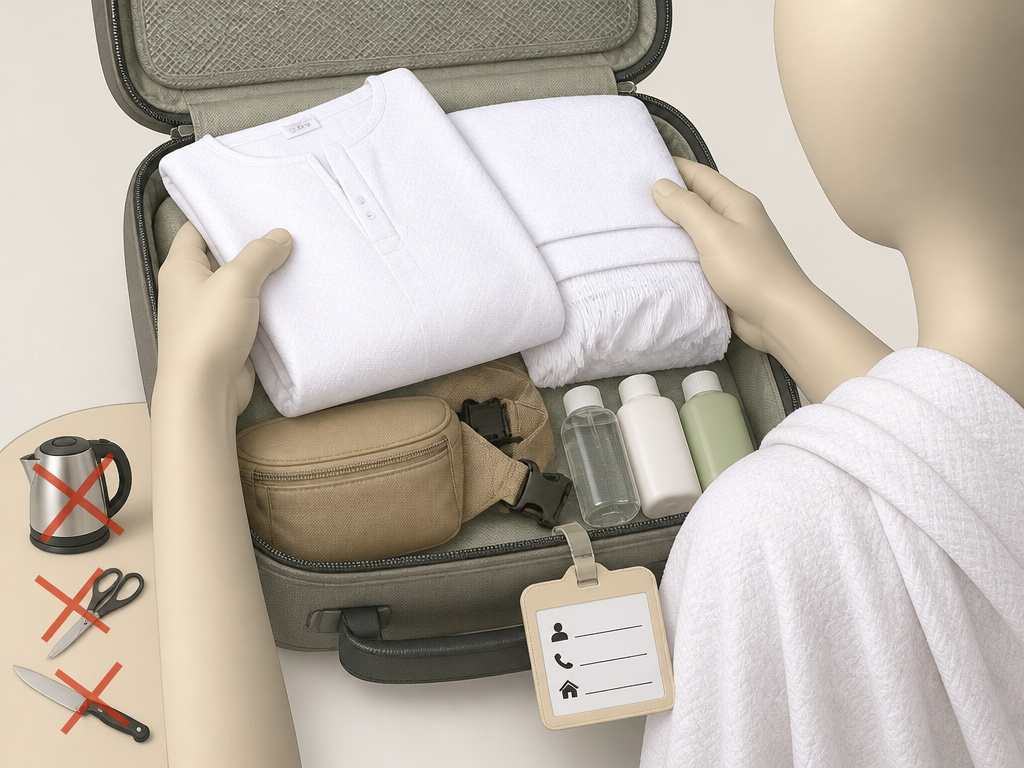
The Saudi General Hajj Guide has a specific packing list, and it’s shorter than most pilgrims expect.
Bring: light cotton clothing, comfortable walking shoes, an extra Ihram set (Izar and Rida), personal hygiene items, a waist pouch for documents and cards, and your medical report plus personal medications. Put a clear label on your bag with your name, phone number, and residential address.
Leave: electric kettles, strong-smelling foods, sharp tools (scissors, knives), and medicines you don’t need. Saudi Arabia’s anti-narcotic laws carry severe penalties, and the guide is explicit that unnecessary medications create risk.
If you’re flying directly to Makkah, put on your Ihram garments before boarding the plane. The Saudi guide flags this as an important note, and it’s the kind of detail that’s easy to miss when you’re focused on the flight itself.
Easy to miss: The bag label. Name, phone number, and residential address, written clearly. Customs and immigration formalities can take many hours, and carry-on-only baggage transfers are far easier than checked.
There’s no option to fly to Makkah. Pilgrims must fly to Jeddah or Madinah and travel by road, and Saudi authorities may only let pilgrims leave the dedicated Hajj terminal. Most international pilgrims fly into Jeddah or Medina and take a bus to Mecca.
Managing Heat, Water, and Crowds at 50°C
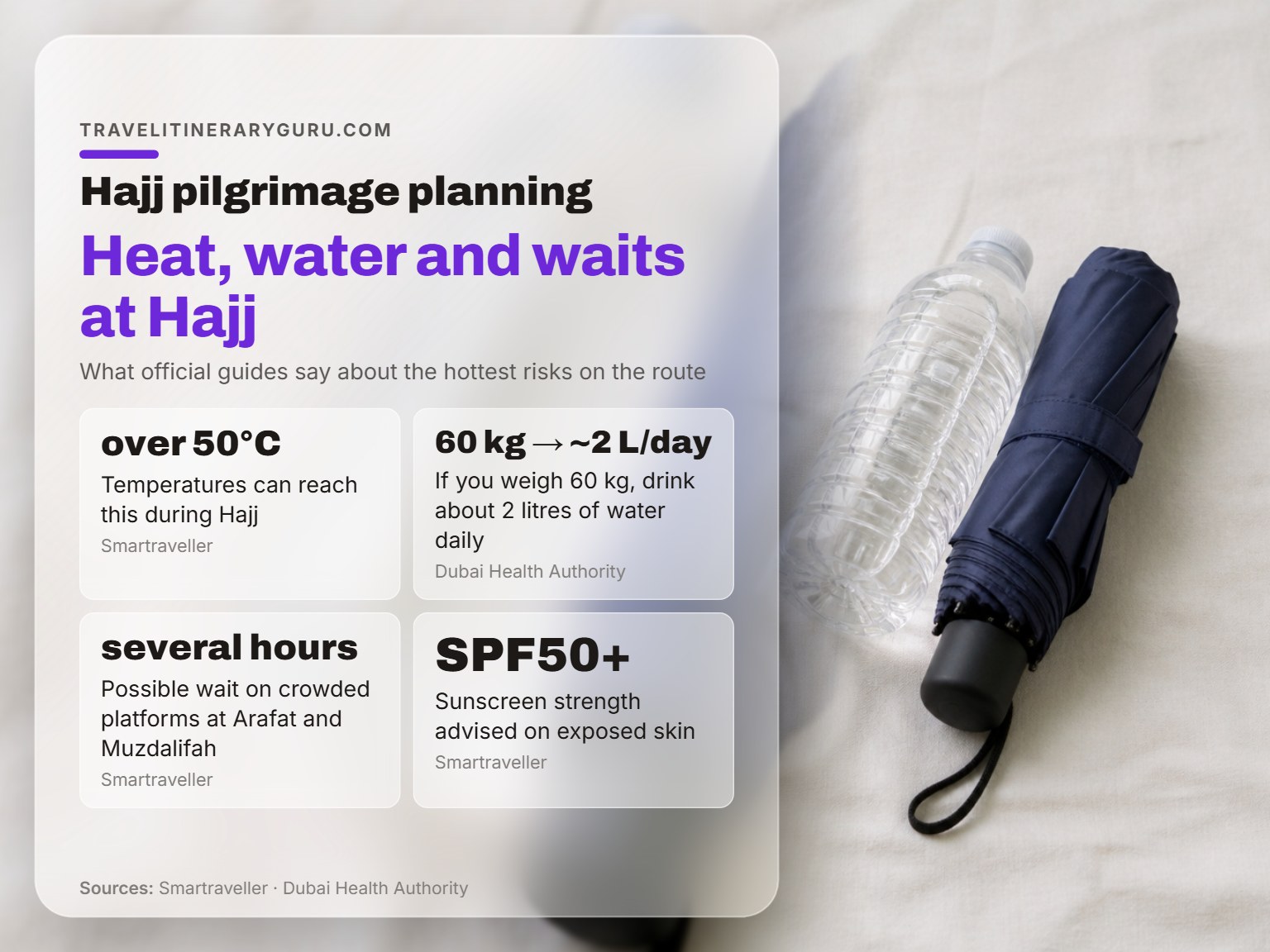
Smartraveller states temperatures can be over 50 degrees Celsius. The CDC notes that ambulances and medical stations line the walking route. Either way, the heat is the primary health risk, and the guidance is consistent across sources.
The Dubai Health Authority’s hydration formula is the most specific piece of advice in any of these documents: if you weigh 60 kg, drink about 2 litres of water every single day (60 x 0.033 = 1.98).
The Saudi health guide adds: fresh fruits are an excellent choice for hydration and nourishment, and carbonated drinks and stimulants are not alternatives to water.
Before you start: Heat illness is the top risk, and it builds before you notice it. Use SPF50+ sunscreen on exposed skin per Smartraveller, carry an umbrella for shade, and avoid direct sun exposure. If you develop a fever, respiratory symptoms, or a rash, inform the administrator immediately.
Crowd management is the other half. The Dubai guide advises maintaining physical distance where possible, avoiding crowded places, and refraining from touching your nose, mouth, and eyes. The Saudi guide adds cough and sneeze etiquette, and no spitting on the ground.
Wait times are real. Smartraveller notes pilgrims may have to wait several hours on crowded platforms at the train stations at Arafat and Muzdalifah. Build that into your expectations, not your itinerary.
Where the Official Sources Disagree
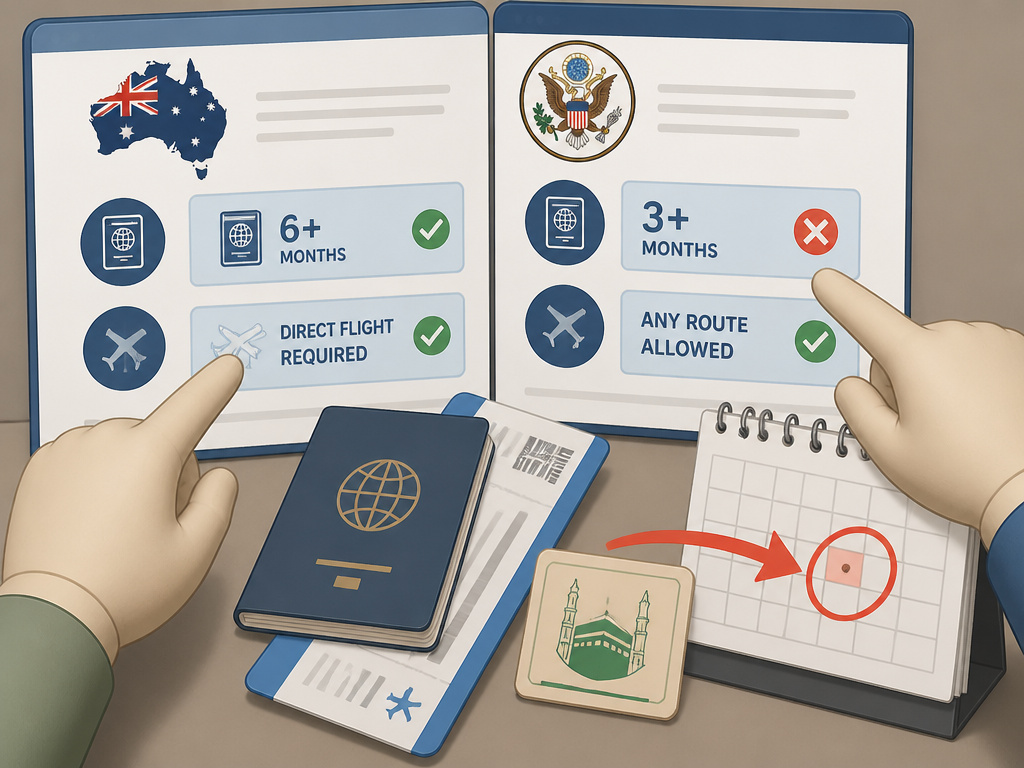
Two government advisories contradict each other on points that matter, and you should see both positions rather than have one presented as the rule.
| Issue | Smartraveller (Australia) | US State Department |
|---|---|---|
| Passport custody | Standard practice for group leaders to hold passports for safety | Directs pilgrims to manage permits/visas through Nusuk; does not endorse surrendering the passport |
| Departure restriction | Does not state a restriction; advises confirming itineraries in advance | Once Hajj begins in Mecca, you cannot leave Saudi Arabia until Hajj is complete; early departure needs Ministry permission |
On passports: Smartraveller describes group leaders taking pilgrims’ passports as standard practice. The State Department’s position is that you manage your permits and visas through Nusuk and it does not endorse handing the passport over. Both are credible government positions.
On departure: the State Department states that once Hajj begins in Mecca, you cannot leave Saudi Arabia until Hajj is complete, and early departure requires Ministry permission. Smartraveller doesn’t state this restriction.
Where this goes sideways: Assuming your return flight date is your departure date. If Hajj is still running and you haven’t secured Ministry permission for early departure, the airport is not the place to find out.
The Return Trip and Post-Hajj Health
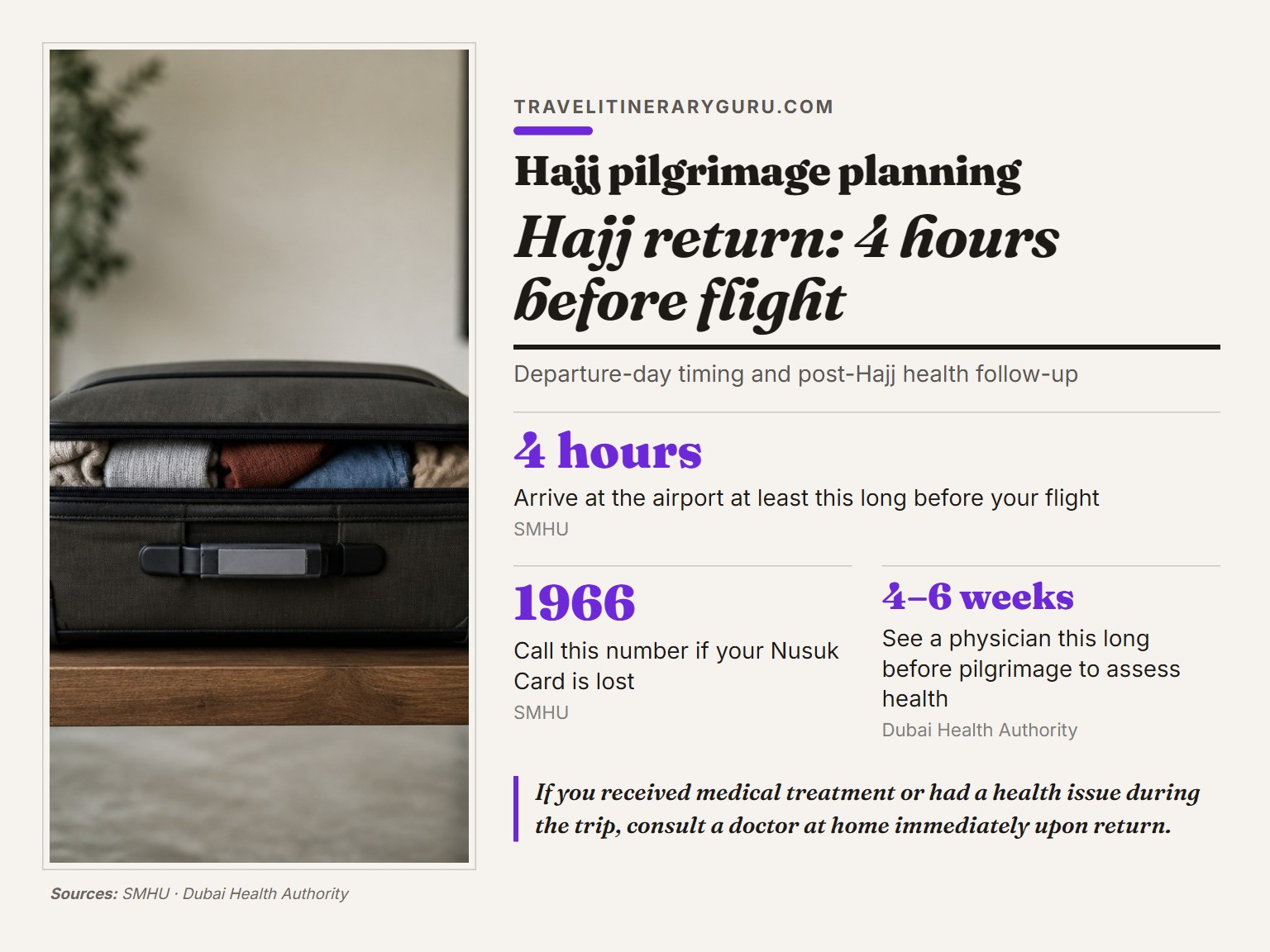
The Saudi General Hajj Guide is specific about the departure day: arrive at the airport at least 4 hours before your flight. Adhere strictly to the bus schedule and designated gathering points, and don’t crowd in front of the buses — all pilgrims depart at the designated time.
The Dubai Health Authority adds a health follow-up step: if you received medical treatment or experienced any health issue during the trip, consult your doctor in your home country immediately upon return. The guide also asks pilgrims to follow all laws and guidelines after returning from Hajj.
For pregnant pilgrims, the Saudi health guide advises against performing Hajj during pregnancy given the significant exertion involved. If you wish to perform Umrah while pregnant, it recommends loose cotton clothing, comfortable footwear, several small meals instead of three large ones, small amounts of fluids at intervals, walking a little every one to two hours, and heading to the nearest hospital if you experience bleeding, headaches, or contractions.
If you intend to use menstrual delay pills to complete Nusuk without interruption, the Saudi guide says to consult a doctor well in advance and take the pills at the prescribed times.
Frequently Asked Questions
Can I book Hajj 2026 through any travel agent?
No. Nusuk Hajj is the only platform approved by the Saudi Ministry of Hajj and Umrah for 2026 (1447H). Reservations are first-come, first-served and require payment through the portal. If an agent claims to have another channel, protect yourself from unofficial brokers before paying anything.
How far in advance should I see a doctor before Hajj?
The Dubai Health Authority recommends starting about 4-6 weeks before your pilgrimage date. That window covers the health assessment, medication supply, and any condition-specific planning. Vaccinations need at least two weeks before travel to take effect, so book the physician visit first.
What vaccinations do I need for Hajj 2026?
The Dubai Health Authority lists seasonal influenza, meningitis, pneumococcal, and COVID-19, all at least two weeks before travel. The Saudi Ministry’s health guide names meningococcal meningitis, seasonal influenza, and coronavirus as mandatory. Check which apply to your country of origin and health status with your physician.
Is there a minimum age for Hajj 2026?
Yes. Pilgrims under 12 cannot take part in Hajj 2026 (1447H), per Smartraveller. If you’re traveling with younger children, plan accordingly or wait until they meet the age requirement.
What happens if I lose my Nusuk Card?
Contact your service provider immediately, or call 1966. The Saudi General Hajj Guide notes you can activate a digital version via the Nusuk app, which serves as a temporary backup if the physical card is lost. Carry the physical card at all times when entering or exiting the camps.
Can I leave Saudi Arabia before Hajj is complete?
The US State Department states that once Hajj begins in Mecca, you cannot leave Saudi Arabia until Hajj is complete, and early departure requires Ministry permission. Smartraveller does not state this restriction. Confirm your itinerary and travel inclusions with your service provider before booking a return flight inside the Hajj window.
Before You Go
Here’s the one rule I’d put above everything else: if your physician visit is less than four weeks out, stop and move the trip. The Dubai Health Authority advises seeing a physician about 4–6 weeks before the pilgrimage and getting vaccinations at least two weeks before travel.
The second thing: protect yourself from unofficial brokers before you pay anyone. Unofficial brokers are the single most preventable failure mode in this whole process, and the Saudi guide names them directly. An irregular visa will prevent entry to the Holy Sites and expose pilgrims to legal accountability and financial loss.
One concession worth stating plainly: the two government advisories disagree on passport custody and departure restrictions, and I can’t resolve that for you. What I can tell you is to ask your group leader where your passport will be stored and to confirm your return flight against the Hajj window before you book.
For pilgrims who want the government sources in full, the Smartraveller Hajj travel planning guide, the CDC Yellow Book Hajj chapter, the US State Department Hajj travel page, and the Dubai Health Authority Hajj guide are where the numbers here come from. Read the primary documents before you book.
