
How to Plan a National Park Day Trip: 6 Steps That Work
This post contains affiliate links. As an Amazon Associate, we earn from qualifying purchases.
To plan a national park day trip, pull your arrival window off the park’s own published guidance, build a Trip Plan for a Trusted Contact, and carry a paper map alongside your phone. Yosemite publishes a before 9 a.m. Or after 5 p.m. Window; Grand Teton publishes before 7 a.m. Or after 3 p.m. For String Lake.
Miss the window and the day fails in a predictable order. You queue at the entrance, circle a full lot, and burn the cool morning hours you needed for the hike. Every park publishes a different number, and one publishes no number at all.
What follows: the arrival windows the parks actually publish, the Trip Plan rule the NPS states two different ways, and the two pieces of gear that decide whether a wrong turn costs you an afternoon or a rescue call.
Key Takeaways
- Arrival windows are park-specific. Yosemite publishes before 9 a.m. Or after 5 p.m. For spring through fall. Grand Teton publishes before 7 a.m. Or after 3 p.m. For String Lake and the Rockefeller Preserve. Zion publishes no number at all.
- A Trip Plan is optional, and the NPS still treats it as procedure. The trip plan article says one isn’t required to visit or to seek help. The planning guide lists sharing one as a core step.
- Leave the Trip Plan with a Trusted Contact, never with the park. NPS will not accept it at the entrance.
- Your phone isn’t a substitute for the 10 Essentials. Carry a backup paper map and download offline content before you lose signal.
- Squirrels and deer injure more people in Yosemite than bears and mountain lions. Distance is the rule, and food storage is the reason.
What Time Should You Arrive at a National Park?
Which parks publish a hard number, and which one leaves you guessing? Yosemite and Grand Teton publish numbers. Zion doesn’t.
Arrival windows vary by park and by destination inside a park. Yosemite publishes a before 9 a.m. Window for spring through fall. Grand Teton publishes a before 7 a.m. Or after 3 p.m. Window for String Lake and the Rockefeller Preserve, and a before 8 a.m. Or after 4 p.m. Window for Jenny Lake.
Grand Teton publishes two different windows for two different spots in the same park. Jenny Lake is the most popular destination there, so its window opens an hour earlier and closes an hour later than the String Lake window.
| Park | Spot | Published window |
|---|---|---|
| Yosemite | Park-wide, spring through fall | Before 9 a.m. Or after 5 p.m. |
| Grand Teton | String Lake and Laurance S. Rockefeller Preserve | Before 7 a.m. Or after 3 p.m. |
| Grand Teton | Jenny Lake, Discovery Trail | Before 8 a.m. Or after 4 p.m. |
| Zion | No specific spot named | No number published |
The Yosemite National Park visit planning page adds a second reason to move early. Yosemite is a busy place, and you may find yourself stuck in traffic, waiting at the entrance, or unable to find parking. The Zion National Park planning guide skips the hour entirely and tells visitors to arrive early because spaces fill quickly year-round.
The arrival window decides more of how to plan a national park day trip than any other single choice. Get it right and the same park feels half as crowded.
If your dates are flexible, visiting national parks in summer is a different calculation than a shoulder-season trip. Millions of people visit Yosemite between April and October, so the window matters more in July than in November.
What a Trip Plan Does, and What It Cannot Do
A Trip Plan is a written record of your itinerary, your expected return time, and your activity details. NPS builds it to be shared with someone who isn’t coming.
NPS publishes both answers on whether you need one. Its planning guide treats sharing your Trip Plan with a Trusted Contact as a core step. Its trip plan article then states that a Trip Plan isn’t required to visit a national park or to seek help during an emergency.
Both things sit on the same website, and the practical reading is simple. Write the plan anyway.
What most people get wrong: Telling a friend you’re headed to Yosemite. That’s a heads-up, not a Trip Plan. NPS wants where, what, and when, held by someone who can call authorities.
What a Trusted Contact Actually Does
NPS defines a Trusted Contact as someone who isn’t going on the trip with you. You tell them where you’re going, what you’re doing, and when you’ll be back. Then you ask them to call authorities and share the plan if you don’t return on time.
That last part is where people fall down. Change your route without telling them and Search and Rescue may have trouble finding you, because the plan in their hand describes a different day.
The NPS trip planning guide and the NPS trip plan article both walk the sequence. Neither one changes the core: the plan goes to a person, not a filing cabinet.
The One Line That Belongs on Every Trip Plan
Put a specific return time on it. NPS asks you to notify your Trusted Contact when you finish each activity, so a plan with three activities gives them three checkpoints.
Don’t hand the form to a ranger at the gate. NPS will not accept it, and the plan goes nowhere useful.
A Trip Plan does not guarantee your safety or your rescue, and NPS says so in plain language. It’s a head start for the people looking, nothing more.
I write the return time on the plan and share it with my Trusted Contact now. A document nobody opens is just a document.
How to Plan a National Park Day Trip in 6 Steps
Six steps, in order: choose the park, choose the window, build the plan, check permits and fees, pack, then confirm conditions the morning of.
Each step has a failure attached to it. Skip one and you’ll find out at the gate.
- Choose the park, and confirm it’s a day trip at all. My working rule is a short drive each way, and I check the last return option before I commit. Past that, the car starts eating the hours you came for.
- Pull the arrival window off the park’s own page. Yosemite says before 9 a.m. Or after 5 p.m. From spring through fall. Grand Teton says before 7 a.m. Or after 3 p.m. For String Lake. Guess wrong and you spend the good light in a queue.
- Check permits, reservations, and timed entry. Some parks route reservations through Recreation.gov, and some activities need a permit you collect separately. Skip this and the trailhead turns you around.
- Build the Trip Plan and hand it to a Trusted Contact. Notify them when your route changes. Otherwise the plan describes a day you aren’t having.
- Pack the 10 Essentials and a paper map. NPS recommends a whistle per person, especially with kids, because search parties hear a whistle farther than a voice.
- Confirm current conditions the morning of. Trails and roads close for rockfall, flooding, and snowfall. Zion’s flash flood risk exists in every season, so a clear forecast doesn’t clear the canyon.
The National Park Service travel tips page is short, but it flags the things that derail a day: timed entry, pet rules, and the visitor center stop.
Check national park entrance fees and reservation rules before you pick a date. Timed entry can decide your whole morning.
NPS also asks you to review how you prepared once you’re home. That’s how the second trip gets easier than the first.
What Breaks a Day Trip Before You Even Leave
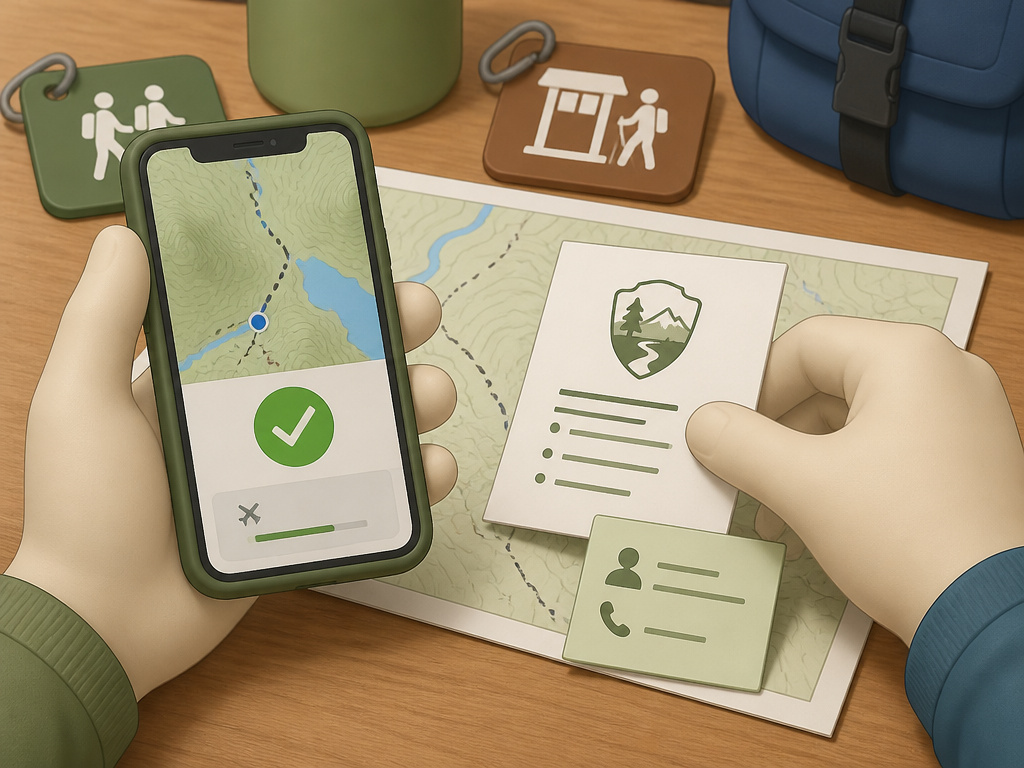
Four failures account for most ruined park days, and all four get decided at your kitchen table.
| What goes wrong | Why it happens | The fix |
|---|---|---|
| You’re lost on a service road | The offline map never got downloaded | Download the park map before you leave signal |
| Search and Rescue can’t find you | Route changed, Trusted Contact not told | Notify on every change and every finish |
| The group splits up | No buddy system agreed in advance | Assign pairs before you leave the car |
| Turned away at the trailhead | Permit required, Trip Plan isn’t one | Check Plan Your Visit for permits |
The pattern behind all four is the same. Something the park publishes got read as optional.
Easy to miss: Permits are a separate system. A Trip Plan goes to your Trusted Contact, not to the park, so it does nothing at a trailhead checkpoint.
If you’re stacking several parks into one loop, the national park road trip cost math changes the plan. Entrance passes and reservations behave differently across a multi-park trip than they do for a single day.
I once built a multi-city itinerary for a client and never checked for a national strike. When it landed, we rebuilt the transport plan in an afternoon. Every plan I write now carries a backup transport line.
The 40 Minutes I Lost on a Fire Road
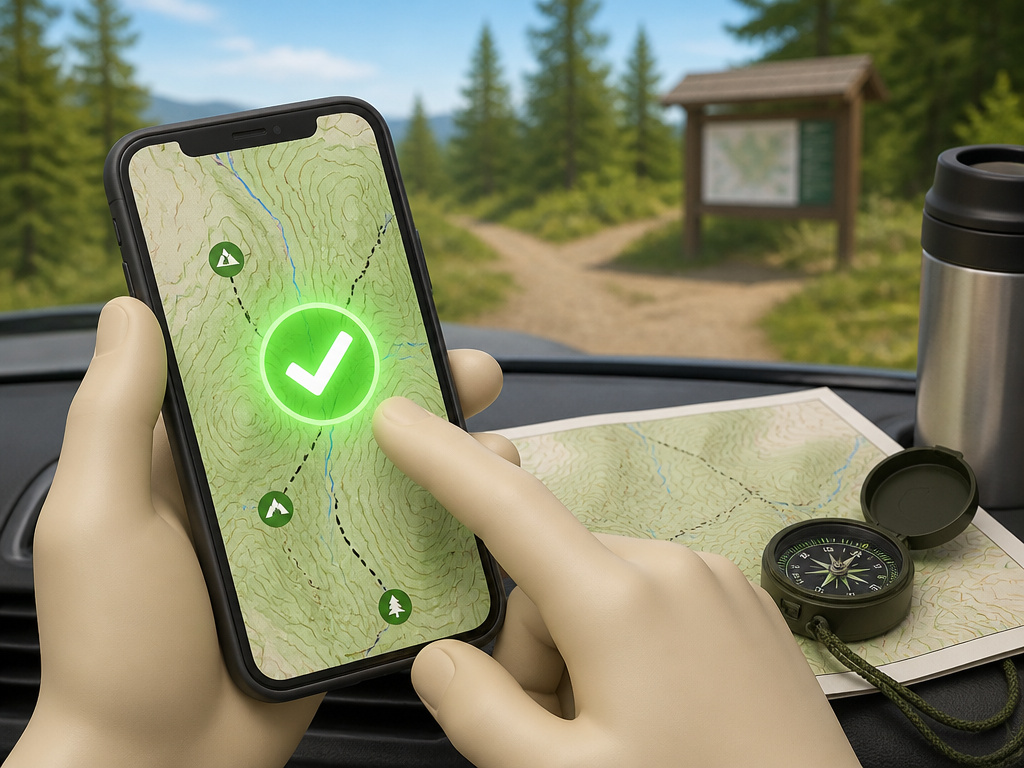
The fire road forked and both branches looked identical. Later I was back at the same fork, well in the wrong direction, because the offline map I meant to download never got downloaded.
Download the map before you leave the driveway. A map you can’t open is a map you don’t have.
NPS promotes its own app for offline park maps. The same trip planning guide warns that a cell phone is not a substitute for any of the 10 Essentials, and that a backup paper map should always be carried.
Download the offline map before you lose signal, and still put a paper map in your pack. The download is quick. The paper map doesn’t need a battery.
A downloaded map works without a signal. A phone hunting for a signal gives you a spinner and then a dead screen.
The same discipline applies to a self-guided national park tour, where nobody hands you a route sheet at the gate. The NPS app stores park maps offline, and that beats a screenshot.
Where there’s no signal at all, a satellite messenger sends a message over satellite rather than a cell tower (check availability).
For bike routes I now drop pins at every water refill and bathroom before I leave the hotel. It sounds paranoid until you’re far out with an empty bottle.
The Accessibility Label Is Optimistic, So Check the Grade

Accessibility labels on park trail guides are optimistic, and the gap between two parks is wider than the label suggests.
At one park, a trail marked wheelchair accessible was a paved loop. At another, the same label sat on a gravel path with a steep grade. I stopped trusting the label after that. Now I look for the surface type and the grade percentage, and I check the park’s own accessibility page before I promise anyone a route.
I won’t promise anyone a trail from a label again. If a park’s accessibility page doesn’t name the surface and the grade, I call the visitor center and ask.
How to Request the Accessible Shuttle
The accessible shuttle at some parks is a separate vehicle you have to request in advance. Show up expecting to roll onto the regular shuttle and you’ll watch it pull away with your group aboard.
A steep grade announces itself immediately, in your arms or your calves depending on how you’re moving. The sign at the trailhead won’t mention it.
Rangers at the visitor center have up-to-the-minute information on road conditions and trails, and they’ll tell you which shuttle to request and when. Ask first.
Squirrels and Deer Hurt More People Than Bears
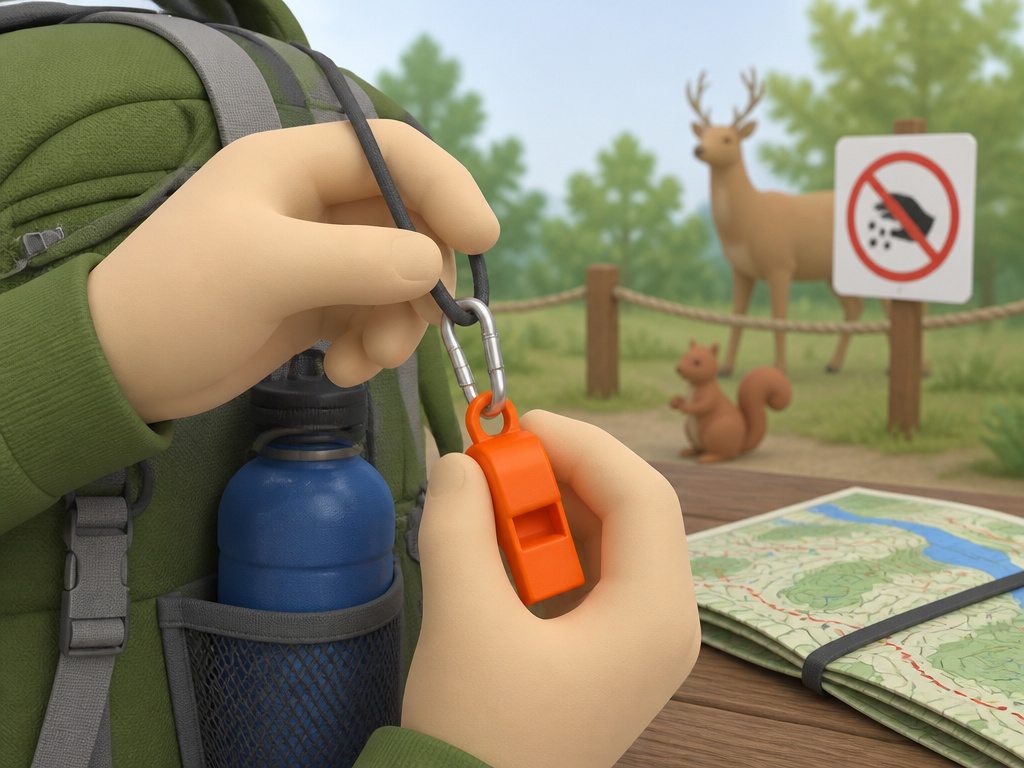
Squirrels and deer injure far more people in Yosemite than bears and mountain lions, according to the park’s own visitor page.
Before you start: Flash floods are possible in Zion in every season, and slot canyons fill faster than the forecast suggests. Heat builds before you feel it, so Zion’s guide says to dress in layers and carry plenty of water no matter the season. Trails and roads close for rockfall, flooding, and snowfall, so check conditions the morning of.
Distance is the rule with wildlife. Getting close to park animals exposes you to disease, and Yosemite’s page is blunt: don’t approach, don’t feed, and don’t let them approach you. Proper food storage and posted speed limits are part of the same instruction.
If you’re planning a day trip with kids, add a whistle per person. NPS recommends one specifically for search-party audibility, and a child’s voice doesn’t carry the way a whistle does. A whistle on a lanyard for every person in the group is what I’d pack.
Stay together as a group, and use the buddy system if you split. NPS is direct that separation leads to getting lost or injured. Yosemite’s own gear list for a hike includes a headlamp with extra batteries.
Assess how you feel before you push on. If something doesn’t feel right, don’t do it, and remember you can come back on a day when you feel better.
When Is a National Park Day Trip the Wrong Call?
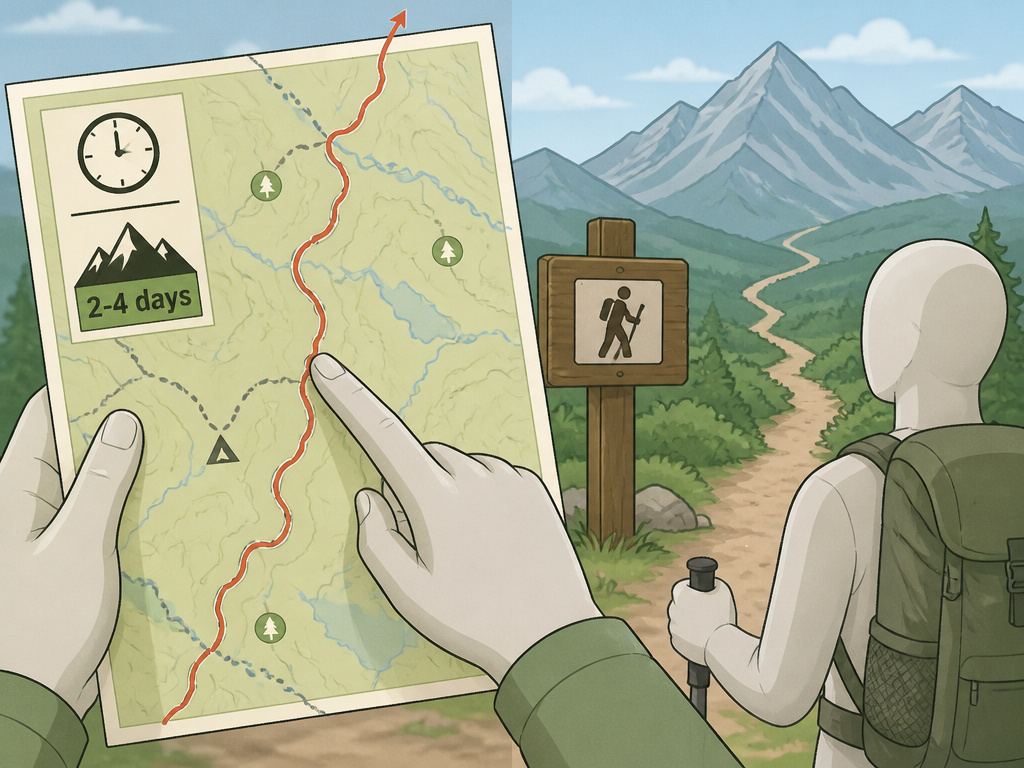
A day trip is the wrong call in three situations. The drive eats more daylight than the park does. The park’s own recommended visit runs two days or longer. Or the activity needs a permit you can’t collect in time.
Grand Teton is the clearest example. NPS describes a standard visit there as two to four days, which tells you a single day is a sampler rather than a visit.
The Day Trip That Should Have Been an Overnight
If the drive is long each way, book the night instead. I’ve made this mistake in both directions. I’ve crammed a long drive into a single day and regretted it, and I’ve skipped a place entirely because I didn’t want to pay for a room.
If the park is the destination, booking national park campsites is often a better night than a gateway-town motel, and it puts you inside the gate before the queue forms.
For a longer stay, planning a family national park trip changes the math again. Kids and multi-day pacing need a different shape than a single-day loop.
Skip these as day trips:
- A park whose own guidance measures the visit in days, like Grand Teton at two to four.
- Any park where the last return leg leaves before you’d want to stop.
- Backcountry routes. NPS puts multi-day and backcountry planning beyond the scope of its trip planning guide.
- A park you’d reach by crossing three others. You’ll spend the day in the car and resent all four.
Frequently Asked Questions
Do I need a reservation to enter a national park?
Sometimes. NPS says some parks require reservations to enter, access an area, or do an activity, and those run through Recreation.gov. Yosemite states that a reservation isn’t required to enter in 2026, though the entrance fee still applies. Check the specific park’s Plan Your Visit page before you pick a date.
Is a Trip Plan required?
No. NPS states plainly that a Trip Plan isn’t required to visit a national park or to seek help during an emergency. It’s still the fastest way to give Search and Rescue useful information if you don’t come back on time.
What are the 10 Essentials?
They’re a collection of first aid and emergency items that help with minor injuries, sudden weather changes, or unexpected delays. NPS notes that a cell phone is not a substitute for any of them, and that you should always carry a backup paper map.
Can I bring my dog on a national park day trip?
It depends on the park. Many parks allow pets on leashes and in campgrounds, and some even have kennels. Zion is stricter: pets aren’t allowed in most areas, so you’re limited to campgrounds, roads, and the Pa’rus Trail.
How long does a national park day trip take?
Plan on the full day, and treat the drive as part of it. Grand Teton’s own guidance describes a standard visit as two to four days, which tells you a single day covers one area well and the rest poorly. Pick one destination inside the park and build around it.
What time should I leave to beat the crowds?
Work backward from the park’s published window. Yosemite says before 9 a.m. Or after 5 p.m. From spring through fall. Grand Teton says before 7 a.m. Or after 3 p.m. For String Lake and the Rockefeller Preserve. Where a park publishes no number, arrive early and expect to park in town and shuttle in.
Before You Go
Here’s the trigger I’d use. If the round-trip drive is longer than the time you’ll spend inside the park, don’t do it as a day trip. Book the night, or pick a closer park. There are more than 400 of them, and the closest one usually beats the famous one you’re driving past three others to reach.
One concession, because it matters. Everything above about how to plan a national park day trip assumes a day or overnight trip. NPS says multi-day and backcountry planning is beyond the scope of its trip planning guide, and it means it. In the backcountry, this is a starting point rather than a procedure.
Start with one thing this week. Pull the arrival window off the park’s own page and write it down. That single number decides whether your day trip is a day trip or a parking lot tour.
Then hand the plan to someone who isn’t going.
