
Layover vs Stopover Pros and Cons: Which to Book?
This post contains affiliate links. As an Amazon Associate, we earn from qualifying purchases.
A layover is a connection that stays under four hours on a domestic ticket or under 24 hours on an international one, while a stopover is the longer, deliberate break that clears those thresholds and lets you leave the airport. The pros and cons are simple: a layover costs you nothing extra and keeps the trip moving, and a stopover buys you a second destination at the price of time, planning, and sometimes money.
That four-hour line does more work than most travelers realize, because it is where the trip stops being transit and starts being a decision, and it is the threshold that separates layover vs stopover pros and cons. Cross it and you are no longer waiting for a plane. You are running a small side trip with its own logistics.
What follows is the practical version: the exact thresholds, where the airlines and the airports disagree about them, which carriers still hand out stopovers, and the one window I tell people to avoid entirely.
Key Takeaways
- Under four hours domestic, under 24 international is the working definition of a layover, and it is a convention rather than a law.
- The four-hour layover is the worst of both worlds. Too short to leave, too long to sit still.
- A stopover usually means collecting your bags and clearing immigration, so budget the time for it.
- Award tickets are where stopovers still live. Several carriers allow one or more, and the rules change by program.
- Separate tickets void your protection. If the legs aren’t on one booking, the second airline owes you nothing.
What Is the Difference Between a Layover and a Stopover?
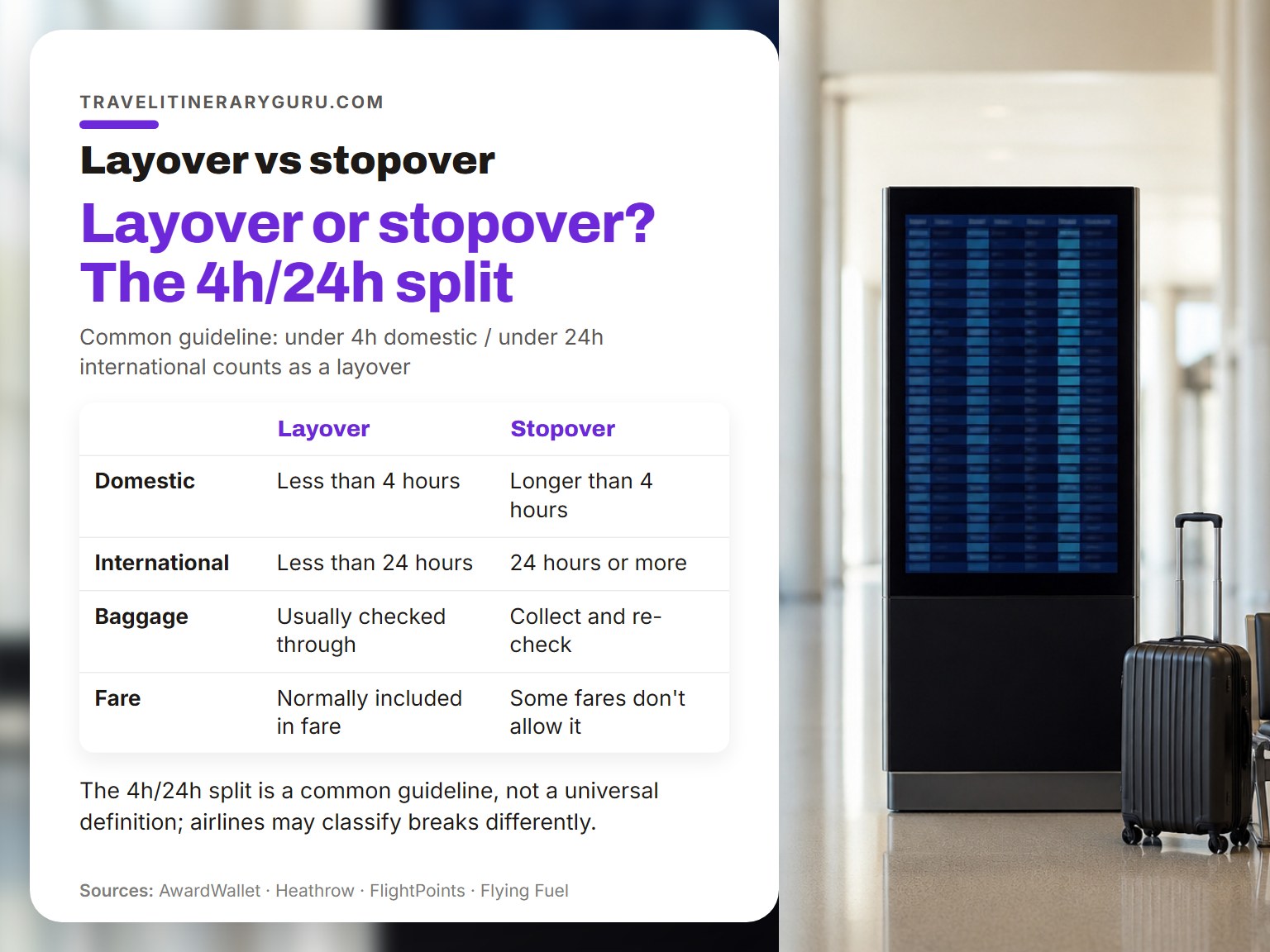
Heathrow, the airport operator, draws the line plainly: a layover is usually less than four hours on a domestic trip or less than 24 hours on an international journey, and a stopover lasts 24 hours or more between international flights. That is the definition most of the industry works from.
Here is the part worth sitting with.
IATA’s Passenger Services Conference Resolutions Manual defines a stopover as a deliberate interruption of travel at a point between origin and destination, generally more than 24 hours for international and more than four hours for domestic itineraries. That manual is the industry instrument carriers copy from, and it is revised annually.
The catch is that no regulator defines the term at all. The US Department of Transportation, the UK Civil Aviation Authority, and the EU do not publish a stopover threshold. It is a commercial and tariff term, which is exactly why the numbers move when you change airlines.
AirAsia says so out loud on its own blog: the four-hour and 24-hour split is a common guideline, not a universal definition, and carriers may classify flight breaks differently.
So the honest answer is that the thresholds are real, widely used, and not guaranteed to apply to your specific fare.
Why the Four-Hour Layover Is a Trap
The Points Guy notes that a layover of three or more hours is generally long enough that an airport lounge becomes worthwhile, and that connections past six hours open up the option of leaving the terminal if your transit documents allow it.
Common mistake: Booking a four-hour connection and assuming you can squeeze in a city visit. Immigration, a round trip, and re-entry through security will eat most of it, and the airline will not wait.
The 4-Hour and 24-Hour Thresholds, Side by Side
The numbers below are the ones the major sources agree on. Treat them as the working baseline, not a rule you can lean your whole booking on.
| Connection Length | Classification | What It Means in Practice |
|---|---|---|
| Under 4 hours (domestic) | Layover | Stay airside, transfer directly |
| 4 hours or more (domestic) | Stopover | Bags may need collecting and rechecking |
| Under 24 hours (international) | Layover | Standard connection, no extra fare |
| 24 hours or more (international) | Stopover | Deliberate break, entry rules apply |
The domestic column is where the layover vs stopover pros and cons disagreement lives. AwardWallet frames the four-hour mark as a rule, noting that US airlines typically will not allow layovers longer than four hours unless a shorter connection is unavailable, while Kayak and The Points Guy frame the same number as a definitional boundary instead. Kayak and The Points Guy frame the same number as a definitional boundary instead.
Same figure, opposite implication. One says the airline will stop you. The other says the airline just categorizes it differently. If you are planning around a domestic connection, ask the carrier which one applies to your fare.
Which Airlines Still Offer Stopovers?

Award tickets are where the perk survives, and the terms vary more than most roundups admit. NerdWallet reports that most airlines which offered free stopovers on award tickets have eliminated that perk, while AwardWallet documents carriers that still allow one or more, and FlightPoints says many airline programs let you add one stopover to an international award ticket at no extra cost.
Both things are true at once, depending on the program.
| Airline | Stopover Allowance | Maximum Stay |
|---|---|---|
| Air Canada Aeroplan | 1 one-way, 2 round-trip | 45 days |
| Singapore Airlines | 1 Saver, 2 Advantage | 30 days |
| Turkish Airlines | 1 per award flight | 20-hour minimum |
| Emirates | 1 Classic Saver, 2 Flex Plus | Not stated |
| Etihad | Connections over 8 hours | Abu Dhabi only |
Two of those deserve a closer look. Turkish Airlines runs a complimentary hotel stay for a stopover in Istanbul on round-trip flights operated entirely by Turkish Airlines, with a minimum stopover of at least 20 hours, and you have to call to book it. Etihad treats any connection longer than eight hours as a stopover, requires it to be in Abu Dhabi, and also books it only over the phone.
If you are weighing a multi-city trip against a single long connection, those two programs are the ones that make the math work.
Worth knowing before you start: Air Canada Aeroplan’s stopovers exclude flights wholly within North America. A domestic-only itinerary gets you no stopover at all, no matter how long the connection runs.
Does a Stopover Cost More Than a Layover?
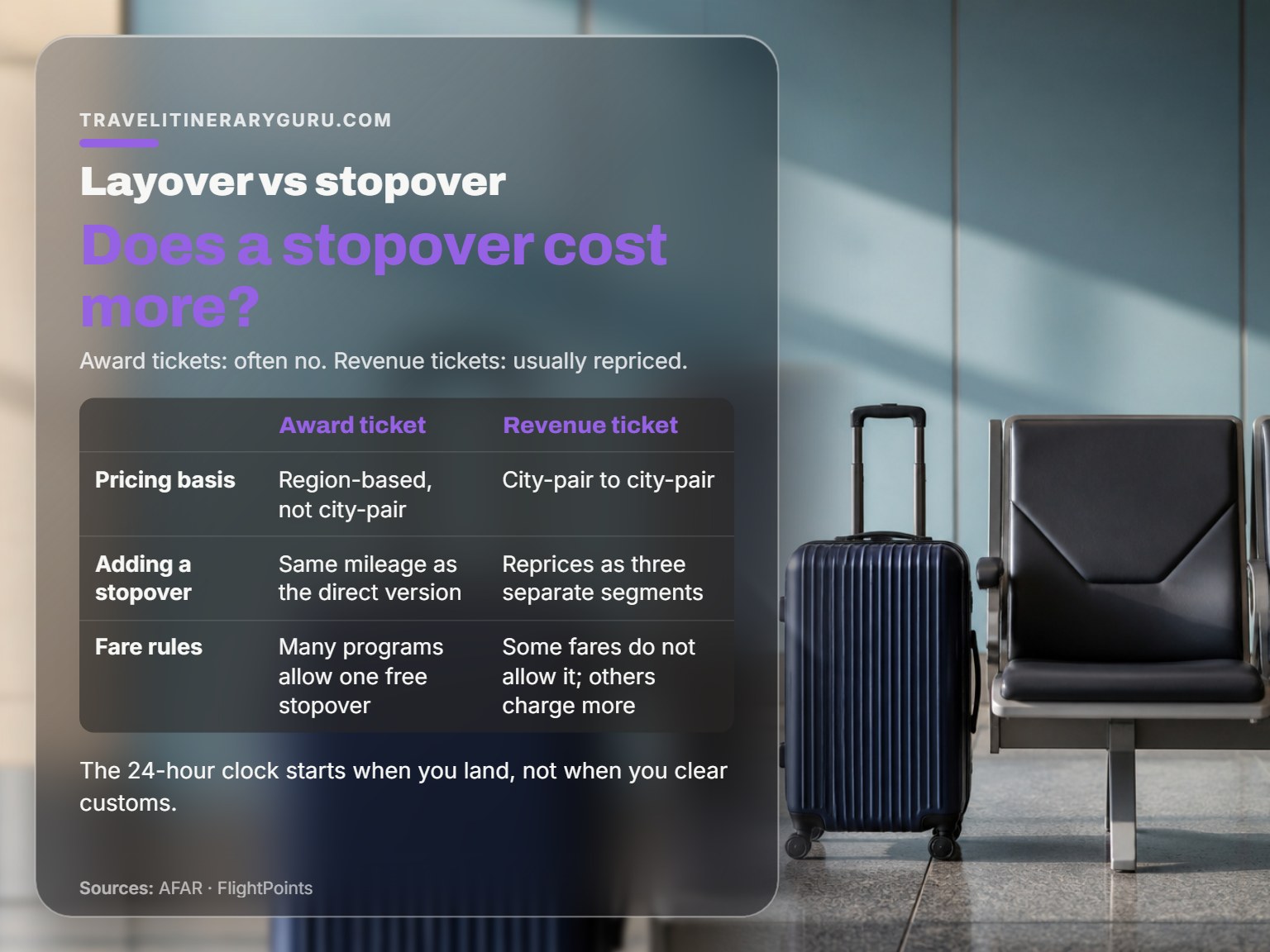
On award tickets, often not. AFAR explains the mechanism: award pricing is region-based rather than city-pair-based, so a routing like New York to London to Paris redeems at the same mileage as the direct version. That is why stopovers are feasible on award tickets at all.
Revenue tickets behave differently. AFAR notes that cash fares are built city-pair to city-pair, so adding a stopover reprices the whole itinerary as three separate segments, while Flying Fuel says some fares do not allow a stopover while others charge more or price the trip as two separate journeys. Flying Fuel puts it more gently, saying some fares do not allow a stopover while others charge more or price the trip as two separate journeys.
So the layover vs stopover pros and cons answer splits cleanly by ticket type, and this is the single most useful thing to know before you start pricing.
The part nobody mentions: The 24-hour clock starts the moment you land at the connecting airport, not when you clear customs or check into a hotel. If you are timing a stopover to stay just under the threshold, the clock is already running while you queue.
What a Stopover Does to Your Bags and Your Visa
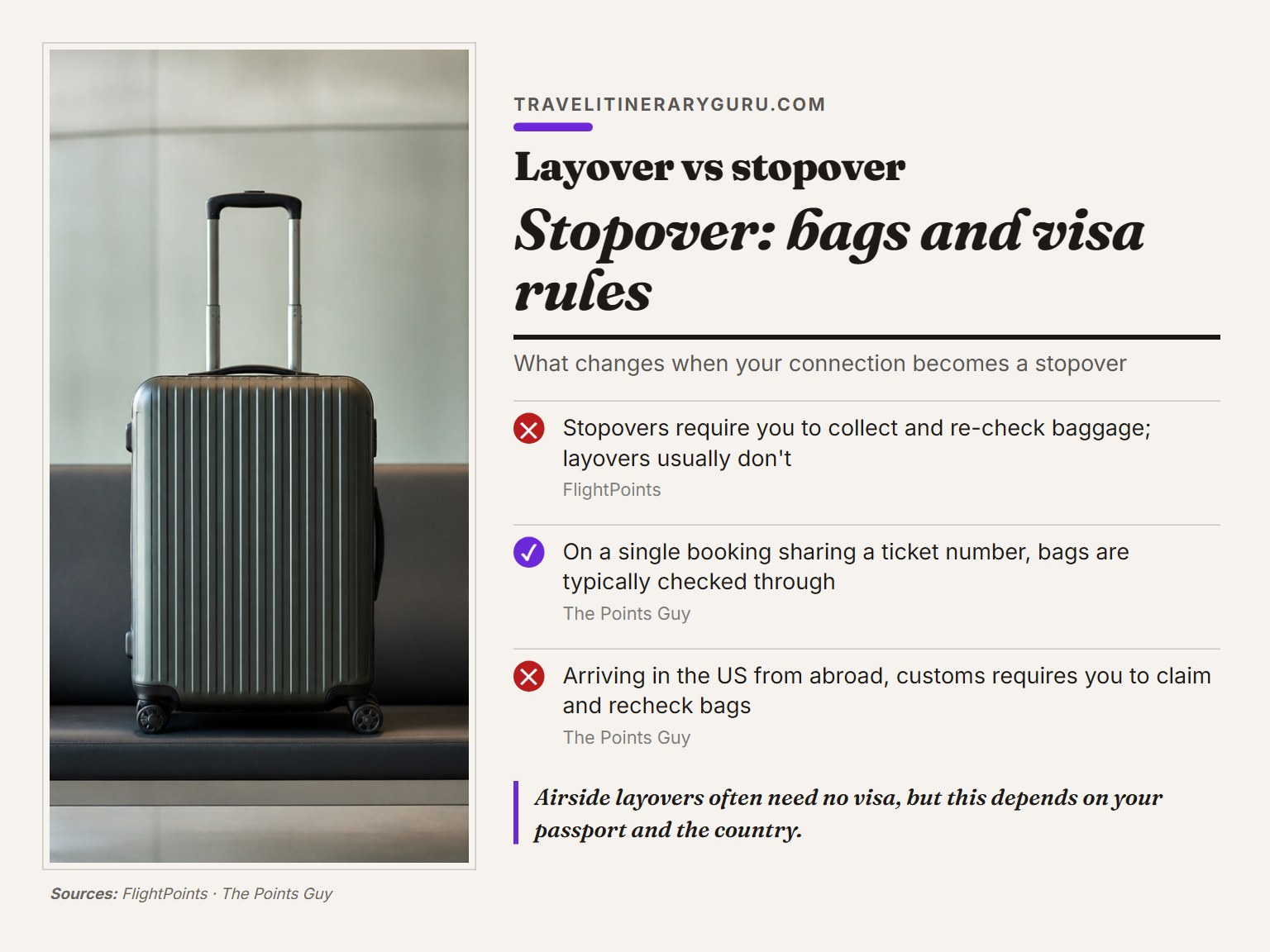
Bags are the part that catches people out. FlightPoints states that stopovers require you to collect and re-check baggage while layovers usually do not, though AirAsia and Flying Fuel note that bags may still be checked through during a stopover depending on the airline and itinerary. The Points Guy adds the key exception on the layover side: on a single booking where both flights share a ticket number, bags are typically checked through, except when arriving in the US from abroad, where customs requires you to claim and recheck them before your onward flight.
AirAsia is more cautious, noting that baggage may still be checked through during a stopover depending on the airline and itinerary. So the safe assumption is that a stopover means you handle your own bags, and you should confirm the exception if it matters.
Visas are the other half. If you stay airside during a layover, many countries do not ask for a visa, though Flying Fuel is careful to add that this depends on your passport and the country, while The Points Guy warns that some countries mandate a visa even for short airside layovers. The Points Guy goes further, warning that some countries mandate a visa even for short airside layovers.
That is the line where a cheap connection can turn expensive. Check your nationality’s transit requirements before you book, not after.
Skip this if: You are traveling on a passport that needs a transit visa for your connection country. A stopover adds an entry requirement on top of the transit one, and the paperwork is not something you fix at the gate.
Layover or Stopover: Which Should You Book?
It depends on what you are actually buying with the extra hours, and that is a question you can answer in about a minute.
Book the layover if you want to reach your destination and you have limited holiday time. Book the stopover if the connecting city is somewhere you would genuinely visit, and you can absorb the extra night and the extra planning.
There is a route-design angle here too. A stopover is really a slow travel move — it converts dead transit hours into a place, which is the same instinct behind cutting a city from a packed week. If you are already thinking about how to balance sightseeing time against the hours you lose to transit, the stopover is the version of that math where you win the hours back.
The Ticket Rule That Decides Everything If Something Goes Wrong
This is the part that matters more than any threshold.
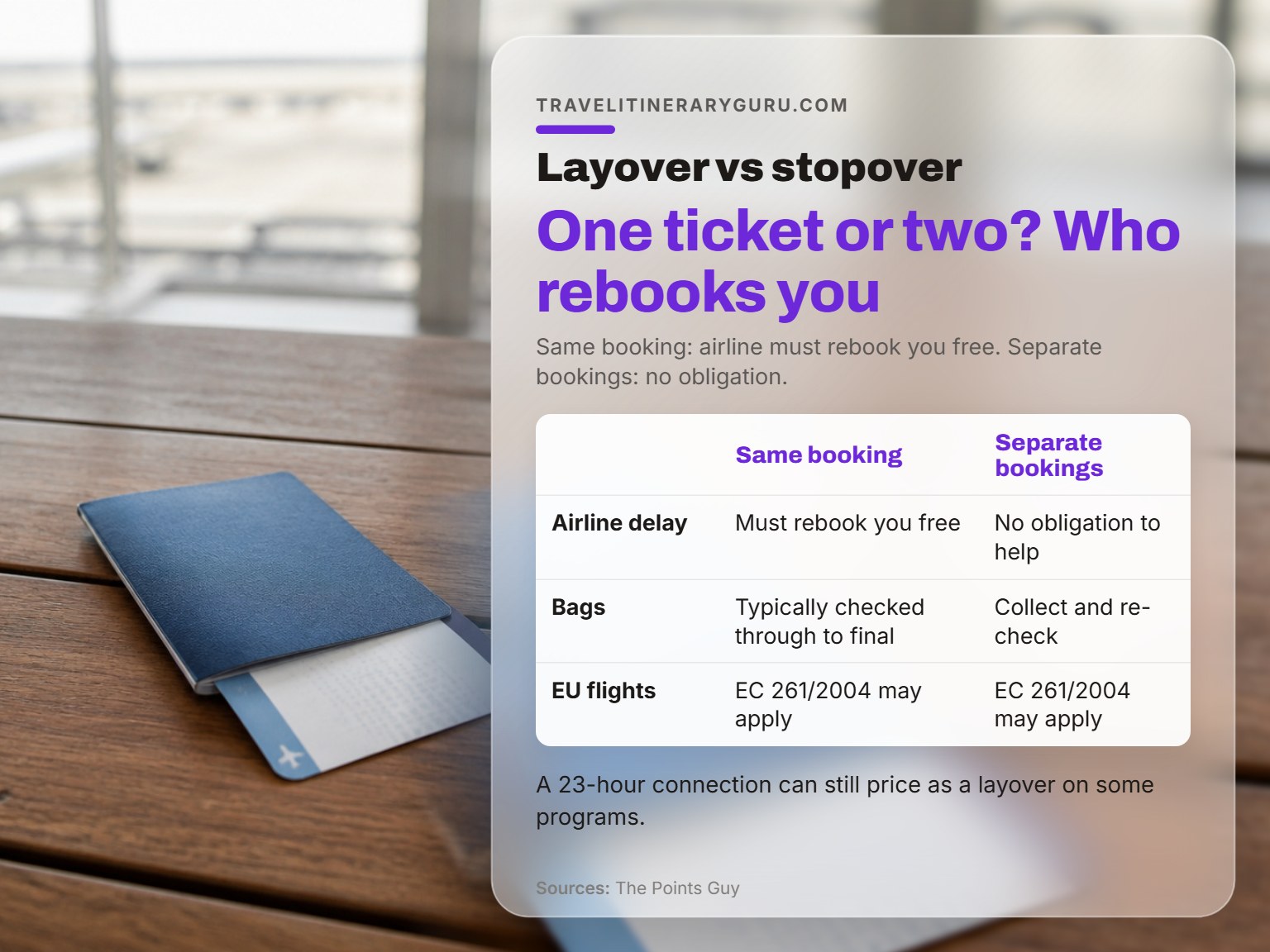
If both flights sit on the same booking and the delay is the airline’s fault, the airline is obligated to rebook you on the next available flight at no charge. If the flights are on separate bookings, the second airline has no contractual obligation to help you at all. USA Today’s layover versus stopover definitions piece documents exactly that split.
Travelers flying to or from Europe may have additional recourse under EU Regulation EC 261/2004, which The Points Guy flags as a separate layer of protection.
So the pros and cons of a layover versus a stopover are not only about time. They are about who owns the risk when a flight runs late.
If you are building a tight connection on purpose, do it on one ticket.
Easy to miss: A 23-hour connection can still price as a layover on some programs. AwardWallet cites an AAdvantage award with 23-hour layovers in both Los Angeles and Tokyo that priced as a single one-way award because each connection stayed under 24 hours.
What About the Long Layover You Didn’t Choose?
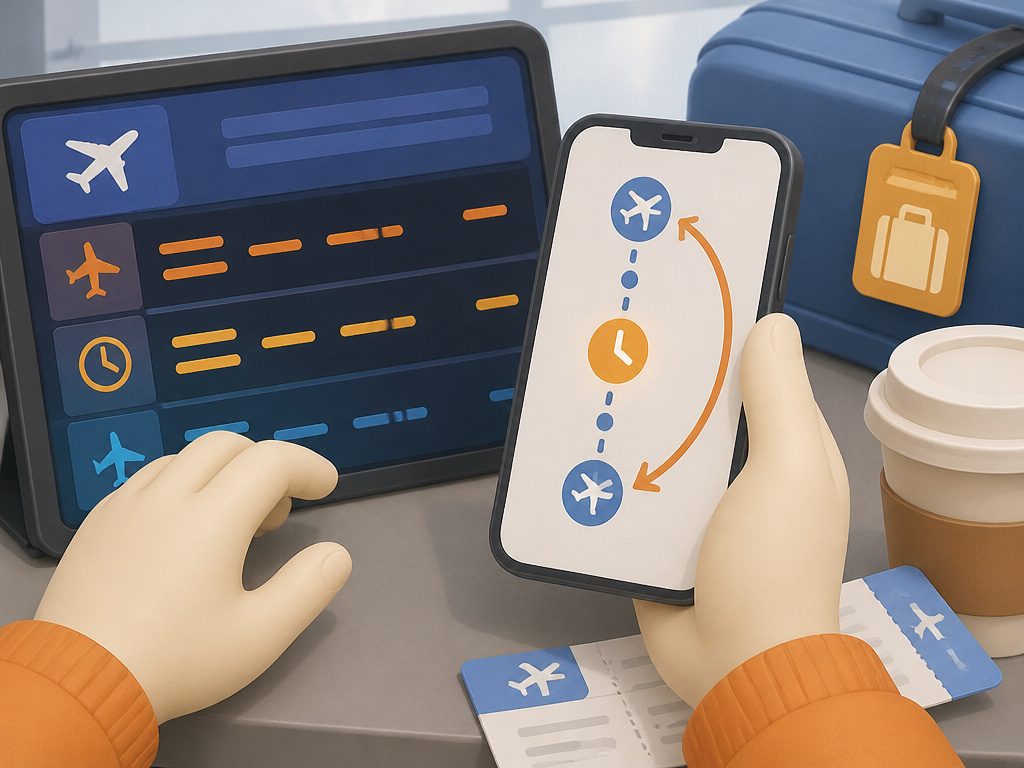
Sometimes the long connection is not a decision. It is the only routing available, and you are stuck with it.
That is a different problem from choosing a stopover, and it has its own playbook. A long layover is worth planning for rather than enduring, whether that means a lounge pass, a shower, or a timed walk to a nearby attraction. If you want the tactical version, there is a full breakdown of long layover tips that covers what to do with the hours.
One thing worth knowing before you plan anything: AwardWallet notes that most airlines will not offer a 23-hour layover in the first place, because shorter connecting times are usually available on other flights, while NerdWallet says you can still get value from a layover of up to 23 hours 59 minutes without triggering stopover pricing. The marathon layover is often something you have to hunt for, not something that happens to you.
And if the connection is long because the whole flight is long, the preparation is different again. The long-haul flight itself is where the fatigue gets banked, and a stopover on the far end does not fix a body that arrived already wrecked. Neither does a stopover fix jet lag if you spend the extra day on a red-eye schedule.
Frequently Asked Questions
Is a layover always shorter than a stopover?
By the working definitions, yes. A layover stays under four hours domestically or under 24 hours internationally, and a stopover clears those marks. But the definitions are conventions rather than rules, and carriers apply them differently, so the label on your ticket is what counts.
Can I leave the airport during a layover?
Often, yes, but only if your transit documents allow it. The Points Guy notes that leaving the terminal becomes worth considering once a connection passes six hours, and that you will need to clear immigration and re-enter security. Confirm your visa requirements first, because some countries require a visa even for a short airside connection.
Do I need to collect my bags during a stopover?
Assume yes. FlightPoints states that stopovers require you to collect and re-check baggage while layovers usually do not. AirAsia cautions that bags may still be checked through during a stopover depending on the airline, so confirm with your carrier rather than guessing at the counter.
Why do some airlines call an eight-hour connection a stopover?
Because the thresholds are set by the carrier, not by a regulator. Etihad treats any connection longer than eight hours as a stopover, and Qatar Airways uses a 12-hour minimum for its short stopover packages, while Heathrow and other sources use a 24-hour international threshold. The four-hour and 24-hour figures are the common baseline, not a ceiling on airline discretion.
Is a stopover worth it on a cash ticket?
Usually not, in the sense that it rarely comes free. AFAR explains that cash fares are built city-pair to city-pair, so adding a stopover reprices the itinerary as separate segments. On award tickets the pricing is region-based, which is why the same routing can cost the same miles.
What happens if I miss my connection?
It depends entirely on how the ticket was booked. If both legs are on one booking and the delay is the airline’s fault, the carrier must rebook you on the next available flight at no charge. If the legs are on separate bookings, the second airline has no contractual obligation to help.
The Bottom Line
Here is the threshold I’d actually plan around: if a connection lands between two and four hours, keep it under four or commit to 24 or more.
Turkish Airlines makes the long version easy with a stopover program, but you have to ask for it when you book, not after. The same is true of most of the programs in the table above, and two of them only take bookings over the phone.
One concession worth stating plainly: everything here assumes a single ticket. If you are assembling legs yourself, the thresholds stop mattering and the liability rule takes over. That is a different trip with a different risk profile, and the fare savings rarely cover a missed connection in a foreign airport.
Pick the version of the trip you can actually absorb. A stopover you didn’t plan for is just a layover with worse logistics.
