
How to Take a Walking Tour With Kids: Step-by-Step
This post contains affiliate links. As an Amazon Associate, we earn from qualifying purchases.
To take a walking tour with kids, plan around attention spans instead of the route. Smithsonian Education puts young children’s learning sessions at 10 to 15 minutes, and says 30 minutes to 1 hour may be the limit before a museum visit becomes too much.
That time budget changes how to take a walking tour with kids. A long highlights walk that crosses several districts asks more of a young child than a short loop of one neighborhood, and the loop is the version that ends well. The gap between those two is where a family walking tour either holds together or comes apart.
What follows covers the four decisions that matter: which tour to book, what goes in the daypack, when to call it and leave, and how to handle the three places where the official guidance flatly contradicts itself.
Key Takeaways
- Book one tour, not three. A single anchor stop per day beats a packed schedule, and kids remember the one they finished.
- Hold hands under five. The National Gallery of Art asks every visitor to keep an arm’s distance from artworks, and recommends holding the hand of any child under five.
- 30 minutes to 1 hour is the realistic ceiling for a gallery or museum walk before a child is done.
- Know the exit before you commit. The National Park Service warns that 2 hours in a cave or 3 hours on a shuttle tour is a bad fit when you can’t easily turn around.
- On safety, the sources split. Explore Buffalo puts the duty on school personnel to make sure their students are safe, present, and not left behind. The Park Service puts the burden on the accompanying parent or guardian to pre-scope trails and carry the child if needed. Decide which trip you’re on before you go.
How Long Should a Walking Tour With Kids Actually Be?
Smithsonian Education gives the clearest number in this field: 10 to 15 minutes per learning session for preschoolers and early-grade children, with 30 minutes to 1 hour as the limit for a museum visit before overwhelm sets in.
Museum and gallery guidance converges on a short window. Preschool and early-grade children learn best in 10- to 15-minute sessions, and 30 minutes to 1 hour may be the limit before a museum visit becomes too much. Fixed programs of 2 to 3 hours remove the option of leaving early, which is the part that turns a good day into a hard one.
That window is shorter than most tour listings assume. The National Park Service makes the same point from the other direction, warning that visiting national parks with children gets hard when a program runs 2 hours in a cave or 3 hours on a shuttle tour and you can’t easily turn around.
The two sources don’t agree on a lower bound. Smithsonian Education sets one at 10 to 15 minutes per session. The Park Service warns against long fixed programs but names no minimum. Plan for the shorter number and treat anything past an hour as a bonus.
Gallery walks add a physical rule on top of the time rule. The National Gallery of Art kids visit page asks every visitor to keep at least an arm’s distance from the artworks, and recommends holding the hand of any child under five. Explain that touching the art even lightly can damage it. Kids follow rules they understand.
A short walk that ends on a high note beats a 2-hour one that ends in tears.
Skip this if: Your child is under five and the program is a 2-hour cave walk or a 3-hour shuttle loop. There’s no easy way to turn around, and the meltdown arrives around hour two with nowhere to go.
Pick the Tour Before You Pick the Shoes
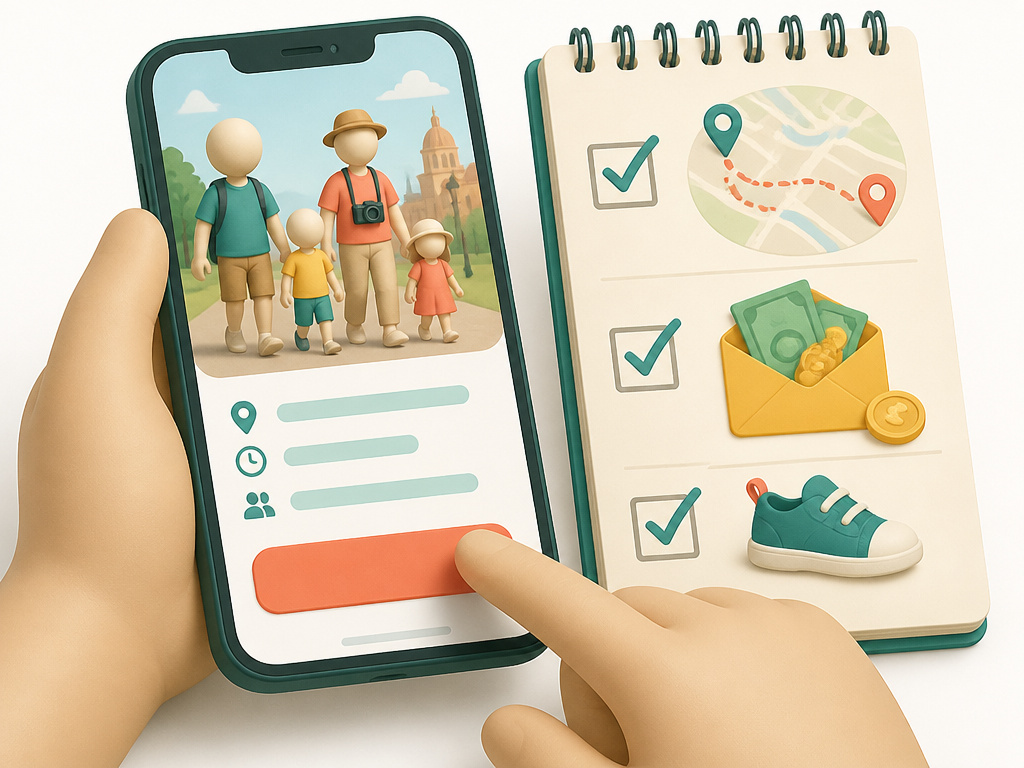
A single-district walk beats a city-wide highlights sprint for how to take a walking tour with kids, and the difference shows up near the end, when one group is still asking questions and the other is finished.
I learned the tip rule the hard way. I once told a family a walking tour was free. They enjoyed the whole route and walked away at the last stop without tipping. The guide had earned it. Now I budget the tip before I book anything, and I tell everyone I plan for to do the same.
Free tours run on a simple mechanism. The guide’s income depends on being good rather than on being booked, so strong guides stay strong and weak ones stop getting repeat groups. That’s why the free model often produces a better tour than the paid one.
If the operator runs guided tours for families separately from the adult walk, book that one. A family version usually means a shorter route and a guide who expects to answer questions.
Free Tours vs Paid Tours: Which One Wins With Kids
Free walking tours win for most families with kids old enough to keep pace. The group is smaller than a bus tour, the guide has to earn the tip, and you can peel off early without losing anything. Paid tours win in two situations: very young children who need a private pace, and subjects that need real expertise.
Skip the themed costume tours. In my experience they cover the same streets as the free walk and charge for the costume.
What to Check Before You Book
- Total distance, and whether the route is a loop or a one-way line. A one-way route strands you at the far end.
- The stated age range. If the listing doesn’t name one, ask directly.
- Whether the guide is a local. Neighborhood knowledge is the whole product.
- Cancellation terms, because a sick kid on the morning of the tour is a real scenario.
- Where it ends, and how far that is from food.
Common mistake: Treating a free walking tour as free. The guide is paid by the tip at the end, so a family that slips away at the last stop takes the guide’s income with it.
What Actually Goes in the Daypack
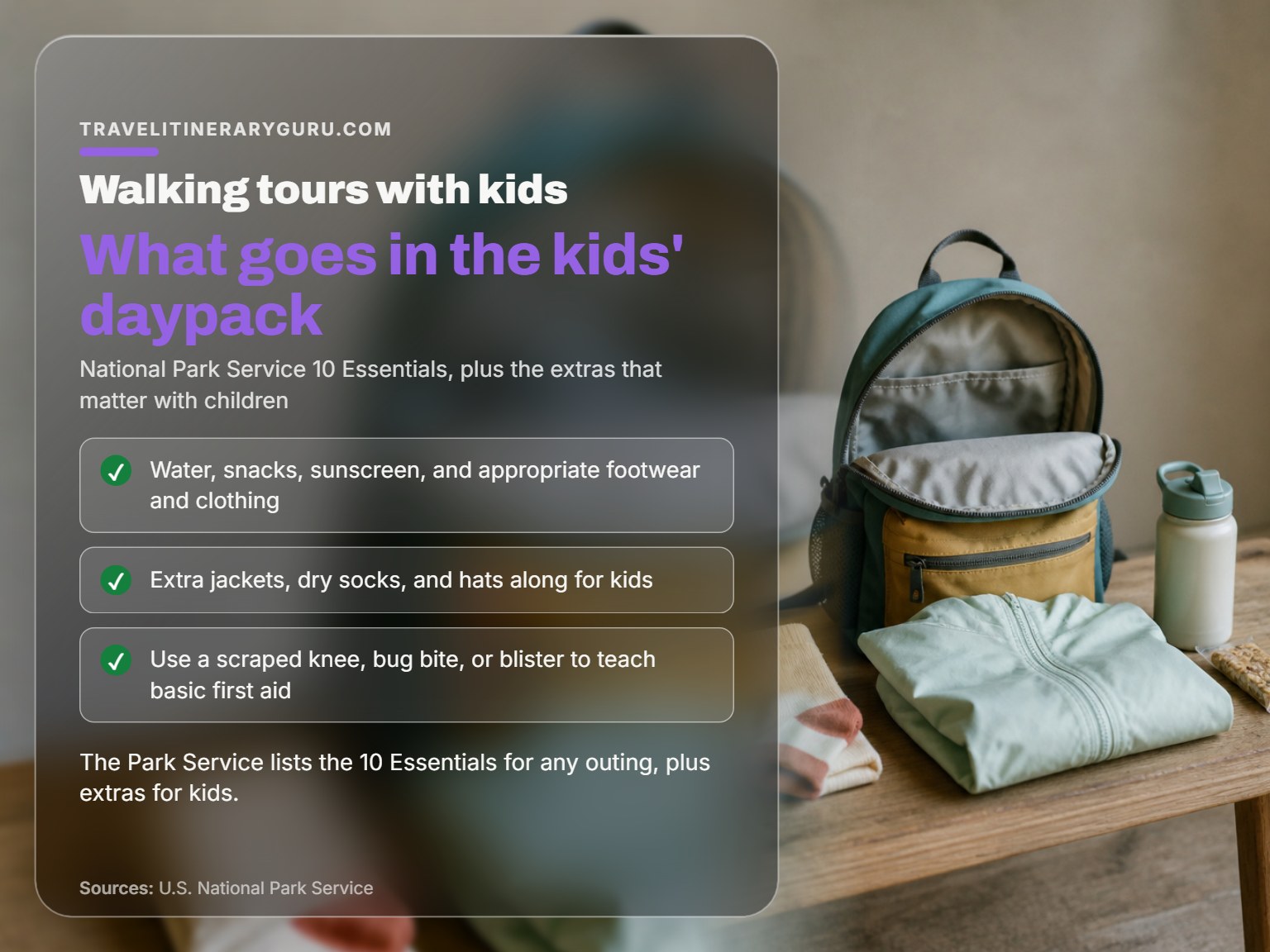
Three things go in the bag that parents forget: a dry pair of socks per child, a jacket even in July, and a snack that doesn’t melt.
The National Park Service’s NPS hiking with kids guide lists the 10 Essentials for any outing: water, snacks, sunscreen, and appropriate footwear and clothing. The same page adds the extras that matter with children, meaning extra jackets, dry socks, and hats.
- Water for every person, plus one spare bottle.
- Snacks that survive a warm daypack. Leave the chocolate at home.
- A dry pair of socks per child. Wet socks go cold and clammy, and a dry pair resets the mood.
- Sun hats and a light layer, even in summer.
- A small first aid kit. The Park Service suggests using a scraped knee, a bug bite, or a blister as a chance to teach basic first aid, which turns a bad five minutes into something a kid remembers.
The same list works for a day trip with kids that isn’t a formal tour at all. If the walk runs long, treat it as a walking tour prep problem and pack the way you would for a hike.
Carriers, Strollers, and Shoes
For very young children, a carrier beats a stroller on a walking tour. Old-town routes run on cobblestones and stairs, and both turn a stroller into a two-person job. A framed carrier that stands on its own when you set it down holds up well. Both stand on their own frame when you set them down. Check availability before a trip that depends on one.
Shoes decide more of the day than the bag does. Closed-toe sandals handle gravel and water. For anything over two hours, a closed kids’ trail shoe wins.
Where the Official Guidance Contradicts Itself
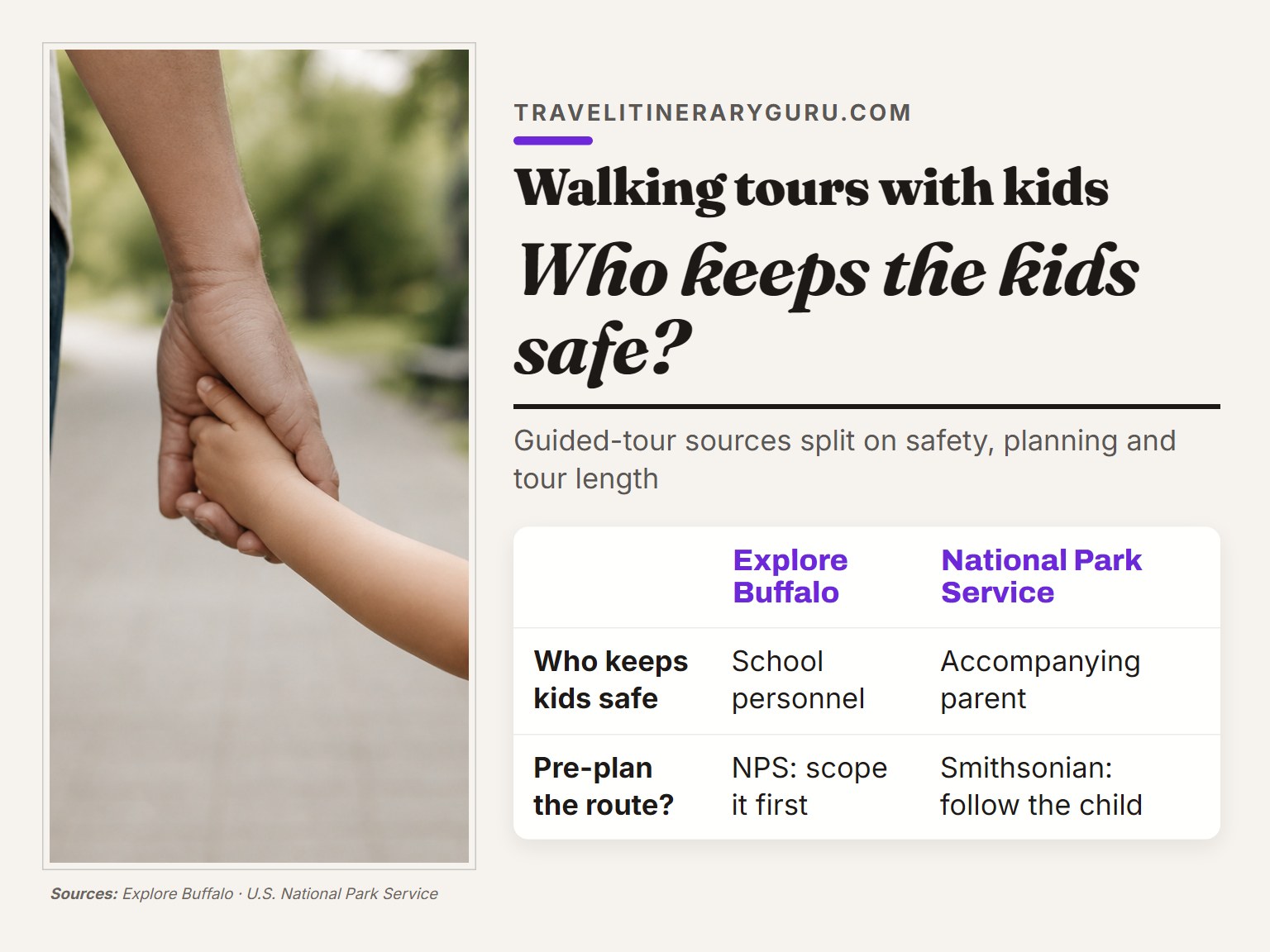
Explore Buffalo’s docent guide and the National Park Service’s ranger advice disagree about something basic: who is responsible for keeping the children safe.
| The question | One position | The other position |
|---|---|---|
| Who keeps the kids safe | Explore Buffalo: school personnel | NPS: the accompanying parent |
| Pre-plan the route? | NPS: scope it first | Smithsonian: follow the child’s lead |
| How long is too long? | Smithsonian: 10 to 15 minutes a session | NPS: warns on 2 to 3 hour programs |
On safety, the sources disagree. Explore Buffalo puts the duty on school personnel to make sure their students are safe, that all of them are present, and that nobody is left behind. The Park Service puts the burden on the accompanying parent or guardian to pre-scope trails and carry the child if needed. Both are right about their own trip. A school group travels with staff who know the kids. A family walk travels with you.
On planning, the sources disagree. The Park Service says hiking with your children is not the time to explore an unfamiliar trail; scope it in advance. Smithsonian Education says to be flexible, follow your child’s lead, and abandon the planned exhibit if something else catches their attention. Scope the route, then let the child pick the order. That satisfies both.
On length, Smithsonian Education names a number and the Park Service doesn’t. The Park Service only warns that 2 hours in a cave or 3 hours on a shuttle tour is a bad idea when you can’t turn around. Neither source is wrong. They’re answering different questions.
If you’re joining a guided city tour rather than leading one, the same split applies. The operator owns the route. You own your kid.
How Do You Know When to Stop the Walk?
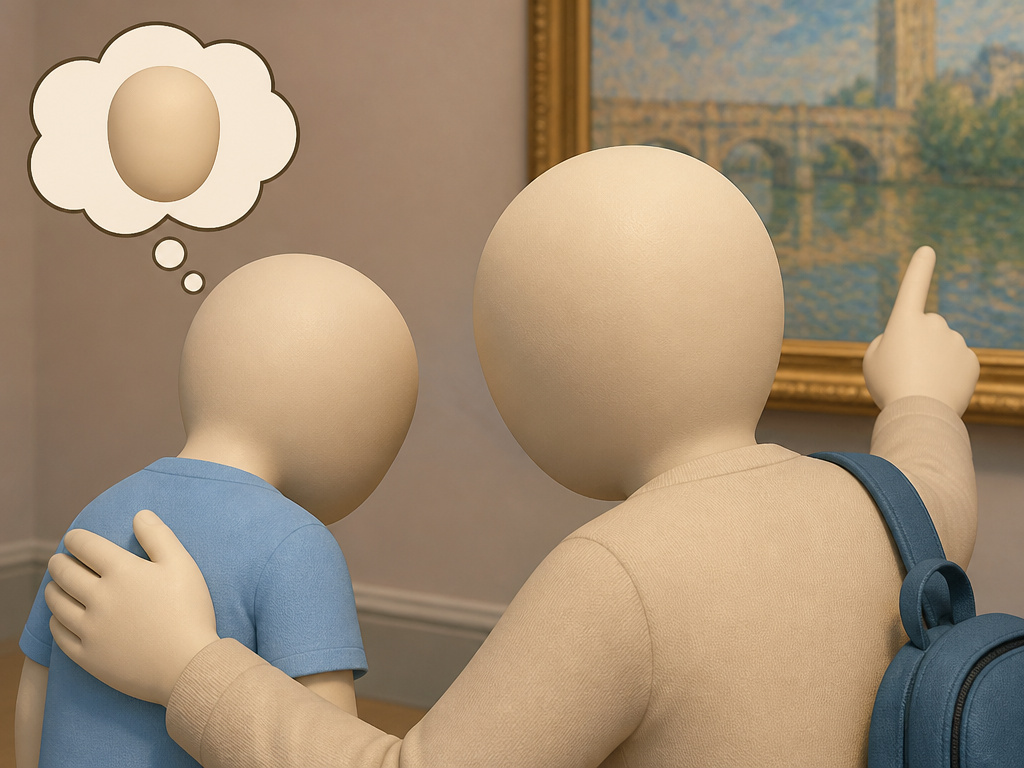
Halfway through the second room, the questions stop. Nobody complains. Nobody looks at anything either.
That flat look is one signal Explore Buffalo tells docents to watch for. Blank stares or wandering attention mean change it up: switch to a different object or ask the group a question.
Smithsonian Education gives you the spoken version. If a child says “I’m bored,” “it’s so hot in here,” or “when are we going home?”, they’ve seen enough. Take a break or leave.
| What you see | What it means | What to do |
|---|---|---|
| Blank stares, wandering eyes | Attention is gone | Switch objects or ask a question |
| “I’m bored” or “when are we going home?” | The visit is over | Take a break or leave |
| A child who can’t answer an easy question | The vocabulary was too hard | Explain more simply, then move on |
| One kid asking nonstop questions | Real interest, wrong moment | Invite them to walk beside you |
One signal is easy to misread. Explore Buffalo notes that what looks like disinterest is often a lack of understanding, so explain more, simplify the vocabulary, or move to the next stop.
Heat ends more family walks than boredom does. If the forecast is hot, treat staying cool on a walk as the planning problem, not the tour choice.
The Smithsonian family visit guide is worth reading before a first museum trip, mostly for the pre-visit conversation it recommends.
If You’re the One Leading the Walk
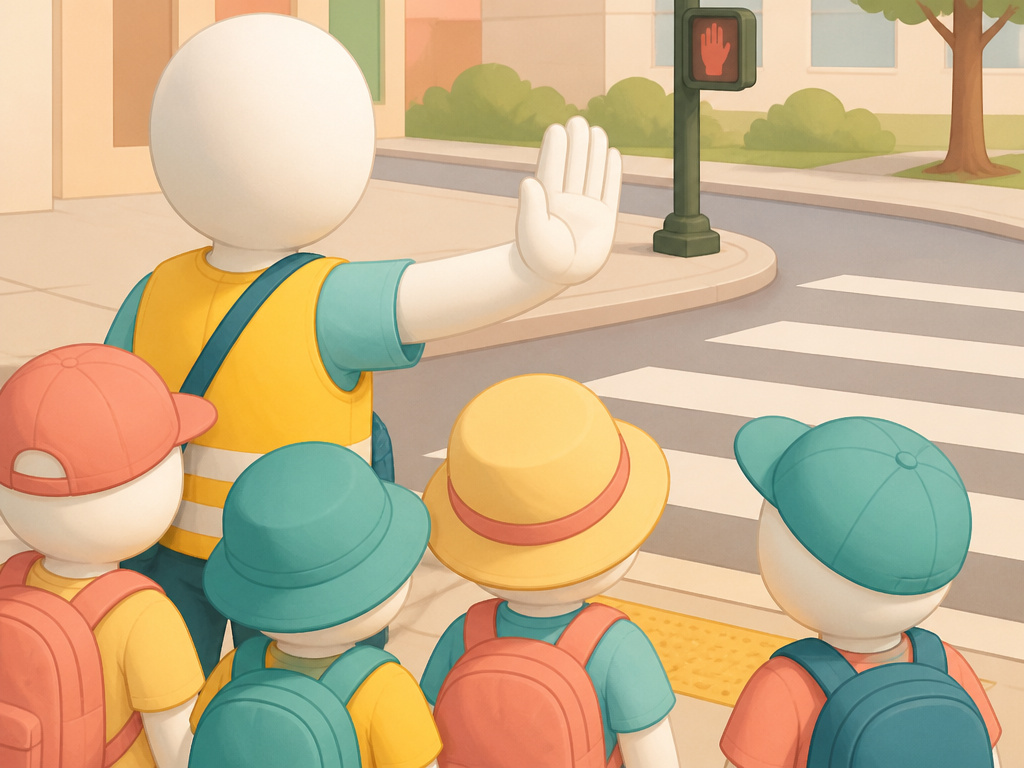
The person at the front sets the pace, and the person at the front is you.
Docents are told to stay at the front of the group at all times and to let students walk next to them but never in front. The reason is mechanical. The person in front decides where the group stops and turns, and a child who can’t see that decision walks into the next intersection alone.
Face the group when you talk. Use verbal organizers like “long ago,” “also,” “first,” and “second” so kids can follow the shape of what you’re saying. And you needn’t say everything you know about a stop.
Before you start: Cross only at corners, crosswalks, and signals, and wait until the whole group is gathered so you cross together, because a guide who steps off the curb alone leaves the back half of the group on the other side. Revolving doors are out with young students; a child who stops mid-turn is stuck until someone pushes from behind.
Crossing Streets With a Group
Cross at corners, crosswalks, and signals, and wait until the whole group is gathered so you cross together. Explore Buffalo is blunt about revolving doors too: don’t use them with young students.
Everything takes longer with a group of kids. Plan the time to get from place to place, and expect the tour to run past its scheduled end. A group of kids on a stone staircase sounds like a drum solo, and that noise is how you know the group is still moving as one.
If you’re building your own route instead of joining one, a self-guided walking tour needs the same rules plus a map you’ve actually walked.
Footwear is the other variable. walking shoes for a long route are not the same shoes as sneakers for a short one.
If you’re guiding a school group rather than your own kids, the tours with children and teens material is written for that job specifically.
One more rule from the docent side: you are not the disciplinarian. School personnel handle behavior. If a student is distracting others and nobody steps in, ask the student to be respectful, and take it to school staff if it continues.
What to Do When It Goes Wrong Anyway
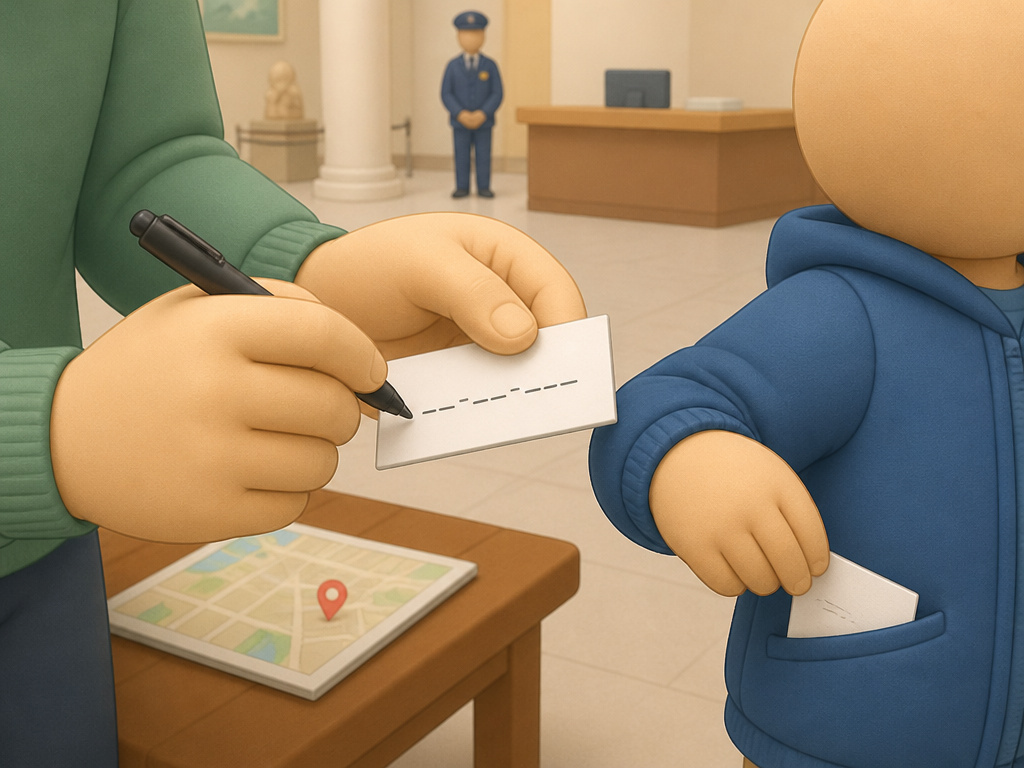
What happens if you get separated in a crowd?
Smithsonian Education says to make a safety plan with your children before you go, and to include the role of museum guards and other staff in it. A child who knows to look for a uniform is a child who doesn’t wander the lobby alone.
Talk about what they’ll see before a first visit. That conversation covers how objects get to a museum and why people collect them, and it gives a child something specific to look for.
Three things to do before you leave the hotel:
- Agree on a meeting point in case anyone gets separated, and name a staff member your child can approach.
- Show your child the map and point at where you’re going.
- Put your phone number on a piece of paper in their pocket.
Book the tour for day one or day two, never the last day. By the end of the trip the kids have already walked those streets, and a guide repeating ground they covered earlier buys you nothing.
Two small things pay off. Pick up a kids guide at an information desk, and ask what’s running. Smithsonian Education suggests asking about self-guided children’s and family tour brochures, audio tours, gallery games and activity sheets, and family workshops. The National Gallery of Art hands out a kids guide at its information desks and runs Paint ‘n’ Play stations in two places, the East Building Atrium and the West Building’s East Garden Court.
The Park Service adds one more idea that pays off later. Let kids draw pictures, take photos, or write down what they find. It keeps their hands busy and their attention on the activity instead of on things they shouldn’t touch.
Kids who have been in transit since early morning hit a wall in the late afternoon, and the wall shows up as tears at a stop you actually wanted to see.
Frequently Asked Questions
What age is too young for a walking tour?
Under five is the age where the rules change. The National Gallery of Art recommends holding the hand of any child under five in the galleries, while older children only need to keep an arm’s distance. If a program runs 2 hours or more with no easy exit, a child that age is a poor fit.
Are free walking tours actually free?
No. The guide is paid by tips at the end, so budget for it before you book. The upside is that the guide’s income depends on being good rather than on being booked, which is why the free walks are often the better product.
How long can a young child last on a museum or gallery walk?
Smithsonian Education puts it at 10 to 15 minutes per learning session for preschoolers and early-grade children, with 30 minutes to 1 hour as the limit for the whole visit. Past that, plan a break or leave.
Should I book the walking tour on the first day or the last?
First or second day. An early tour gives you the layout of the city and a local’s read on what’s worth the walk. By the last day, the kids have already covered that ground.
What if my child has a meltdown in a cave or on a shuttle tour?
That’s the risk the National Park Service warns about. Two hours in a cave or 3 hours on a shuttle tour is a bad idea when you can’t easily turn around. Rangers understand if you leave a program early for a nap or a snack, but only where leaving is possible.
Is a stroller or a carrier better on a walking tour?
Carrier, for anything under about age four. Old-town routes run on cobblestones and stairs, and both turn a stroller into a two-person job.
The Bottom Line
If I could keep only one rule from all of this, it would be this: book the walking tour for day one, tip properly, and treat everything after that as optional.
This all assumes a child who can walk for a stretch without being carried. If yours can’t yet, the math changes. A carrier, a shorter loop, and no fixed program is the honest answer, and no amount of itinerary design fixes it.
I’d rather see a family spend two hours in one district than sprint a packed route they’ll forget by dinner. That’s the whole answer to how to take a walking tour with kids: pick one walk, do it early, and leave while everyone still likes each other.
Your first step this week is a two-minute check. Look at whether the tour you’re eyeing publishes a stated age range and a route map. If it publishes neither, you’ve learned something about how much they’ve thought about kids.
