
How to Respect Local Customs in the Middle East
This post contains affiliate links. As an Amazon Associate, we earn from qualifying purchases.
How to respect local customs in the Middle East comes down to three things: watch what people around you are doing, keep your voice and your camera low, and know the handful of rules that differ by country. Most of it is ordinary courtesy. The part that trips people up is that the Gulf states don’t all draw the same lines.
I see this how to respect local customs in the Middle East advice a lot, and here’s why it falls apart on the ground. People memorize a list, land in Doha, and apply the rules they read about Muscat. Those aren’t the same rules. Oman’s foreign ministry states flatly that eating, drinking and smoking in public during daylight Ramadan hours is forbidden for Muslims and non-Muslims alike. The UAE embassy frames the same month as a courtesy you extend, not a law you break. Same region, same month, different consequence.
What follows is the country-by-country version: Ramadan, greetings, dress, taxis, tipping, photography, and the small signals that matter inside a home. Every rule here traces to a government or national tourism authority page, and where those pages disagree with each other, I’ll show you both sides.
Key Takeaways
- Ramadan rules differ by country. Oman treats public daytime eating as forbidden for everyone; the UAE and Qatar frame it as a courtesy non-Muslims should extend.
- Alcohol is narrower than you think. In Qatar, non-Muslims may drink at hotels holding a special permit or at home. In the UAE, alcohol is served in most hotels but may not be available at other local establishments.
- Don’t offer your hand first to a woman. Qatar’s interior ministry says a man should avoid shaking hands with a woman unless she offers hers first.
- Tipping is not one number. Jordan’s tourism ministry suggests roughly 10% for waiters unless a service charge is already included, and says you aren’t required to tip taxi drivers at all.
- Ask before every photo of a person. Oman’s tourism authority says seek permission first, and both Oman and Qatar flag sensitive locations and Arab women as off-limits.
The Five Phrases That Cover 90 Percent of Interactions
Language buys you more goodwill than any how to respect local customs in the Middle East rule you memorize. A greeting in the local language signals that you see the person in front of you, not just the transaction. Oman’s tourism authority puts it plainly: a friendly “Salam” greeting goes a long way.
English and Arabic are the two most widely spoken languages in the UAE, according to the UAE Embassy in Washington. Visitors there may also hear Urdu, Hindi or Pashtu. In Jordan and Oman, English gets you through hotels and taxis, but Arabic opens doors at the family-run places.
Here’s what I actually do. I learn “hello,” “thank you,” “excuse me,” “please,” and “no thank you.” That’s it. Two of those do almost all the work, and the other three keep you from sounding like a robot reading a phrasebook.
The UAE Embassy notes that Middle Eastern society is considered both more formal and more traditional than Western society. Formality here isn’t stiffness. It’s pace. Greet first, ask about the person, then get to business. Rushing that sequence reads as rude in a way that has nothing to do with the words you use.
A greeting is not a formality you clear before the real conversation. It is the real conversation, and everything after it depends on how you handled the first ten seconds.
Ramadan in the Gulf: Three Countries, Three Different Rules
Ramadan is where the country-by-country approach stops being a nice idea and becomes the difference between a fine trip and a bad afternoon. The month moves each year, so check the dates before you book anything.
The three official positions are genuinely different, and I want to show them side by side rather than flatten them into one rule.
| Country | Official position on public daytime eating | Source |
|---|---|---|
| Oman | Forbidden for Muslims and non-Muslims alike | Oman Ministry of Foreign Affairs |
| Qatar | Non-Muslims not required to fast, but should abstain in public | Qatar Ministry of Interior |
| UAE | Respectful to refrain in public during sunlight hours | UAE Embassy, Washington DC |
Read that table twice. Oman’s page uses the word “forbidden.” The UAE’s page uses “respectful to refrain.” Those are not the same instruction, and treating them as one is how travelers get themselves into an unpleasant conversation with a stranger who has every right to be annoyed.
The UAE Embassy adds a practical detail that matters if you’re traveling there: food will still be available at hotels for non-Muslim guests. So the rule isn’t “you can’t eat.” It’s “you don’t eat where people who are fasting can see you.”
Qatar’s interior ministry lands in the middle. Non-Muslims are not required to fast, but they should abstain from eating, drinking and smoking in public.
If you’re visiting during the month, the UAE Embassy encourages visitors to extend the traditional greeting “Ramadan Kareem.”
Easy to miss: A hotel lobby with a coffee bar is not the same as a public street. The UAE Embassy’s guidance is about public spaces and about not eating in front of staff or business associates during sunlight hours. Your room is your room.
Greetings, Handshakes and the Left Hand
Handshakes are where Western travelers default to autopilot and where the region’s sources specifically warn you off. Qatar’s interior ministry states that a man should avoid shaking hands with a woman unless she first offers her hand. Jordan’s tourism ministry notes that conservative veiled women may not reach out at all.
So the rule is simple and it costs you nothing: wait. Let the other person initiate. If they extend a hand, take it. If they don’t, a slight nod and a hand over the heart does the same job.
The left hand has its own rule. According to the UAE Embassy, guests should not eat with their left hand, which is considered unclean. That guidance comes from the Emirati page specifically. Neither the Omani nor the Jordanian pages mention it, so don’t treat it as a universal law across the region. Treat it as the safe default when you’re eating with your hands.
Communal eating from shared dishes is common practice and is highly recognized as an expression of friendship, per the UAE Embassy. That’s a gift, not a trap. Reach for the shared plate. Just reach with your right hand.
And here’s the one that catches people from cultures where a clean plate is a compliment: in many places it is considered polite to leave a bit of food on your plate. That’s the UAE Embassy’s wording. If your host keeps refilling you, you’re not being tested. You’re being hosted.
The part nobody mentions: Nobody is grading your handshake. They’re reading whether you paused before offering it. That pause is the entire signal.
What to Wear, and Where the Sources Actually Disagree
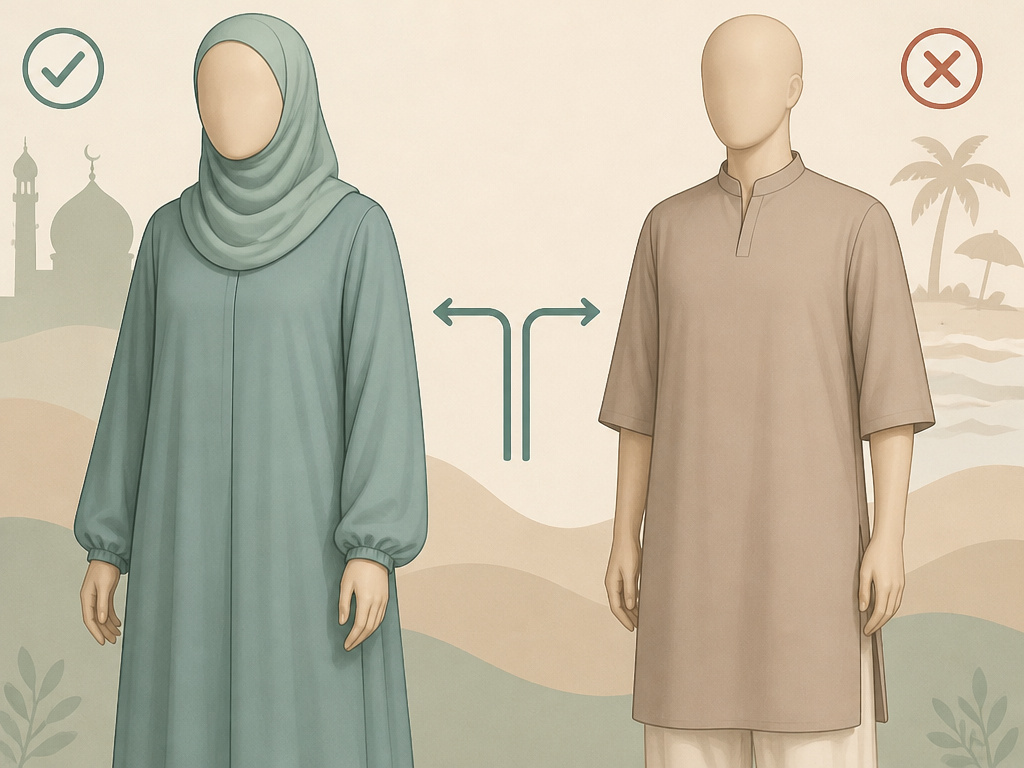
Dress is the topic where the official guidance conflicts most, and I’d rather show you the conflict than pretend it doesn’t exist.
Visit Oman states that head coverings are not mandated for women outside of mosques. That’s about as clear as a national tourism authority gets. Qatar’s interior ministry takes a broader line: women should avoid tight, short or translucent garments, and the page frames the whole set of codes as something visitors are required to observe. Qatar’s page does not carve out an exception for head coverings the way Oman’s does.
Same region. Different official answers. If you’re going to both, follow the stricter one and you’re covered in either.
What both pages agree on is the principle: cover more, not less. Loose fabric that reaches your elbows and knees. Nothing sheer. Nothing that reads as beachwear once you’re off the beach.
Taxis, Tipping and the Jordan Page That Argues With Itself
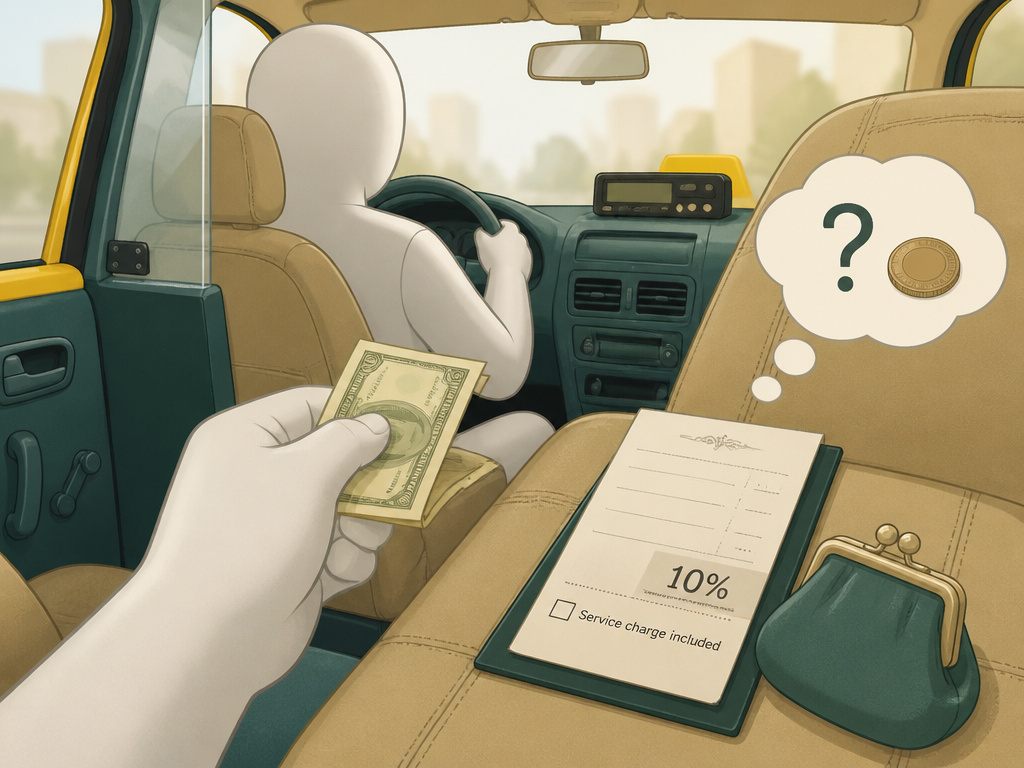
Tipping is the place where every guidebook gets fussy, and where the official sources are more useful than the blogs. Jordan’s Ministry of Tourism and Antiquities gives the clearest numbers in the region.
Tip waiters approximately 10% gratuity unless a service charge is already included. That’s the ministry’s own wording. The conditional matters: check the bill before you add anything.
Taxis are where it gets interesting. The same Jordanian page says you aren’t required to tip your taxi driver, and in the next breath says to round the fare up to the nearest tenth when paying. Those two instructions sit on the same government page and they don’t fully reconcile. My read: the tip is optional, the rounding is expected, and they’re describing the same gesture from two angles.
There’s also a seating rule that surprises people. Men should sit in the front seat of a taxi, and women in the back, both framed by the Jordanian ministry as respectful. If you’re a man traveling alone, sitting up front is the local norm, not an imposition.
For the wider picture across the region, the honest answer is that tipping customs vary enough that a single percentage is useless. Watch what the person ahead of you does. That’s the real number.
What most people get wrong: Treating a tipping guide as a rulebook. The Jordanian page gives you 10% for waiters and tells you taxi tips aren’t required. If you can hold those two facts at once, you’re already ahead of most travelers.
Photography: Permission First, Every Time
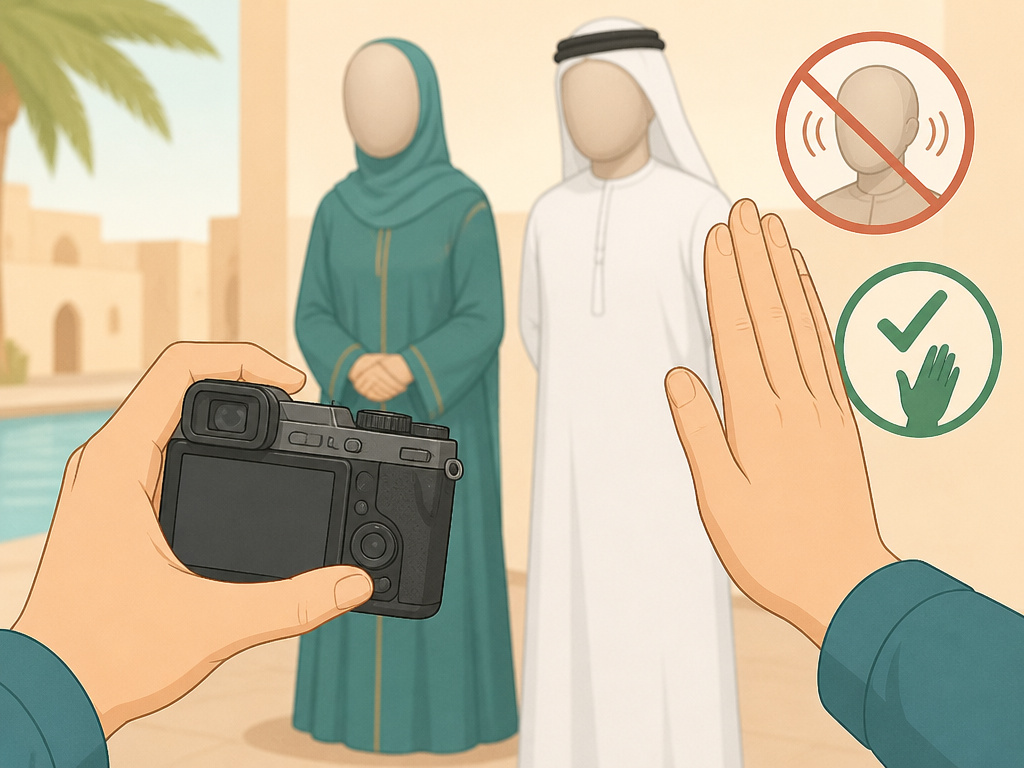
Cameras are the fastest way to turn a warm interaction cold, and the region’s official pages are unusually direct about it.
Visit Oman says to always seek permission before taking photos of locals, and to be mindful of sensitive locations like government buildings and airports. It also notes that travellers should be mindful of sensitive locations like government buildings and airports. That drone line appears on the Omani page and not on the others, so don’t assume it travels. Check the rules for whichever country you’re entering.
Qatar’s interior ministry flags two specific categories to avoid: military installations and Arab women. That’s the Qatari framing. Oman’s is broader and phrased as a request for permission rather than a list of prohibitions.
The practical version, which I’ve settled into after enough awkward moments: ask first, and accept no gracefully. A hand on the camera and a questioning look does the job in any language. If the answer is a head shake, you smile, you nod, and you move on. That exchange costs you one photo and buys you the rest of the afternoon.
Inside a Home: Shoes, Halls and the Coffee Cup
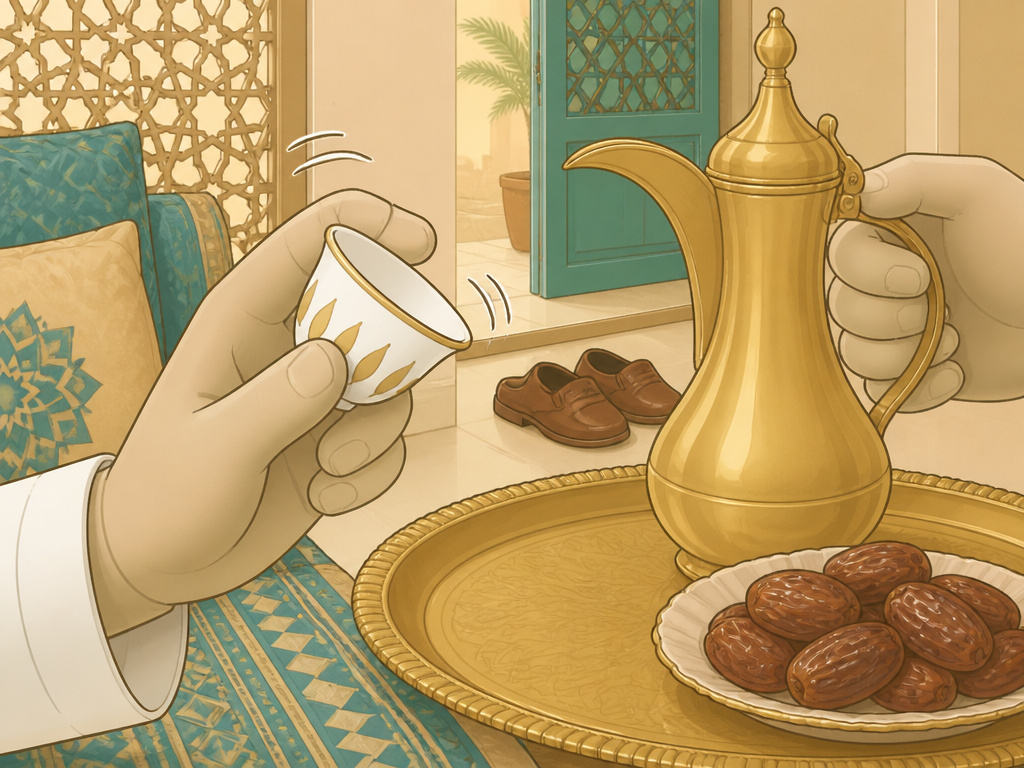
The rules that matter most are the ones you’ll only encounter if you’re lucky enough to be invited into someone’s home or a private majlis. Qatar’s interior ministry lays these out, and they’re the details almost no guidebook covers.
Remove your shoes on entering a private majlis. Women may be directed to a separate hall. Neither of those is a slight. It’s the shape of the room, and following it without commentary is the whole of good manners.
Then there’s the coffee. Shaking a cup side-to-side signals you’re declining a refill. Holding it out signals you want more. Qatar’s page states the gesture, and Jordan’s repeats the shake-to-decline half of it. It’s not universal across every source in the region, so treat it as a Gulf habit rather than a hard law.
Learn it anyway. It’s the single most elegant piece of etiquette in the region, and getting it right the first time earns you a look of genuine surprise from your host.
Alcohol sits in the same category of country-specific rules. Qatar’s interior ministry permits non-Muslims to have alcoholic drinks at hotels provided there is a special permit, or at their homes. It also prohibits driving while or after drinking, and appearing in public while drunk. The UAE Embassy’s version: alcohol is served in most hotels but may not be available at other local establishments, and if alcohol is not offered, it is better not to ask for it.
That last clause is the one to remember. Don’t ask. If it’s available, it’ll be offered.
Where this goes sideways: Asking a restaurant whether they serve alcohol in a country where the answer is no. The UAE Embassy’s guidance is explicit that if alcohol isn’t offered, it’s better not to ask. You’ve just told your host what kind of guest you are.
Driving, Money and the Rules That Carry Penalties
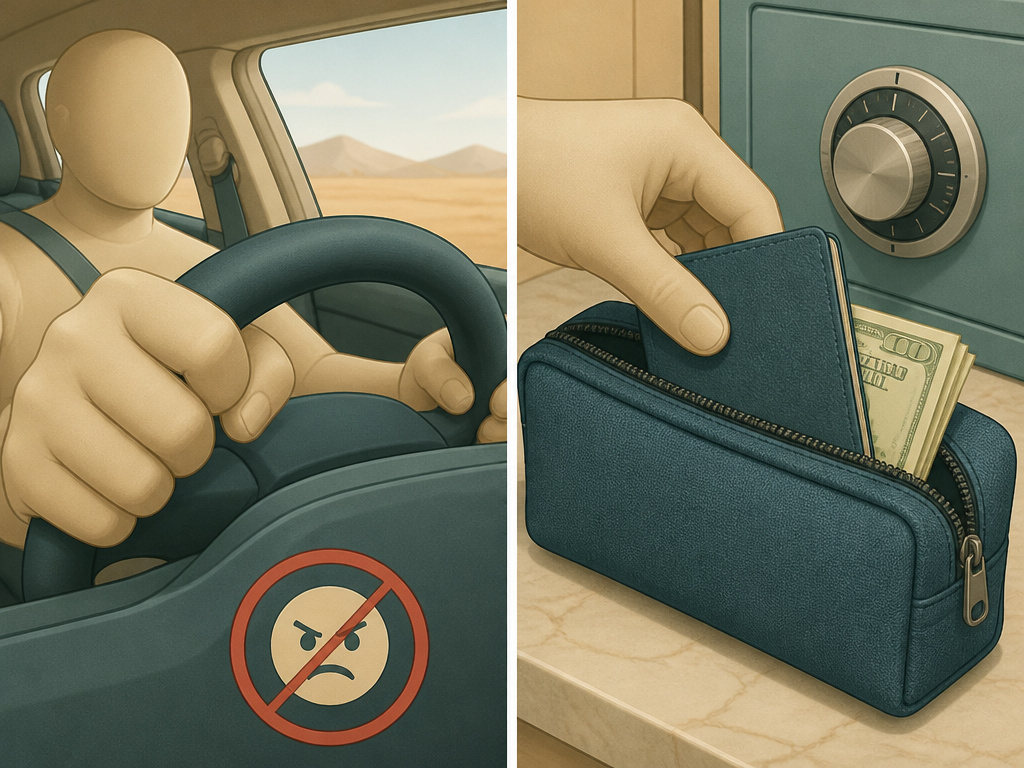
Two areas carry real consequences rather than social ones, and both are worth knowing before you’re behind a wheel or at a border.
Qatar’s interior ministry is unusually blunt about road behavior: motorists should not insult others or show extreme anger while driving, as this may lead to severe penalties including imprisonment. That’s the Qatari framing, and it’s stricter than most visitors assume.
Oman’s tourism authority recommends against driving at night in rural areas. If your itinerary involves a long desert transfer, do it in daylight.
Then there’s the money rule that catches people at the airport. Travellers leaving Oman must declare cash, currencies or negotiable financial instruments exceeding 6,000 (approximately $15,582 or equivalent). Most travelers never come close. The ones who do are usually carrying cash for a group.
Oman’s foreign ministry adds a simple safety habit that applies anywhere: keep passports, money and other valuables in a closed bag or a safe at your hotel. That’s not a Middle East rule. That’s a Tuesday rule.
Markets, Noise and Public Behavior
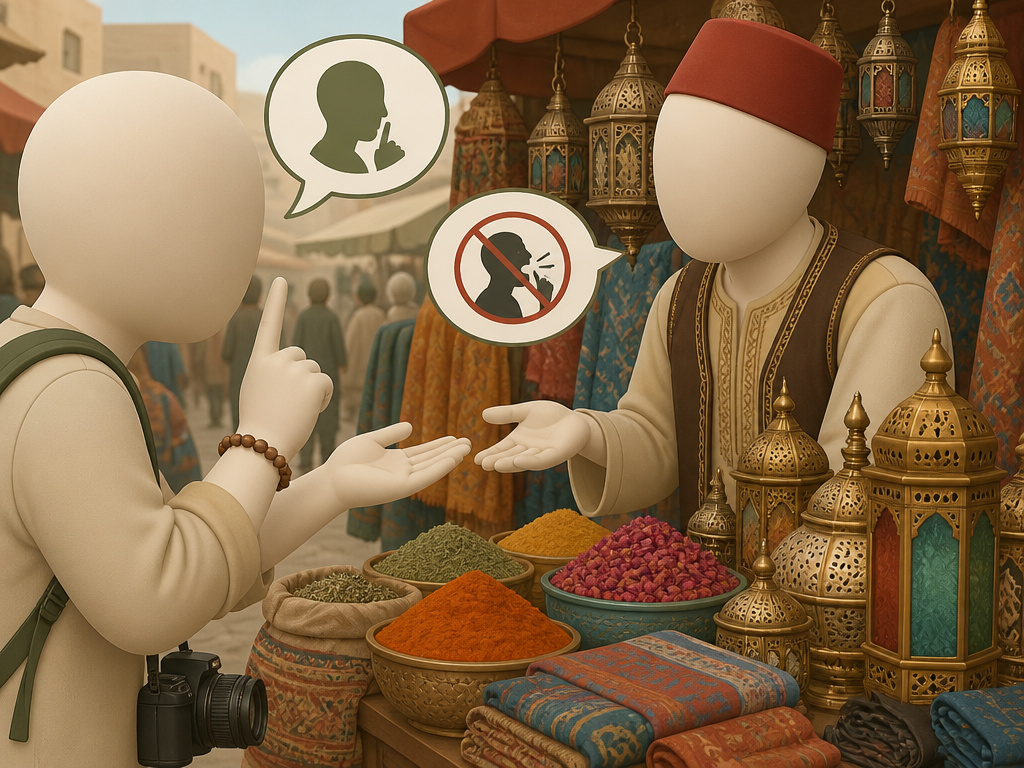
Souks and street markets are where etiquette gets tested most, because they’re crowded, loud, and full of people trying to sell you things. The region’s sources are consistent on the underlying principle.
Oman’s foreign ministry states that noisy or unruly behavior, or gestures, are not welcome. That’s the whole rule in one line. Volume is the thing visitors most often get wrong, and it’s the thing locals notice first.
Visit Oman adds that public displays of affection should be kept private, as Omani culture generally keeps such expressions private. A hand on a shoulder is fine. Anything more is a conversation you don’t want to have in a public square.
Common mistake: Reading a market’s friendliness as an invitation to haggle everywhere.
The Honest Limits of This Guide

I’ll be honest with you about where this list runs out.
The dress guidance above comes from official pages, and I’ve quoted them rather than paraphrased them for exactly that reason.
I looked.
Frequently Asked Questions
Do I have to fast during Ramadan in the Middle East?
No. Qatar’s interior ministry states plainly that non-Muslims are not required to fast during the month. What’s expected is that you abstain from eating, drinking and smoking in public during daylight hours. The UAE Embassy frames it the same way and notes that food will still be available at hotels for non-Muslim guests.
Can I drink alcohol in the Middle East?
It depends entirely on the country. In Qatar, non-Muslims may have alcoholic drinks at hotels that hold a special permit, or at home, per the interior ministry. In the UAE, alcohol is served in most hotels but may not be available at other local establishments. If it isn’t offered, the UAE Embassy advises against asking for it.
Should I shake hands with a woman in the Middle East?
Wait for her to offer first. Qatar’s interior ministry says a man should avoid shaking hands with a woman unless she extends her hand. Jordan’s tourism ministry notes that conservative veiled women may not reach out at all. A nod with your hand over your heart works if no hand comes.
Is it rude to eat with my left hand?
In the UAE, yes. The UAE Embassy states that guests should not eat with their left hand, which is considered unclean. That guidance comes from the Emirati source specifically. Neither the Omani nor the Jordanian pages mention the left hand, so treat it as the safe default rather than a rule that’s enforced everywhere.
Do I need to cover my head as a woman?
Outside of mosques, Oman’s tourism authority says head coverings are not mandated for women. Qatar’s interior ministry doesn’t state that carve-out and asks women to avoid tight, short or translucent garments. If you’re visiting both, follow the stricter guidance and you’re covered either way.
How much should I tip in Jordan?
Jordan’s Ministry of Tourism and Antiquities suggests approximately 10% for waiters unless a service charge is already included. For taxis, the same page says you aren’t required to tip, but also says to round the fare up to the nearest tenth. The rounding is the practical gesture.
The Bottom Line
Here’s the rule I’d actually build your trip around: if the country’s official guidance and the behavior in front of you disagree, follow the behavior. Watch a cafe for twenty minutes before you order. Watch how people greet each other at the next table.
One specific threshold worth memorizing. If you’re traveling during Ramadan, the country you’re in changes what you can do at lunch. Oman’s rule is a prohibition. The UAE’s is a courtesy. Qatar sits between them. Check which one applies before you book a daytime food tour, because that’s the one mistake on this list that a hotel concierge can’t fix for you.
Hello, thank you, excuse me, please, no thank you. Say them to a stranger before you leave home and get the fumbling out of the way.
