
How to Plan an Anniversary Trip: Booking Windows That Work
This post contains affiliate links. As an Amazon Associate, we earn from qualifying purchases.
To plan an anniversary trip, decide the one splurge first, then protect the empty space around it. Book time-sensitive anchors as soon as your dates are set, tell the property it’s your anniversary, and cap the itinerary at one or two activities a day. The number of the anniversary matters less than the intention behind it.
That one-splurge structure is where most anniversary plans go wrong before they start. Knowing how to plan an anniversary trip means resisting the urge to upgrade everything at once, and a trip with four upgrades and no breathing room stops feeling like a celebration and starts feeling like a production.
What follows is the sequencing: how far ahead to book, how much to pre-plan, where the sources flatly disagree with each other, and the arrival-night mistake that ruins more anniversary dinners than bad food ever has.
Key Takeaways
- Pick one anchor splurge, a great dinner, a great room, or a great experience, and keep the rest of the trip simple.
- Book anything capacity-limited the moment your dates are set. Sunset dinners, couples massages, and wine tours that fill up are the items you cannot recover.
- Tell the property it’s your anniversary when you reserve. Hotel and restaurant staff respond by going out of their way, per AAA Via’s Pamela Goldman.
- Don’t schedule the big dinner on arrival night. Travel days count as full days, so don’t stack activities on arrival or departure.
- Two activities a day is the ceiling, not the target. Vacation Planner’s guidance is blunt: anniversary trips are about being together, not maximizing checklist items, while AvantStay caps it at one anchor activity per day.
How Far Ahead Should You Actually Book?
This is the how to plan an anniversary trip question the sources genuinely disagree on, and nobody has resolved it. AvantStay says book three to six months ahead for the best rates and selection, and pushes that window even earlier if your dates fall in peak season or near a holiday. Vacation Planner splits it: eight to sixteen weeks out for international trips, four to eight weeks for domestic. Royal Caribbean’s own guide takes a third position, advising you to book the trip and any special excursions as soon as possible.
I get why the three-to-six-month number sounds right. It’s the one that gets repeated most, and it feels responsible. But it’s an aggregator rule of thumb, not a rule, and the two shorter windows are aimed at different trips than the one you’re probably planning.
Here’s how I’d actually sequence it, and it’s closer to Royal Caribbean’s advice than to either blog:
- Set your dates and lock the anchor splurge first. The signature dinner, the right room, the one bucket-list activity. These are the items you can’t substitute later.
- Book the room and the flights once the anchor date is fixed. Everything else in the trip bends around those two bookings.
- Reserve time-sensitive experiences as soon as your dates are set. Private dinners, guided tours, anything with a capacity limit.
- Finalize the rest before you leave. Confirm the reservations, build the packing list, and stop adding things.
| Source | Recommended Lead Time | Best For |
|---|---|---|
| Royal Caribbean | As soon as possible | Cruises; capacity-limited excursions |
| AvantStay | 3-6 months ahead | Milestone trips; peak-season dates |
| Vacation Planner | 8-16 weeks international | Longer international trips |
| Vacation Planner | 4-8 weeks domestic | Shorter domestic weekends |
Booking windows are a range, not a deadline. The anchor splurge is the only item where late means locked out; everything else is negotiable.
One thing worth knowing before you start: if your anniversary falls during peak season or near a holiday, AvantStay’s advice to push the booking earlier applies.
How Much Should You Pre-Plan?
The sharpest how to plan an anniversary trip disagreement in the entire source set sits inside a single publication. AAA Via’s Pamela Goldman says to make reservations ahead of time. In the same article, AAA’s Brian Woolery says the opposite: avoid overbooking and let the day take you on an unexpected adventure. Dr. DeMaria, quoted alongside both, warns that pressure and a packed schedule undermine the trip.
That’s not a contradiction the sources resolve. It’s a real split, and the resolution is a structure, not a side.
Plan the anchors. Leave the middle empty. Goldman’s advice covers the dinner reservation and the room; Woolery’s covers the Tuesday afternoon where you have nothing booked and end up somewhere you didn’t expect. Both can be true in the same trip if you stop treating the itinerary as a single decision.
AvantStay’s version of this is one anchor activity per day, maximum, with mornings or evenings left completely open, while Vacation Planner allows two activities a day but emphasizes the same principle of leaving generous downtime. Vacation Planner allows two activities a day but adds the same warning, leave generous downtime for actual togetherness, while AvantStay caps it at one anchor activity per day. The gap between one and two is small enough that either works. What fails is stacking the schedule.
An itinerary without buffer time leaves no room for the unexpected. Technically you followed the steps. The result still feels rushed.
Where this goes sideways: Booking the anniversary dinner for arrival night. Travel days count as full days, per AvantStay, and you’ll be tired, possibly delayed, and more focused on logistics than on the meal.
Where Should You Go, and Does the Anniversary Number Matter?
Destination first, or number first? AARP structures eight destinations around the traditional anniversary gifts for the 20-, 30-, 40- and 50-year marks, a constraint no other source in the set applies. Everyone else treats the destination as a standalone decision.
Vacation Planner pushes back on the gift logic directly: the number matters less than the intention, and a well-planned weekend trip can be more meaningful than a lavish vacation planned carelessly. That’s the position I’d hold to. The gift-year structure is a nice prompt when you’re stuck, not a requirement.
What actually decides the destination is the overlap between two travel styles, and Vacation Planner names the failure mode: look for the overlap, not the average. A beach-and-city combination often beats committing to one or the other. Pamela Goldman’s version of the same point is blunter, compromise may be necessary for beach lovers married to skiers chasing fresh powder.
| Anniversary | Common Approach | Source |
|---|---|---|
| 5th | A longer trip you’ve been saving for; possibly international | Vacation Planner |
| 10th | Return to your honeymoon destination | Vacation Planner |
| 25th | A dream destination, or a trip combining what you both love | Vacation Planner |
| 20/30/40/50 | Destination structured around traditional gift themes | AARP |
If you’re weighing a first big trip together rather than a milestone, the same sequencing logic applies to honeymoon planning, one anchor, real downtime, and the rest left loose.
Do You Tell the Hotel and Restaurant It’s Your Anniversary?
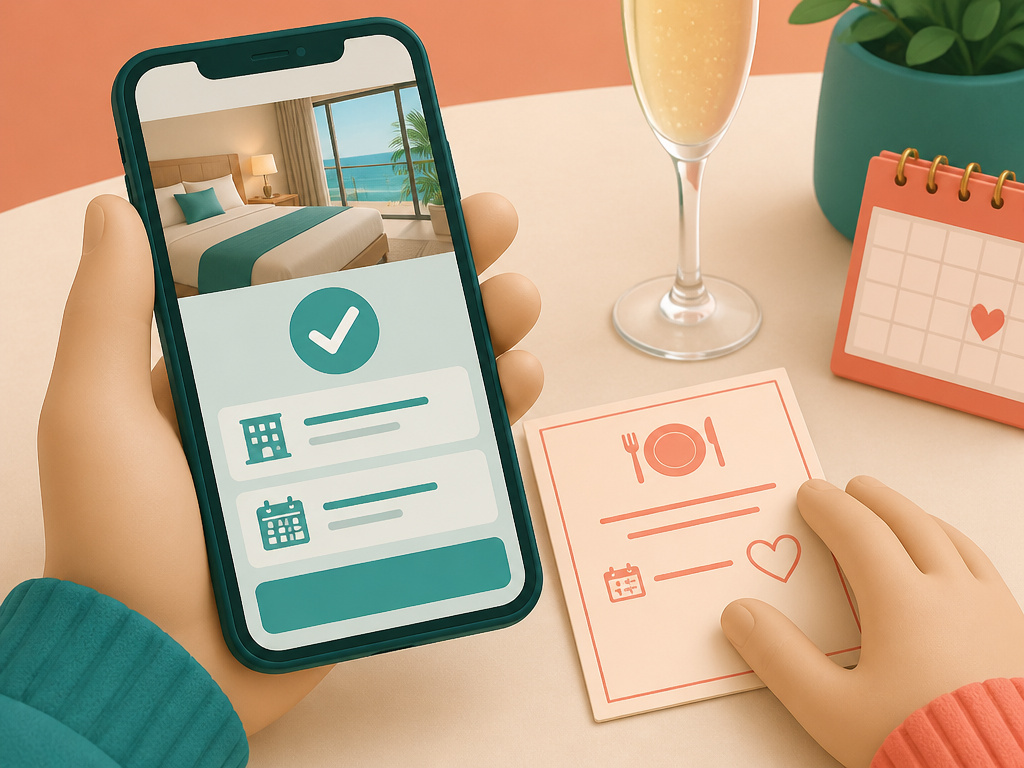
Goldman says tell absolutely everyone, while Dr. Flag the anniversary at every reservation, from the hotel to dinner, and staff will usually respond by going out of their way to make the experience extra-special. Dr. DeMaria, in the same article, warns against the pursuit of the perfect and contrived Instagram shot.
Both positions are about the same instinct, and they don’t actually cancel out. Telling the restaurant it’s your 25th is a fact you’re sharing. Choreographing a reveal is a performance. Goldman’s advice covers the first; DeMaria’s warning covers the second.
So share the occasion. Skip the production.
What most people get wrong: Assuming the upgrade is automatic. The gesture only happens when someone knows to make it, and the person who needs to know is the one taking your reservation.
What Actually Changes the Trip Once You’re There
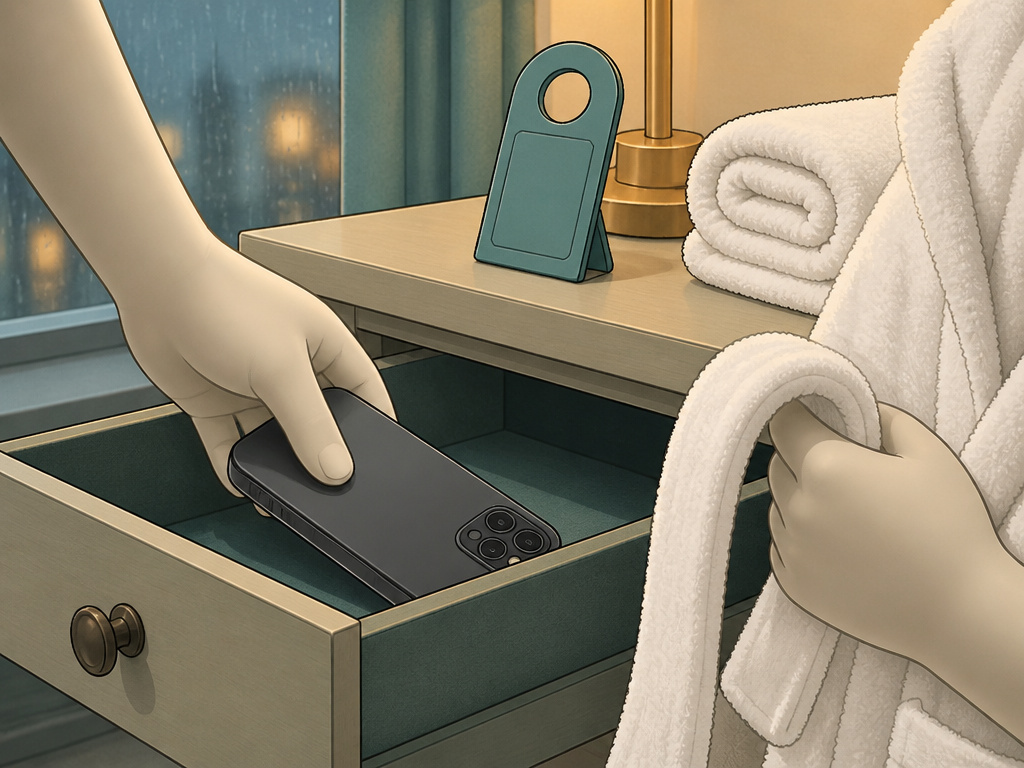
Rain changes more anniversary plans than any other single factor, and Laura McIlvan, former guest services supervisor at HarbourView Inn in Charleston, has the most practical answer in the source set: use rain as an excuse for a spa treatment, a day in bathrobes, or a museum trip. The concierge will always have ideas for romantic things to do when the weather turns.
That’s the part nobody puts in the caption. A rained-out afternoon with a spa booking beats a sunny afternoon spent improvising.
Brian Woolery’s contribution is the one I’d steal outright: share your hotel’s contact information with friends and family who might need to reach you, then leave your phone in the room. The people who need you can find you. Everyone else can wait.
If you’re building the day-by-day structure for a trip like this, the same pacing rules that apply to planning a slower itinerary apply here, fewer stops, longer stays, and mornings or evenings left deliberately blank.
Cruises, Rentals, or a Small Hotel?
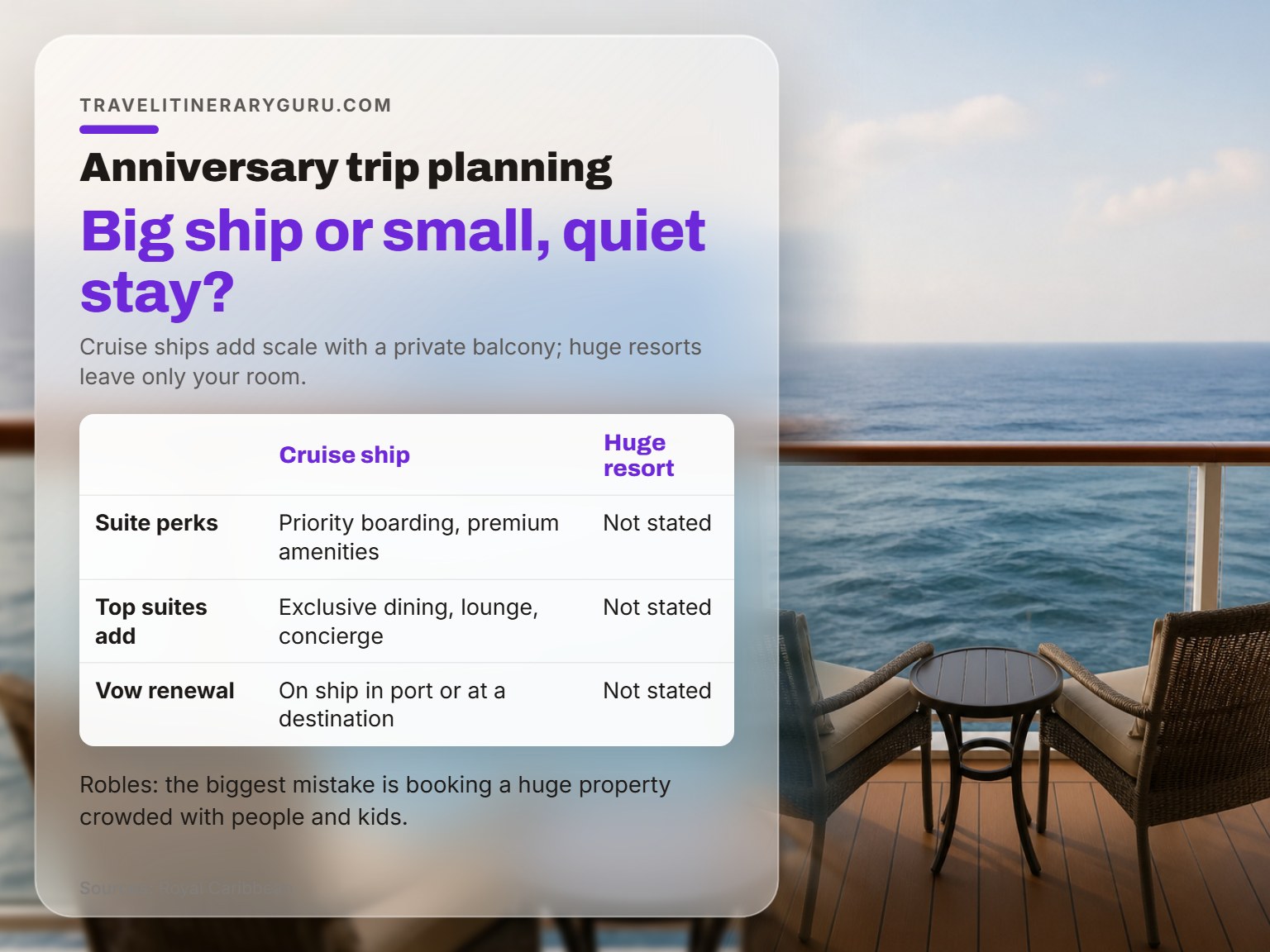
Charlie Robles, former general manager of The Collector Luxury Inn & Gardens in St. Augustine, calls booking a huge property crowded with people and kids the biggest mistake couples make when planning a romance-filled getaway, while Royal Caribbean’s cruise model treats the ship itself as the large property. That’s a direct conflict with the cruise model, where the ship is the large property, and Royal Caribbean’s guide is unbothered by the objection.
The two aren’t describing the same thing. Robles is warning about scale without privacy. A cruise ship has scale, but a balcony stateroom gives you a door that closes. The failure case is a mega-resort where the only private space is your room.
Royal Caribbean’s own structure makes the distinction concrete. Balcony and suite staterooms carry the luxury befitting an anniversary, and all suite guests get priority boarding and premium in-room amenities. Grand Suites, Ocean View/Panoramic (No Balcony) Suites and Owner’s Suites go further, adding exclusive dining and lounge spaces, concierge service, and priority access to dinner reservations, spa bookings and excursion ticketing.
For a couple who wants the anniversary treated as an event rather than a weekend, the line runs vow renewals on the ship while in port or at one of the destinations on the itinerary. The “Still The One” package includes pre-planning support from a Wedding Specialist, a private venue with decor, a wedding officiant, a bottle of Moet & Chandon and chocolate-covered strawberries delivered to the stateroom, dinner for two at a specialty restaurant, a keepsake vow renewal certificate, and a celebration cake.
Ship choice matters more than most couples expect. Royal Caribbean names Utopia of the Seas and Wonder of the Seas as party-forward ships suited to high-energy couples, and Radiance Class as the smaller, intimate, relaxed-pace fleet variant. That’s a real fork in the road, and it’s the same fork Robles is describing from the hotel side.
Skip this if: You want a trip where the property is quiet by default. A mega-ship with a party deck is the wrong call, and no amount of suite perks fixes the ambient noise.
If your dates fall during hurricane season, the storm question changes the calculus for any coastal or Caribbean booking. The same lead-time logic that governs traveling during hurricane season applies to an anniversary trip booked for those months.
What Should You Do About Surprises?

Vacation Planner’s rule is to add one or two surprises and keep them small, while Dr. DeMaria warns against the pursuit of the perfect and contrived Instagram shot. A small surprise, a thoughtful note in the room. Small surprises beat a fully secret itinerary, and surprises work for moments, not for the entire trip.
Ana Diaz, senior director of global sales for Barcelo Hotel Group, has the best version of this in the source set: write your loved one a letter at home and leave it on the pillow with turndown service. It costs nothing and it lands harder than most booked experiences.
Brian Woolery adds the useful escalation path, your hotel manager or concierge can help you brainstorm gestures that go beyond traditional ideas like rose petals and chocolate-covered strawberries. Ask them. They’ve seen every version of this and they know which ones work.
The part nobody mentions: A fully secret itinerary removes your partner’s ability to contribute, and the trip stops being shared before it starts.
Frequently Asked Questions
How far in advance should you book an anniversary trip?
Sources disagree, and the honest answer is that it depends on the trip type. AvantStay recommends three to six months ahead for best rates and selection, pushing earlier for peak season or holidays. Vacation Planner suggests eight to sixteen weeks for international trips and four to eight weeks for domestic. Royal Caribbean advises booking as soon as possible. The one item that isn’t negotiable is the anchor splurge, book that the moment your dates are set.
Should you tell the hotel it’s your anniversary?
Yes, according to AAA Via’s Pamela Goldman, who recommends flagging the occasion at every reservation from the hotel to dinner. Staff typically respond by going out of their way to make the experience special. Dr. DeMaria, quoted in the same article, cautions against chasing a perfect, contrived moment, so share the fact without choreographing a reveal.
How many activities should you plan per day?
AvantStay’s rule is one anchor activity per day, maximum, with mornings or evenings left completely open. Vacation Planner allows two activities a day but emphasizes the same principle: leave generous downtime for actual togetherness. Both sources agree that stacking the schedule defeats the purpose of the trip.
Is it worth booking a cruise for an anniversary?
It depends on whether you want scale with privacy or scale without it. Royal Caribbean’s guide argues that cruises combine accommodations, dining, entertainment and experiences into one journey, removing planning stress. Charlie Robles of The Collector Luxury Inn & Gardens warns that a huge property crowded with people and kids is the biggest mistake couples make. A balcony or suite stateroom resolves most of that objection.
What should you do if it rains on your anniversary trip?
Laura McIlvan, former guest services supervisor at HarbourView Inn in Charleston, suggests treating rain as an excuse for a spa treatment, a day spent in bathrobes, or a museum trip. She notes the concierge will always have ideas for romantic things to do when the weather turns. A rained-out afternoon with a booking beats a sunny one spent without a plan.
Does the anniversary number change what kind of trip you plan?
Vacation Planner suggests a longer, possibly international trip for a 5th anniversary, a return to your honeymoon destination for the 10th, and a dream destination for the 25th. AARP structures destinations around traditional anniversary gifts for the 20-, 30-, 40- and 50-year marks. Vacation Planner’s counterpoint is worth holding onto: the number matters less than the intention.
The Bottom Line
One rule most guides skip: if your anniversary falls inside peak season or near a holiday, treat every booking window below as already closed and start now. That’s the trigger. The three-to-six-month number assumes a normal calendar, and a normal calendar is the one thing an anniversary date never gives you.
Your first move this week is a single conversation, not a booking. Sit down and answer two questions out loud: what’s the one splurge, and what does the rest of the trip look like if that splurge is the only thing on the schedule? Everything downstream, destination, room, lead time, falls out of those two answers.
I’ll concede the limitation here. This all changes if you’re traveling with kids, or if one partner is planning the trip as a surprise for the other. A surprise trip removes the shared conversation that every source in this set treats as step one, and the pacing rules stop applying cleanly once you’re the only one who knows the plan. In that case, plan for less than you think you should, and build in more empty space than feels comfortable. The empty space is the part that works.
