
How to Plan a Solo Road Trip: The 2-Hour Rule
This post contains affiliate links. As an Amazon Associate, we earn from qualifying purchases.
A solo road trip needs four things checked before you leave: tires, fluids, a full tank, and a plan that builds in a rest stop every two hours. Everything else is comfort. The vehicle checks take an afternoon. Knowing how to plan a solo road trip matters most because the rest-stop plan is the one that saves lives.
Tires carry the whole argument. They are the only part of the car touching the road, and they fail in ways that show up slowly and then all at once. A tire with insufficient tread cannot clear water fast enough, and you hydroplane at speeds that used to feel fine.
What follows is the order I actually work in when I think about how to plan a solo road trip: vehicle first, route second, rest stops third, and the social side of traveling alone last. That last one is the part most solo guides skip entirely.
Key Takeaways
- Check tire pressure, including the spare, and confirm the tires are correctly inflated with sufficient tread and no visible damage.
- Replace tires when the penny test shows Lincoln’s whole head, or sooner if you see uneven wear or insufficient tread.
- Plan a stop every two hours on any drive over two hours, whether you feel tired or not.
- Download an offline map before you leave, because service gaps are a planning problem, not a packing problem.
- Tell one person your route and ETA before you turn the key. It costs you a text message.
What Does the Penny Test Actually Tell You?
The penny test answers one question: is there enough tread left to push water out of the way? Stick a penny into the tread groove with Lincoln’s head upside down. If you can see the top of his head, the tire is done.
Two numbers matter here. The penny test is the check to use: if you can see the top of Lincoln’s head, the vehicle needs new tires, and that is a floor, not a target. NHTSA summer driving tips put it plainly: below that, the tire cannot clear water fast enough and you hydroplane at speeds that used to feel fine.
A tire that fails the penny test cannot clear water fast enough, and you hydroplane at speeds that used to feel fine. The tread grooves exist to channel water out from under the contact patch. Once they are shallow enough, the water has nowhere to go, the tire lifts, and steering stops responding until speed drops.
Uneven wear tells you something different. If the inside edge is bald and the outside is fine, you have an alignment problem, not a tread problem. Rotating and aligning fixes it. Replacing tires without fixing the alignment just buys you the same wear pattern on new rubber.
Here is the part nobody tells you. Tread depth and tire age are two separate clocks, and both of them run out.
Tread Depth vs Tire Age: Which Clock Runs Out First?
Both positions are defensible, and the honest answer is that you should use whichever one fires first.
| Check | What It Catches | Who Sets It |
|---|---|---|
| Penny test | Tread below 2/32 inch | NHTSA |
| Sidewall inspection | Cuts, bulges, embedded objects | Michelin |
| Uneven wear pattern | Alignment or rotation problem | NHTSA |
The EV Tire Mismatch
Electric vehicles are often heavier than gas-powered cars, and that weight changes what the tires need to do.
If you are road-tripping an EV, the standard inflation and tread checks still apply. Just expect the wear clock to run faster than it would on a comparable gas car.
Check the Car Before You Check the Route
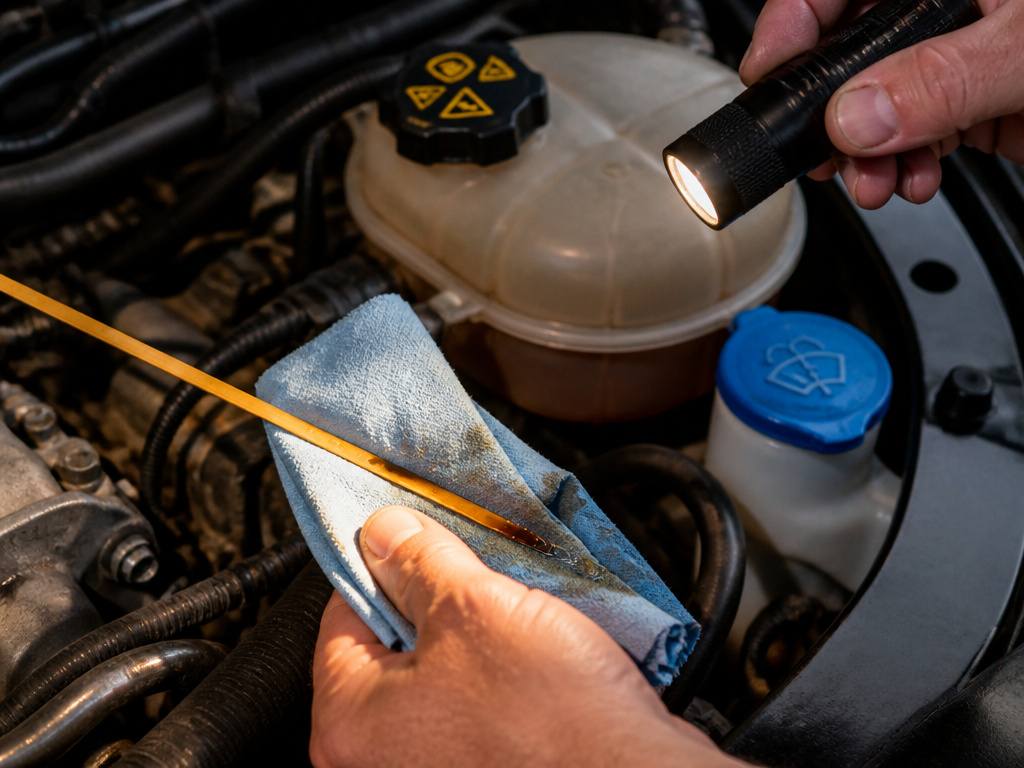
I see this advice a lot, and here’s why it falls apart on the ground: people plan the route first because it is the fun part. The route is the easy part. The car is what strands you.
Start under the hood. Michelin road trip tips list the basics in order: engine oil level, coolant level, windshield washer fluid, and every exterior light. Add brake fluid to that list, and confirm that brakes, lights, wipers, and battery are all working properly.
Belts and hoses deserve a look too. Heat degrades rubber, and a belt with a visible crack or a hose with a bulge is a breakdown waiting for the worst possible moment. Replace them before the trip rather than during it.
If the car is overdue for a service, book it before you go. Prepping your car for a long drive is cheaper than a breakdown 400 miles from home, and it is the one prep step that catches problems you cannot see from the driveway.
One more thing worth doing: register your tires with the manufacturer. Registering your tires with the manufacturer means you’ll receive direct notification in the event of a safety-related recall.
How Do You Plan Rest Stops Before You Need Them?
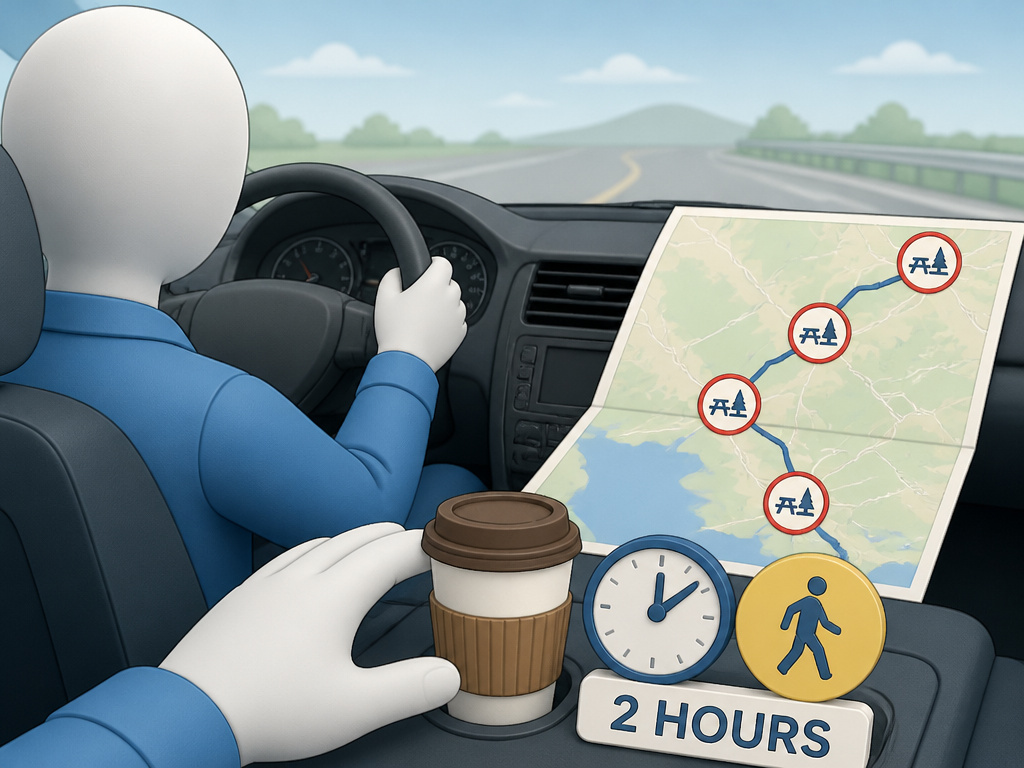
Build them into the route before you leave, not on the fly, as part of how to plan a solo road trip. Planning stops every couple of hours maintains alertness better than driving until fatigue forces a stop, because fatigue onset is gradual and drivers consistently underestimate how impaired they have become.
The Northern Territory government’s official driving safety checklist sets the interval at a rest stop every two hours. Michelin lands on the same number independently. Two sources, same rule, no coordination between them.
Michelin goes further and states that at measurable fatigue levels, driving impairment is comparable to impairment from alcohol. Coffee and fresh air delay the onset of fatigue but do not cure it. Rest is the only fix.
Warning signs to watch for in yourself:
- Drifting between lanes without noticing
- Missing an exit you meant to take
- Difficulty keeping your eyes focused on the road ahead
- Losing track of the last few minutes of driving
Any one of those means pull over. Not at the next town. Now.
What most people get wrong: Treating a rest stop as a fuel stop. Fueling does nothing for alertness. Park, get out, walk for ten minutes, and eat something. That is the stop that counts.
Where to Stop and Where Not To
Rest areas, service stations, and towns are the three reliable options. Pick places where you can park safely, stretch, use a bathroom, and get food or water.
Where this goes sideways: Letting time pressure cut the stop short. Arriving at your destination exhausted is not the goal of the trip, and the last two hours of a long drive are the most dangerous ones you will spend.
The Two-Hour Rule Applies Even When You Feel Fine
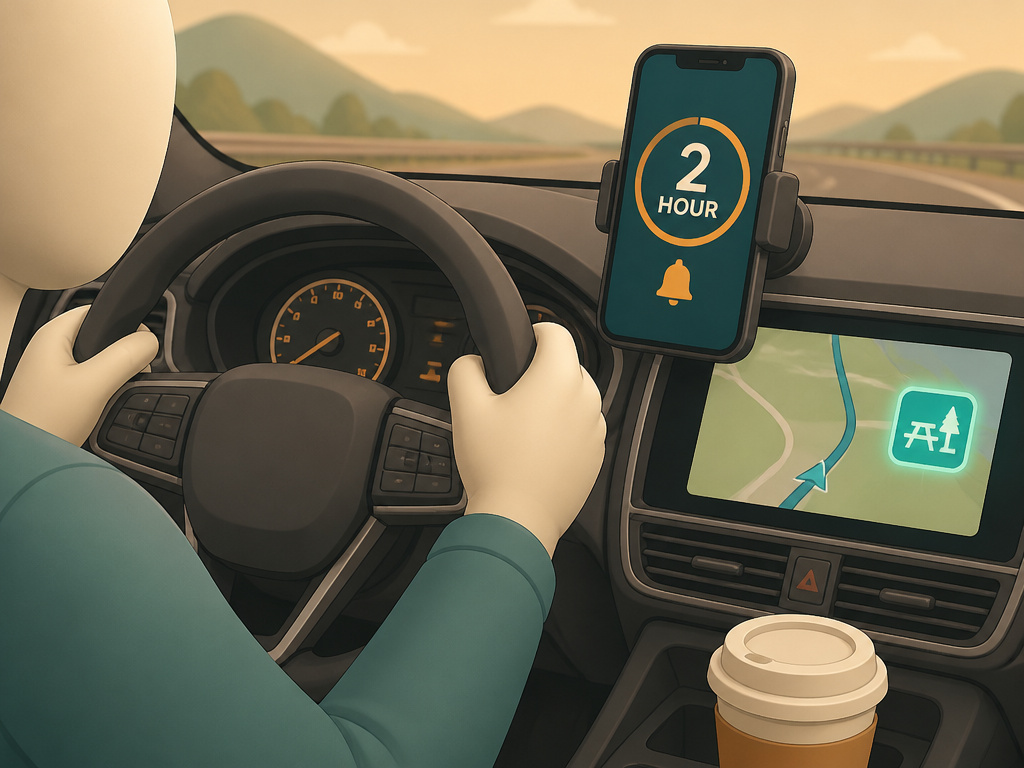
On any journey over two hours, plan a stop regardless of how alert you feel. That is Michelin’s guidance, and it is the single most useful sentence in their whole road trip page.
The logic is uncomfortable. You are the worst judge of your own fatigue. By the time you notice you are tired, you have been impaired for a while. The stop schedule is a workaround for your own bad self-assessment.
I’ll be honest with you: I used to treat the two-hour rule as a suggestion for other people. Then I drove a stretch of central Wyoming at dusk after eight hours behind the wheel and realized I had no memory of the previous twenty minutes. Nothing bad happened. It could have. Now the timer runs whether I feel like it or not.
Planning a stop every two hours is the same as avoiding road trip fatigue on any other long drive. The mechanism does not change with the scenery.
Fuel, Range, and the Stops Nobody Plans
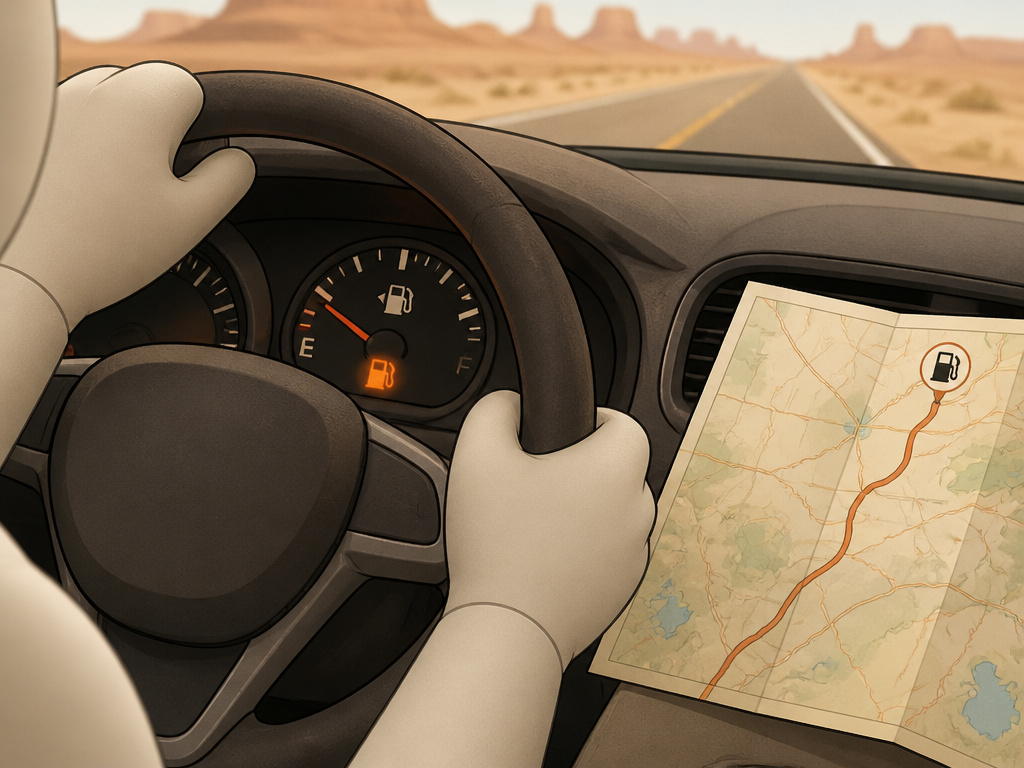
Keep the tank close to full whenever possible, and know the fuel range of the vehicle before you leave. On an unfamiliar route, that range number is the difference between a relaxed drive and a white-knuckle one.
Map your fuel stops before you go, especially through stretches where the next station is genuinely far away. Know where the next service is on any alternative route too, in case a closure pushes you onto a detour.
What Changes When You Are Driving Alone
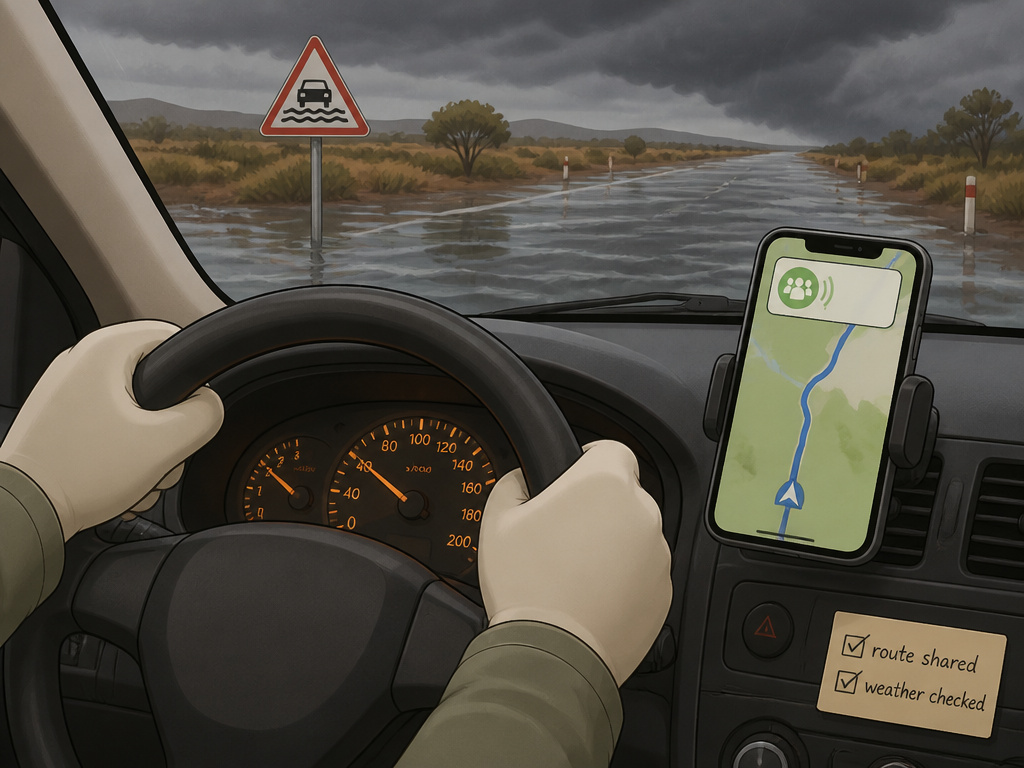
Solo driving removes the passenger who would have noticed you drifting. That is the whole safety difference, and it drives every other adjustment.
Share your route, your accommodation, and your expected check-in times with someone you trust, particularly if the route includes remote areas. REI’s checklist puts it simply: tell someone where you are going, and give them your route, dates, and destination.
Before and during the trip, check official weather updates, road-closure information, and travel alerts. Allow time for breaks and delays rather than building a schedule with no slack in it.
The Wet Season Window
Road conditions can change quickly during the wet season, which the Northern Territory government defines as October to May. Road conditions can change quickly during the wet season, and a route that was fine yesterday can be impassable today.
The Convoy Warning
The Northern Territory checklist carries one piece of advice that no other source I found repeats: don’t drive in convoys, especially if you are towing a caravan. This is a single-source position rather than a consensus, and no other authority in this research addresses convoys at all.
Take it as one jurisdiction’s guidance, not a universal rule. If you are traveling in a group through remote country, it is worth knowing that at least one road authority thinks convoys create their own risks.
Navigation, Maps, and the Service Gap
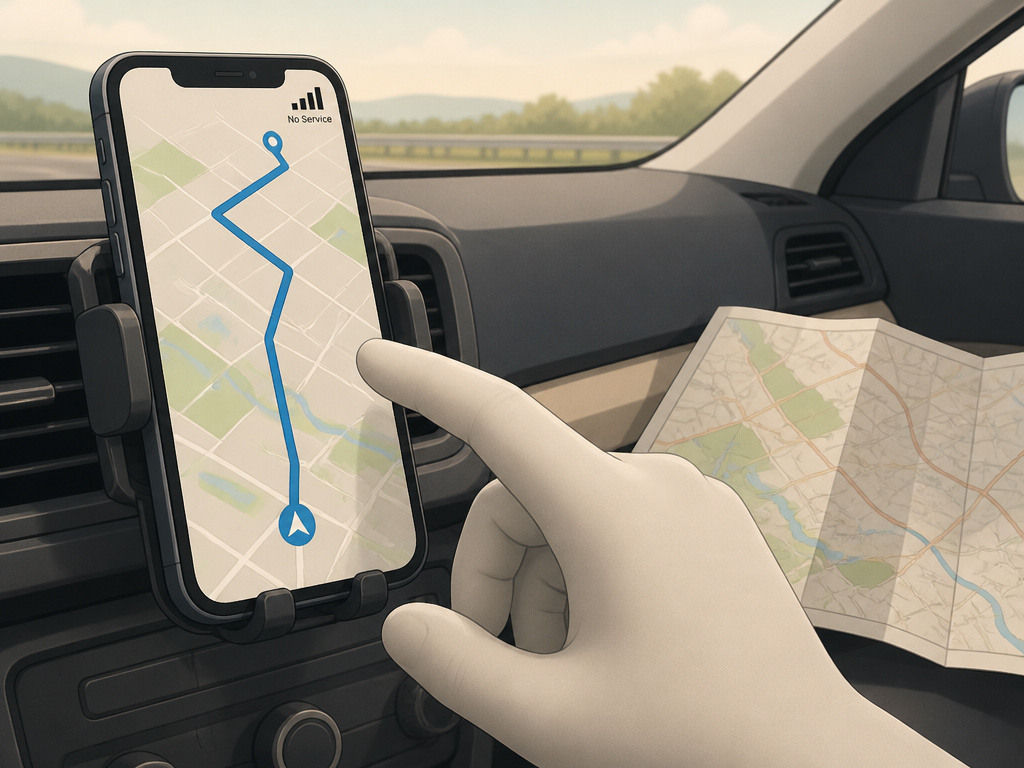
Download an offline map of your route before you leave. Losing service is never expected and always inconvenient, and an offline map means a dead zone is an annoyance rather than a crisis.
A physical map as a backup is not paranoia. It is the same logic as a spare tire. You probably will not need it. If you do need it, nothing else substitutes.
Using offline navigation properly means starting the route while you still have a signal, so the app has the full path cached. Starting it after the signal drops does not work.
The Part That Has Nothing to Do With the Car
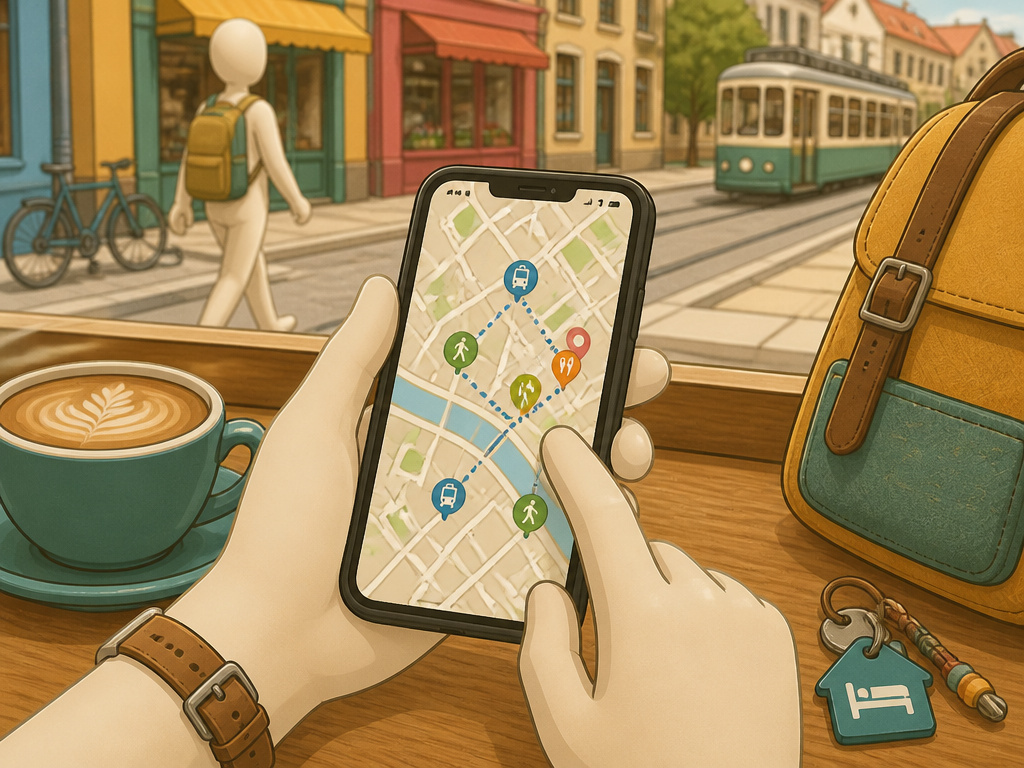
Solo travel is the fastest way I know to learn how to travel. You make decisions quicker, you meet more people, and you actually notice where you are instead of narrating it to someone in the passenger seat.
That is also why choosing a destination matters more than most people think. A place with walkable towns, good transit, and a hostel or guesthouse culture is a completely different experience from a place where every meal happens in a car.
Frequently Asked Questions
How often should I stop on a solo road trip?
Plan a rest stop every two hours, and stop regardless of how alert you feel on any drive over two hours. Fatigue builds gradually and you will not notice it until you are already impaired. Fuel stops and rest stops are two different things; a fuel stop does not count as a rest.
How do I check my tires before a long drive?
Check pressure on all four tires and the spare, inspect for any visible damage or embedded objects, and confirm the tread depth is adequate. Then run the penny test on each tire and look for cuts, bulges, or embedded objects in the sidewall.
Is it safe to drive alone at night?
At night, clean headlights, correctly inflated tires for maximum braking grip, and adequate tread depth for shorter stopping distances are the three vehicle-side factors with the most direct impact on nighttime safety. Clean headlights, correctly inflated tires, and adequate tread depth are the three vehicle factors with the most direct effect on nighttime safety. If you are already tired, do not start a night leg.
What should I do if I feel tired while driving?
Pull over and rest. Coffee and fresh air delay the onset of fatigue but do not cure it, and rest is the only effective remedy. Warning signs include drifting between lanes, missing exits, and trouble keeping your focus on the road. If any of those show up, stop at the next safe place, not the next town.
Do I need a physical map if I have a GPS app?
Bring one as a backup, and download an offline map of your route before you leave. Service gaps are common on remote stretches, and a downloaded route plus a paper map covers the case where your phone dies, loses signal, or both.
How do I prepare for a solo road trip without overplanning it?
Plan the vehicle checks and the rest-stop schedule in detail. Leave the rest loose. A route with a buffer day and no fixed schedule after mid-afternoon gives you room to stop at the cemetery with the handmade sign, which is usually the part you remember.
The Bottom Line
One rule most guides skip: if your route runs through a region with a wet season, check whether your travel dates fall inside it before you book anything. The Northern Territory puts that window at October to May. Conditions change fast inside it, and a route that was open last week can be closed today.
The first thing to do this week is the least glamorous one. Walk out to the car, check the date code on each tire, and run the penny test. If Lincoln’s head is visible on any of them, you have your answer before you have a route.
The rest of the plan is a stopwatch and a tank of gas. Every two hours, get out of the car. Keep the tank above half. Tell someone where you are going.
Everything past that is preference. I have a blind spot for solo female travel safety specifics, because my experience is filtered through a male perspective, so for that I point readers to women who have actually driven those routes alone. For the vehicle prep and the rest-stop math, the sources above cover it. Turn that travel dream into a real plan.
