
2-Day Charleston Weekend Itinerary: The Harbor-First Plan
This post contains affiliate links. As an Amazon Associate, we earn from qualifying purchases.
Two days in Charleston works if you anchor day one on the water and send day two in one direction, according to cruisefromcharlestonsc.com, though Lonely Planet advises spending at least three days here to make the most of its attractions. This 2-day Charleston weekend itinerary covers the essentials. The Fort Sumter ferry runs about 2 1/4 hours round trip from Liberty Square, Waterfront Park and the Battery are both free, and day two splits three ways: a plantation, Patriots Point, or a beach.
That first day of the 2-day Charleston weekend itinerary is doing more work than it looks like. Charleston’s harbor is the thing the city was built around, and the ferry, the waterfront parks, and the sunset boats all sit within walking distance of each other. Get that right and you’ve seen the spine of the place.
What follows is the 48-hour plan I’d hand a friend: what to book ahead, what’s free, what the tickets actually cost, and the three corners of the region your second day has to choose between. I’ll flag the assumptions that break this plan, because a few of them are expensive to discover at the dock.
Key Takeaways
- Book the Fort Sumter ferry before you arrive. The National Park Service highly recommends buying tickets ahead of the day of your visit, and the boat schedule is subject to change or cancellation at any time.
- Your National Parks pass will not get you on the ferry. The National Parks and Federal Recreational Lands Pass is not honored for the Fort Sumter ride, even though the fort is a National Monument.
- Day two is a three-way fork, not a list. Plantations, Mount Pleasant, and the beaches sit in different corners of the region, so you pick one and commit.
- The downtown parking garage at 24 Calhoun Street has a seven-foot height restriction. RVs and tall vans have to leave from Patriots Point instead.
- Two days is enough if you anchor day one on the water, according to cruisefromcharlestonsc.com, though Lonely Planet advises at least three days. Three days lets you do two of the three day-two options instead of one.
Why Day One Belongs on the Harbor
Start with the boat. Fort Sumter Tours is the only National Park Service authorized access to the fort, and the ferries leave from exactly two places: the Fort Sumter Visitor Center at Liberty Square downtown, and Patriots Point Naval and Maritime Museum in Mount Pleasant. You cannot get to Fort Sumter from Fort Moultrie. That’s not a scheduling problem, it’s a design one.
Fort Sumter sits at the entrance of Charleston Harbor on a small pentagon-shaped island. Access is by concessioner ferry only. Private vessels may not dock at the fort, and the National Parks and Federal Recreational Lands Pass is not honored for the ferry ride. Two departure points serve the island, and the tour boat schedule is subject to change or cancellation at any time.
The ferry runs $43 for adults and $39 for seniors and active military, departing at 9:30 and giving you about an hour on the island. Budget roughly 2 1/4 hours round trip from Liberty Square. The National Park Service publishes its own Fort Sumter operating hours, and the price figure comes from the operator rather than the agency, which is a distinction worth knowing before you plan around a number.
The Fort Sumter Visitor Center at Liberty Square opens daily from 9:00 am to 4:30 pm and has a free water bottle-fill station, which matters more than it sounds like in July. If you’re driving, the City of Charleston garage at 24 Calhoun Street sits steps from the Liberty Square entrance, and it has a seven-foot height restriction. That single number reroutes every tall vehicle in the city.
Easy to miss: The National Parks and Federal Recreational Lands Pass works at Fort Moultrie and the other federal sites, but not for the Fort Sumter ferry. Plan on paying the ferry fare separately even if you bought the annual pass specifically for this trip.
The Free Half of Day One
For the 2-day Charleston weekend itinerary, Waterfront Park costs nothing and stays open from 6 a.m. To midnight. It’s 10 acres of harbor and Cooper River frontage, and it’s where I’d send anyone with an hour to kill before a reservation. The Battery is also free and takes about 45 minutes at an easy pace.
Between the two, you’ve covered the waterfront without spending a dollar. That’s the part of a weekend trip that actually rests you.
Here’s what I’d push back on: the instinct to fill the gap between the ferry and dinner with another ticketed attraction. You’ve just spent two and a half hours on a boat. Walking the seawall is the recovery, not the filler.
Worth knowing before you start: Restrooms in the City of Charleston may be locked and available upon request. Build a stop into your route rather than assuming one will appear when you need it.
If you want a structured walk instead of a wander, the NPS historic Charleston itinerary maps the city around the Revolution, the Civil War, and the Civil Rights Movement, and it’s the framing I’d use if you only have time for one history thread. The city was founded in 1670, and that itinerary is the fastest way to understand what happened after.
The Evening Slot: Sunset Cruise or Ghost Boat
You have two good evening options and they cost different amounts for different reasons.
A sunset cruise runs $60 for two hours, or there’s a $45 BYOB version out of Shem Creek. The Charleston Harbor Ghost Cruise is $45 for a 1.5-hour narrated trip on a 45-foot catamaran that carries up to 49 people and leaves from the Maritime Center. Children under 3 aren’t permitted, check-in is at least 30 minutes before departure, and free cancellation runs 24 hours ahead.
If you’d rather eat on the water, the Charleston Harbor Dinner Cruise is $120, boards at 6:30 p.m. At Patriots Point, and sails from 7:00 to 9:30 p.m. With a four-course dinner and live music.
| Evening Option | Duration | What You Get |
|---|---|---|
| Sunset cruise | 2 hours | Harbor views at golden hour |
| Ghost Cruise | 1.5 hours | Narrated ghost stories, 45-ft catamaran |
| Dinner cruise | 2.5 hours | 4-course dinner, live music, boards at Patriots Point |
One warning about the free option: on Friday and Saturday from March through December, the City Market Night Market runs 6:30 to 10:30 p.m. And costs nothing, with about 100 local artists and craftspeople set up. It’s the cheapest good evening in the city and it’s the one people forget to check the calendar for.
Day Two Is a Three-Way Fork, Not a Checklist
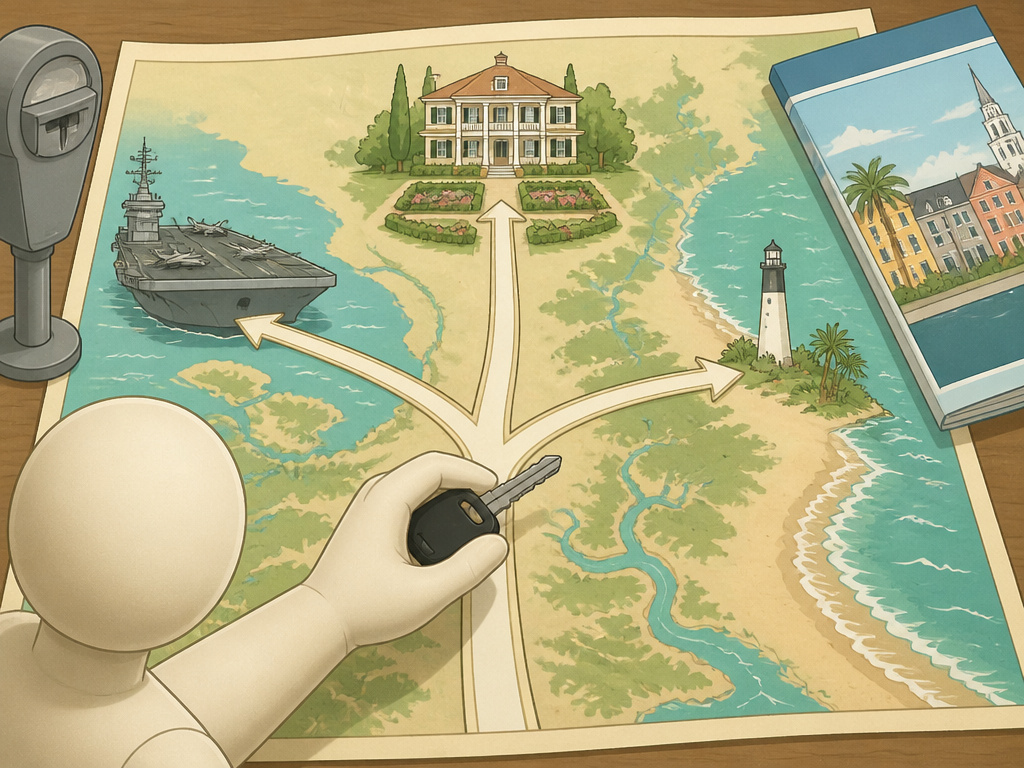
This is where most 2-day plans go wrong. U.S. News-style itineraries present day two as a linear list you work through. That logic doesn’t survive contact with the map, because plantations, Mount Pleasant, and the beaches sit in different corners of the region. You pick one direction and you commit to it.
The official Charleston visitor information from the city includes a printable guide plus details on garages, lots, and metered parking on the peninsula, which is worth pulling up before you decide how you’re moving around.
| Day-Two Direction | Anchor Stop | Best For |
|---|---|---|
| Plantation | Magnolia, Middleton, or Boone Hall | Gardens, history, slow pace |
| Patriots Point | USS Yorktown | Kids, ships, indoor backup |
| Beach | Folly or Sullivan’s Island | Warm weather, low cost |
If you want gardens and history, take a plantation. Magnolia Plantation runs about $32 for adults, Middleton Place is $32 with $4 off if you book online, and Boone Hall is $30 with the mansion tour, tractor tour, and gardens included. If you’re traveling with kids or you like ships, Patriots Point is the easy call at $28 for adults, open 10 a.m. To 5 p.m., built around the USS Yorktown.
If the weather’s good, take the beach. Folly Beach sits about 11 miles from downtown, and Sullivan’s Island charges nothing for parking. That last detail is the difference between a cheap beach day and an annoying one.
What 2 Days in Charleston Actually Costs
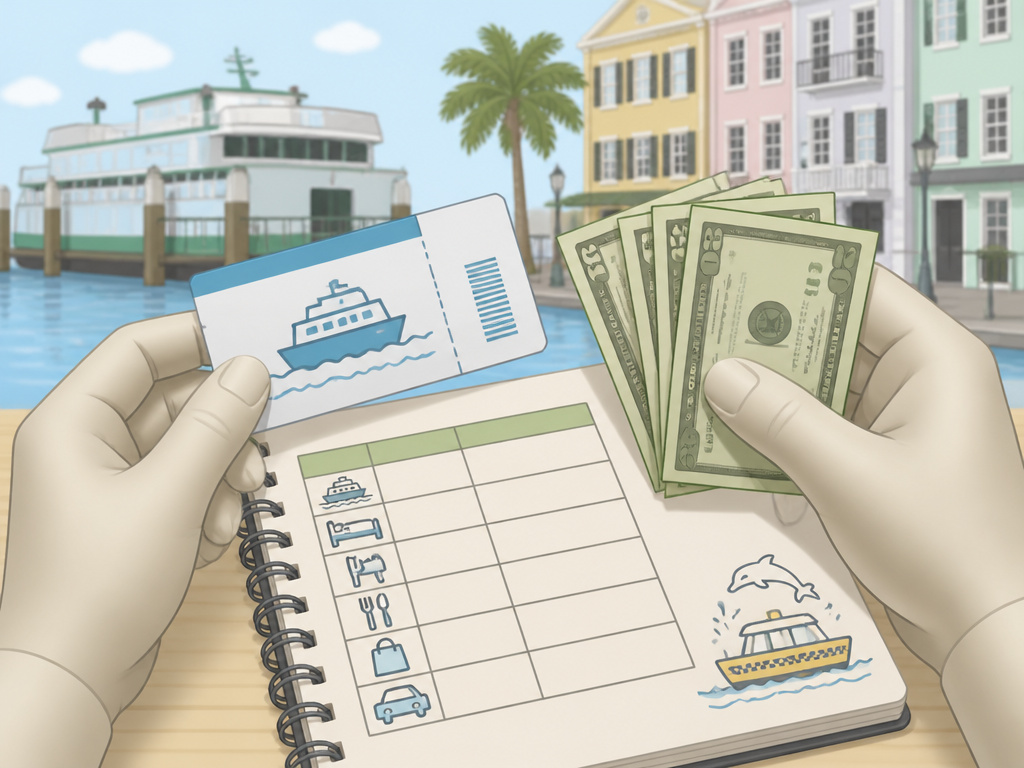
The ticket math is the part people get wrong, mostly because they budget for the attractions and forget the boats.
| Item | Cost | Notes |
|---|---|---|
| Fort Sumter ferry | $43 adults, $39 seniors/military | About 1 hour on the island |
| Water taxi all-day pass | $17 | Dolphin cruise on every trip |
| Patriots Point | $28 adults | Open 10 a.m. To 5 p.m. |
| Magnolia Plantation | About $32 adults | Gardens and house |
| Boone Hall | $30 | Mansion, tractor tour, gardens included |
The water taxi all-day pass at $17 is the cheapest ride on the harbor and it comes with a dolphin cruise on every trip, which is the kind of detail that sounds like marketing until you’re on the boat and it happens.
Notice what’s missing from that table: parking. Garage fees, the Folly pier lot, and Liberty Square parking are all extra and none of them are summed above.
Where this goes sideways: Booking day two around two of the three directions. Plantations, Mount Pleasant, and the beaches are in different corners of the region, and trying to pair any two of them turns a relaxed day into a drive.
The Historic Houses and Their 15-Minute Trap
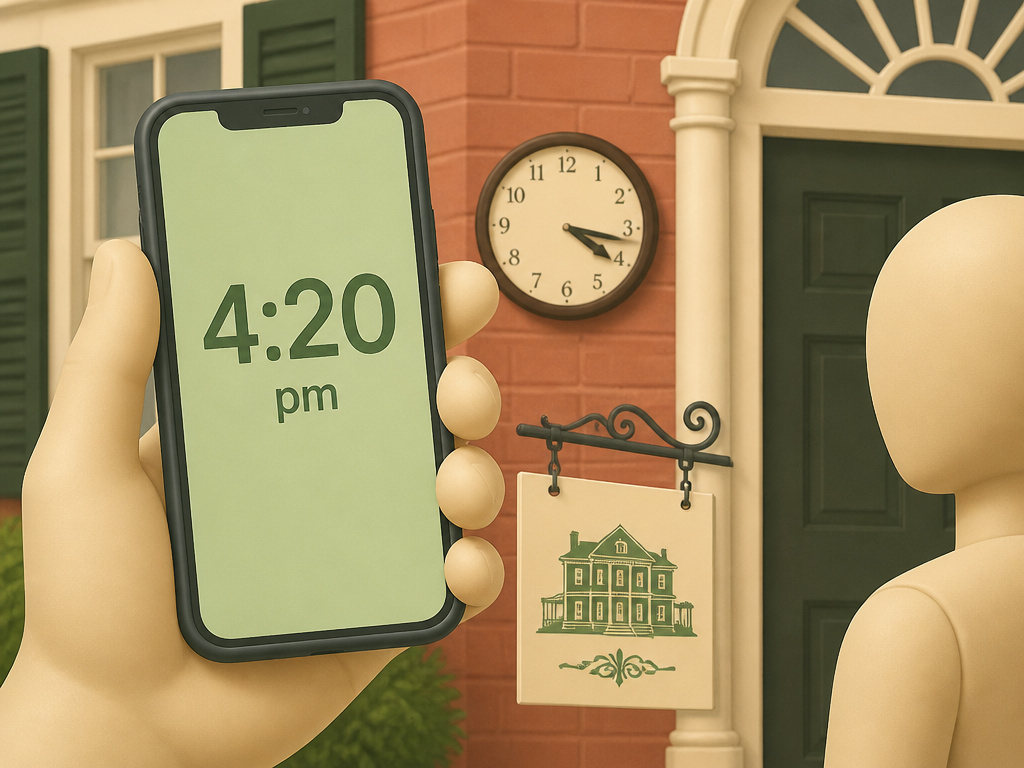
If you’re building in a museum day, the timing details matter more than the ticket price. The Charleston Museum visit information covers the flagship galleries at 360 Meeting Street, open Monday through Saturday from 10:00 am to 5:00 pm, plus two historic houses with separate last-tour cutoffs.
The Heyward-Washington House at 87 Church Street runs its last tour at 4:15 pm. The Joseph Manigault House at 350 Meeting Street runs its last tour at 4:30 pm. That’s a 15-minute gap, and it’s the difference between getting in and standing on the sidewalk. Arriving at 4:20 pm fails at one house and passes at the other.
The Heyward-Washington House was constructed in the early 1770s and President George Washington stayed there during his 1791 visit to Charleston. The Manigault House was built in 1803 and is a National Historic Landmark. The museum is fully accessible to visitors with limited mobility, and manual and electric wheelchairs are permitted throughout; manual wheelchairs are available at the Visitor Services Desk on a first-come, first-served basis.
Groups of ten or more get discounted rates and specialized experiences, which is the one case where a group actually works in your favor here.
What Breaks This Plan
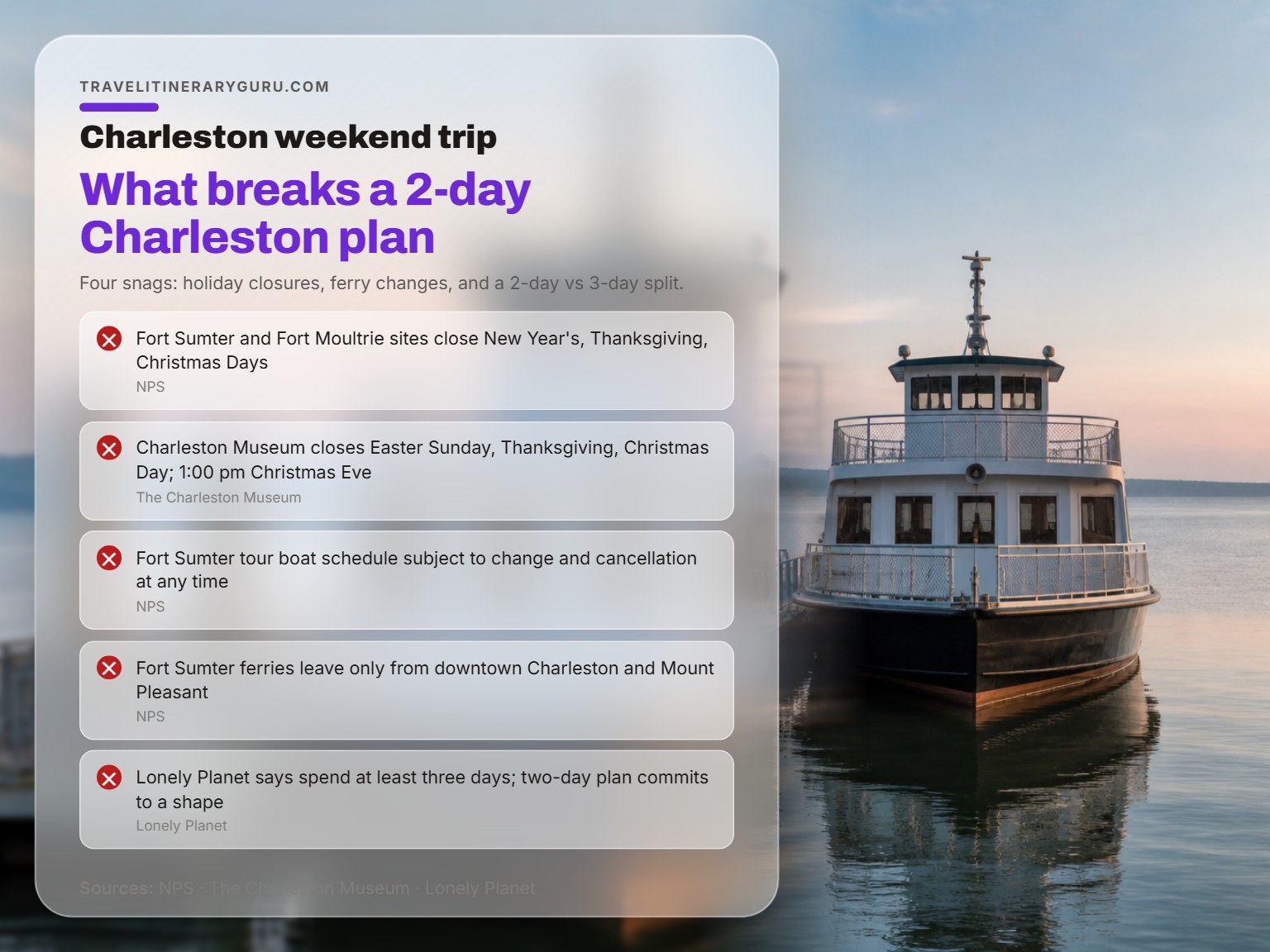
Four things, and three of them are calendar problems.
Holiday closures don’t line up between the two systems. All park sites within Fort Sumter and Fort Moultrie National Historical Park close on New Year’s, Thanksgiving, and Christmas Days. The Charleston Museum and its historic houses close on Easter Sunday, Thanksgiving, and Christmas Day, and the museum closes early at 1:00 pm on Christmas Eve. If your weekend lands on Easter, the federal sites are open and the museum isn’t.
The second thing is the ferry itself. The National Park Service warns that the tour boat schedule is subject to change and cancellation at any time, which means the 9:30 departure is a plan, not a promise. The agency also recommends reviewing safety regulations and pet policies before your visit.
Third: you cannot get to Fort Sumter from Fort Moultrie. If you’re staying near Sullivan’s Island and assuming you’ll catch the boat from that side, you won’t.
Fourth, and this is the one I’d flag hardest: cruisefromcharlestonsc.com says two days in Charleston is enough if you anchor day one on the water, but Lonely Planet advises spending at least three days here to make the most of its attractions. Lonely Planet’s own guidance is to spend at least three days here. Both things are true. The two-day version works because it commits to a shape rather than trying to cover ground.
Skip this if: You’re visiting with a group larger than four and nobody wants to walk. The peninsula rewards pedestrians and punishes anyone trying to park four separate times in one afternoon.
Frequently Asked Questions
Is 2 days enough for Charleston?
Two days is enough to see the harbor, the historic peninsula, and one big day-two destination without rushing. You’ll cover Fort Sumter, Waterfront Park, the Battery, and one evening boat. What you won’t cover is a second plantation or a second beach.
How much does the Fort Sumter ferry cost?
The operator publishes $43 for adults and $39 for seniors and active military. The National Park Service confirms there is a fee but directs visitors to Fort Sumter Tours rather than publishing a figure, so treat the operator’s number as the working one. Your National Parks pass does not cover it.
Can I drive to Fort Sumter?
No. Private vessels may not dock at the fort, and the only authorized access is through Fort Sumter Tours. You can drive to either departure point, but the downtown garage at 24 Calhoun Street has a seven-foot height restriction, so tall vehicles should use Patriots Point in Mount Pleasant.
What should I do on day two?
Pick one of three directions: a plantation, Patriots Point and Mount Pleasant, or a beach. Magnolia, Middleton, and Boone Hall are the plantation options; Patriots Point is built around the USS Yorktown; Folly Beach is about 11 miles from downtown and Sullivan’s Island has free parking.
What’s free in Charleston?
Waterfront Park is free and open 6 a.m. To midnight. The Battery is free and takes about 45 minutes. The City Market Night Market is free on Friday and Saturday evenings from March through December, and the Fort Sumter Visitor Center has a free water bottle-fill station.
What’s closed on holidays?
Federal park sites close on New Year’s, Thanksgiving, and Christmas Days. The Charleston Museum and its historic houses close on Easter Sunday, Thanksgiving, and Christmas Day, with an early 1:00 pm close on Christmas Eve.
Before You Go
Book the ferry first, then build the rest of day one around it. That single decision fixes your morning, sets your walking radius, and tells you which parking garage you’re actually using. Everything else on day one is free or close to it.
Arrival afternoon is a wash, departure morning is a wash, and the middle day goes to orienting.
So if you can stretch this to three nights, do it, and use the extra day to take two of the three day-two directions instead of one. If you can’t, commit hard to the harbor on day one and pick your fork without second-guessing it.
The last thing I’d say is the least popular thing here: the best two-day trip to Charleston probably isn’t Charleston. Fair warning.
If you’re comparing this against other short East Coast breaks, the same logic applies to a 2-day Savannah itinerary or a 2-day Boston itinerary, both of which reward the same anchor-and-wander structure. For a longer run at the region, a Deep South road trip or a car-free East Coast itinerary stretches the same approach over more days.
