
Adventure Tour Pros and Cons: How to Choose
This post contains affiliate links. As an Amazon Associate, we earn from qualifying purchases.
Adventure tour pros and cons balance three things: what the operator handles, what the group pace costs you, and how remote the consequences get. A guided trip buys logistics, local access, and a fixed itinerary. Independent travel buys freedom and flexibility, and it hands you the planning load.
That last clause carries the weight. The CDC Yellow Book puts it plainly: in adventure travel, conditions are austere and access to definitive care is remote, so even a minor injury gets magnified into an evacuation decision. Everything below hangs off how far you are from help when something goes wrong.
What follows: the three variables that drive real risk, the cons that never make the brochure, the pros that justify the money, and a way to match the tour type to the destination instead of guessing.
Key Takeaways
- Match the tour type to the destination, not to your budget. Complex regions reward a guide; most of Western Europe doesn’t.
- Altitude sickness becomes a risk at 2,500 meters, and the Government of Canada suggests booking a travel health appointment about 6 weeks out.
- A standard travel insurance plan may not cover extreme sports or nature expeditions, so buy based on your planned activities and read the exclusions.
- Tour guides may lack sufficient medical training for emergencies, which is why the CDC suggests basic life support and first aid courses before departure.
- Don’t do it alone. Canada’s advisory is blunt about solo adventure tourism outside the country.
What an Adventure Tour Actually Includes
An adventure tour is a package built around movement through difficult ground. The operator handles transport, permits, and lodging. You handle the walking, the weather, and whatever your body does at altitude.
The CDC Yellow Book defines adventure travel as trips built around active human locomotion, involving challenging terrain, extreme weather, longer durations, and remote locales. Hiking, trekking, backpacking, cycling, diving, mountaineering, river rafting, skiing, and surfing sit inside that boundary. The Government of Canada draws a narrower line: extreme sports plus common risky activities like hiking, biking, ziplining, snorkelling.
Three credible bodies draw three different boundaries, which matters when you’re reading a brochure.
| Source | What Counts as Adventure Travel |
|---|---|
| CDC Yellow Book | Hiking, trekking, diving, skiing, surfing, overland driving, humanitarian relief expeditions |
| Government of Canada | Extreme sports plus common risky activities like hiking, biking, ziplining, snorkelling |
| Government of Canada (narrower frame) | Extreme sports plus common risky activities like hiking, biking, ziplining, snorkelling |
If you’re booking a safari tour, a dive week, or a cycling trip, you’re inside the CDC’s definition and outside the Government of Canada’s narrower frame. That gap is where insurance arguments start, and it’s also where a lot of travelers discover their policy was written for a different trip.
I’ve booked both kinds of trip, and the difference shows up in the first two days. Here’s what a guided adventure tour typically bundles:
- Permits and park fees, handled before you land
- Ground transport between trailheads, including airport and hotel transfers
- A guide with route knowledge and, on good trips, a satellite messenger
- Group gear: ropes, cooking equipment, a shared first aid kit
- Lodging, meals, and a buffer day
That gap matters. The bundle is the product, and you’re paying for it whether or not you use every piece.
Where the Adventure Tour Pros and Cons Come From
The adventure tour pros and cons reduce risk to three variables: probability, consequence, and cognitive bias. Probability depends on the duration, frequency, and severity of the hazards you meet. Consequence is what happens after something goes wrong, and in adventure travel it gets magnified because conditions are austere and definitive care is remote.
Bias is the human variable, and it’s the one you can actually train.
Four biases show up again and again in that framework:
- Familiarity and consistency bias: you’ve done this route before, or the environment never changes, so you stop noticing the warning signs.
- Expert halo: a highly skilled traveler or guide assumes they can’t make a mistake.
- Scarcity bias: you don’t want to miss a rare event, like summiting, so you push past your own safety limits.
- Social facility bias: peer pressure does the deciding.
Not every researcher frames risk the same way. A systematic review in Tourism Management Perspectives notes that risk is often described as “inherent in adventure tourism,” a view the UNWTO’s 2014 framing supports and several studies endorse. The same review points out that other publications argue risk isn’t central from a consumer’s perspective, and that travelers are chasing an aroused state, thrill, and rush. Both positions are live in the literature.
The CDC guidance on adventure travel health advises travelers to be vigilant about probability, consequence, and cognitive bias and to make good decisions before and during their trip.
The industry’s usual shorthand takes a beating in that same review. Soft adventure means hiking and snorkelling; hard adventure means rock climbing and wilderness trekking. The review calls the split overly simplistic and says it fails to capture what adventure tourism actually is.
I’ve come around on that. The soft/hard label tells you almost nothing when you’re choosing a trip, because the difficulty of a hike depends on the person doing it.
The Cons Nobody Puts in the Brochure
Pace is where it starts. A group tour moves at the speed of its slowest member, and that’s a feature if you’re the slow one and a tax if you’re not. You also don’t choose your group.
I see this advice a lot: just book a group tour, it’s easier. On the ground it falls apart for four reasons.
- Pace. The itinerary doesn’t care that you wanted two more hours at the ruins.
- Composition. You don’t pick your travel companions, and one incompatible personality can define a two-week trip.
- The bundle. A package tour charges for things you’d have skipped, and you pay whether you use them or not.
- Rigidity. Weather windows and rest days were set months before the forecast existed.
My own rule is simpler than that.
For solo travelers the math changes. In my experience, a group tour for solo travelers sidesteps the single supplement and gives you built-in company at dinner, which on some trips is worth more than the itinerary.
Don’t book a group tour for a city you can walk. You’ll spend the trip watching the group’s back and the itinerary’s clock, and by day four you’ll be counting exits.
What You Actually Gain From a Guide
She stopped outside a plain door and explained what had happened behind it.
That’s the whole argument for guided travel in one anecdote. Price and quality are barely related in this market.
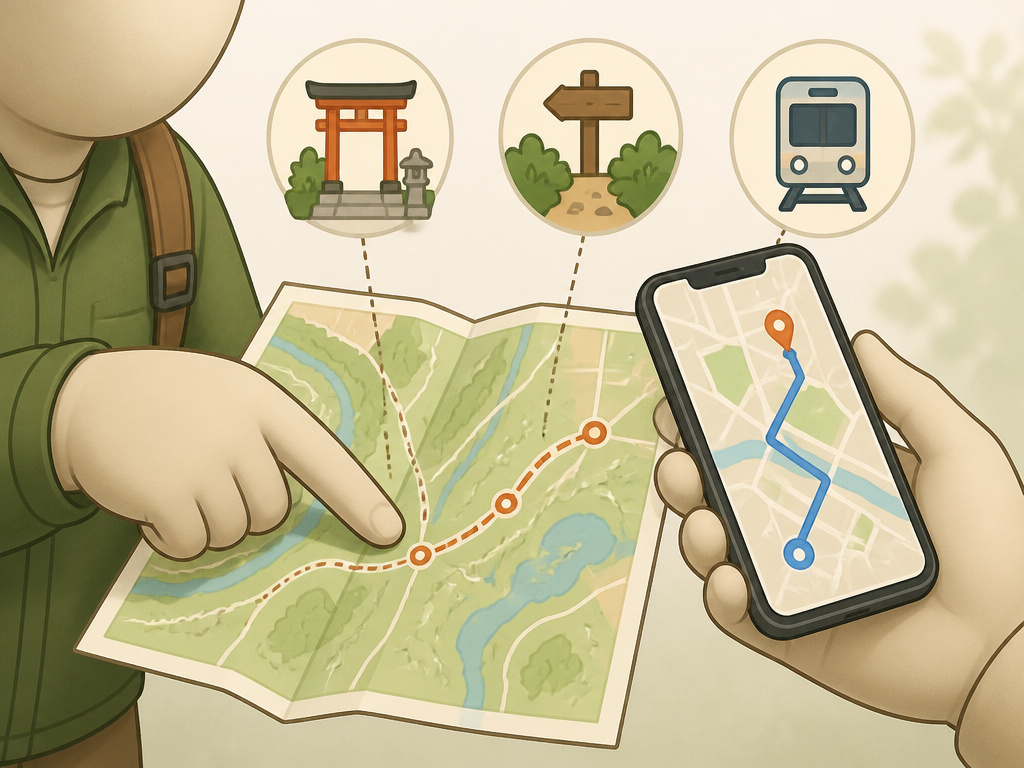
A guide compresses orientation, and the mechanism is simple. Local routing knowledge replaces your trial-and-error, so the days you’d have spent working out transit, etiquette, and which neighborhoods are worth an evening come back to you.
What a guide actually delivers:
- Access you can’t buy independently: permits, restricted sites, trailheads with no public transport
- Someone else carrying the risk decisions, which matters more when you’re jet-lagged
- A built-in social group if you’re traveling alone
- Local knowledge that’s current, rather than from a five-year-old blog post
The Half-Day Private Guide
I won’t recommend a “skip-the-line” tour to anyone who can book direct. You’re buying a queue you could have avoided with a timed entry slot, plus a person holding a flag. The exception is a site where the official booking system is genuinely broken.
Where Guides Earn Their Fee
The guided vs self-guided debate usually settles on a hybrid: guide for the first day, self-guided after that. On a complex route, the first day is where the value sits.
After that, you’re faster alone. That’s not a knock on guides. It’s just how orientation works.
Which Adventure Activities Carry the Most Real Risk?
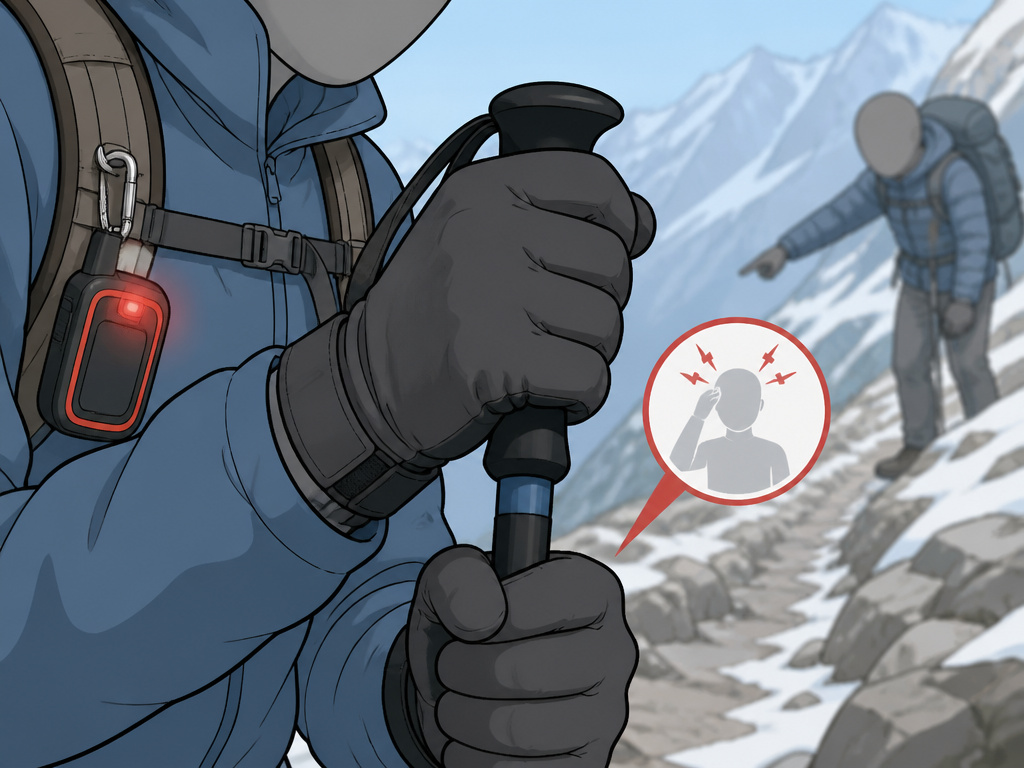
Altitude sickness becomes a risk at 2,500 meters above sea level. The Government of Canada lists it alongside hypothermia, heat illness, and travellers’ diarrhea as the problems most likely to end your day early.
Hypothermia is defined in that same advisory as a body temperature below 35°C. Both are preventable with pacing, layers, and a willingness to turn around.
| What You Notice | What It Usually Means | What to Do |
|---|---|---|
| Headache that won’t shift | Early altitude sickness | Stop ascending, hydrate, tell your guide |
| Cough or breathlessness at rest | Worsening altitude sickness | Descend; don’t sleep higher |
| Racing heartbeat, light-headedness | Altitude or dehydration | Sit, drink, reassess the day |
| Confusion or vision changes | Serious altitude illness | Descend and seek medical help |
| Shivering that won’t stop | Hypothermia risk, below 35°C | Shelter, dry layers, warm fluids |
Cold gets into your hands through gloves that were fine at the trailhead. The first sign is that you’ve stopped wanting to take them out of your pockets.
Before you start: Three hazards to plan around. Altitude sickness becomes a risk at 2,500 meters, so build acclimatization days into the route rather than pushing through a headache. Hypothermia sets in below 35°C, and wet layers at a windy pass get you there faster than cold alone, because water pulls heat off skin far quicker than air does. Remote areas may have no cell service at all, so check coverage and carry a satellite messenger or an emergency beacon if the route is genuinely backcountry.
Certification limits are where two advisories part ways. New Zealand’s SafeTravel guidance states that most insurance policies require a diver to stay within the limits of their certification, and it gives the numbers: 18 metres for an open water diver, 30 metres for advanced open water. Canada’s advisory sets no depth figure at all. It points divers toward Divers Alert Network (DAN) insurance instead.
Gear that earns its place:
- Eye protection for snow sports, to prevent snow blindness
- A life jacket or wetsuit for water sports, to prevent drowning or hypothermia
- An emergency beacon for mountain sports or backcountry tramping
- Helmet, padding, and goggles for extreme sports
A satellite messenger or an emergency beacon covers the gap when cell coverage disappears.
Don’t push for a summit day with a headache that won’t shift. Altitude sickness gets worse with ascent, and the descent that would have fixed it on day one turns into an evacuation by day three.
Insurance, Medical Clearance, and the Paperwork Nobody Enjoys
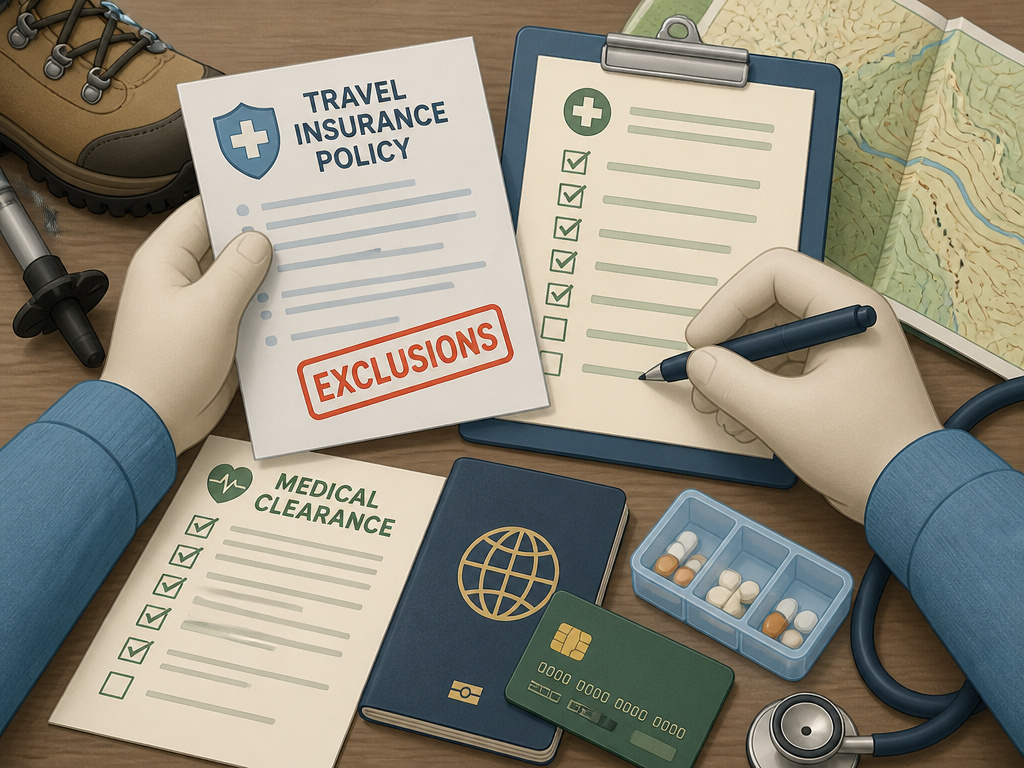
Standard travel insurance is written for beach holidays and city breaks. The Government of Canada says it directly: a standard plan may not offer adequate coverage for extreme sports, nature expeditions, or other adventure activities. Buy based on the activities you’ve actually booked.
The research gets uncomfortable at this point. A travel insurance mountain adventure tourism study frames the purchase against risk literacy and expectation, which raises a question the Canadian advisory doesn’t ask: does buying the policy change how anyone behaves, or does it just move the financial risk somewhere else? The advisory treats insurance as financial mitigation. The research suggests the behaviour question is still open.
Four checks before you pay for a policy:
- Look for special policies or add-ons built for adventure travelers, such as wilderness rescue or adventure sports coverage
- Check the exclusions against your actual itinerary, including the parts you’d rather not think about
- Ask specialty clubs, outdoor groups, or professional associations for recommendations tied to your activity
- Carry extra emergency cash and a high-limit credit card, because rescue, evacuation, and repatriation often get billed upfront even when you’re covered
Skip this if: You rely on a battery-powered medical device and your destination has no reliable power. The CDC’s own guidance says to build a backup plan or reconsider the trip, and that call belongs before you book, not at the trailhead.
The CDC’s pre-travel screening list runs longer than a standard checkup covers: anaphylaxis-level allergies, asthma, cardiac disease, deep vein thrombosis and pulmonary embolism, diabetes, joint replacement, opioid-dependent pain, oxygen-dependent emphysema, recent surgery, sleep apnea, and stroke. Travelers with a previous history of environmental illness, including altitude illness, anaphylaxis, frostbite, heat exhaustion, or hypothermia, are at risk of recurrence.
On guide capability, the two governments say different things. Canada’s advisory warns that tour guides may lack sufficient medical training for emergencies. The CDC’s position is that travelers should consider completing basic life support and first aid courses themselves before departure, and it notes those courses help regular adventure travelers most. Read together, the advice is to treat your own training as the backup.
Timing is the other split. Canada suggests talking to a health care provider or visiting a travel health clinic about 6 weeks before your trip. The same page adds that even if your departure is close, it’s still worth making the appointment.
I learned the cost-versus-comfort trade the hard way on a long-distance train once. I burned the savings and the first day of the trip in the same morning. Adventure travel runs the same math, and the cheap option that costs you a day is the expensive one.
The CDC also cautions travelers who depend on battery-powered devices (a CPAP machine, an insulin pump) about device failure or simply no electricity where they’re going. Some people with chronic illness, particularly those who are medically dependent on electronic devices, who have difficulty walking, or who are medically frail, likely aren’t good candidates for adventure travel at all.
Carry electronic copies of your most recent electrocardiogram and chest x-ray, your medical and surgical history, and a medication list. Know your blood type if the trip is genuinely remote or long.
How Do You Match the Tour Type to the Destination?
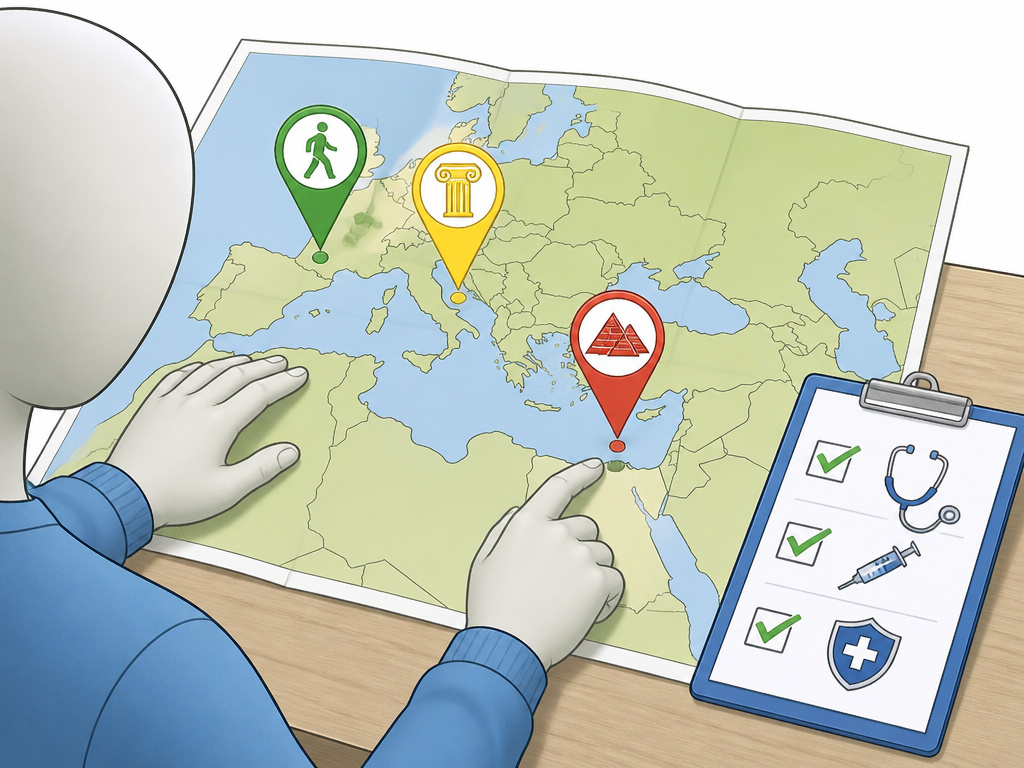
Complexity decides it. Three variables matter: how hard the destination is to move around, how remote the route gets, and how much you actually want to learn.
That framework beats both camps. “Always book a guide” wastes money in Lisbon. “Never book a guide” wastes days in Cairo.
High-Complexity Destinations: Take the Group Tour
Egypt, Iran, and parts of Central Asia are where a group tour earns its keep. Permits, language, and internal transport are genuinely hard to arrange alone, and a fixed itinerary removes decisions you don’t want to be making at 6 a.m.
Medium-Complexity Destinations: Book a Guide for Day One
Italy and Japan sit here. You can do them independently, and you should. A day-one guide compresses orientation, and after that you’re faster alone.
The same logic applies to a cultural tour in a city where the history is dense and unmarked. Two hours with someone who knows what they’re looking at beats two days of plaques.
Low-Complexity Destinations: Skip the Tour
Most of Western Europe is self-guided territory, and so is most of the English-speaking world. Booking a group tour here is how people end up resenting a pace they paid for.
Long trips are a separate question. A multi-day tour makes sense when the route is the point and the logistics are the obstacle. If you’re going to book one, how to choose a guided tour means checking three things: who holds the license, who carries the medical kit, and what happens if someone gets hurt.
Now I map the first leg the night before, every time.
Before you commit to any adventure tour, work through this in order:
- Get medical clearance first if you have any condition on the CDC’s screening list. Skip it and you can find out at altitude that your cardiac history was a bigger deal than you thought.
- Book the travel health appointment about 6 weeks out. Late appointments still help, but a vaccine series that needs multiple doses won’t finish in time.
- Match the insurance policy to your activity list. A standard plan that excludes extreme sports leaves you paying for a rescue
Frequently Asked Questions
How far in advance should I book a guided adventure tour?
Popular operators in remote regions fill their departures months ahead, and permit quotas in places like national parks or high-altitude routes cap group sizes. Booking early also gives you time to complete any required medical clearance or vaccination schedule. Last-minute slots exist, but they usually come with fewer choices on dates and guide teams.
Can I join an adventure tour if I have a chronic condition like asthma or a heart issue?
Many operators accept participants with managed conditions, but most require a doctor’s sign-off before departure. The real question is whether your condition stays stable under exertion, cold, and altitude, since those stressors can change your baseline. Ask the operator what medical screening they run and whether they can accommodate medication schedules or dietary needs.
What happens if I get injured midway through a multi-day trek?
Guides typically carry a communication device and a basic trauma kit, and their first job is stabilizing you and calling for help. Evacuation from a remote trail can take hours or longer depending on terrain and weather, so response time is the variable you cannot control. This is why trip insurance with medical evacuation coverage matters more on adventure tours than on city breaks.
Are small-group adventure tours better than large ones for safety?
Smaller groups move faster and are easier for a guide to monitor, which helps on technical terrain. Larger groups sometimes carry a second guide or a dedicated medic, offsetting the supervision gap. Ask about the guide-to-participant ratio and whether anyone on the team holds a wilderness first responder certification.
