Safari Tour Pros and Cons: What to Know First
This post contains affiliate links. As an Amazon Associate, we earn from qualifying purchases.
Safari tour pros and cons come down to this: a safari delivers wildlife encounters you cannot get anywhere else, but it costs a lot, it stresses the animals you came to see, and the industry that sells it to you is largely unregulated. More than 150 game parks and reserves across Africa give you real choice in price and experience.
The money is real, and it’s climbing, which is central to the safari tour pros and cons. Seventy-four million travelers visited Africa in 2024, and average safari budgets now sit around $6,000 per person, up 25 percent in recent years.
But the part that rarely makes the brochure is what happens to the wildlife when the vehicles arrive. Research into Mara cheetahs found mothers in high-tourism areas raised fewer cubs. African elephants’ stress hormones ran 112 percent higher in months with higher tourism. That’s the trade-off sitting under every booking decision.
The rest of this walks the choice honestly: what a safari actually costs by tier, where the wildlife damage shows up, which operator claims hold up under scrutiny, and the health prep the CDC says you must have.
Key Takeaways
- Budget $70/day minimum for a group minivan camping safari; popular parks run $100–150/day, and a luxury trip flying into a lodge for a week with guided personal 4×4 trips can easily run over US$1000/day.
- Malaria is endemic to Sub-Saharan Africa and transmission occurs in most game parks, so chemoprophylaxis and permethrin-treated netting are essential.
- No independent body with real teeth audits hospitality-led conservation programs, and the broader industry operates largely on the honor system.
- Self-drive safaris are highly discouraged for first-timers, and most rental agencies won’t rent for off-road use.
- Gorilla trekking and other more strenuous safari activities require participants to be at least 15 years old, per CDC guidance.
What Does a Safari Tour Cost Per Day?
Cost is where the safari industry gets opaque fast. The tier you pick drives everything else about the trip.
A basic group minivan camping safari has a minimum budget of US$70/day, per the Wikivoyage safari travel guide. Some of the most visited parks push that to US$100–150/day. A luxury trip flying into a lodge for a week with guided personal 4×4 trips runs over US$1000/day, and National Geographic reports luxury safaris can now cost over £1,000 per person per night.
The sticker price is rarely the final price. A park entrance fee or camping permit may run US$50 and often isn’t covered by the operator’s quoted rate.
| Safari Tier | Typical Daily Cost | What You Get |
|---|---|---|
| Group minivan camping | US$70/day minimum | Shared vehicle, tents, basic meals |
| Popular park group tour | US$100–150/day | Better vehicles, park fees sometimes included |
| Luxury fly-in lodge | Over US$1000/day | Private 4×4, guided game drives, full service |
Common mistake: Assuming the quoted price covers park fees. A US$50 entrance fee or camping permit often gets billed separately at the gate, and operators know travelers won’t walk away once they’ve arrived.
One-day safaris deserve their own warning. Wikivoyage describes the experience bluntly: “8 hours and US$100 later, you may be disappointed.” Orientation and driving can consume the entire day, leaving very little actual game-viewing time.
Where the Wildlife Damage Actually Shows Up
The marketing story is that safari tourism funds conservation, but the safari tour pros and cons look messier in the research.
A 2025 study found a decline in the population density of lions in the Maasai Mara as the number of tourism camps grew, a trend independent of changes in prey or vegetation. Research into Mara cheetahs found mothers in high-tourism areas raised fewer cubs. African elephants’ stress hormones were 112 percent higher in months with higher tourism.
In July 2025, at Mara River crossing #5 near Kogatende, guide Nick Kleer filmed a wall of 4WD vehicles blocking wildebeest. The animals turned to a neighbouring crossing, and the vehicles raced off after them. Ecologist Grant Hopcraft at the University of Glasgow, who has tracked wildebeest since 1999, named the phenomenon the “Great Wall of Toyota.”
The Nature Africa Serengeti tourism study adds a layer worth knowing. Impala stress-marker levels stayed elevated near lodges even under a no-tourist model, higher than near permanent tented camps or seasonal campsites. Wildebeest avoidance of buildings extended several kilometres.
The part nobody mentions: Lodge architecture itself measurably shifts wildlife behaviour. Impala stress markers were higher near lodges than at tented camps, even with zero tourists present.
So the honest version of the “conservation through tourism” claim is this: tourism can fund protection at scale, but the density and design of that tourism also cause measurable harm. Both things are true. That’s a genuine con, not a marketing footnote.
Is It True That Safari Tourism Benefits Local Communities?
Sue Snyman, an ecotourism researcher at African Leadership University in Kigali, puts it plainly: “Very few countries have a formal policy related to revenue-sharing.” Her research found no formal requirements that lodge owners or tour operators give back to the communities where they’re based.
That gap between promise and policy is the core issue. Luca Belpietro, of the Maasai Wilderness Conservation Trust, has said travelers can’t easily verify impact. His assessment: “There is no independent body with real teeth” to audit hospitality-led conservation programs. “The broader industry operates largely on the honor system.”
The community-benefit picture splits by ownership model. Karl Langdon, a regional director at Virgin Limited Edition, explains that national parks often protect critical biodiversity at scale, while private and community conservancies usually offer lower density tourism and more direct financial returns to local landowners.
Worth knowing before you start: “Community-owned” and “community-benefiting” are different claims. Ask which one applies before you book.
A 2024 PNAS study complicates the private-conservancy story further. Private protected-area management benefits wildlife and tourism, but impacts on rural wealth are inconclusive, and there’s some evidence it undermines physical security for nearby communities in conflict-adjacent areas. The conservation-NGO framing of private management as a win-win doesn’t hold everywhere.
Questions to Ask Before Booking a Safari Operator
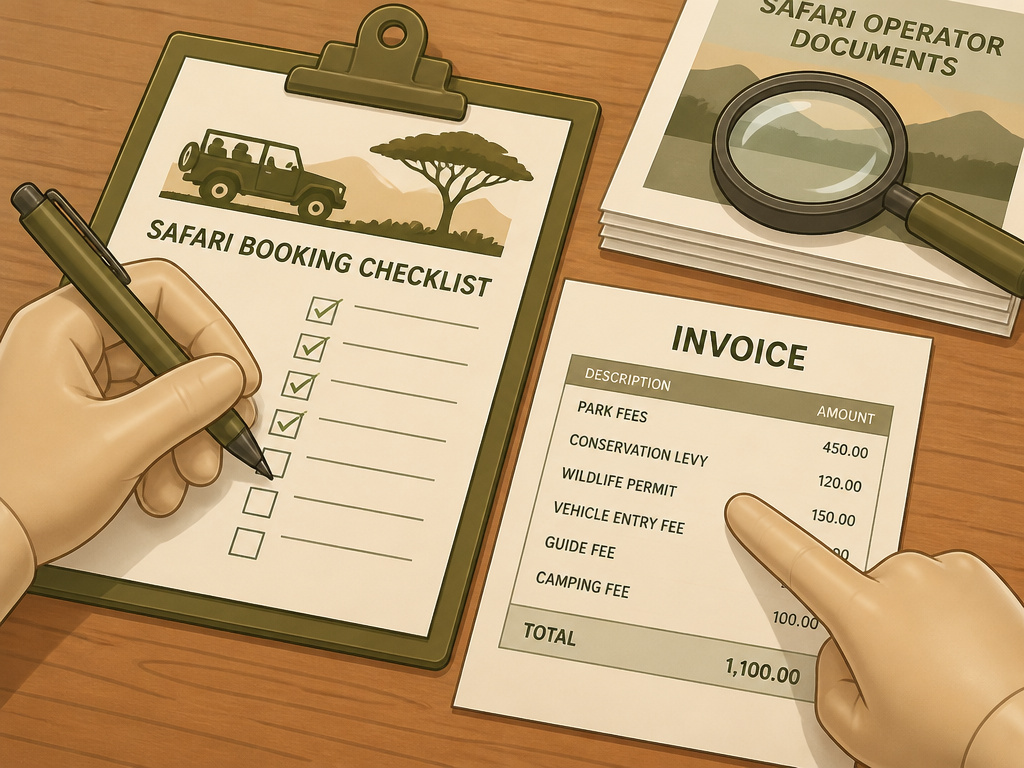
The single biggest risk in safari booking is operator quality. Wikivoyage puts the ratio starkly: for every quality local safari operator, there are 1–2 operators who are dishonest, offer poor service, operate unlicensed, or circumvent laws.
That’s not a reason to avoid local operators. It’s a reason to ask specific questions and get answers in writing.
Ask about ownership model first. Who owns the lodge or runs the tour? Is it a national park concession, a community conservancy, or a private operation? Langdon’s point is that this determines where your booking fee actually goes.
Ask what’s included, in writing. Park fees, camping permits, food, water, and equipment should all be itemized before you pay. Wikivoyage warns that for every quality local safari operator, there are 1–2 operators who are dishonest, offer poor service, operate unlicensed, or circumvent laws.
Ask for third-party validation. Any independent audit is worth more than a lodge’s own sustainability page.
Ask about group size. A 2025 study tied declining lion density in the Maasai Mara directly to growth in tourism camp numbers.
If you’re weighing whether to book a guided trip at all, the guided tour vs self-guided travel breakdown covers where each approach wins. And if you’re deciding between the two biggest safari countries, Kenya vs Tanzania is the fork most travelers hit first.
Skip this if: You’re booking a one-day safari from a beach resort. Orientation and driving can consume the entire day, and as Wikivoyage puts it, “8 hours and US$100 later, you may be disappointed.”
Can You Do a Self-Drive Safari?
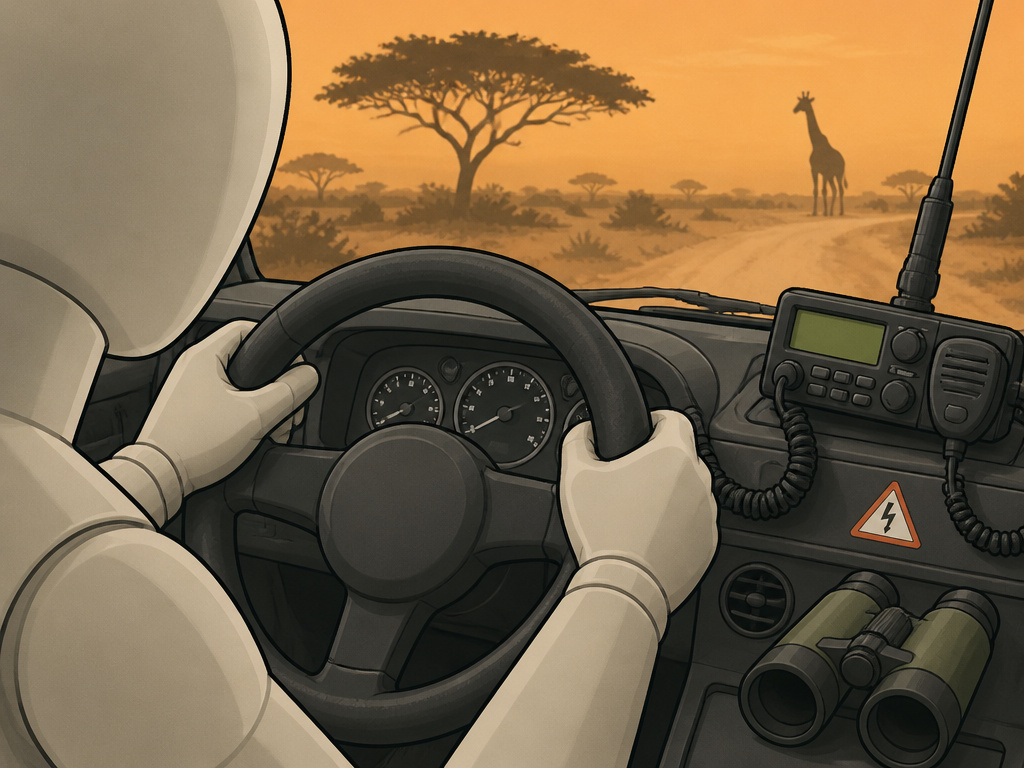
Self-drive safaris are possible in some parks. They’re also highly discouraged for first-time safari goers, and the reasons stack up fast.
Independent travelers miss that entirely.
Then there’s the practical stuff. Most rental car agencies won’t rent vehicles without a driver or for off-road use. Independent drivers need an HF radio to communicate with park rangers for safety, and should not exit their vehicle without a firearm.
The CDC notes that some parks are easily accessible with self-drive options, so the picture isn’t uniform.
If you do go guided, the questions to ask before booking a guided tour apply directly to safari operators, and the how to spot a bad guided tour checklist is worth running through before you commit a deposit.
What Health Prep Does the CDC Actually Require?
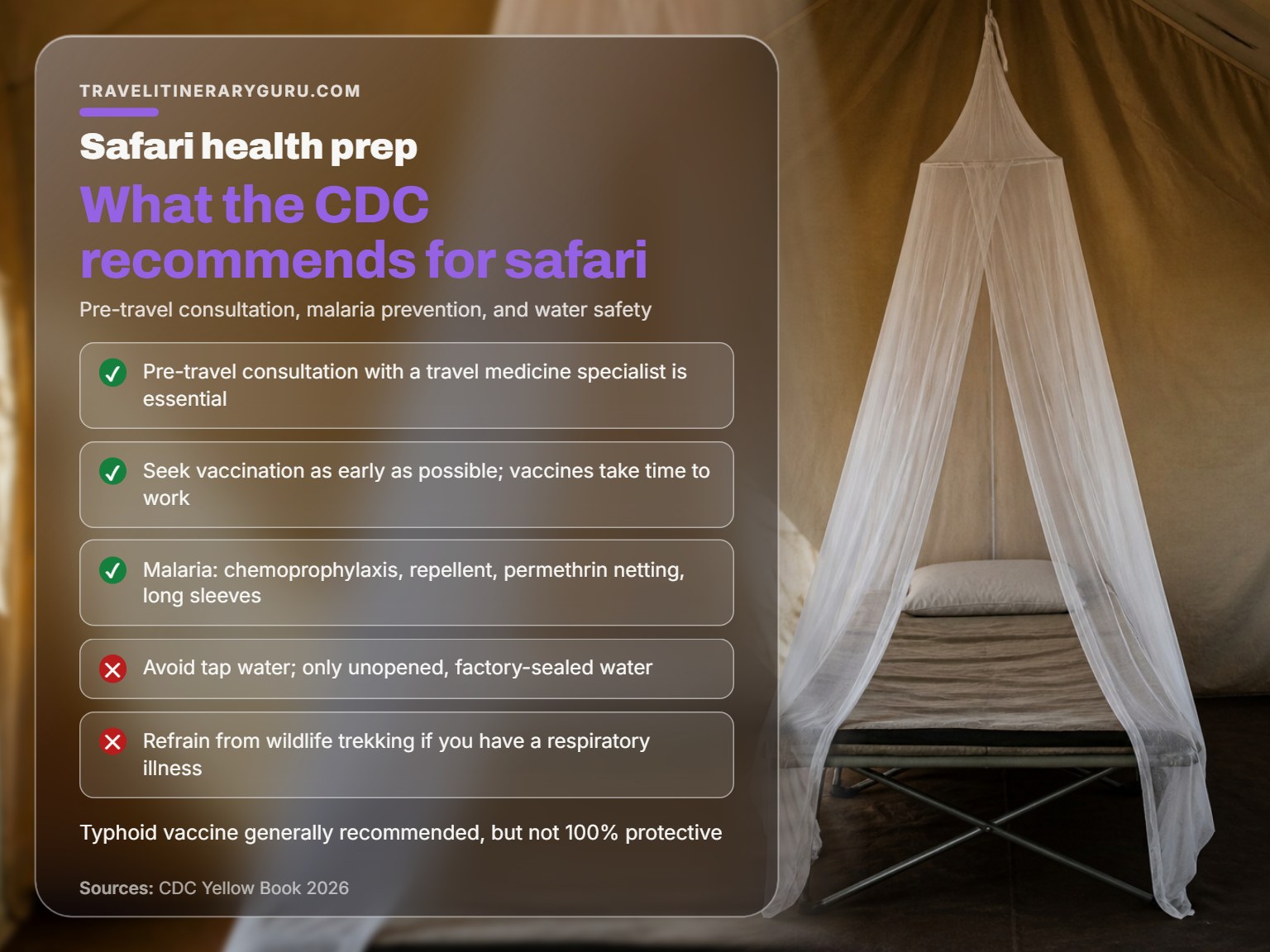
Health prep is where safari planning gets serious. The CDC Yellow Book safari health guidance is the reference document, and it’s specific.
A pre-travel consultation with a travel medicine specialist is essential, and multiple vaccinations might be required. Because vaccines take time to become effective, you should seek vaccination as early as possible before departure.
Malaria is endemic to Sub-Saharan Africa, and transmission occurs in most game parks. Most infections are caused by Plasmodium falciparum. Appropriate chemoprophylaxis plus personal protection, long-sleeved shirts, long pants, insect repellent, and sleeping under permethrin-impregnated mosquito netting, are all essential.
Typhoid fever vaccine is generally recommended for safari-goers. Because vaccination doesn’t confer 100 percent protection, even vaccinated travelers should avoid potentially contaminated food and water. Cholera vaccine isn’t needed for standard safaris unless you’re planning a side trip to work in a refugee camp or do humanitarian aid in an affected country.
African tick bite fever is endemic to much of Sub-Saharan Africa and is the most commonly diagnosed rickettsial disease among returning travelers. Tick-bite precautions are the defense.
| Health Risk | Prevention | Why It Matters |
|---|---|---|
| Malaria | Chemoprophylaxis, repellent, permethrin netting | Endemic in most game parks |
| Typhoid fever | Vaccine plus food/water care | Vaccine isn’t 100 percent protective |
| African tick bite fever | Tick-bite precautions | Most common rickettsial disease in returning travelers |
| Travelers’ diarrhea | Hand sanitizer (60%+ alcohol), sealed water only | Tap water should be avoided entirely |
The horseback safari welfare study is worth flagging for a different reason. It covered 17 group rides, 72 encounters, and 7 large-herbivore species, and found horses showed the strongest wariness around giraffe specifically. If you’re considering a horseback safari, the welfare trade-off is species-dependent, not uniform.
Easy to miss: Travelers with respiratory illness should refrain from wildlife trekking entirely.
What Should You Pack for a Safari?
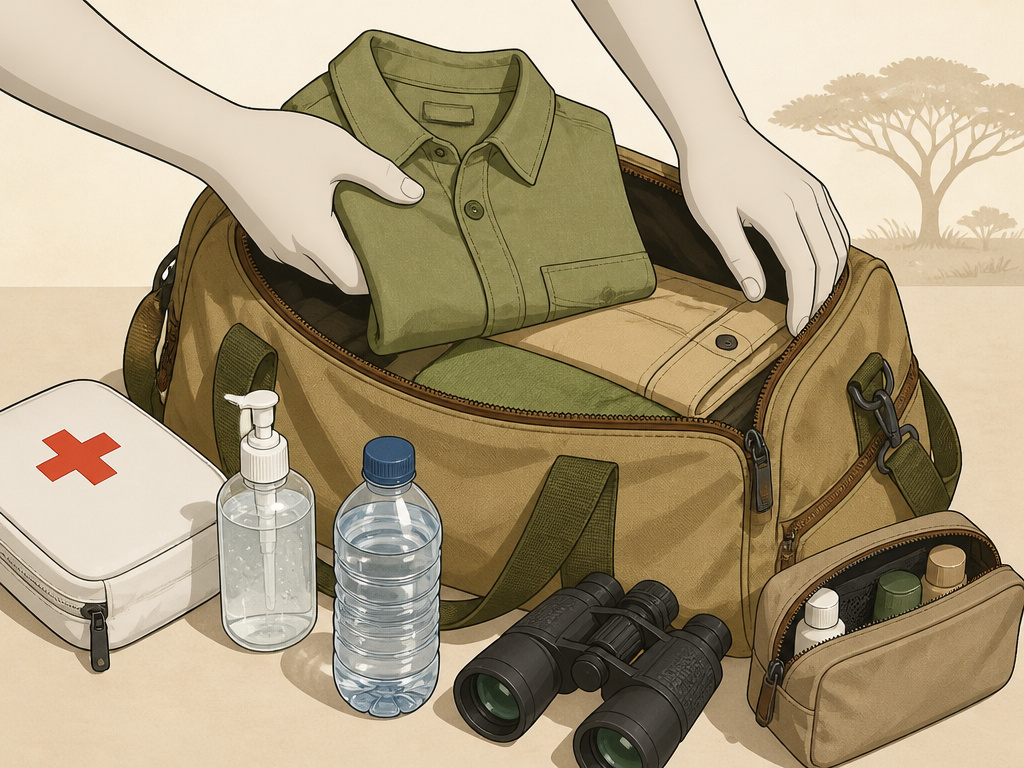
Packing splits into health kit and gear. Get the first one right and the second one mostly takes care of itself.
Carry a personal medical kit with enough medication to treat allergies, chronic conditions, routine health needs, and emergencies. Carry all medications with you on safari, access to authentic drugs isn’t guaranteed in remote locations. Pack antimotility medicine for mild travelers’ diarrhea, and get clear written guidance on antibiotic therapy for moderate to severe cases.
Carry alcohol-based hand sanitizer with at least 60% alcohol for when water and soap are scarce or unsafe. Avoid tap water entirely, only drink adequately disinfected water from an unopened, factory-sealed container.
Pack an adequate supply of feminine hygiene products, since options can be limited on safari.
For optics, good safari binoculars matter more than a long lens for most travelers, you’ll spot far more with decent glass than with a phone. On the bag side, soft-sided safari luggage fits bush-plane weight limits that hard cases don’t. And travel insurance is worth the cost on a trip this far from emergency services.
If you’re building a multi-park route, a structured Kenya safari itinerary saves you from the mistake of trying to cover too much ground in too few days.
Frequently Asked Questions
Is a safari tour worth the cost?
For most travelers, yes, if you pick a group camping safari at US$70/day. A group camping safari at US$70/day delivers the core wildlife experience without the luxury markup. The value drops sharply on one-day trips, where orientation and driving eat most of the day.
How much should I budget for a safari?
Budget depends on tier. Group minivan camping starts at US$70/day. Popular parks run US$100–150/day. Luxury fly-in lodges exceed US$1000/day. Add park entrance fees, which may run US$50 and often aren’t included.
Are safaris safe?
Safari-related injuries usually occur when travelers disregard rules, per CDC guidance. Follow your guide, stay in the vehicle, and complete the health prep. The bigger risks are malaria, travelers’ diarrhea, and tick bites, all of which are largely preventable.
What’s the biggest downside of safari tourism?
Wildlife stress. A 2025 study linked declining lion density in the Maasai Mara to growth in tourism camps. Cheetah mothers in high-tourism areas raised fewer cubs, and elephant stress hormones were 112 percent higher in high-tourism months.
Can I do a safari without a guide?
Self-drive safaris are possible in some parks but highly discouraged for first-timers. Most rental agencies won’t rent for off-road use, and you’d need an HF radio and a firearm to exit the vehicle safely. For a first safari, a licensed operator is the better call.
The Bottom Line
Here’s the part nobody tells you. The safari industry’s biggest problem isn’t price. It’s that almost nobody is checking whether the conservation and community claims are true.
Luca Belpietro’s line about the honor system is the one to remember. There’s no independent auditor with teeth. So your job as a traveler is to do the verification the industry won’t.
Start with one concrete action this week: email three operators and ask two questions. What’s your ownership model, and can you show third-party validation? The operators who answer clearly are the ones worth booking. The ones who deflect are telling you something.
Fair warning. This all changes if you’re doing a one-day safari from a resort. In that case, the calculus is different, you’re buying a game drive, not a conservation story, and you should price it that way.
And if you’re considering horseback, remember the giraffe finding. The welfare trade-off isn’t uniform, and the operator who admits that is more trustworthy than the one who doesn’t.
Practical wisdom beats perfect theory every time. Ask the questions. Then book.
