
How to Take a Walking Tour in Hot Weather: Beat the Heat
This post contains affiliate links. As an Amazon Associate, we earn from qualifying purchases.
Walking a city in serious heat is a planning problem before it’s a fitness problem. Get the timing, water, and shade decisions right and the tour still works. Knowing how to take a walking tour in hot weather matters. Get them wrong and you’ll retain none of it.
To take a walking tour in hot weather, book the earliest or latest slot available, carry at least one litre of water per hour, and plan a shaded route with a shortcut. The Northern Territory Government advises considering postponing a walk when the temperature is more than 32 °C (90 °F), and some parks close walks outright when it gets too hot.
The 32 °C line is the only hard number any of the major official guides gives you on how to take a walking tour in hot weather, and it comes from the NT Government’s parks safety page. Everything else, the timing windows, the water rate, the sunscreen minimum, is where the guidance splits, and that split matters more than any single rule.
Here’s what the four main sources actually say, where they contradict each other, and how I’d build a hot-weather tour day around all of it.
Key Takeaways
- Book the earliest or latest slot in summer. My documented experience backs this: I did a 2pm tour in Seville in July and retained exactly zero historical facts by the third stop.
- Carry at least one litre of water per hour when walking in hot conditions, the NT Government and Ramblers both state this figure independently.
- Sources disagree on the heat window. NPS says start before 10am or after 4pm; Ramblers says avoid 11am–3pm; REI says avoid noon to 3 p.m.
- Shade is not a comfort issue. The WHO states perceived temperatures in direct sun run 10–15 °C higher than in shade.
- Some walks close outright when temperatures are too high, and water in remote parks may not be supplied or may need boiling first.
Which Hours Actually Work for a Hot-Weather Walking Tour?
Four credible sources, four different answers. This is the single most useful thing to know before you book anything.
The coolest windows for a hot-weather walk vary by source. The U.S. National Park Service recommends scheduling activity before 10am or after 4pm. Ramblers advises avoiding the hottest part of the day between 11am and 3pm. REI narrows that further to noon to 3 p.m. The Northern Territory Government simply advises starting as early in the morning as possible.
The NPS window is the widest. REI’s is the narrowest. If you want one rule that satisfies all of them, it’s this: be finished by 10am, or start after 4pm. That’s the intersection of every recommendation on the table.
The NT Government’s seasonal note sharpens this further. The Top End runs hot and humid from October to March. If your tour is in that window, the 8am slot isn’t a preference. It’s the only slot.
A guide in Rome once told me the smart play in summer is the 8am or the 6pm departure, cooler, thinner crowds, and better light for photos. He was right on all three counts, and I’ve used that advice ever since.
The 32 °C Postpone Threshold and When Walks Get Closed
The NT Government gives the only hard numeric cutoff in the whole guidance set: consider postponing your walk if the temperature is more than 32 °C (90 °F).
That’s not a suggestion. It’s a rule page, and it comes with a companion fact most tour operators don’t advertise: some walks are closed when temperatures are considered too high. You can plan the perfect shaded route and still arrive to find the trailhead gated.
The NPS takes a different approach. It gives no numeric threshold at all, and instead says to schedule for a cooler part of the day or plan to go out another day if extreme heat is forecasted. Ramblers lands in the same place with different words: if it’s a heatwave, consider a shorter walk than usual.
So there are two failure modes here, and they need different fixes.
| Source | Threshold or Guidance | What It Means for You |
|---|---|---|
| NT Government | Postpone if above 32 °C (90 °F) | Hard cutoff; walks may close |
| U.S. National Park Service | No number; reschedule if extreme heat forecast | Judge by forecast, not thermometer |
| Ramblers | No number; shorten the walk in a heatwave | Reduce distance, not just pace |
| WHO | Avoid strenuous activity at hottest time of day | Timing beats intensity management |
The practical version: check the forecast the night before, check the park’s website or call the park the morning of, and have a backup plan you’re genuinely willing to use. The NPS is explicit that using the backup plan is the correct move, not a failure.
Where this goes sideways: Treating the 32 °C threshold as a soft guideline. Walk closures happen without warning on high-heat days, and a closed trailhead at 9am means your entire morning is gone.
How Much Water Do You Actually Need Per Hour?
The numbers here mostly agree, which is unusual for this topic. The NT Government says at least 1 litre per hour. Ramblers independently states one litre per hour when you’re hiking in hot conditions.
Two national bodies, same figure for how to take a walking tour in hot weather, arrived at separately. I’d treat that as the working rate.
The WHO approaches it differently, with a lower per-hour figure but a daily floor: 1 cup of water per hour and at least 2–3 litres per day.
The NPS gives no numeric rate at all. Its guidance is to drink before you feel thirsty. REI says to drink water until you’re no longer thirsty.
Here’s where the sources genuinely diverge, and it’s worth showing plainly:
| Source | Water Guidance | Reader Takeaway |
|---|---|---|
| NT Government | At least 1 litre per hour | Highest per-hour target |
| Ramblers | One litre per hour in hot conditions | Matches NT figure |
| WHO | 1 cup per hour; 2–3 litres per day | Daily floor matters most |
| U.S. National Park Service | No numeric rate; drink before thirsty | Behaviour, not measurement |
| REI | Drink until no longer thirsty | Symptom-led approach |
If you follow only the NPS or REI guidance, you get no target at all. That’s the gap. For a walking tour specifically, two to three hours on your feet, in a city, in summer. I’d default to the NT and Ramblers figure of one litre per hour and treat the WHO’s 2–3 litre daily minimum as the floor beneath it.
There’s a real edge case the walking-specific sources skip. The NT Government notes that in NT parks, water may not be supplied, or may need boiling before drinking. Ramblers advises taking water purifying tablets or a filter on longer hikes in case you need extra fluid. If your tour is in a remote or park setting, “I’ll refill at the next fountain” is an assumption you can’t make.
What most people get wrong: Relying on refill points that don’t exist. Know where you can top up before you start walking, the NT Government lists this as a pre-walk check, not a mid-walk discovery.
Why Shade Changes the Temperature More Than You Think
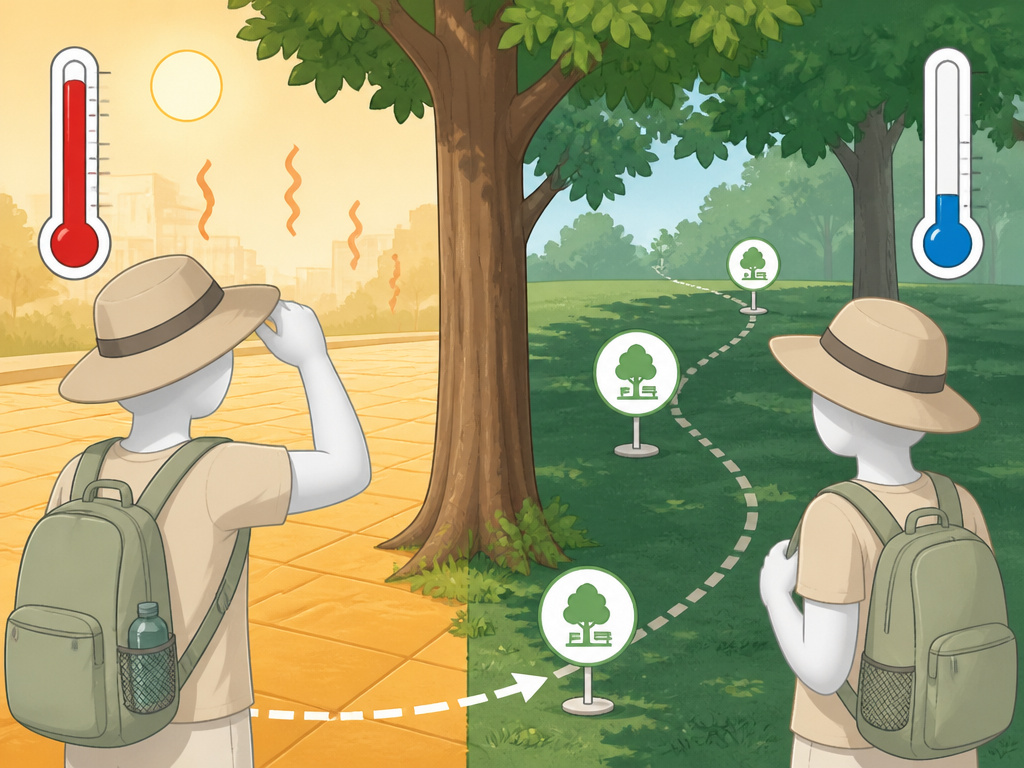
The WHO quantifies this better than anyone: perceived temperatures in the sun can be 10–15 °C higher than in shade. Shade alone can reduce how hot you feel by more than 10 °C.
That’s not a comfort margin. That’s the difference between a walk that works and one that doesn’t, and it’s why route selection beats willpower every time.
Ramblers builds its summer guidance around this. Plan a route with plenty of shade, such as a woodland walk. If you’re doing a group recce, locate shade areas to stop in or choose naturally shaded routes. The NPS says to take frequent breaks and rest under shade whenever possible.
The WHO goes further and recommends spending 2–3 hours during the day in a cool place. On a tour day, that’s your lunch break, and it’s worth protecting.
This is where a self-guided walking tour has a real advantage over a group one. You pick the route. You decide when to stop. Build the shaded version first and treat the sunny version as the fallback.
Sunscreen, Clothing, and the SPF Disagreement
The sources split here too, and it’s worth knowing which number you’re following.
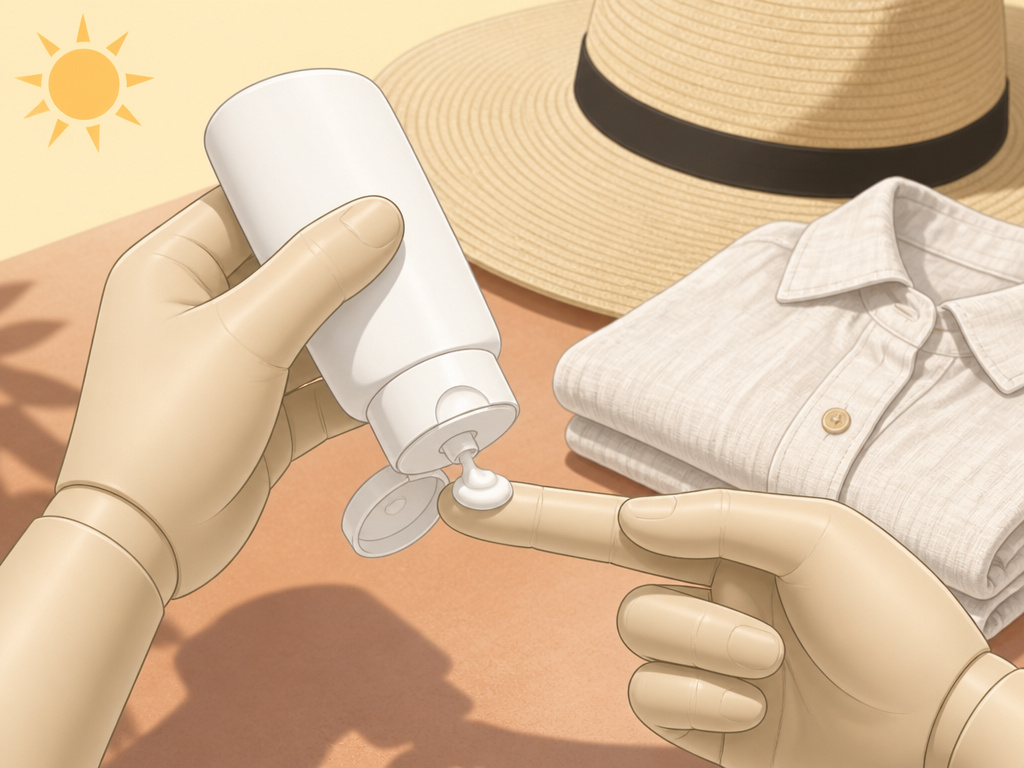
The NT Government says SPF 50 or higher. Ramblers says SPF 30+. The WHO also says SPF 30+, applied regularly.
I’d follow the higher figure. There’s no downside to SPF 50 over SPF 30, and the NT guidance is the more specific of the two on application timing.
Clothing is the other split. The NT Government specifies breathable cotton. The NPS specifies lightweight, light-coloured, loose-fitting clothing but names no fibre at all. REI takes a third position: cotton can be OK in hot and dry conditions, because the moisture feels good against your skin and evaporates to cool you.
Ramblers adds the layer most people skip: wear loose, lightweight clothes that provide plenty of coverage, plus a wide-brimmed hat.
The WHO’s guidance for children is worth knowing if you’re taking a walking tour with kids: lightweight, loose-fitting clothing that covers their skin, wide-brimmed hats, sunglasses, and sunscreen.
Easy to miss: The NT Government’s sunscreen guidance. Applying SPF at the trailhead means you may be unprotected at the start.
Navigation, Check-Ins, and the Phone-First Assumption
Phone-first navigation is the default assumption for most travelers. The NT Government pushes back on it.
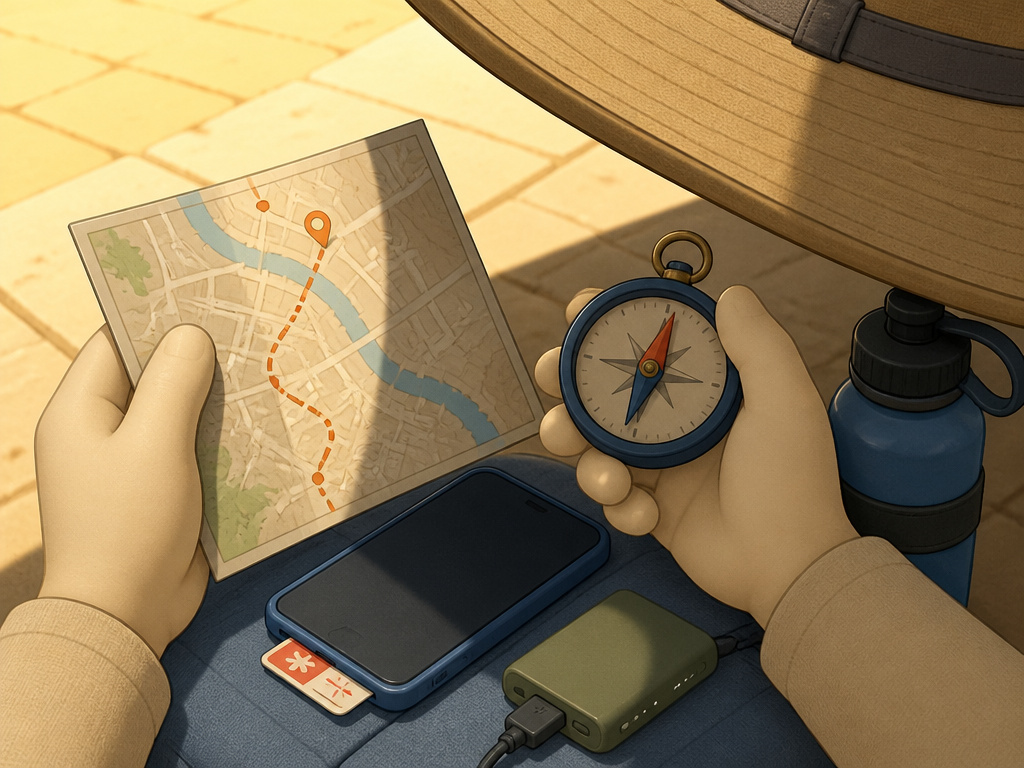
Its guidance requires carrying a map of the area on extended walks, with GPS navigation apps demoted to backup. Ramblers agrees: take a paper map and compass as back-up. The NPS doesn’t address navigation at all.
Ramblers adds a heat-specific phone tip that nobody else mentions. The fix is to keep your phone out of direct sunlight and carry a battery power pack.
Both the NT Government and Ramblers stress telling someone your plans. Ramblers is specific: make sure someone knows where you’ve gone and when you’ll be back, and call or message them when you’re safely home or if your plans change.
The Ramblers page also suggests storing an In Case of Emergency (ICE) contact and essential medical information on your smartphone, since first responders can access it even on a locked phone.
Skip this if: You’re doing a two-hour city tour with a live guide and reliable signal. The printed map requirement is aimed at extended walks in remote areas, not a loop around a historic district.
Acclimatisation: the Constraint UK and Australian Guides Don’t Mention
This is the biggest gap in the guidance set, and it’s a timing problem most travelers never plan for.
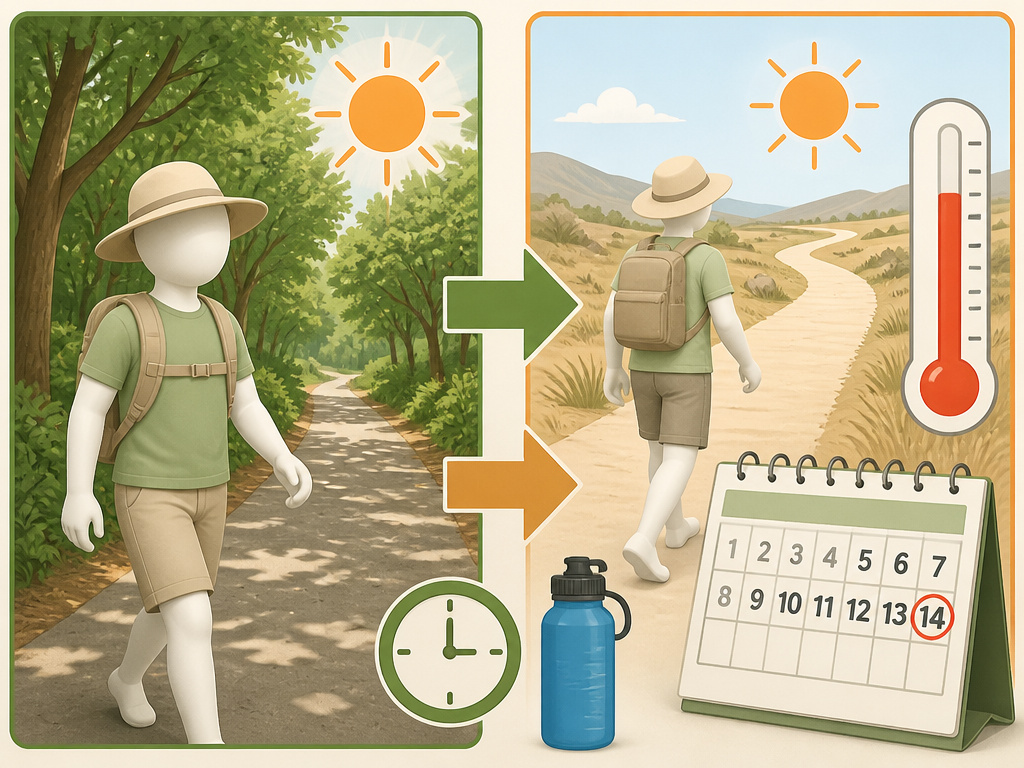
The NPS says it takes several days to adjust before activity. REI is more specific: 10 days to two weeks to acclimatise to heat and humidity.
Neither the NT Government nor Ramblers mentions acclimatisation at all. If you’re reading UK or Australian guidance, you won’t encounter the concept.
That matters for a specific kind of trip: the one where you fly from a temperate city into serious heat and book a walking tour for day one. Your fitness level is irrelevant for the first week. Your heat tolerance hasn’t caught up yet.
Book the shorter, shadier, earlier tour on day one and save the long one for later in the trip.
The part nobody mentions: Acclimatisation timelines vary by source and aren’t in every guide. NPS says several days; REI says 10 days to two weeks. Neither UK nor Australian guidance addresses it. Plan for the longer figure.
Heat Illness Signs and When to Stop

The WHO lists the signs to watch for: dizziness, nausea, or confusion. Seek medical help if needed. That’s the shortest and clearest symptom list across all four sources.
The NPS gives the clearest decision rule for when to bail: stop and turn around if it gets too hot during your activity. Its framing is that you can always put your backup plan into action.
The WHO adds two things the walking-specific sources skip entirely. First, never swim alone, a drowning risk it flags inside heat guidance. Second, if you have a medical condition or take medicines regularly, check with your doctor.
Common mistake: Pushing through the first signs because the tour is paid for and half done. Dizziness and nausea are the WHO’s stated markers. Stop at those, not at collapse.
The Kit That Actually Earns Its Place in Your Bag
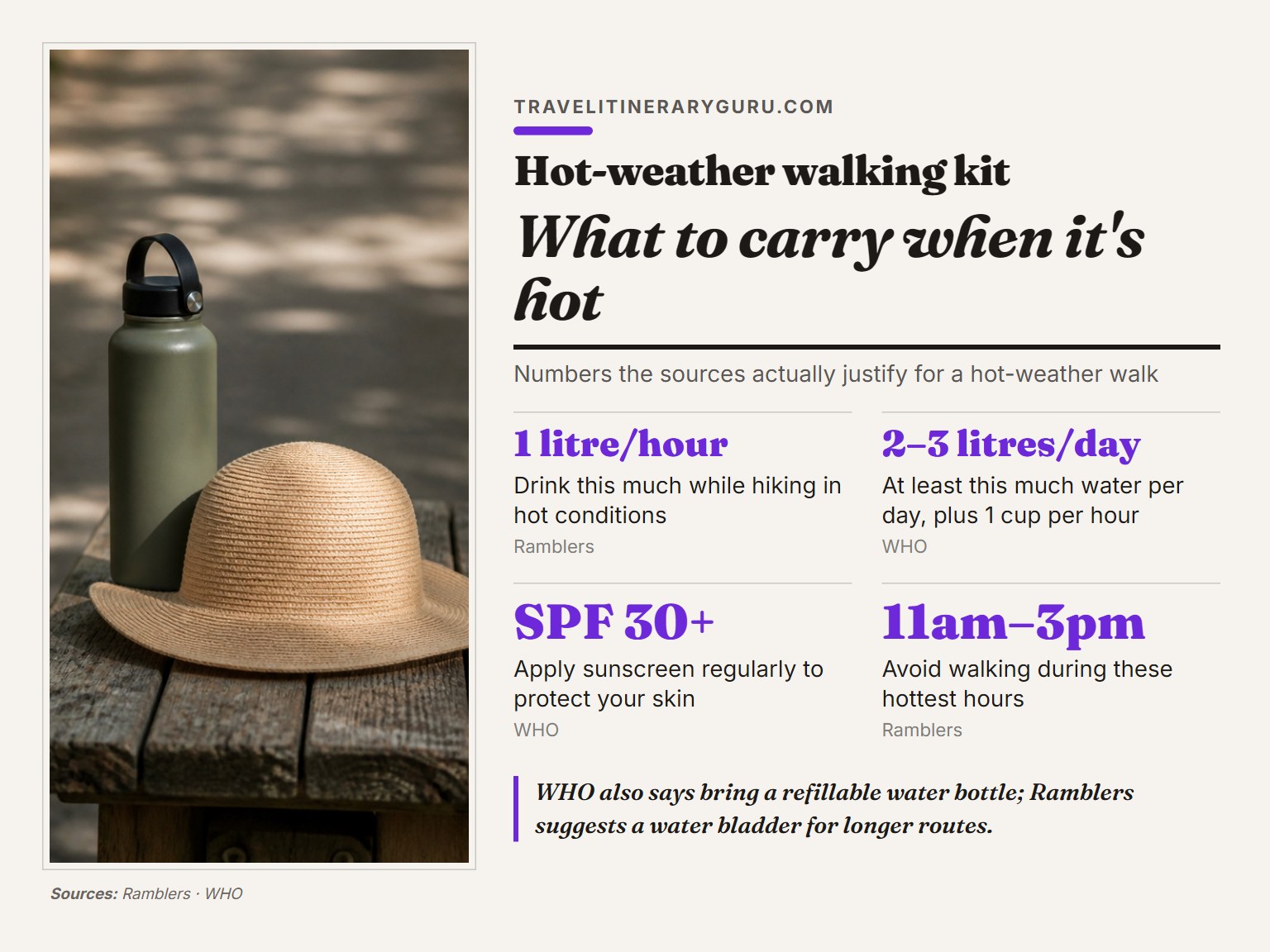
Most hot-weather packing lists are the same twelve items in a different order. Here’s what the sources specifically justify, and what I’d actually carry.
- A refillable water bottle. The WHO names this directly. Carry at least one litre per hour of walking.
- A water bladder, if you’re doing a longer route. Ramblers suggests one on both of its pages, specifically because it makes drinking easier while moving.
- Water purifying tablets or a filter on longer hikes, per Ramblers, in case you need extra fluid and the refill points don’t exist.
- A wide-brimmed hat and SPF 50 sunscreen.
- A warm layer, torch, and whistle. Ramblers lists these for emergencies.
- A first-aid kit and a stored ICE contact on your phone.
- A battery power pack, per Ramblers.
- Water and a packable bowl for your dog, if you’re bringing one. Ramblers and REI both cover this: let the dog lie down in shade when tired.
One note on the dog: the WHO’s infant and child guidance is worth reading alongside it. Never cover a pram with dry fabric, it makes the carriage hotter. Use a wet, thin cloth and re-wet it, combined with a portable fan.
Frequently Asked Questions
What temperature is too hot for a walking tour?
The NT Government advises considering postponing a walk above 32 °C (90 °F). That’s the only hard numeric threshold across the four main official sources. The U.S. National Park Service gives no number and instead says to reschedule if extreme heat is forecasted. If you’re near or above 32 °C, treat the walk as optional and check whether the route is even open.
Should I book a morning or evening walking tour in summer?
Both work, and the sources disagree on exactly where the cutoffs sit. NPS says before 10am or after 4pm. Ramblers says avoid 11am–3pm. REI says avoid noon to 3 p.m. The safe intersection is finishing by 10am or starting after 4pm. In the NT’s October-to-March hot season, morning is the stronger choice because temperatures can pass 30 °C (86 °F) by 9am.
How much water should I carry on a hot walking tour?
The NT Government and Ramblers both state one litre per hour in hot conditions. The WHO gives a lower per-hour figure of 1 cup but adds a daily minimum of 2–3 litres. The NPS and REI give no numeric rate at all and instead advise drinking before you feel thirsty. For a two-to-three-hour tour, one litre per hour is the working number.
Can a walking tour be cancelled because of heat?
Yes. The NT Government states that some walks are closed when temperatures are considered too high. This applies to park and trail settings rather than city tours, but it’s worth checking the park’s website or calling ahead on any high-heat day. Have a backup plan ready, per the NPS guidance.
Is shade really that much cooler?
Yes, measurably. The WHO states perceived temperatures in the sun can be 10–15 °C higher than in shade, and that shade alone can reduce how hot you feel by more than 10 °C. That’s why route selection, picking a shaded path over a sunny one, beats pacing or willpower as a heat strategy.
What are the warning signs of heat illness on a walk?
The WHO lists dizziness, nausea, or confusion, and advises seeking medical help if needed. The NPS decision rule is simple: stop and turn around if it gets too hot during your activity.
The Bottom Line
Here’s the part nobody tells you. The 32 °C threshold isn’t a suggestion, and the walks that close for heat don’t announce it in advance. Check the park’s website the morning of, not the night before.
If you do one thing this week, put the SPF on before you leave the hotel, not at the trailhead. That’s the NT Government’s stated guidance, and it’s the single easiest fix in this entire article.
I get why people book the midday slot, it’s the one that fits around lunch, and the photos look better in the brochure. But I’ve done a 2pm summer tour and I remember the shade patches better than I remember the cathedral. Book the 8am or the 6pm. The light is better anyway.
