
How to Visit Petra: A Realistic Two-Day Plan
This post contains affiliate links. As an Amazon Associate, we earn from qualifying purchases.
How to visit Petra comes down to three decisions: enter through the Siq early, split the site across two days instead of one, and treat the Monastery climb as the real event rather than an optional add-on. The Treasury is the first thing you see and the least of what’s there. Budget a full day minimum, two if your legs and your schedule allow it.
Petra sits roughly a three-hour drive from Amman, which makes it a destination rather than a stop. That distance is why so many itineraries get the how to visit Petra question wrong: people treat it as a box to tick between the capital and the Dead Sea, then wonder why the day felt like a forced march.
The rest of this walks through the order that actually works, what the climb to the Monastery demands of you, and how to slot Petra into a longer Jordan route without turning the whole trip into a checklist.
Key Takeaways
- Enter through the Siq first thing, because the Treasury reveal happens in a narrow slot canyon and midday crowds turn that moment into a queue.
- Plan two days, not one. The site is far larger than the Treasury, and most visitors burn out before they reach the good parts.
- The Monastery climb is long and challenging, with a donkey option if you want it.
- Petra is the anchor of a Jordan trip, not a day trip. Build the route around it rather than squeezing it in.
- Pack for real walking. Sandstone, stairs, and sun, in that order.
What Is Actually at Petra Beyond the Treasury?
The Treasury is the headline, and the site is far bigger than the headline. Petra was a thriving Nabataean city carved entirely into rose-colored rock, and the carved facades continue for miles past the famous one.
Walking through the narrow Siq and looking up at the towering pink sandstone cliffs, then watching the Treasury slowly reveal itself, is the moment everyone comes for. It is genuinely unforgettable. But it is also the first ten percent of the day.
Petra’s carved monuments were cut directly into the sandstone cliffs by the Nabataeans, and the site extends well beyond the Treasury into tombs, temples, and trails that stretch deep into the surrounding landscape. The Treasury functions as the entry point to a much larger archaeological area rather than as the destination itself.
Beyond the Treasury, there are tombs, temples, and trails that stretch deep into the surrounding landscape. Most visitors see the Treasury, take the photo, and turn around. That is the single biggest mistake at this site.
The rock itself is the tell. Rose-colored sandstone, carved smooth on the facades and rough everywhere else. The color shifts through the day as the sun moves across the canyon walls.
If you want to understand what you are looking at before you go, the same approach that works for visiting Machu Picchu applies here: learn the site’s shape first, then walk it.
How Long Does Petra Actually Take?
One day is the minimum. Two days is the honest answer for anyone who wants to see more than the Treasury and the theater.
A single day at Petra means a long stretch of walking, much of it on stone stairs and uneven ground. That is enough for the Siq, the Treasury, the street of facades, and either the Monastery or the Royal Tombs. It is not enough for both.
Two days gives you time to split your visit to Petra across two days. Day one covers the Siq, the Treasury, and the main colonnaded street at an unhurried pace. Day two goes high: the Monastery, the High Place of Sacrifice, or the trails that climb into the surrounding landscape.
| Time Available | What You Can Realistically See | What You Miss |
|---|---|---|
| Half day | The Siq, the Treasury, the street of facades | Everything above ground level |
| One full day | The above plus the Royal Tombs or the Monastery | The other of the two |
| Two days | The whole main site, both climbs, time to sit | Little, honestly |
If you are building this into a longer route, the same logic that governs planning a trip to Egypt applies: give the anchor site the days it deserves, and let the rest of the itinerary flex around it.
The Monastery Climb and What It Asks of You
The Monastery sits at the top of a long, challenging climb. There is a donkey option if you are feeling brave, and the reward at the top is worth every step.
The Monastery is just as breathtaking as the Treasury. It is also a reminder of how vast and extraordinary the whole site is, because you only understand the scale of Petra once you have climbed above it and looked back down.
Fair warning: the stairs are cut into the rock and worn smooth by centuries of feet. Some sections are wide and shallow, others are steep enough that you will want a hand on the wall. The heat builds through the morning, so the climb is easier earlier in the day than later.
- Start the climb early. The trail has almost no shade, and the sandstone radiates heat as the day goes on.
- Carry more water than feels reasonable. More than you think you need is a starting point, not a target.
- Wear shoes with actual grip. Smooth-soled sneakers on worn sandstone stairs is how people fall.
- Give yourself plenty of time for the round trip, longer if you stop at the viewpoints on the way up.
Where this goes sideways: Attempting the Monastery climb on the same day as a dawn entry and a full walk of the lower site. By the time most people reach the stairs, their legs are already done, and the climb turns into a grind instead of a highlight.
What Time of Day Should You Enter?
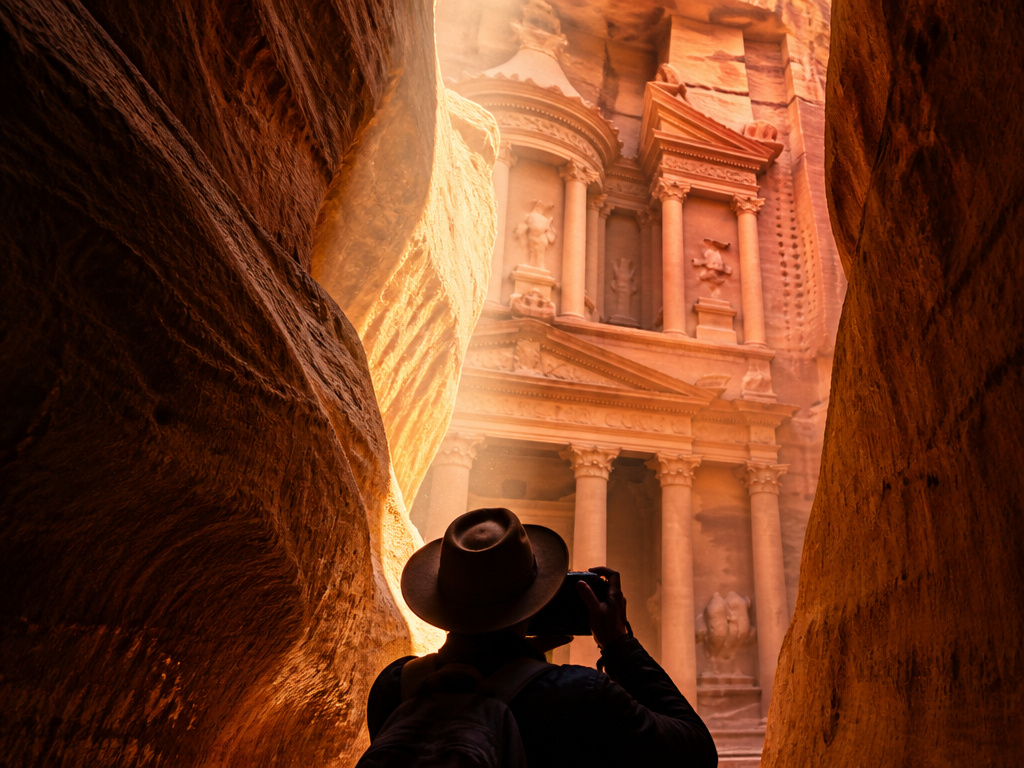
Dawn entry is the standard advice, and it works for a reason. The Siq is narrow, the Treasury sits in a slot canyon, and the light hits the facade in a way that photographs beautifully in the early hours.
But dawn only works if you are actually awake for it. I have planned enough trips to know that the standard advice assumes a traveler who slept well the night before. For a client arriving off a long-haul flight, I flipped the plan and sent her in the afternoon instead. She was awake, the light was still good, and she actually enjoyed the site rather than shuffling through it half-conscious.
Skip this if: You are arriving the same day from Amman or Aqaba. A dawn entry after a three-hour drive and a short night is a recipe for a miserable visit. Go the afternoon you arrive, sleep, then hit the site properly the next morning.
The same principle applies to the wider route. If you are traveling through the region, the Middle East customs you will encounter are worth reading up on before you arrive, and that includes how you dress and behave at the site itself.
How Petra Fits Into a Longer Jordan Route
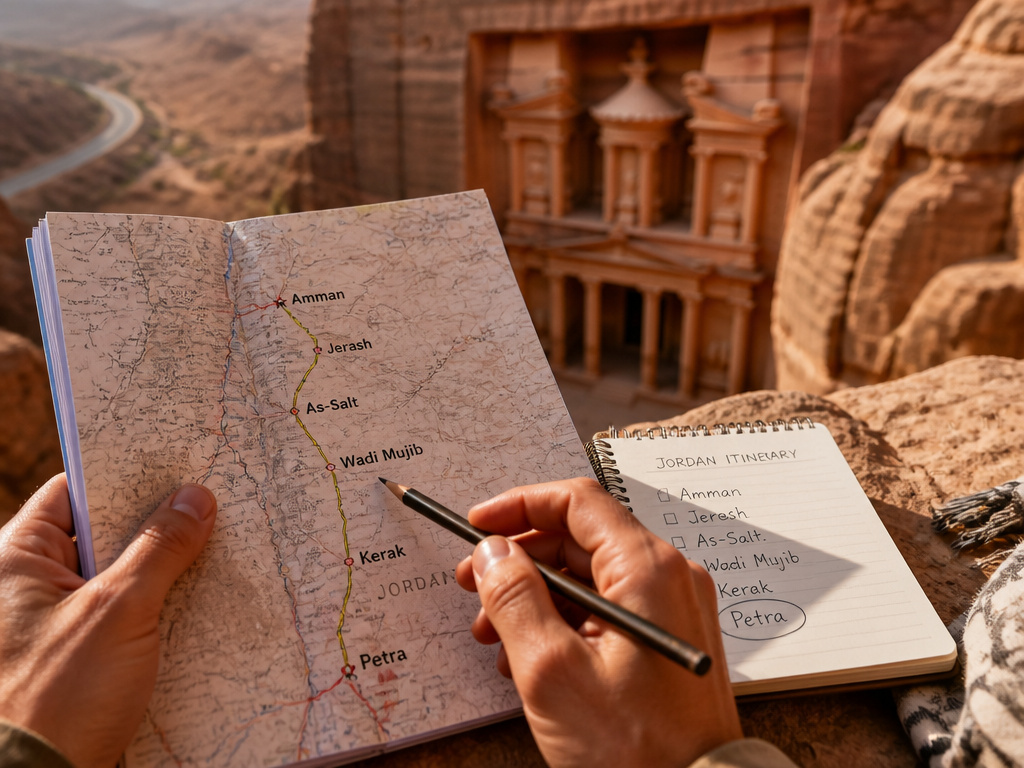
Petra is the anchor of a Jordan itinerary, but it is not the only stop, and the route around it matters as much as the site itself.
A sensible shape for a Jordan trip runs north first, then south. Start in Amman, spend a day on the capital’s Citadel and downtown, then head north to Umm Qais and Jerash before turning south toward Petra. From Amman, the drive to Petra is a long one.
Jerash is worth the detour on its own. It is one of the best-preserved Roman cities outside of Italy, with an Oval Plaza, a Cardo Maximus, towering columns, grand theaters, and long stone streets still largely intact. Umm Qais, the ancient Gadara, sits on a hilltop with views that stretch across several countries at once.
As-Salt, a short drive from Amman, is a UNESCO-listed hillside town known for its distinctive yellow-stone houses, narrow streets, and Ottoman-era architecture. It is the kind of stop most itineraries skip and most travelers remember.
If you are planning the walking portions of the trip yourself, the same method behind a self-guided walking tour is what you want at Petra: pick the route, know the distances, and build in rest.
What to Wear and Carry at Petra
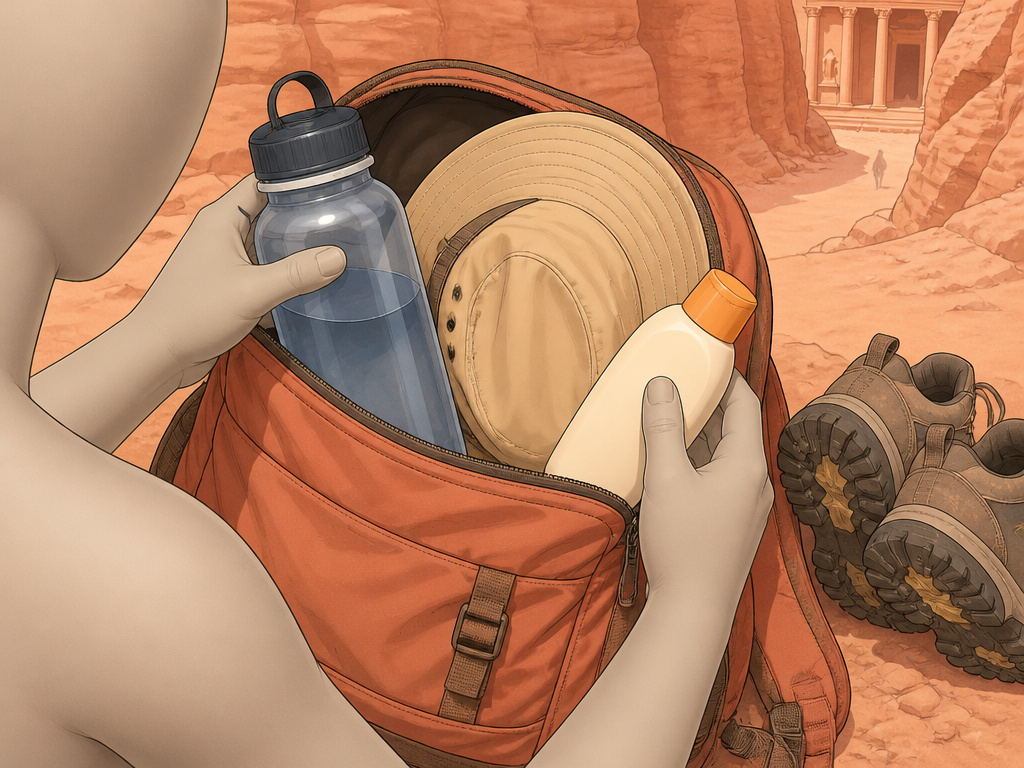
Dress for a long day on stone in the sun, and dress respectfully. Petra is an archaeological site in a conservative country, and the same rules that apply when you dress for religious sites apply here in spirit.
- Broken-in shoes with grip. The stairs and the Siq floor are both uneven, and the sandstone gets slick in places.
- Layers. Mornings in the canyon are cool, and midday is genuinely hot. You will shed and re-add clothing through the day.
- A hat and sunscreen. There is very little shade once you are past the Siq.
- A refillable water bottle. You will drink more than you expect.
| Item | Why It Matters | Skip It If |
|---|---|---|
| Grippy shoes | Worn sandstone stairs are a hazard | You are only doing the Siq and turning back |
| Plenty of water | Heat builds fast in the canyon | You are visiting in deep winter |
| Sun hat | Almost no shade past the Treasury | You enter late in the day |
| Modest layers | Site sits in a conservative region | Never, honestly |
Common mistake: Treating Petra as a photo stop and wearing city clothes. The site is a hike with monuments in it, and the people who enjoy it most are dressed like they knew that going in.
Should You Hire a Guide or Go Self-Guided?
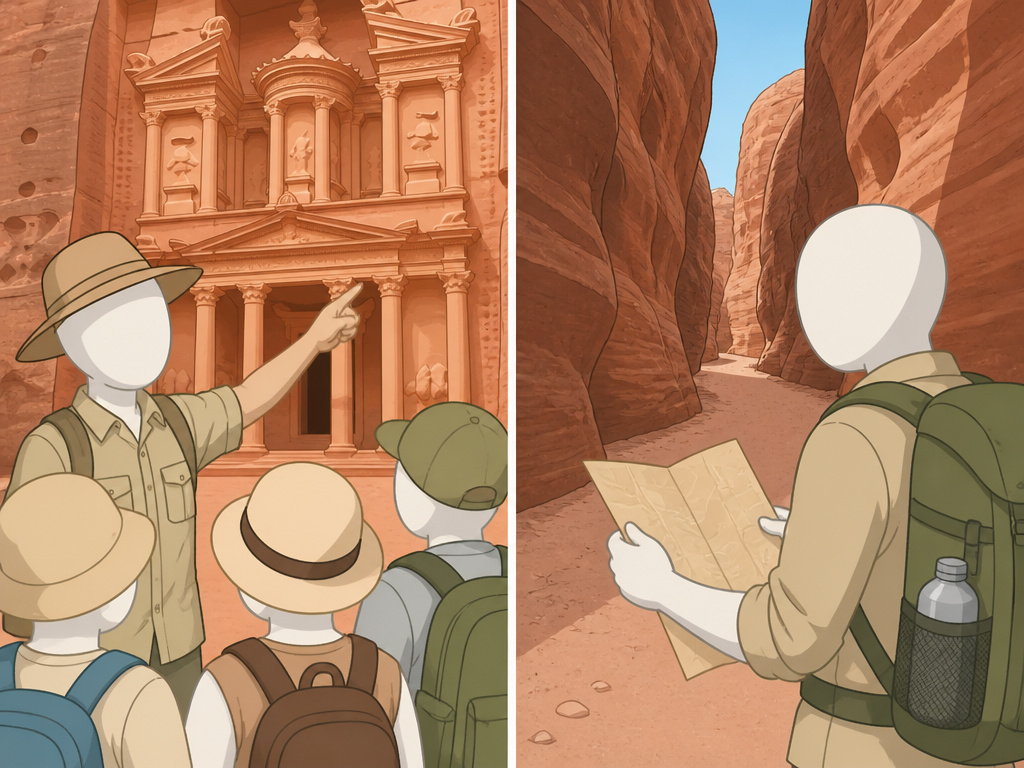
Both work, and the honest answer is that it depends on how much context you want versus how much freedom you want.
A guide earns their place at Petra. The site’s history is dense, the Nabataean engineering is not obvious from the ground, and a guide will point out things you would otherwise walk straight past. If you want the site to mean something beyond the photos, hire one for the first morning.
Self-guided works too, and it is what I default to. The site is well-signposted, the main route is obvious, and the freedom to stop, sit, and double back is worth a lot. If you go this route, the same approach behind a self-guided history tour is what you want: read up before you go, know the layout, and let the site surprise you.
The middle path is what I usually recommend. Hire a guide for the first half-day to get oriented and hear the stories, then walk the rest on your own.
Frequently Asked Questions
How many days do you need at Petra?
Two days is the honest answer if you want to see the site properly. One day covers the Siq, the Treasury, and either the Monastery or the Royal Tombs. Two days gives you time for both climbs and still lets you sit and take it in.
Is the climb to the Monastery worth it?
Yes, and it is the part most visitors skip. The Monastery is just as breathtaking as the Treasury, and the climb gives you a sense of the site’s scale that you cannot get from the canyon floor. The climb is long and challenging, and there is a donkey option if you want it.
What is the best time of day to visit Petra?
Early morning is the classic answer, and it works because the light in the Siq and on the Treasury facade is at its best. But if you are arriving off a long flight or a same-day drive, an afternoon visit beats a dawn one you are too tired to enjoy.
Do you need a guide at Petra?
No, but a guide adds real value for the first half-day. The site is well-signposted and easy to walk on your own, but the history and the Nabataean engineering are not obvious from the ground. A guide for the first morning, then self-guided after, is the balance I recommend.
What should you wear to Petra?
Broken-in shoes with grip, layers for cool mornings and hot middays, a hat, and modest clothing. The site is a long walk on stone and stairs, not a stroll, and it sits in a conservative region.
The Bottom Line
If your trip to Petra is still being planned, the single most useful thing you can do is decide whether you are giving it one day or two. Everything else follows from that answer.
One day, and you are choosing between the Monastery and the Royal Tombs. Two days, and you stop choosing. The site rewards the second answer, and the difference in what you remember afterward is not small.
I get why people cram Petra into a single day. Jordan itineraries are tight, flights are expensive, and the site looks like a morning’s work on a map. It is not. It is a long visit, and the people who treat it as a quick stop tend to leave with a photo of the Treasury and a vague memory of being tired.
The one concession I will make: if you are genuinely short on time, skip the Monastery and do the Royal Tombs instead. The climb is the better experience, but the Tombs are closer, and a tired climb is worse than no climb. Start with the icons, then go deeper when you have the days to spend.
