
How to Bike the Golden Gate Bridge: Which Side, When
This post contains affiliate links. As an Amazon Associate, we earn from qualifying purchases.
To bike the Golden Gate Bridge, ride the west sidewalk from the Presidio side when it’s open: fewer pedestrians, and the skyline sits behind the towers instead of in front of them. Cyclists cross toll-free 24 hours a day, but which sidewalk you use changes by day and by season. The limit is 15 mph, dropping to 5 mph around the towers.
That schedule is where the how to bike the Golden Gate Bridge question turns into a bad one. The district publishes four separate windows, split by season and by day of the week, and the short summaries floating around online collapse all four into a single line. Get the hour wrong and you’re standing at a locked gate with a rental bike and no plan B.
What follows: the sidewalk windows by day and season, the two speed limits and where each one applies, the night gate procedure almost nobody explains, and the Presidio start that skips the crowd.
Key Takeaways
- Ride the west sidewalk from the Presidio side; the east side shares its path with pedestrians until 3:30 pm on weekdays.
- 15 mph is the limit on the span, 5 mph at the towers, and the towers are where the crosswind hits hardest.
- Cyclists have 24-hour access, but after dark you enter the east sidewalk through a remotely controlled security gate.
- All classes of e-bikes are allowed. E-scooters, skateboards, roller blades, and roller skates are not.
- There are no bike rentals at the bridge. The nearest shop is Sports Basement at Crissy Field.
Which Sidewalk Do You Ride, and When?
Which sidewalk you ride depends on the hour and the calendar, not on your preference. The Golden Gate Bridge, Highway and Transportation District publishes four separate windows, split between Pacific Standard Time and Pacific Daylight Time and between weekdays and weekends or holidays.
The sidewalks measure approximately 10 feet wide across most of the span. Width drops to 5.5 feet at the pylons and roughly 7.5 feet at the towers. The eastern sidewalk carries bicycles 5:00 am to 3:30 pm on weekdays; the western sidewalk carries bicycle traffic from 3:30 pm to 9:00 pm.
The version most riders memorize comes from the San Francisco Bicycle Coalition bridge advocacy page: west side on weekends and after 3PM on weekdays, east side before 3PM. That summary is directionally right. It also flattens four seasonal windows into one line, which is how people end up at a locked gate in November.
The district’s own schedule is more granular: it lists weekday west sidewalk access starting at 3:30 pm, while the San Francisco Bicycle Coalition describes west side access as beginning after 3PM on weekdays. Weekend windows shift by season. On Pacific Standard Time the west sidewalk runs 5:00 am to 6:30 pm. On Pacific Daylight Time both sidewalks run 5:00 am to 9:00 pm.
| When | Official district schedule | Where the summaries differ |
|---|---|---|
| Weekday before 3:30 pm | East sidewalk, shared with pedestrians | Summary says “before 3PM” |
| Weekday after 3:30 pm | West sidewalk until 9:00 pm | Summary says “after 3PM” |
| Weekend, PST | West sidewalk, 5:00 am to 6:30 pm | Summary gives one weekend rule |
| Weekend, PDT | East and west, 5:00 am to 9:00 pm | Summary gives one weekend rule |
Width drives most of these rules. The sidewalks run approximately 10 feet wide across most of the span, per the Golden Gate Bridge bicycle safety study Alta Planning + Design delivered in October 2020. At the pylons they pinch to 5.5 feet. At the towers, roughly 7.5 feet.
That’s a shared path, and cyclists must yield to pedestrians, particularly near the towers where sight distances are short. The district’s full write-up lives on the Golden Gate Bridge district bike access page.
Indicator lights at the approach tell you which side is open before you commit. They also flag unexpected west sidewalk closures from high winds or special events, which is the one scenario a printed schedule can’t cover. During Pacific Daylight Time, either sidewalk may close an hour early at 8 pm. One sidewalk always stays open.
I check the seasonal window every time I plan a crossing, even in July, because the dates shift year to year. And I’d rather ride the west side at 4 pm on a Tuesday than fight the east side at noon on a Saturday.
Common mistake: Treating a summer schedule as a year-round one. The west sidewalk closes at 6:30 pm on PST weekends but stays open to 9:00 pm on PDT weekends, so a November ride planned from a July memory ends with a detour to the east sidewalk and a buzzer.
The 15 mph Limit, the 5 mph Towers, and Where the Numbers Came From
Fifteen miles per hour came out of a speed study, not a guess. Alta Planning + Design found that a 15 mph speed limit is consistent with the 85th percentile speeds observed in the speed study. The study recommended posting the limit on both entrance signs, stenciling the speed limit clearly on the sidewalk, and dropping it to 5 mph around the towers.
The district adopted the 15 mph limit, effective January 1, 2022, as part of several new safety measures. The policy review happened because more people were biking the bridge, especially on e-bikes, and the old rules no longer matched conditions.
The Gap Between the Limit and the Hardware
The study says out loud what every e-bike rider already suspects: modern bicycles, especially e-bikes, are capable of speeds much greater than 15 mph. Alta recommended the 15 mph limit anyway, citing narrow sidewalks, mixed bicycle and pedestrian traffic, opposing flows, and frequent high winds. The rule and the hardware don’t match.
The district’s answer is that all classes of e-bikes are allowed on the bridge and expected to follow the cyclist rules. Same limit, same yield requirement, same tower slowdown. You can read the full set of changes in the new Golden Gate Bridge bike safety measures notice.
The towers are where that gap bites. The sidewalk narrows to about 7.5 feet there, sight distances are short, and the crosswind comes through hard enough to step your front wheel a few inches toward the railing. You correct without thinking about it. That correction is the 5 mph limit.
I take the 5 mph zone seriously. It’s the only stretch of the crossing where you can’t see far enough ahead to fix a mistake.
The part nobody mentions: Around the towers the path is roughly 7.5 feet wide, so a rider carrying 15 mph through there meets oncoming traffic with no room to react.
How the Night Gate Actually Works
The night gate is the piece almost nobody explains, and it’s the reason a 24-hour crossing isn’t as simple as it sounds. Cyclists have access around the clock, but from 9:00 pm to 5:00 am on weekdays, and from 6:30 pm to 5:00 am on PST weekends, the east sidewalk is closed and gated. You get through by asking.
Before you start: The night window runs on a security gate, not a posted schedule, so you wait at the buzzer instead of riding straight through.
- Press the buzzer at the closed gate at the end of the east sidewalk, then wait. Security staff have to locate you on a camera before the gate moves.
- Stay in front of the gate while you wait for security staff to locate you on a security camera.
- Ride through, then repeat the whole procedure at the far end. Both ends are gated, and the second gate doesn’t stay open for you. 4.
Here’s where the two sources part company. The San Francisco Bicycle Coalition describes 24-hour access as simply pushing the button on the gate, while the district’s version adds the camera verification and the second gate at the far end, which is the part that surprises people at 11 pm.
What You Cannot Bring Through the Gates
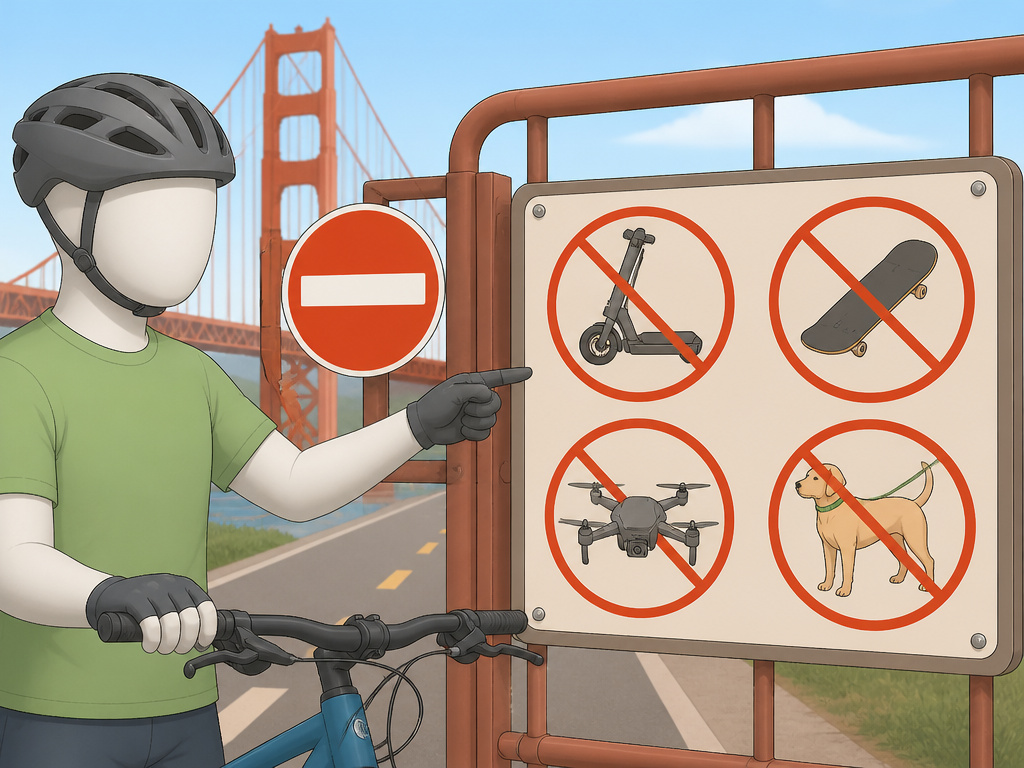
The prohibited list is longer than most riders expect, and most of it covers things people try to roll, ride, or fly across the span.
- E-scooters and similar devices.
- Roller blades, skateboards, and roller skates.
- Non-service animals, including dogs and horses being led, ridden, or driven. Service animals are always permitted.
- Pushcarts and wheelbarrows.
- Drones. They’re banned over or near the bridge and over National Park Service land on both sides of it.
Dropping or throwing anything off the bridge is a misdemeanor under California Penal Code section 219.3.
On this bridge they aren’t.
Skip this if: You were planning to bring a dog. Non-service animals aren’t permitted on the sidewalks at all, so a bridge crossing with a leashed dog means turning around at the gate.
Where Do You Get a Bike?
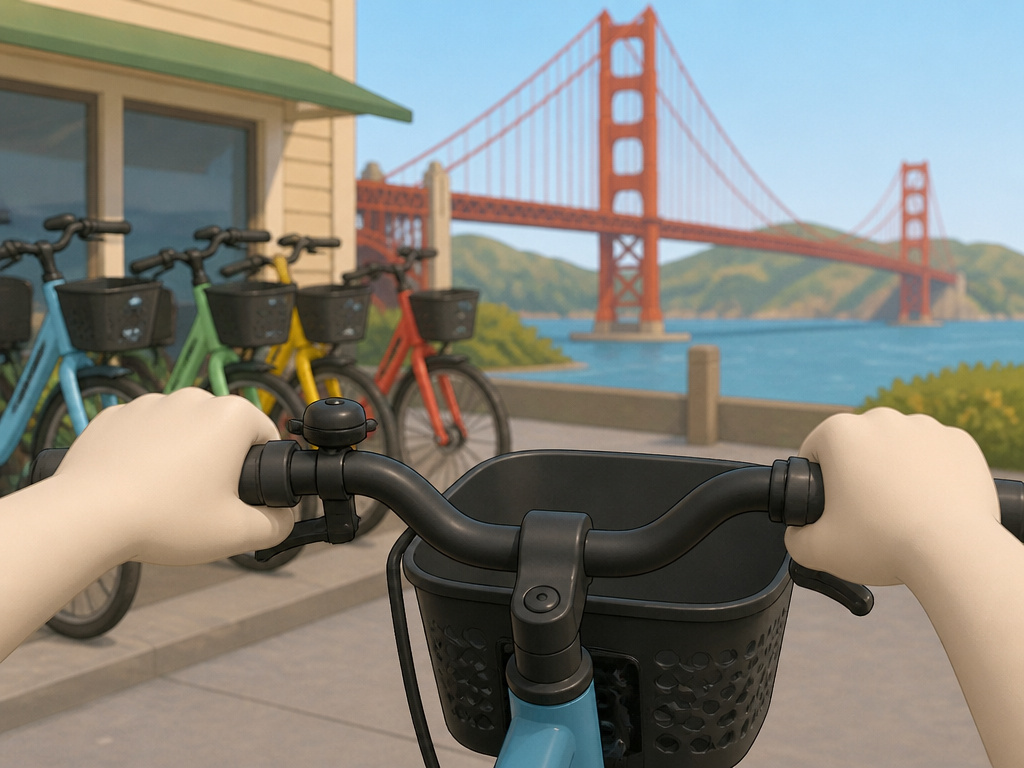
There are no bike rentals at the Golden Gate Bridge, and that catches out a lot of people who assume a landmark this busy rents bikes on site. It doesn’t. You bring your own or you rent before you arrive.
Renting Near the Bridge
The closest location to rent bikes is Sports Basement at Crissy Field.
You can also bring your own bike or rent one at a local bike rental shop. The same basics apply anywhere: bike share docks have to be returned to a station, so a one-way ride north to Sausalito leaves you with nothing to dock into.
Getting to the Bridge Without a Car
From the south, the approach is the Golden Gate Promenade in the Presidio, a 1.7-mile one-way moderate trail with a dedicated bike path along Crissy Field. You can also take public transit or the Presidio Go shuttle straight to the Golden Gate Bridge Plaza and start from there.
The National Park Service bridge biking guide lays out the rest: cross the bridge, then either return the same way or continue north to Sausalito or the Marin Headlands. From Sausalito you can catch the Golden Gate ferry back to the Ferry Building in San Francisco.
If this is one stop on a longer San Francisco itinerary, ride it early in the trip. Weather on the strait changes fast, and a flexible morning beats a fixed afternoon.
The Ride Itself: Surfaces, Climb, and How Long It Takes
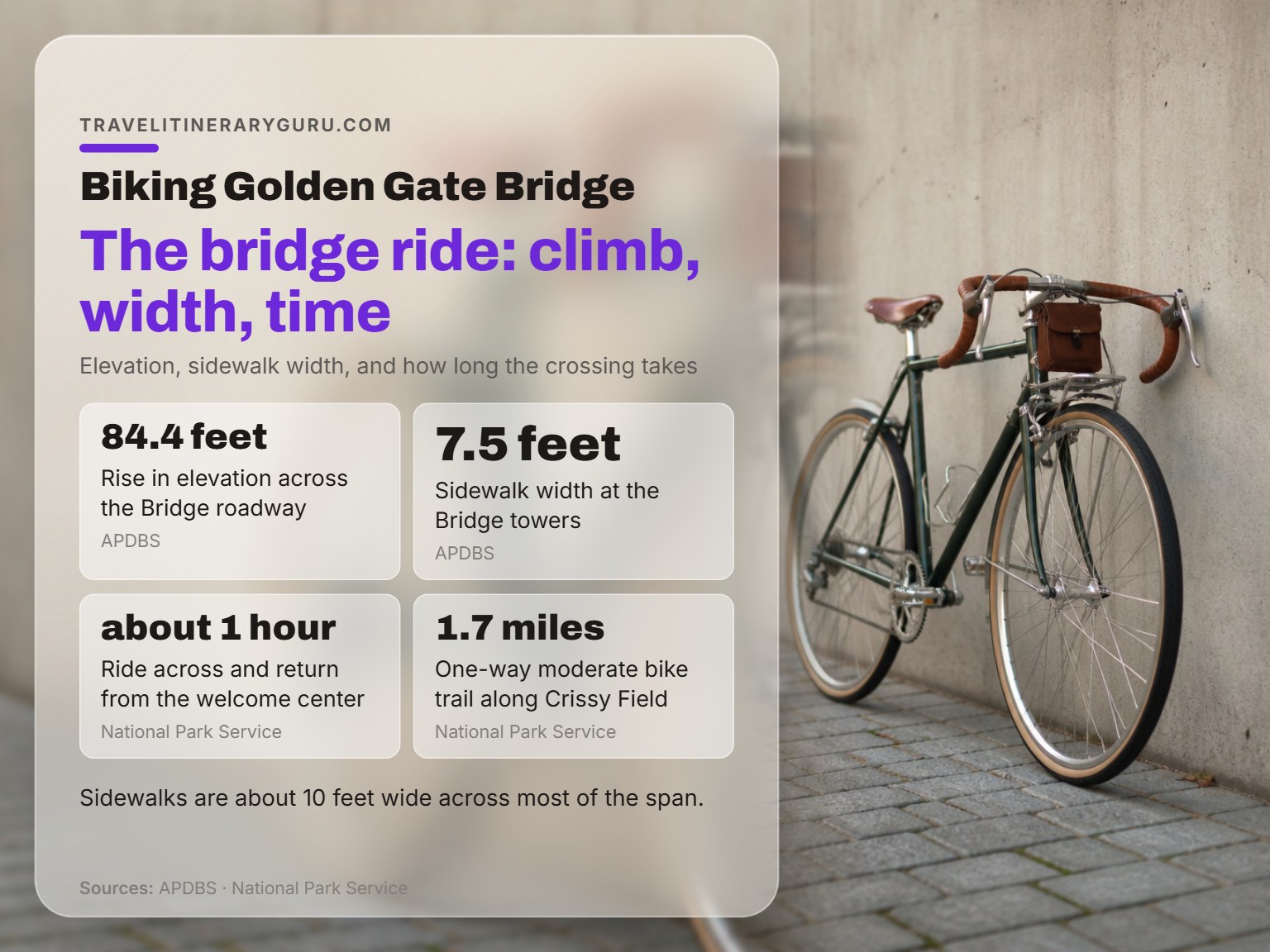
The climb is smaller than the wind makes it feel. The rise in elevation across the Bridge roadway is 84.4 feet, according to the Alta study. That number is modest. The crosswind is what makes it feel like work.
Surface matters more than riders expect. The path is paved at the bridge and between the bridge and Crissy Field. At Crissy Field itself it’s firm, packed gravel. At Crissy Field, the path is firm, packed gravel.
What Goes Wrong, and What to Do About It
Most problems on this ride have a single cause and a single fix. The trick is knowing which one you’re looking at before you start improvising.
| What goes wrong | Why it happens | What to do |
|---|---|---|
| West gate is shut | You’re early, or it’s a PST weekend evening | Move to the east sidewalk |
| Night gate won’t open | East sidewalk gates are remotely controlled | Press the buzzer and wait |
| Wind pushes you at the tower | Path narrows to about 7.5 feet | Drop to 5 mph, hold your line |
| The ride feels twice as long | Crissy Field is packed gravel, not asphalt | Add time on the approach |
Timing is the other variable. If you start at the welcome center and ride across and return, it should roughly take about 1 hour. Extend past the north end toward Sausalito or the Marin Headlands, or loop back along Crissy Field, and the same outing can eat most of a day.
Restrooms sit at the Golden Gate Bridge plaza, Fort Point National Historic Site, West Bluff picnic area, and East Beach at Crissy Field. The Pavilion Welcome Center has restrooms, a visitor center, and interpretive exhibits.
Budget for it. If you’re still working out how many days to spend in San Francisco, treat the bridge ride as a half-day block rather than a quick stop you squeeze between two other things.
How to Bike the Golden Gate Bridge From the Presidio Side
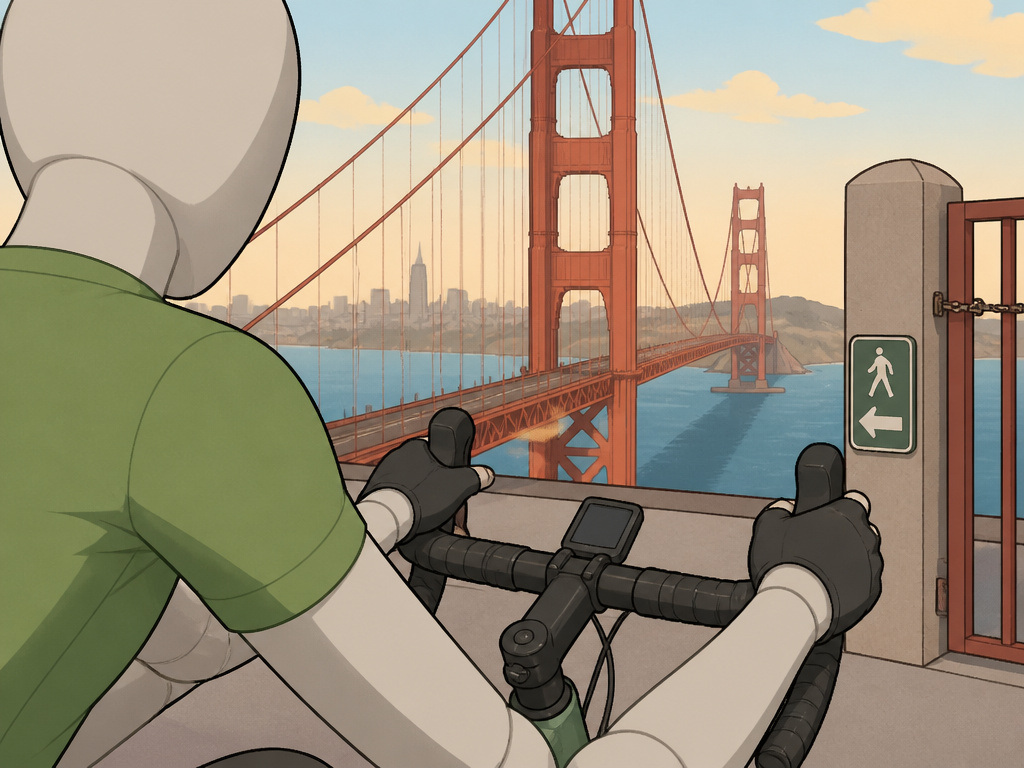
You’re on the west sidewalk at 4 pm on a Tuesday. The skyline sits behind the towers, the pedestrians are all on the other side, and the wind is doing its usual thing. This is the version of the ride people come back and talk about.
The tourist move is to rent near Fisherman’s Wharf and ride the east sidewalk. The better ride starts in the Presidio and takes the west side. Fewer pedestrians, and you get the bridge silhouetted against the city instead of the city silhouetted against the bridge.
That’s a small change with a big effect. The east sidewalk before 3 pm on a weekday is a shared path with people who stop without warning to take photos. The west side, once it opens, is mostly bikes.
I won’t send a first-time rider out on the east sidewalk before 3 pm on a weekday. Sharing a 10-foot path with pedestrians who stop mid-step is the version of this ride that makes people say the bridge was overrated. Start in the Presidio at 3:30 pm instead.
The Presidio end also puts you within a few minutes of lesser-known San Francisco spots that the tour buses never bother with. Worth building into the same afternoon.
If you’re mapping out a longer ride with multiple stops, the same discipline applies here as anywhere: self-guided bike tour planning lives or dies on how honestly you estimate the distance between things.
If the west sidewalk gate is shut, you’re either early or the wind is up. Take the east side and keep riding.
Pick the hour. The bridge does the rest.
Frequently Asked Questions
Can you bike across the Golden Gate Bridge at night?
Yes. Cyclists have access 24 hours a day. Between 9:00 pm and 5:00 am on weekdays, and between 6:30 pm and 5:00 am on PST weekends, you use the east sidewalk and enter through a remotely controlled security gate. Press the buzzer, wait for staff to locate you on camera, then repeat the process at the other end.
Which side of the Golden Gate Bridge do cyclists use?
On weekdays before 3:30 pm, bicycles use the east sidewalk and share it with pedestrians. After 3:30 pm on weekdays, and on weekends, the west sidewalk carries bicycle traffic. Weekend windows shift with the season, so check the district’s schedule rather than relying on a summary.
How long does it take to bike the Golden Gate Bridge?
The National Park Service estimates roughly an hour for a ride from the welcome center across the bridge and back. If you continue north to Sausalito or the Marin Headlands, or loop back along Crissy Field, plan for most of a day.
Are e-bikes allowed on the Golden Gate Bridge?
All classes of e-bikes are permitted, and riders are expected to follow the same rules as any cyclist. That means the 15 mph limit on the span and 5 mph around the towers. The bicycle safety study noted that modern bicycles, especially e-bikes, are capable of speeds much greater than 15 mph and recommended the 15 mph limit anyway, because of the narrow sidewalks, mixed-use congestion, opposing traffic flows, and often high winds.
Can you rent a bike at the Golden Gate Bridge?
No. There are no rentals on site. The closest rental location is Sports Basement at Crissy Field, per the National Park Service. Bay Wheels bike share is another option if you’re starting from within San Francisco, but you’ll need a dock to return the bike to.
What is the speed limit for bikes on the Golden Gate Bridge?
15 mph on the sidewalks, dropping to 5 mph around the towers. A 15 mph speed limit is consistent with the 85th percentile speeds observed in the speed study, and the new policies take effect on January 1, 2022.
The Bottom Line
One thing to do before you leave: pull up the seasonal sidewalk window and check which time zone you’re in. That single check decides whether your ride starts on the west sidewalk with the skyline behind you or ends at a locked gate on the east side.
The short version of how to bike the Golden Gate Bridge: start in the Presidio, ride the west side when it’s open, and treat the towers as a 5 mph zone even when the path in front of you looks clear. All classes of e-bikes are welcome. Scooters, skateboards, and dogs are not.
Fair warning. This all changes if you’re crossing on a PST weekend evening. The west sidewalk shuts at 6:30 pm, and from there you’re on the east side pressing a buzzer. Plan the ride around that hour and everything downstream takes care of itself.
I’d rather see you ride it once, at the right hour, than ride it twice and come away thinking the bridge was overrated.
