
How Many Days to Spend in Tahiti: The Flight Rule
This post contains affiliate links. As an Amazon Associate, we earn from qualifying purchases.
Most people book Tahiti wrong before they book anything. They pick a number of nights first, then try to fit flights around it. That’s backwards. The flights and the ferry schedules decide your day count, and there’s one airline rule that quietly reshapes the whole trip.
How many days to spend in Tahiti depends on your flights, not your wish list. Air Tahiti requires 90 minutes between an international arrival and a domestic flight, and 120 minutes the other way, so most trips touch Tahiti twice, a night after you land and a night before you fly home. Two or three days on the island itself covers it.
Those two numbers come from the airline’s own connecting-time rule, and they’re the reason the how many days to spend in Tahiti question usually turns into five nights somewhere you can’t leave. I’ve watched clients book that way. They fly eleven hours, land on a resort island, and never see the market, the museum, or the road that ends at Teahupo’o.
What follows: the day-count math for Tahiti itself, the three sources that disagree about total trip length, and the seasonal closures that will change your plan if you’re travelling in the next six months.
Key Takeaways
- Two or three days on Tahiti is the right number for most trips, split between arrival and departure rather than booked back-to-back.
- Air Tahiti’s 120-minute rule means a late inter-island flight can cost you your international connection. The safe version is a night on Tahiti before you fly home.
- The Papeete market opens at 04:00 on Sundays according to Ville de Papeete and Tahiti Tourisme, though another Tahiti Tourisme page says 3:00am, not the weekday 05:30. A Sunday arrival gives you a full first day; a Monday arrival doesn’t.
- Divers need one extra day. Allow a full day between your last dive and your flight home.
- The second and third Faarumai falls are closed from 16 November 2026 for about six months, according to the Service du tourisme de la Polynésie française. The first fall stays open.
How Many Days Do You Actually Need in Tahiti?
Two days for most people, three if you like land. One day covers the market, the museum and the food trucks. Two adds the coast road. Three adds something Tahiti does better than the other islands.
Air Tahiti’s operating rule sets minimum connecting times of 90 minutes for an international arrival to a domestic flight, 120 minutes for a domestic flight to an international departure, and 120 minutes between a boat and a flight in either direction. These intervals govern how a multi-island itinerary can be sequenced.
That’s the how many days to spend in Tahiti constraint everything else bends around. You can’t treat Tahiti as a pure transit stop unless your long-haul flight lands on time, and long-haul flights don’t always land on time.
The three-day version looks like this. Day one is Papeete: the market early, the museum mid-morning, the waterfront food trucks in the evening. Day two is the coast road by car, a full loop of Tahiti Nui. Day three is a choice. Teahupo’o by boat, a 4WD day in the Papenoo valley, or a guided hike.
Worth knowing before you start: The museum is closed to individual visitors on Mondays and Tuesdays. Tuesdays are reserved for schools and booked groups. Put the coast road on one of those days instead.
More than three days on Tahiti is for surfers, hikers, and people who genuinely like towns. If turquoise water from your room is the whole point, the extra days belong on Moorea or further out.
One Day, Two Days, Three Days: What Each Actually Buys You
One day is a taste. It’s fine if Tahiti is only where you change planes, and it’s genuinely enough for the market, the museum and dinner. It is not enough for the coast road as well.
The Papeete market, Mapuru a Paraita, runs Monday to Friday 05:30–16:00, Saturday until 13:00, and Sunday 04:00–10:00, according to Ville de Papeete. Go early. On a Sunday, the tourist board says to arrive before 07:00 to see it at its liveliest.
Te Fare Imanaha, the Museum of Tahiti and the Islands at Punaauia, opens Wednesday to Sunday 09:00–17:00, according to Te Fare Iamanaha. Admission is 1,000 XPF, free under 18, and the audio guide is 500 XPF, according to Te Fare Iamanaha. Go before the outer islands, not after, the context makes the rest of the trip read differently.
Two days adds the circle drive. That’s a full day by car: Point Venus, the Arahoho blowhole, the Faarumai falls, the Taravao plateau, the Vaipahi gardens, Marae Arahurahu, and the Mara’a caves. Avis Tahiti‘s smallest manual cars start at 12,900 XPF a day, according to Avis Tahiti.
| Days on Tahiti | What It Covers | Who It Suits |
|---|---|---|
| One | Market, museum, food trucks | Transit passengers only |
| Two | Adds the Tahiti Nui coast road | Most first visits |
| Three | Adds Teahupo’o, the interior, or a hike | Anyone who likes land |
| More than three | Surfing, long hikes, town life | Surfers and hikers |
The part nobody mentions: A late inter-island flight back to Tahiti can eat your international connection. The 120-minute rule is a minimum, not a buffer. If your Air Tahiti flight lands at 16:00 and your long-haul leaves at 22:30, you’re inside the window but one delay away from missing it.
Three days adds one of the things Tahiti does better than the other islands. The end of the road at Teahupo’o and a boat out to the wave is the obvious pick. Wave-watching trips run from about €30 (roughly 3,600 XPF), and Teahupoo Tours and Surf Adventures rates 08:00 and 16:00 as the best hours. Bus 30B runs from Papeete and the airport.
The interior is the other option. A full-day crossing of the Papenoo valley runs from €84 (about 10,000 XPF) with Natura Exploration, or US$103 (11,200 XPF) with Moana Voyages, according to the operators. A reviewer wrote in early June 2026 that landslides a few weeks earlier had stopped the tour reaching Lake Vaihiria, according to a Manawa review. Ask before you book.
How Do Your Flight Times Change the Plan?
Dawn arrivals hand you a whole first day. Evening arrivals hand you a bed and, if you’re quick, the food trucks.
Land at either hour and you can be at the market before it gets hot. On a Sunday that’s the 04:00–10:00 window, which is the best version of the market anyway.
That’s a first night and nothing else. The Vai’ete food trucks on the Papeete waterfront run from about 18:00 to midnight every evening, according to Tahiti Tourisme, so you can eat well and fall over.
Departures matter just as much. On one sample day, 19 October 2026, long-haul flights left at 07:40, 21:10 and 22:30, according to Aéroport de Tahiti. Air Tahiti Nui recommends arriving three hours ahead for international departures, according to Air Tahiti Nui. A 22:30 departure gives you most of a last day. A 07:40 departure gives you nothing, and you’ll want the airport motel across the road from the terminal.
Tahiti Lockers, opposite the international departure gate, keeps luggage around the clock, according to Aéroport de Tahiti. That’s what makes a late departure workable, you check out, drop the bags, and still have the afternoon.
The Split-Stay Argument, and Why I’ve Come Around on It
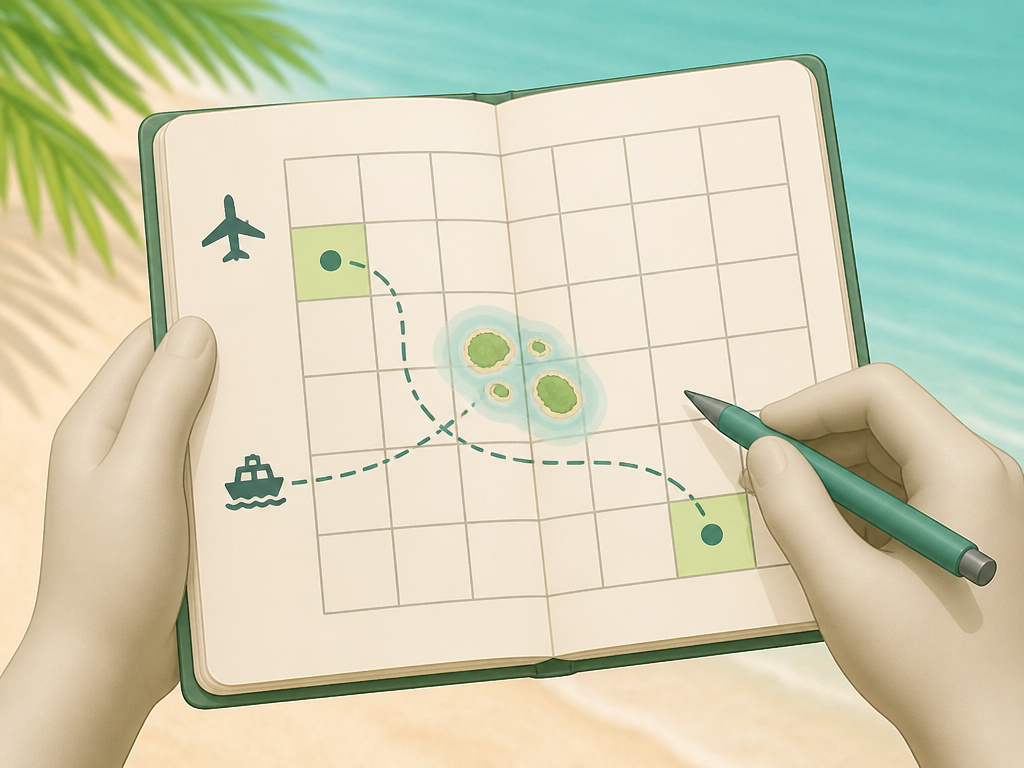
I used to book Tahiti days as one block. Land, stay three nights, leave. It’s simpler and it’s what most itineraries imply.
I’ve changed my mind. The 120-minute rule is the reason. If you block your Tahiti days at the start and fly out to the islands on day four, you’ve spent your buffer before the risky part of the trip. If you split them, one night on arrival, one before departure, the buffer sits where it’s needed.
Skip this if: You’re only visiting Moorea. The ferry crossing takes 30–45 minutes, according to Tahiti Tourisme, and Aremiti charges visitors 2,350 XPF one way, according to SNC Aremiti. There’s no Air Tahiti connection to protect, so a single block of Tahiti days is fine.
The split also changes what you can do. A night on arrival plus a night before departure, with a full day in between, is genuinely two or three days on the island. It just doesn’t feel like it when you’re booking.
This is the same trap that catches people planning days in Fiji, a long-haul flight, a resort island you can’t leave, and a day count that looked generous on paper. Tahiti has the same shape. The difference is that Tahiti has a town, a museum and a road worth driving, so the split stay pays you back.
Should You Skip Tahiti and Connect Straight Through?
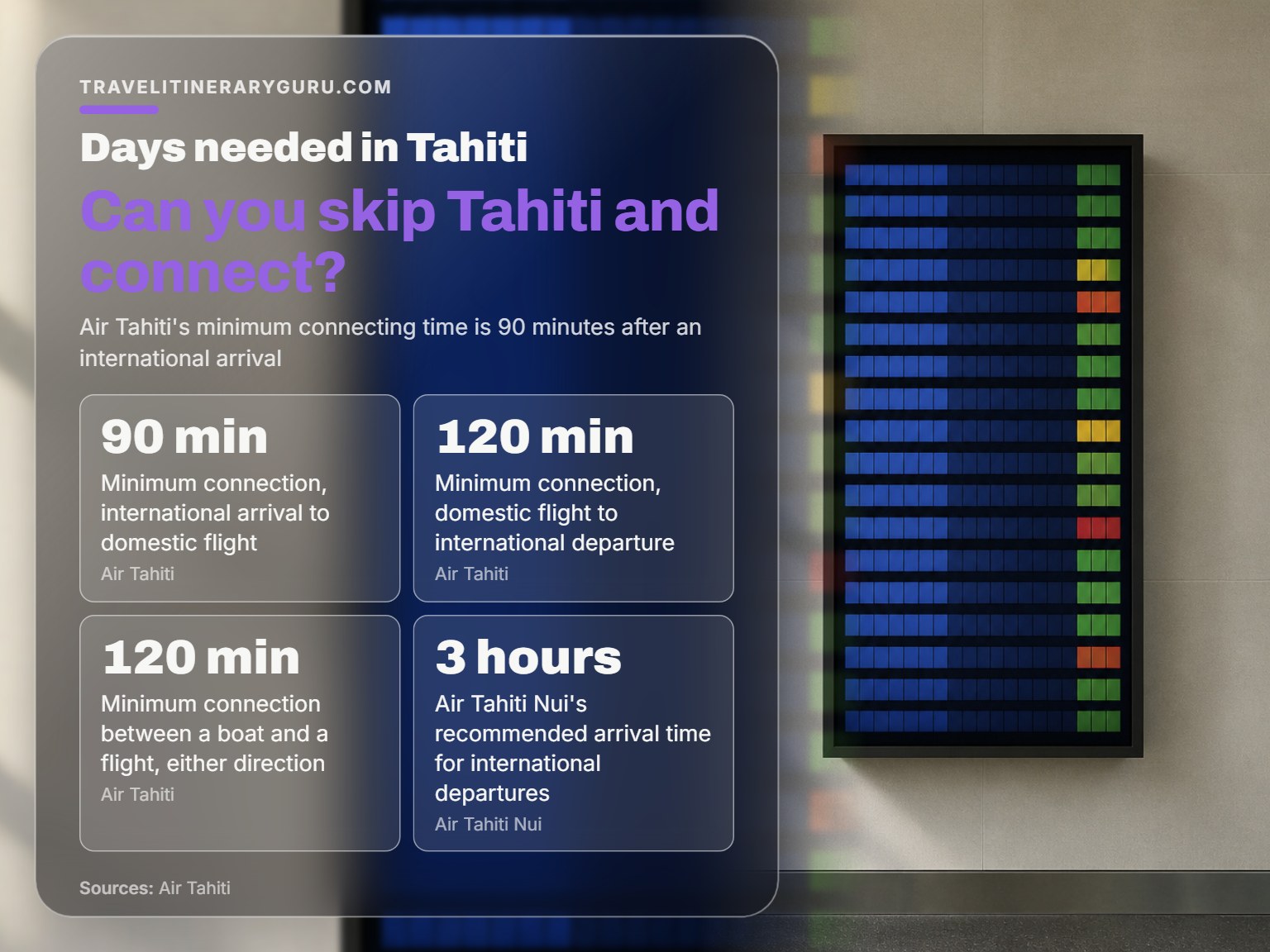
You can, inside the 90-minute minimum. It’s legal and people do it. It’s also the plan that fails hardest when a long-haul flight runs late.
Here’s the arithmetic. Your international flight lands. Air Tahiti needs 90 minutes before it will sell you the domestic connection. If you land at 05:30 and your island flight leaves at 08:00, you’re inside the window with room. If you land at 18:40 and the last island flight is at 20:30, you’re not.
The safer version is a night on Tahiti. Not because the island is unmissable, it’s a transit island for a lot of people and that’s a fair read, but because a missed connection on day one costs you a day you’d already paid for.
Easy to miss: Shops on Tahiti run 08:00–17:00 and Saturday mornings, and most are closed on Sundays, according to Tahiti Tourisme. If you land on a Sunday and need supplies, the market is your option and it shuts at 10:00.
There’s also the museum argument. Going before the outer islands, not after, is the version I’d defend. You get the archaeology and the migration history first, and every marae you see afterwards has context. Reverse the order and it’s a room of objects you’ve already stopped caring about.
If you’re weighing a transit stop against a longer island stay elsewhere, the same logic shows up in how many days to spend in the Maldives, resort islands don’t let you leave, so the transit question never comes up, and the day count has to carry everything.
How Many Days Do You Need for the Whole Trip?
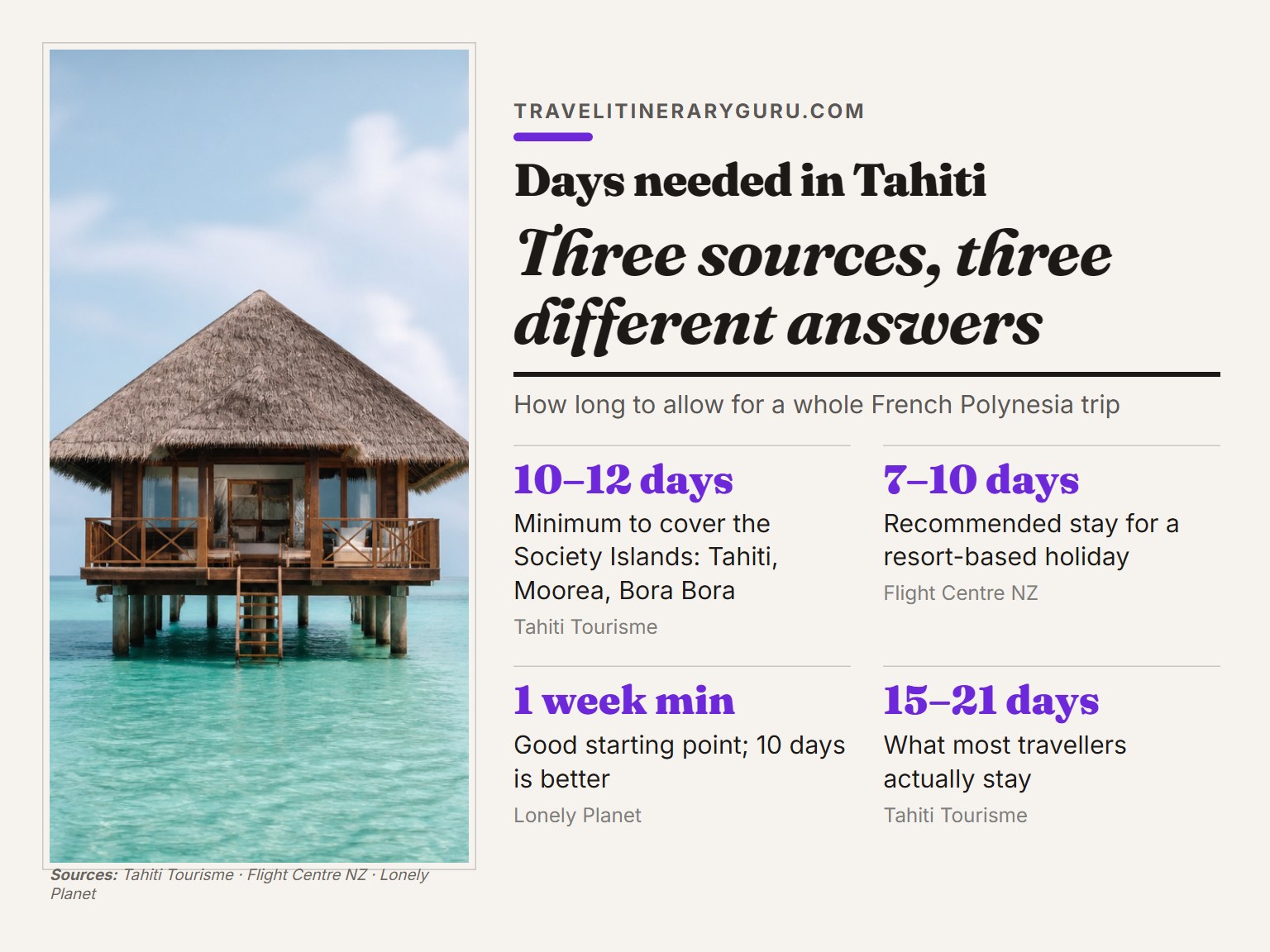
This is where the sources genuinely disagree, and you should know that before you book anything.
Tahiti Tourisme, the official destination board, says a minimum of 10–12 days is needed to cover the Society Islands. Tahiti, Moorea and Bora. It adds that three weeks allows for an island in the Tuamotus, such as Rangiroa or Fakarava, and a month is necessary to include the Marquesas. It also states that most travellers stay between 15 and 21 days.
Lonely Planet says a week is the minimum and 10 days is better. Flight Centre NZ recommends 7 to 10 days. That’s three different answers to the same question, and the gap between them is roughly a week.
| Source | Recommended Length | What It Assumes |
|---|---|---|
| Tahiti Tourisme | 10–12 days minimum | Society Islands, all three |
| Lonely Planet | 1 week minimum, 10 days better | More than one island |
| Flight Centre NZ | 7–10 days | Resort-based holiday |
My read: the tourist board is answering a different question. It’s describing what it takes to see the Society Islands properly, which is a real number and a fair one. Lonely Planet and Flight Centre are answering what most people actually book. Both are correct about their own question.
One thing all three would agree on. Trying to see five islands in a week doesn’t work, the inter-island legs eat your time. If you want a first trip that holds together, the classic trio is Tahiti, Moorea and Bora. Add Rangiroa or Fakarava if you dive, or Huahine if you want something less polished.
The same overreach shows up in days in Bali and in how long in Zanzibar. Long-haul destinations invite ambitious itineraries, and the travel days are always the part people forget to count.
When to Go, and What’s Shut Right Now
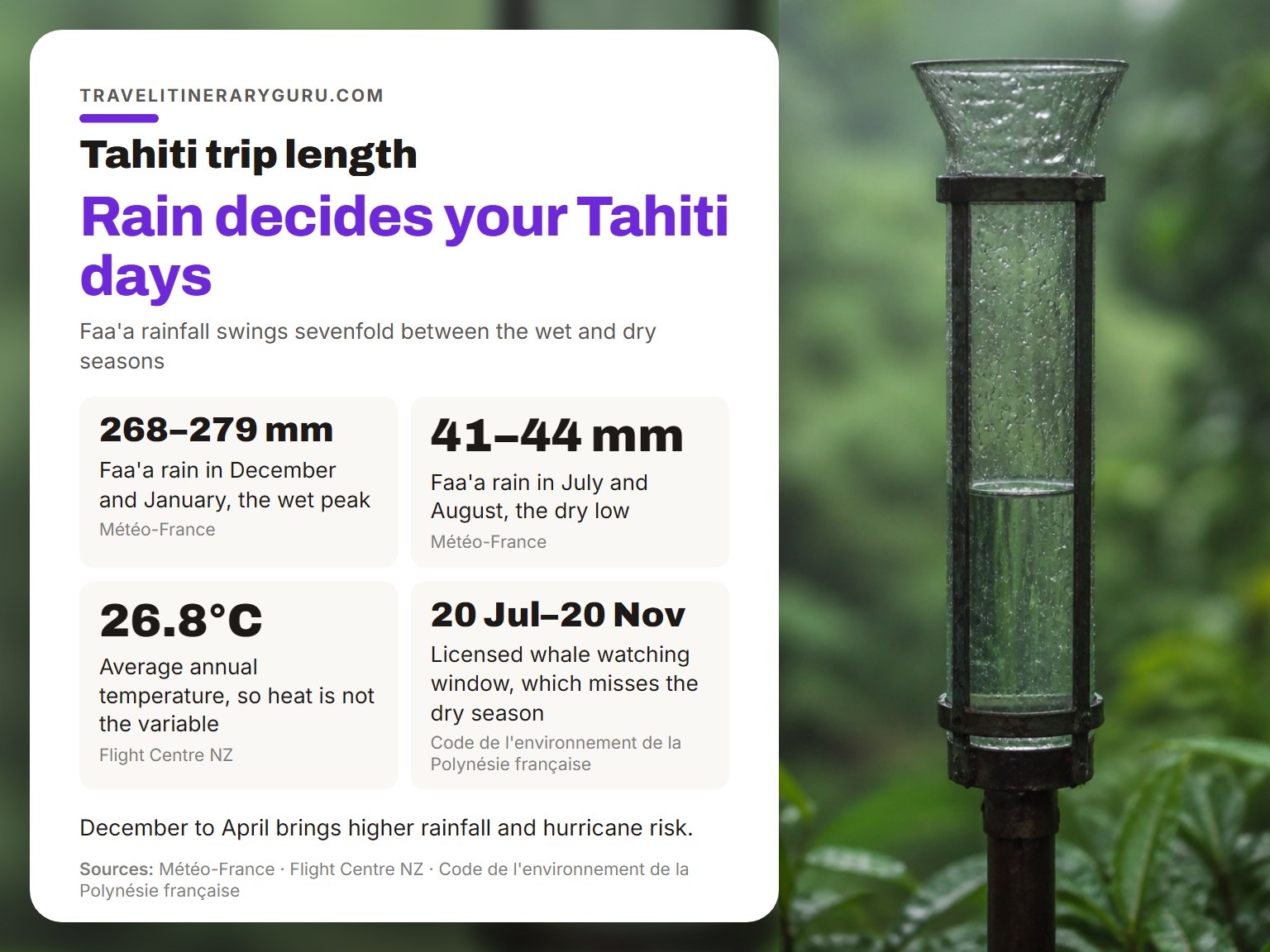
April to October is the dry season, and the numbers back it up. Faa’a gets 268–279 mm of rain in December and January, against 41–44 mm in July and August, according to Météo-France. That’s a sevenfold difference, and it decides whether your valley and waterfall days happen at all.
From December to April, rainfall is higher and there’s a hurricane risk. The average annual temperature sits at 26.8°C, according to Flight Centre NZ, so heat isn’t the variable. Rain is.
Two closures matter for anyone travelling in the next six months. The second and third Faarumai falls are closed from 16 November 2026 for about six months; the first fall stays open. The Arahoho blowhole reopened on 30 October 2026, so that stop is back on the circle drive.
The Gauguin space at Papeari was due to open at the end of 2026 but had no announced date when it was last checked, according to Tahiti Infos. Don’t build a day around it.
Whale season is the other timing lever. Licensed whale watching runs from 20 July to 20 November under the Code de l’environnement de la Polynésie française. Humpback sightings are possible from August to October on the tourist board’s account, while Lonely Planet puts the whales close to shore from July to October. Either way, the window is roughly July through November, and it doesn’t overlap the dry season neatly.
If you’re planning around the whales, Santorini trip length is a useful contrast, a three-night island where the season is about crowds, not wildlife, and the day count is set by how much caldera you can take.
Getting Around Without a Car
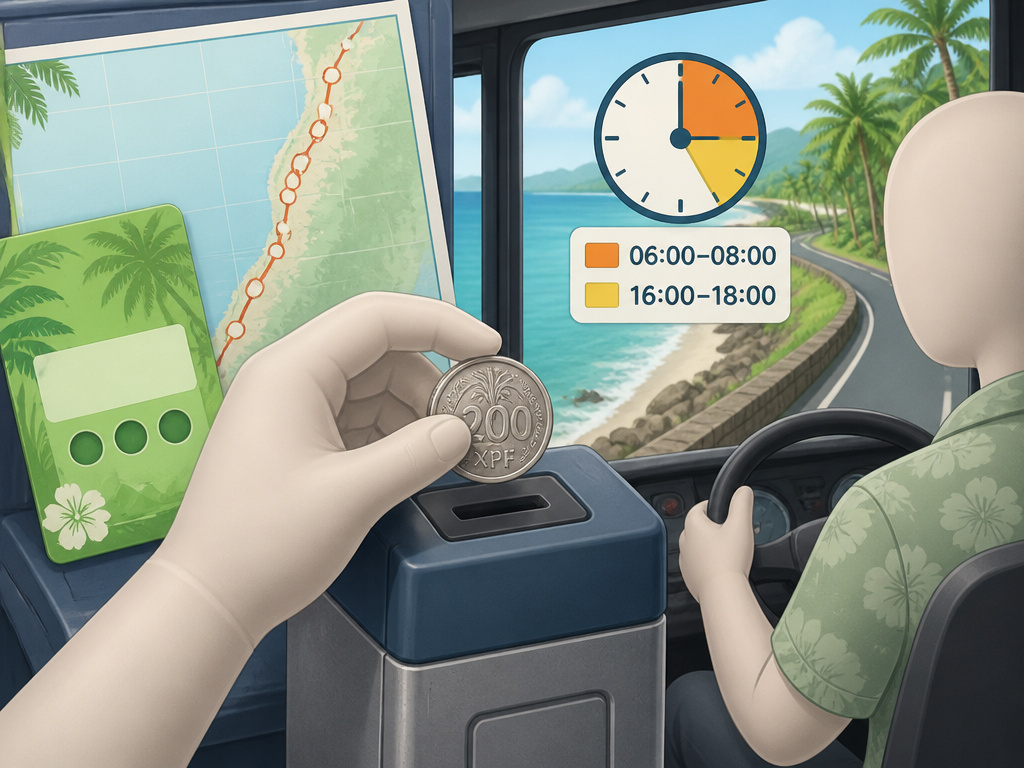
Papeete and the west coast work fine by bus. Tere Tahiti charges 200 XPF on board, 150 XPF prepaid, or 1,200 XPF for a three-day visitor pass, according to Tere Tahiti (RTCT). That covers the market, the museum and the beaches.
The coast road doesn’t work by bus. For the loop you need a car or a tour, and a car is the better version because you set the pace. The one thing to plan around is traffic: most economic activity sits between Punaauia and Mahina, and the peak windows are 06:00–08:00 and 16:00–18:00, Monday to Friday. Start the loop early and you’ll miss both.
Where this goes sideways: Driving the coast road on a weekday afternoon. You’ll sit in the Punaauia–Mahina crawl for an hour and lose the light at the Mara’a caves.
For the last night, two options do specific jobs. Tahiti Airport Motel is across the road from the terminal, published at 14,900 XPF for a double, though the rate is undated. Kon Tiki faces the Papeete ferry terminal, according to Kon Tiki Tahiti, which is the right call if you have an early boat or want an evening in town.
Frequently Asked Questions
How many days do you need in Tahiti?
Two or three on the island itself. One day covers Papeete’s market, the museum and the food trucks. Two adds the coast road round Tahiti Nui. A third adds Teahupo’o, a 4WD day in the Papenoo valley, or a guided hike. Split them between the start and end of the trip.
Is one day in Tahiti enough?
For the market, the museum and dinner, yes. It is not enough for the coast road as well, that’s a day of its own. If Tahiti is purely where you change planes, one day is a fair allocation and you’ll still eat well.
Should I skip Tahiti and connect straight to the islands?
You can, inside Air Tahiti’s 90-minute minimum connecting time. A delayed long-haul flight makes it risky, though, and a missed connection costs you a day. A night on Tahiti is the safer plan, and the market and museum are worth the day anyway.
Can I see Tahiti without a car?
Papeete and the west coast, yes. Tere Tahiti buses cost 200 XPF on board or 150 XPF prepaid, and a three-day visitor pass is 1,200 XPF. For the coast road you need a car or a tour.
What can I do on Tahiti on a Sunday?
The market runs 04:00–10:00 and is at its liveliest before 07:00. The museum opens at 09:00. The beaches are open, and the Vai’ete food trucks run from about 18:00 to midnight. Note that most shops are closed on Sundays.
Do I need extra time if I’m diving?
Yes. Allow a full day between your last dive and your flight home to lower the risk of decompression sickness. That’s a day non-divers don’t need, and it changes where the last night goes.
The Bottom Line
One rule most guides skip: if your international flight lands after 16:00 and you’re connecting to an island the same day, don’t. Book the night on Tahiti. The 90-minute minimum is a floor, not a plan, and the 120-minute rule on the way home is the one that bites.
For a first trip, my answer is a split stay, one night on arrival, one or two full days in the middle, one night before departure. That’s two or three days on Tahiti, and it protects the connection at both ends.
Fair warning on the total trip length. The tourist board’s 10–12 day minimum is honest about what the Society Islands take. If you only have a week, pick two islands and accept that you’re seeing a slice. Trying to fit five in a week is the mistake I see most often, and the inter-island legs are what punish it.
Start with the flights. Everything else, the days, the islands, the order, falls out of that.
