
2-Day Salt Lake City Itinerary for First-Time Visitors
This post contains affiliate links. As an Amazon Associate, we earn from qualifying purchases.
You can see the core of Salt Lake City in two days, and the first-timer version works best as one walkable downtown day plus one mountain or neighborhood day. Temple Square runs 7AM to 10PM daily with free admission, and it stays open through the ongoing renovation.
That second day is where most 2-day Salt Lake City itinerary for first-time visitors plans quietly fall apart. The downtown loop is genuinely walkable, but the moment you point the plan at a canyon trailhead or a neighborhood like 9th & 9th, the transit math changes and a car stops being optional.
What follows is the two-day shape I’d hand a first-timer: a downtown day you can do on foot and TRAX, a second day built around one outdoor anchor, and the two contradictions in the official sources that will actually affect your trip.
Key Takeaways
- Day 1 is car-free. Temple Square, the Utah State Capitol, City Creek Center, and the public library all sit within a 15-20 minute walk of each other.
- TRAX Sunday service is disputed: the Salt Lake Tourism Center says TRAX does not run on Sundays, while Visit Utah and visitsaltlake.com promote TRAX and the free fare zone with no Sunday caveat.
- Day 2 wants a car or rideshare. Visit Salt Lake’s own “Where the Locals Go” itinerary recommends car access for its mountain day.
- Temple Square is open during renovation, not closed. Visit Utah’s page still carries the stale “major renovations” warning.
- The Downtown Farmers Market is seasonal, not a year-round anchor. Visit Salt Lake hedges with “if in season.”
What Order Should a 2-Day Salt Lake City Itinerary Follow?
Day 1 stays downtown and on transit. Day 2 goes up or out, and you decide between a canyon hike and a neighborhood wander based on how your legs feel after Day 1.
Salt Lake City sits at roughly 4,200 feet in a bowl between the Wasatch Range and the Great Salt Lake, and downtown is compact enough that a single walking loop covers the historic core.
Salt Lake City’s downtown core is laid out on Brigham Young’s original street grid, with wide numbered blocks radiating from Temple Square. Addresses read as coordinates: 300 South, 900 East.
Start your downtown day at Temple Square. The Temple Square official visitor guide confirms the square is open daily from 7AM to 10PM and admission is free, and it remains open during the renovation ahead of a Salt Lake Temple Celebration in 2027.
One distinction first-timers miss: the square is open, but the temple interior is not. The National Park Service notes that entrance to the Salt Lake Temple itself is restricted, and the building is under construction. You walk the grounds, not the building.
From Temple Square, the Utah State Capitol, City Creek Center, and the Salt Lake City Public Library all sit within a 15-20 minute walk of each other. That’s your Day 1 spine, and it’s the part of the trip where you can walk or take TRAX in the free fare zone.
Why Does TRAX Not Run on Sundays?
TRAX Sunday service is disputed in any 2-day Salt Lake City itinerary for first-time visitors: the Salt Lake Tourism Center states flatly, “Trax does not run on Sundays!” while Visit Utah and visitsaltlake.com promote TRAX and the free fare zone with no Sunday caveat. This is the single most important scheduling fact for a car-free visitor, and it’s the one the official tourism pages don’t mention.
I’ll be honest with you: I nearly built a Sunday plan around TRAX before I found that line buried on a tourism-center FAQ page. Visit Utah and visitsaltlake.com both promote TRAX and the downtown free fare zone with no Sunday caveat at all. If you’re arriving on a Sunday and planning to lean on rail, you need a different plan.
On Sundays, you’re walking, ridesharing, or taking a UTA bus. Downtown is compact and walkable, so walking covers Day 1.
Here’s the transit picture in one place:
| Option | Best For | The Catch |
|---|---|---|
| Walking | Day 1 downtown loop | Fine for the core, useless for canyons |
| TRAX light rail | Airport to downtown, free fare zone | No Sunday service |
| UTA bus or rideshare | 9th & 9th, Sugar House | Slower than rail, but runs Sundays |
| Rental car | Day 2 canyon and mountain legs | Parking downtown is a hassle |
Common mistake: Planning a Sunday arrival around TRAX. The Green Line from the airport is the easy answer on any other day, but on Sunday you’re booking a rideshare or a taxi instead.
For the historic-trail side of downtown, the NPS Utah historic trails itinerary is a numbered 13-stop walking tour with exact addresses. It’s a federal source and the most precise downtown document I’ve found.
Which Downtown Stops Are Worth the Walk?
The NPS walking tour anchors the historic stops, and the addresses are exact. This Is The Place Heritage Park sits at 2106 Sunnyside Avenue per NPS, though the park’s own listing shows 2601 E Sunnyside Ave, so verify before you drive there. The park holds the National Pony Express Monument and the 60-foot This Is the Place Monument inside its 450 acres.
A few other stops worth the detour:
- Pioneer Memorial Museum at 300 North Street and Main Street, per NPS, for pioneer history in a single building
- The Great Salt Lake City Pony Express Station monument at 163 South Main Street, a curbside marker most walkers pass without noticing
- The 9th & 9th neighborhood at 900 S 900 East, which has 40-plus women-owned businesses per Visit Utah
It’s a 10-15 minute bus ride or rideshare from downtown, and TRAX doesn’t reach it, so plan for a UTA bus or a rideshare if you’re going.
The Downtown Farmers Market at 300 W 300 South is a Saturday tradition per Visit Utah, bringing thousands of people together for local food and art. But it’s seasonal. Visit Salt Lake hedges the listing with “if in season,” so don’t build a Saturday plan around it in the dead of winter.
Easy to miss: The farmers market isn’t a year-round anchor. Visit Salt Lake’s own listing says “if in season,” which means a winter Saturday visit gets you an empty lot, not a market.
For the wider Utah context, if you’re extending this trip into a longer route, our Utah national parks itinerary maps out the Mighty Five loop that most first-timers bolt onto a Salt Lake base. It’s a different trip, but the logistics overlap more than you’d think.
Is the Salt Lake Temple Actually Open?
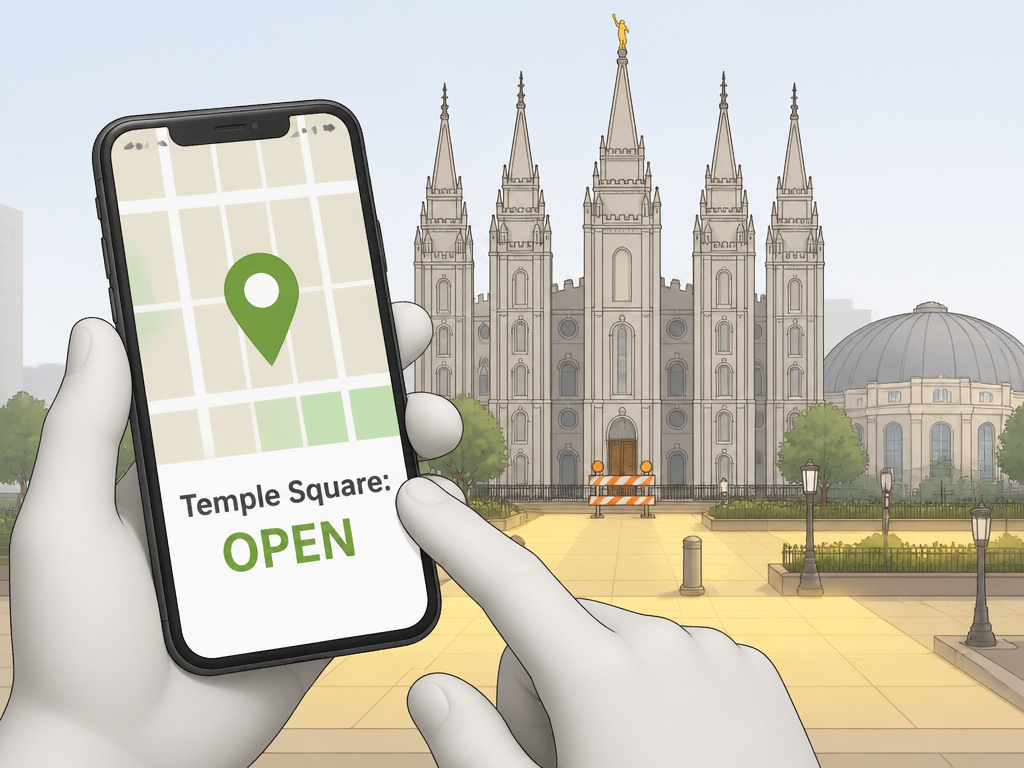
No. The Salt Lake Temple interior is closed to visitors during the renovation, but Temple Square itself is open, free, and running normal hours. This is the contradiction that trips up first-timers, because Visit Utah’s page still warns of “major renovations” and redirects visitors to the Tabernacle, Church History Museum, and FamilySearch center.
Two official sources, opposite emphasis. The operator-controlled Temple Square site says the square remains open and free during the renovation, ahead of a 2027 celebration. Visit Utah’s page reads as if the whole site is closed.
The practical answer: you can visit Temple Square today. You cannot enter the temple. Visit Utah redirects visitors to the Tabernacle, Church History Museum, and FamilySearch center, and the Tabernacle holds one of the largest pipe organs in the world.
The Salt Lake Temple took roughly four decades to build and was finished in 1893. The square’s open-during-renovation status is worth confirming before you go, ahead of the 2027 Salt Lake Temple Celebration.
How Hard Is the Ensign Peak Hike Really?
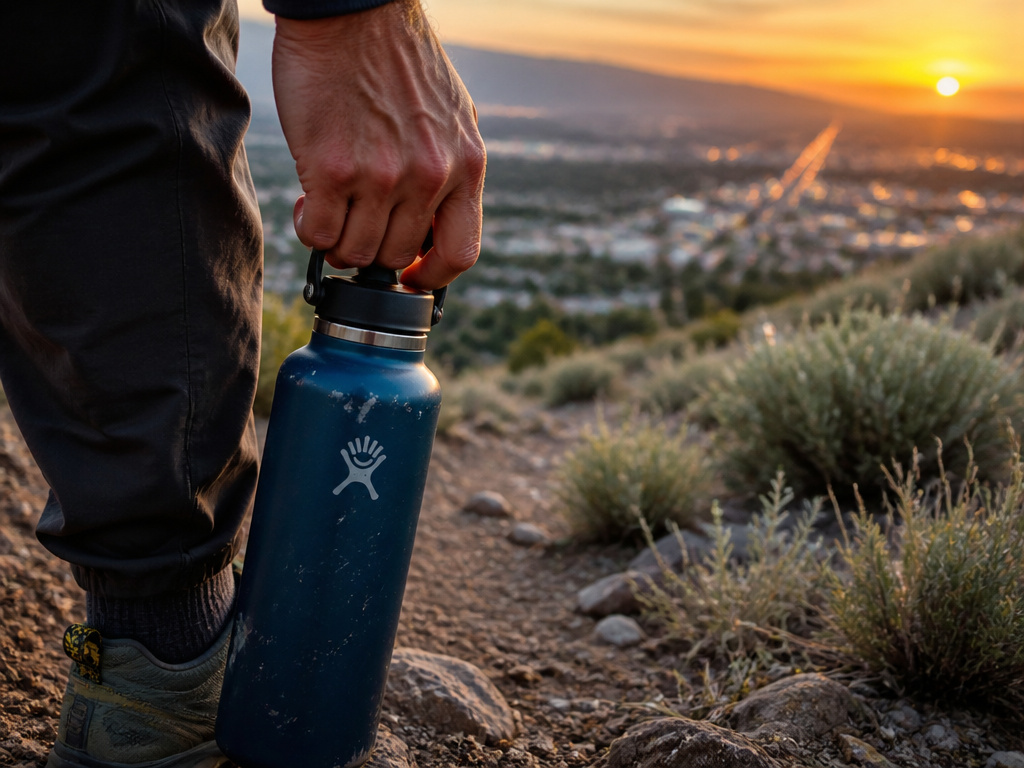
Ensign Peak is a 700-foot climb from downtown, and the trailhead sits 1 mile north of Temple Square. NPS describes it as an easy walk about 0.3 mile up the trail to an overlook at 5,060 feet, with the summit at 5,414 feet.
That “easy walk” phrasing is doing some work. Allow at least an hour from the trailhead for a leisurely hike, and carry water. The overlook gives you a straight view down State Street across the valley the pioneers planned.
What most people get wrong: Treating Ensign Peak as a quick photo stop. It’s 700 feet of elevation gain from downtown, at altitude, and NPS recommends a full hour plus water. This is a real hike, not a viewpoint pull-off.
The view is best at dusk, as the sun sets and the city streets start to sparkle.
What Changes on Day 2?
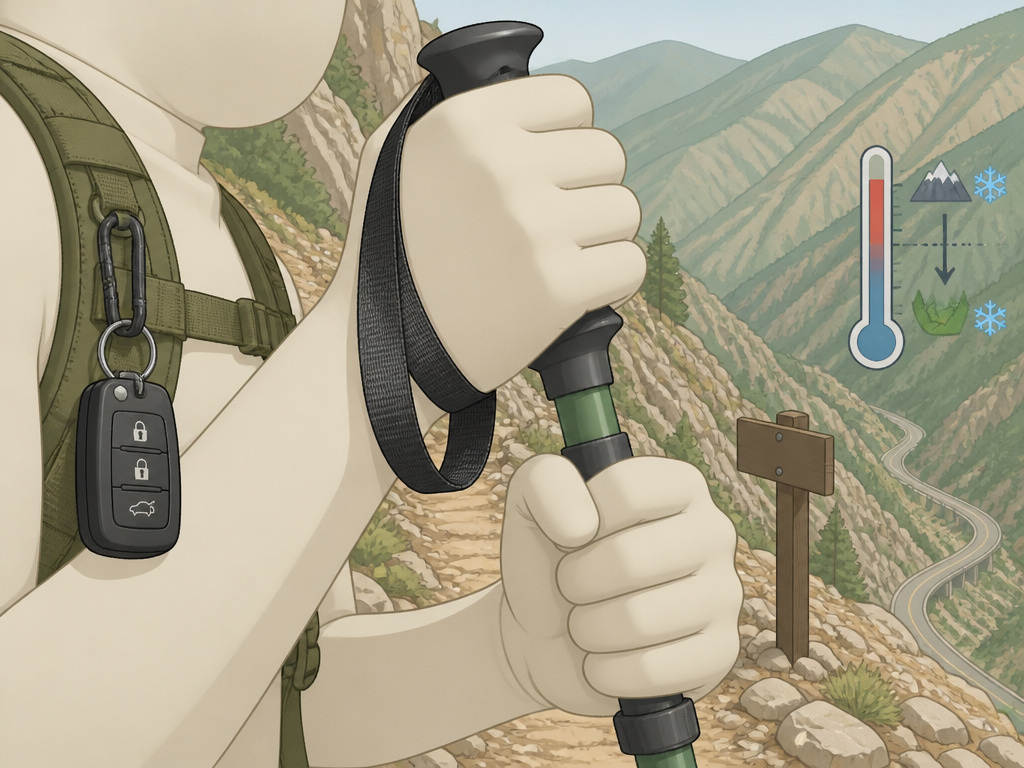
In a 2-day Salt Lake City itinerary for first-time visitors, Day 2 is where you pick your anchor, and the honest answer is that a car stops being optional. Visit Salt Lake’s “Where the Locals Go” itinerary says Day 1 destinations are near downtown so a car or rideshare works, but Day 2 has destinations across the city and up into the mountains, so it recommends car access.
If you want a canyon hike, the Lake Blanche Trail climbs 2,700 feet through the Twin Peaks Wilderness in Big Cottonwood Canyon. Summer daytime highs regularly clear 90°F downtown, but temperatures drop 15-20 degrees at higher elevations in the canyon, so the same hike feels very different an hour up the road.
For the neighborhood version of Day 2, stay downtown-adjacent. The Southwest travel guide is worth reading if you’re extending this into a longer regional trip, but for a two-day Salt Lake visit, the neighborhood option is simpler.
If a canyon hike is on your list, our Zion and Bryce Canyon itinerary shows how the southern Utah parks handle elevation and trailhead logistics, which is a useful comparison for the Wasatch canyons.
Worth knowing before you start: A 2,700-foot canyon climb at 4,200 feet of base elevation is not the same as the same climb at sea level. Your pace will be slower than you expect, and the temperature swing between valley and canyon is 15-20 degrees.
Where Should First-Time Visitors Stay?
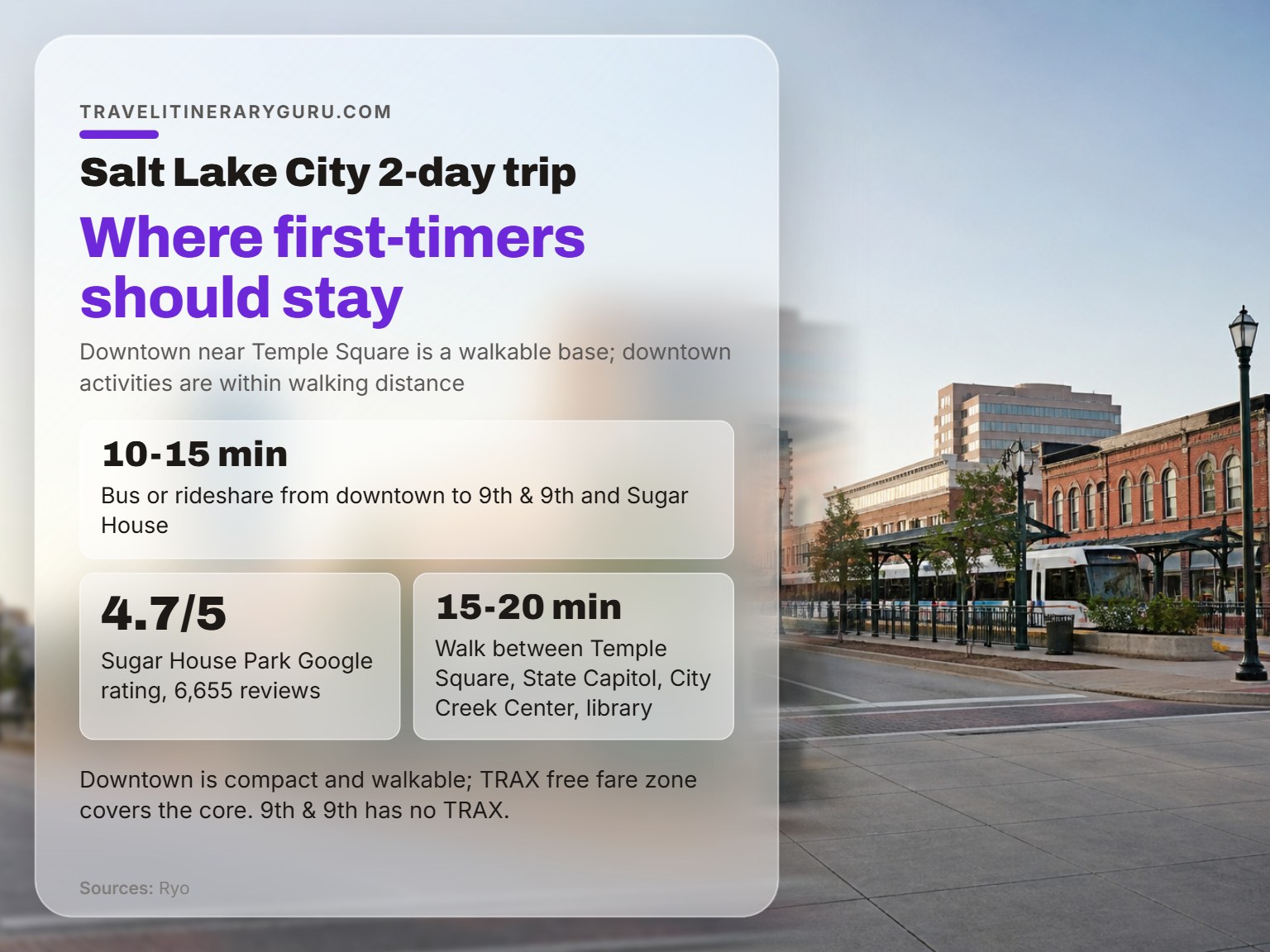
Downtown near Temple Square is the right base for a two-day trip, and the reason is logistics. Staying downtown means Day 1 is walkable, since the historic core is compact.
9th & 9th and Sugar House are a 10-15 minute bus ride or rideshare from downtown. Sugar House Park at 1330 2100 S is rated 4.7/5 on Google across 6,655 reviews, and it’s an easy walk to dinner.
One more thing worth checking before you book: if you’re combining this with a longer US trip, our guide on how to plan your first USA trip covers the passport, insurance, and booking-order questions that come up before the itinerary even starts.
Frequently Asked Questions
Is two days enough for Salt Lake City?
Yes, for the downtown core and one outdoor anchor. Visit Utah’s own trip planner recommends 2 days for Salt Lake City as a base camp, though its “Play The Hits” itinerary runs 3 days. Two days covers Temple Square, the historic downtown loop, and one canyon or neighborhood day.
Do I need a car in Salt Lake City?
For Day 1, no. Downtown is compact and walkable, and TRAX covers the free fare zone. For Day 2, Visit Salt Lake recommends car access because the mountain and neighborhood destinations are spread across the city and up into the canyons.
Does TRAX run on Sundays in Salt Lake City?
Sources disagree: the Salt Lake Tourism Center states plainly that TRAX does not run on Sundays, while Visit Utah and visitsaltlake.com promote TRAX and the free fare zone with no Sunday caveat. Visit Utah and visitsaltlake.com promote TRAX without mentioning the Sunday gap, so a first-time visitor relying on those pages won’t learn it until they’re standing at a closed station.
Is Temple Square open during the renovation?
Yes. The official Temple Square site says the square is open daily from 7AM to 10PM with free admission and remains open during the renovation. The temple interior is closed and restricted per NPS. Visit Utah’s page still carries a stale “major renovations” warning that reads as if the whole site is shut.
What is the best time of year to visit Salt Lake City?
Late spring or early fall, around May and October, when the weather is mild and outdoor activities are comfortable. Summer downtown highs regularly clear 90°F, and winter daytime temperatures sit in the 30s°F, with four resorts, Alta, Snowbird, Brighton, and Solitude, within 45 minutes of downtown.
The Bottom Line
One scheduling dispute most two-day guides skip: the Salt Lake Tourism Center says TRAX does not run on Sundays, while Visit Utah and visitsaltlake.com promote TRAX with no Sunday caveat, so if your trip includes a Sunday, confirm service before relying on rail. That single scheduling fact reshapes Day 1 more than any attraction choice.
The second rule is about Day 2. Decide before you arrive whether you’re renting a car, because the canyon and neighborhood options both assume you have one. If you don’t, keep Day 2 downtown and treat it as a slower version of Day 1, which is a perfectly good trip.
And I’ll be honest about the part I can’t help you with: I’m terrible at budgeting for luxury travel. I can tell you how to eat well downtown and keep Day 1 cheap, but if you want a luxury resort weekend, I’m the wrong person to ask. Everything above is built for the traveler who wants the city and one good hike.
Fair warning on the Temple Square timeline: the 2027 celebration date is the anchor for the renovation messaging, and official pages disagree on how to frame the current state. Check the operator’s site the week you travel, not the tourism board’s.
