
How to Travel Respectfully in Indigenous Communities
This post contains affiliate links. As an Amazon Associate, we earn from qualifying purchases.
To travel respectfully in Indigenous communities, ask before you photograph anyone or any event, stay out of restricted and sacred areas, and follow the guidance of the Traditional Owners or tribal government for that specific place. Written etiquette guides are a starting point; YMAC says to identify the right person for that part of the land, while Indigenous Tourism BC says to follow Indigenous governance and communities collectively.
The “specific place” part is where most trip planning quietly falls apart. A single national etiquette list doesn’t exist, and the organizations that publish guidance say so themselves. Yamatji Marlpa Aboriginal Corporation (YMAC) states plainly that its own guide should not be used in place of direct advice from the relevant language group or Prescribed Body Corporate (PBC), which is central to how to travel respectfully in indigenous communities.
So the work isn’t memorizing a rulebook. It’s figuring out who to ask, and then asking.
What follows: the consent rules that actually differ between communities, the seasonal windows that will cancel your meeting, the group logistics that break invisibly, and the four questions to answer before you book anything.
Key Takeaways
- Sacred sites have two thresholds. Indigenous Yukon asks visitors not to visit spirit houses or graveyards at all, while Uluṟu-Kata Tjuṯa prohibits entering restricted areas but permits approaching a boundary.
- Identify the right person for that specific part of Country. YMAC notes different people hold cultural responsibility over different parcels of land, while Indigenous Tourism BC advises following Indigenous governance and communities collectively.
- Pack out everything and expect no facilities. AIANTA notes public bathrooms aren’t always available in Native Nations and communities.
The Consent Rules That Actually Differ Between Communities
Photography is the first place travelers get it wrong, and it’s the clearest example of why one rule doesn’t cover everywhere.
Commercial photography of Uluṟu-Kata Tjuṯa National Park requires a permit. Permission to photograph Aṉangu individuals must be sought separately from any park-level permit.
Commercial work and personal snapshots sit under different rules. If you’re shooting for a brand, a client, or a monetized channel, you’re in permit territory before you’ve taken the camera out of the bag.
This is where I see the most avoidable friction. Travelers treat a phone camera as exempt from the permission question. It isn’t. The device doesn’t change what you’re doing.
When Consent Is Not Enough
A yes from one person doesn’t travel. If a community member agrees to a photo, that agreement is for that moment, that frame, and that person. It doesn’t extend to their family, their home, or the event happening behind them.
AIANTA’s guidance for visiting Tribal Nations and Alaska Native Villages names the failure mode directly: taking photographs of certain ceremonies is one of the unique impacts uninformed guests cause, alongside damage to sacred sites and desecration of graves, which is central to how to travel respectfully in indigenous communities.
Easy to miss: Assuming a general “yes” covers the whole scene. A nod from one person does not authorize the ceremony behind them, and the resulting image can cause harm long after you’ve flown home.
What Most People Get Wrong About Sacred Sites
Sacred sites aren’t a single category with a single rule. The thresholds differ, and getting this wrong isn’t a minor faux pas.
| Source | Sacred-site rule | Practical read |
|---|---|---|
| Indigenous Yukon | Do not visit spirit houses, graveyards, sacred sites | Stay away entirely |
| Uluṟu-Kata Tjuṯa (Parks Australia) | Do not enter or photograph restricted areas | Approach permitted, entry prohibited |
| Quileute Tribe | Protect sacred and ceremonial areas and artifacts | Follow posted and stated boundaries |
| AIANTA (general) | Private homes, sacred sites, certain ceremonies not accessible | Treat as off-limits by default |
The pattern underneath all four: assume off-limits, then wait to be invited. The Quileute Tribe frames this as protecting sacred and ceremonial areas and preserving historical artifacts. Their page also notes that spiritual teachings, sacred ceremonies, and burial grounds are not openly shared with the public, which is central to how to travel respectfully in indigenous communities.
That last point matters for how you plan. You aren’t owed access to ceremony. The invitation, if it comes, comes from the community.
How Do You Ask Before Taking Photos or Recording?
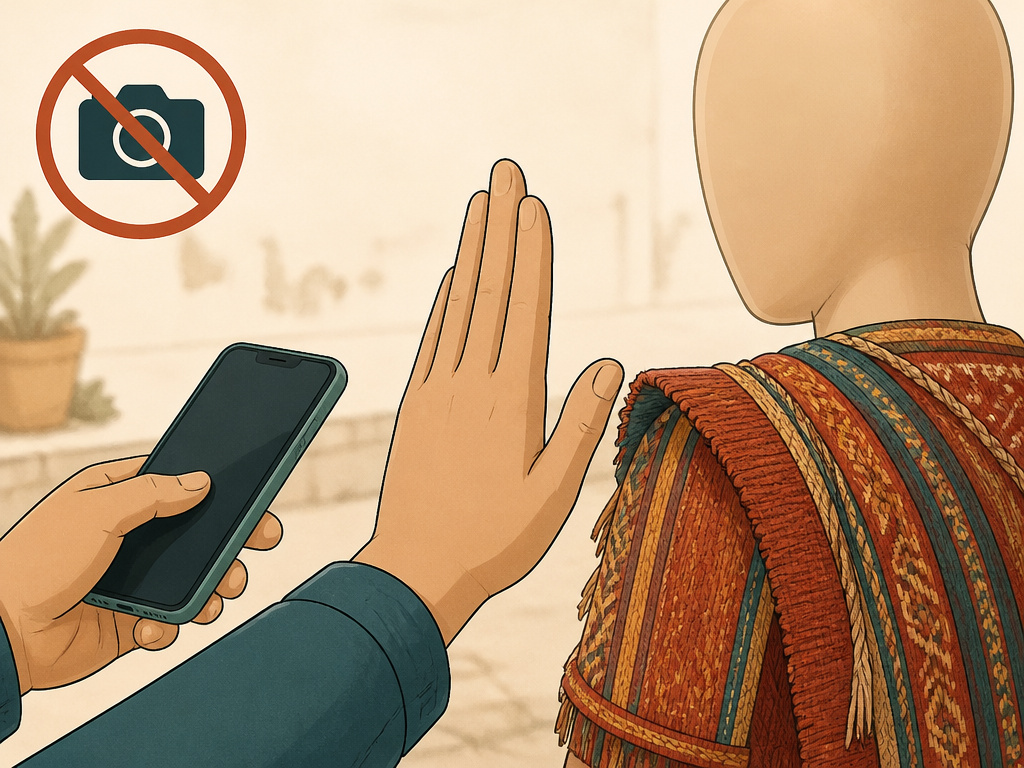
Ask the person directly, in the moment, before the camera comes up. If you’re recording an event rather than an individual, ask the organizer or host first, then ask individuals within it.
The mechanics are simple. The follow-through is where people slip.
- Ask once, in advance. Not mid-shutter, not after. Before.
- Accept a no without negotiating. A declined photo is a complete answer.
- Ask about sharing, not just taking. Posting to social media is a second consent question.
- Don’t photograph children without a parent present and agreeing.
- Put the phone away during ceremony. Even if you’re not filming, a raised screen reads as one.
AIANTA’s framing is that it’s respectful practice to ask for permission before taking photos, and that permits may be required. Two separate things: consent from people, and authorization from the governing body.
Who Speaks for This Part of Country?
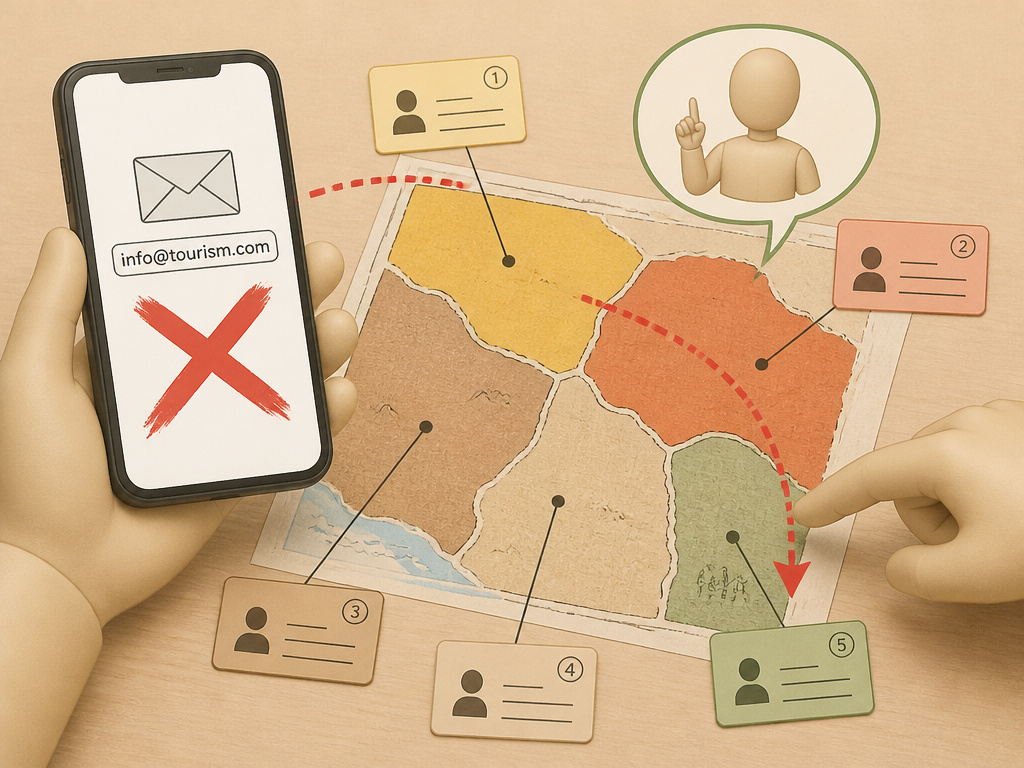
Here’s the structural thing that trips up well-meaning visitors: there isn’t always one contact.
Where this goes sideways: Emailing one generic tourism address and assuming it covers the whole region. Responsibility over land is often parcel-specific, and the wrong contact can stall a permit for weeks.
In practice, this means your first question to any tourism office or band office is: who holds responsibility for the specific area I’m planning to visit? Then ask for an introduction.
YMAC also notes that where possible, you should ask to be introduced to everyone present, and that when that isn’t possible, introductions should be done with discretion so it doesn’t create the impression that some people matter more than others.
That’s a small logistical detail with a large cultural logic behind it. Plan for it.
Language and Greetings
Uluṟu-Kata Tjuṯa’s cultural page notes that Aṉangu traditionally greet each other with “palya,” a word that also carries meanings of welcome, thank you, understood, ok, and goodbye. Greeting Aṉangu with a friendly “palya” while in the park is a simple way to show respect for local culture.
Two other things from the same page are worth holding onto. Some Aṉangu may find constant eye contact uncomfortable. And Aṉangu may remain silent while considering a response, which visitors frequently misread as disengagement.
Silence is thinking. Don’t fill it.
The Seasonal Windows That Cancel Your Trip
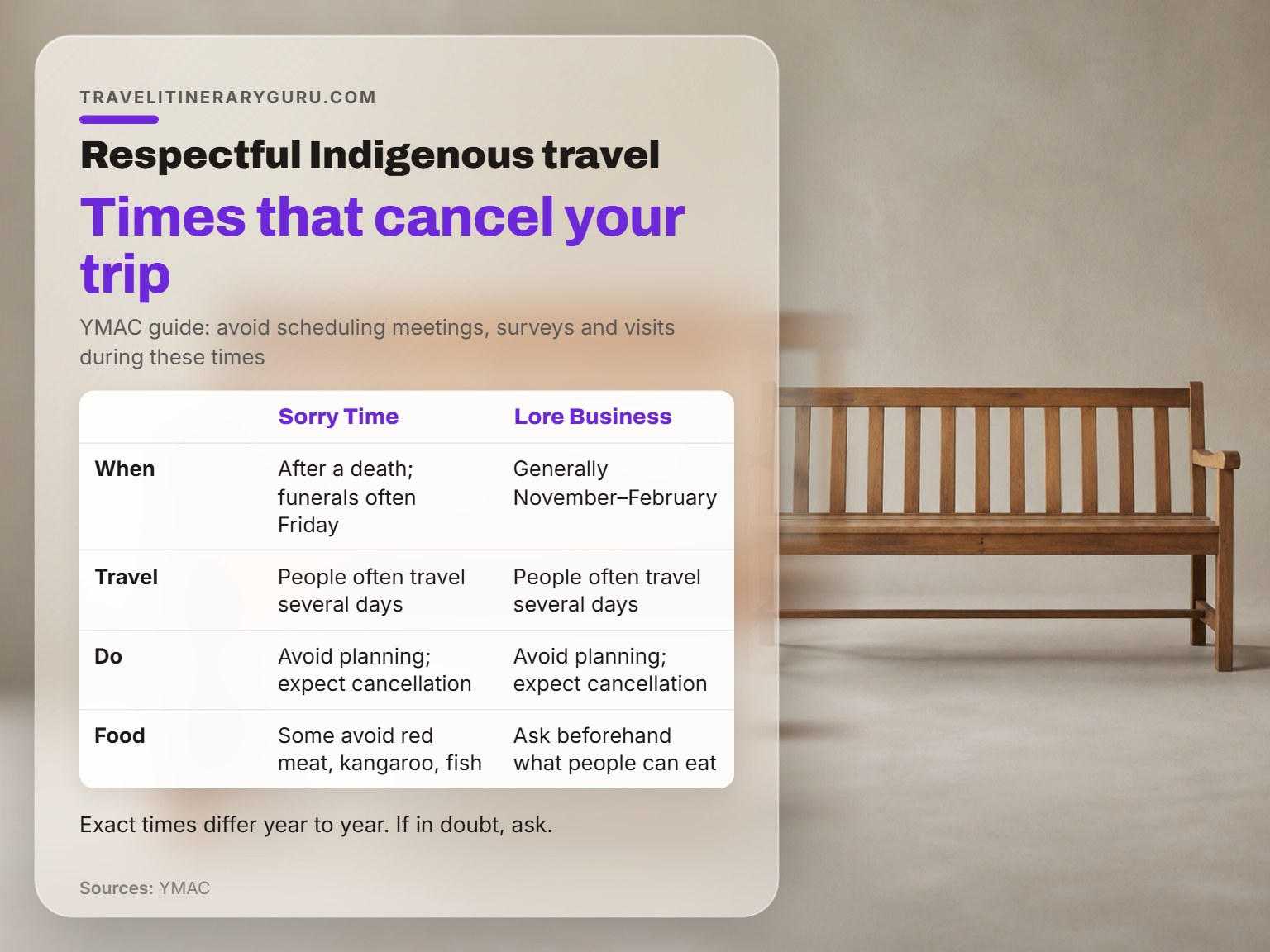
YMAC’s guide lays out two periods when scheduling a visit, a meeting, or a survey can go sideways.
Sorry Time covers the mourning period following a death and funerals, which YMAC notes often take place on a Friday. Lore Business refers to cultural ceremonies generally held November through February, though exact times differ year to year. People often need to travel several days for both.
YMAC’s guidance is direct: always avoid planning meetings, surveys, and similar activities during these times, and be prepared for activities to be cancelled for these reasons. Don’t disturb people during Sorry Time and Lore Business, or when they’re at the specific places they travel to for these practices.
| Period | When | What to do |
|---|---|---|
Food is part of this. During a mourning period, some people won’t eat certain foods like red meat, including kangaroo, or fish. YMAC advises asking beforehand what people can and can’t eat, and having a variety of food available if you’re catering for a meeting, survey, or field trip.
The part nobody mentions: A multi-day Sorry Time can pull your entire local contact list out of the region at once. Build a buffer of days into any schedule that depends on a specific person being present.
The Group Logistics That Break Invisibly
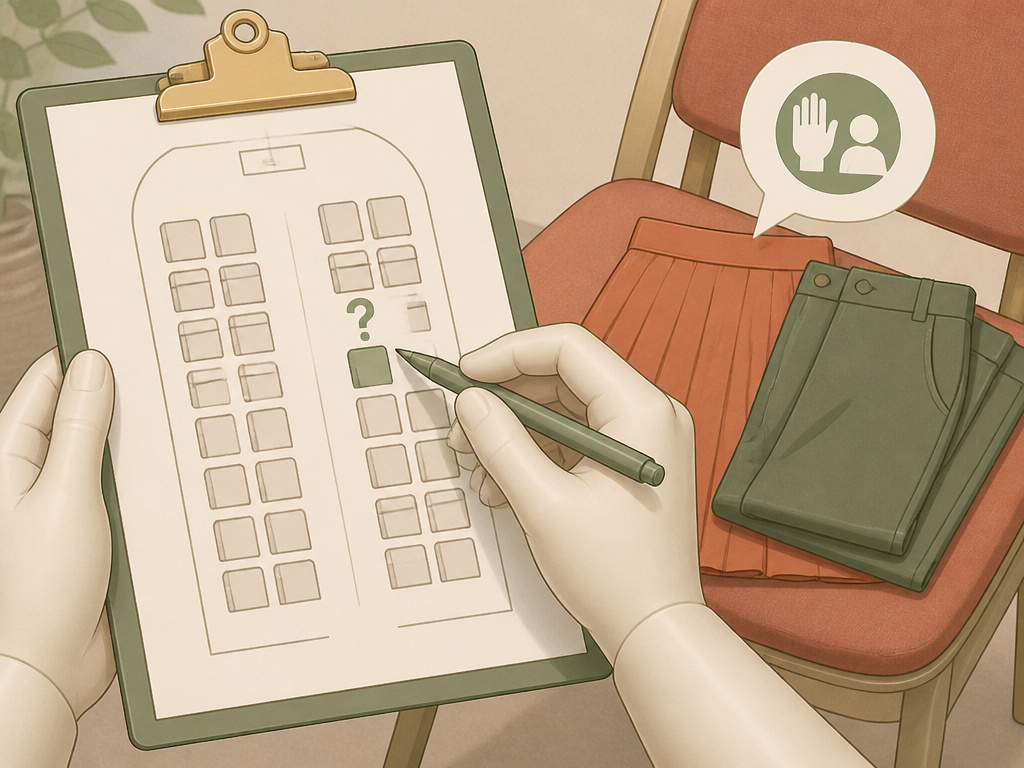
Two protocols in YMAC’s guide can quietly wreck a group itinerary that looks fine on paper.
Avoidance relationships: some individuals cannot speak to or look at one another, and may not share a car or sit together. If you’re coordinating transport or seating for a mixed group, you can violate this without knowing it. Ask before you assign seats.
The second is clothing. YMAC advises avoiding tight or revealing clothing, noting that pants or skirts falling below the knee are generally fine, and to dress for local environment and weather. That’s a general guideline from one representative body, not a universal rule.
The same principle shows up in how you’d approach dressing for religious sites anywhere in the world: cover more than you think you need to, then adjust based on what you observe.
If You’re Staying Overnight
Accommodation is where the “am I a guest or a customer” question gets sharpest. AIANTA notes that private homes, sacred sites, and certain ceremonies are not accessible to visitors, and that assuming all community dwellings are open to guests is one of the unique impacts uninformed guests cause.
If you’re considering booking a homestay with a local host, the sequence matters: confirm access, confirm what’s shared and what isn’t, and don’t treat a homestay listing as blanket permission to wander.
AIANTA also notes that infrastructure like public bathrooms isn’t always available in Native Nations and communities. Plan accordingly.
What You’re Actually Responsible For
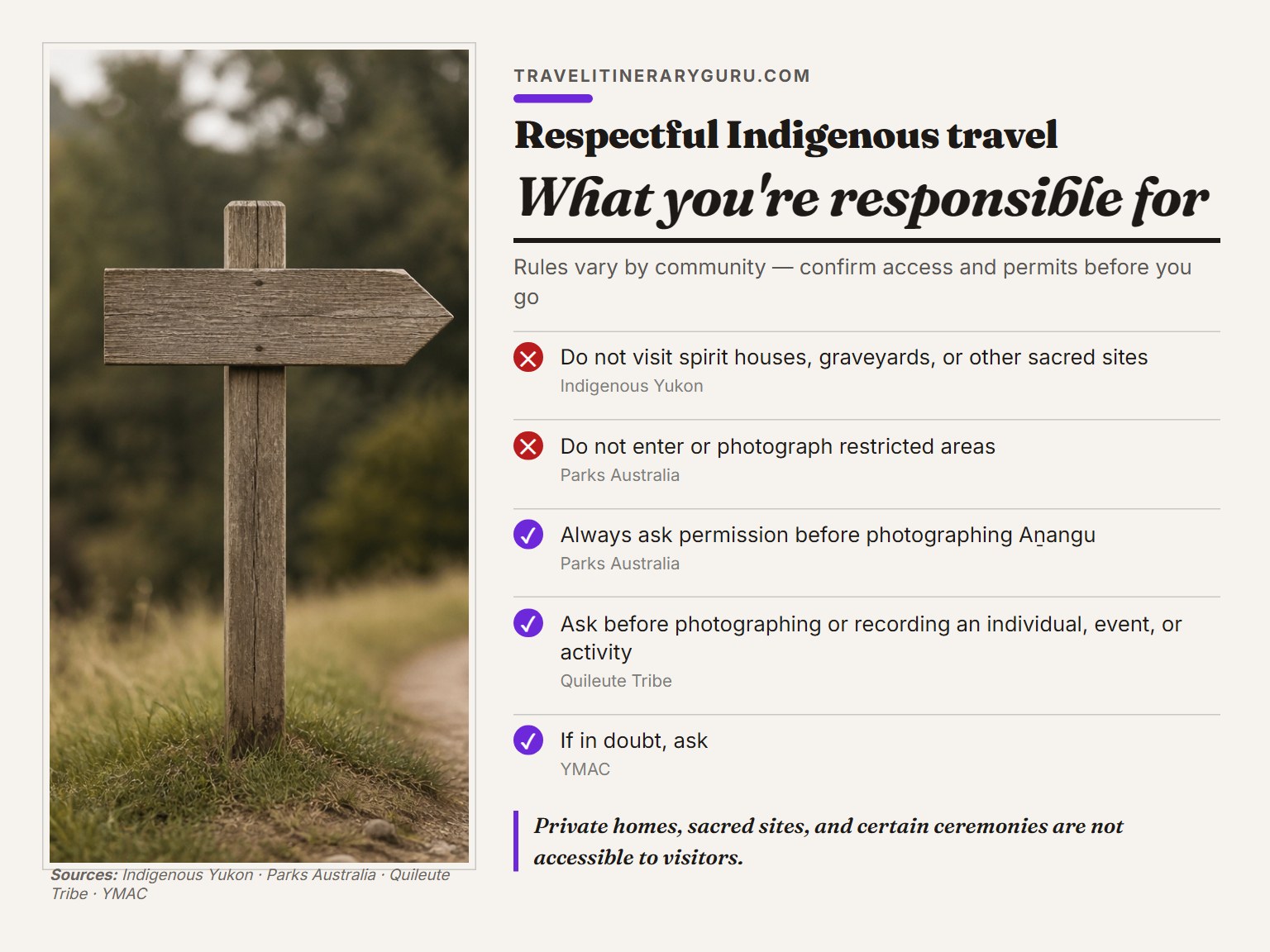
AIANTA lists the familiar impacts first: trash and litter, human and pet waste, wildfires, water contamination, damage to vegetation and soils, and the spread of invasive species. Then the unique ones: damage to sacred sites, uninformed harvesting of medicinal plants, desecration of graves, photographing certain ceremonies, and assuming all community dwellings are open to guests.
The core instruction is to seek out information about the specific community you’re visiting, and to begin unlearning the assumption that all Indigenous communities and cultures in the United States are the same. Culture is not a monolith.
AIANTA recommends practicing the Leave No Trace Seven Principles: Plan Ahead and Prepare; Travel and Camp on Durable Surfaces; Dispose of Waste Properly; Leave What You Find; Minimize Campfire Impacts; Respect Wildlife; Be Considerate of Others.
And share what you learn. AIANTA notes that you have a lot of influence with people you already know.
Skip this if: You’re only passing through on a highway and not stopping. The rules above apply the moment you leave the road and enter a community, a cultural site, or a park under joint Indigenous management.
How Do You Check Access and Permits Before You Go?
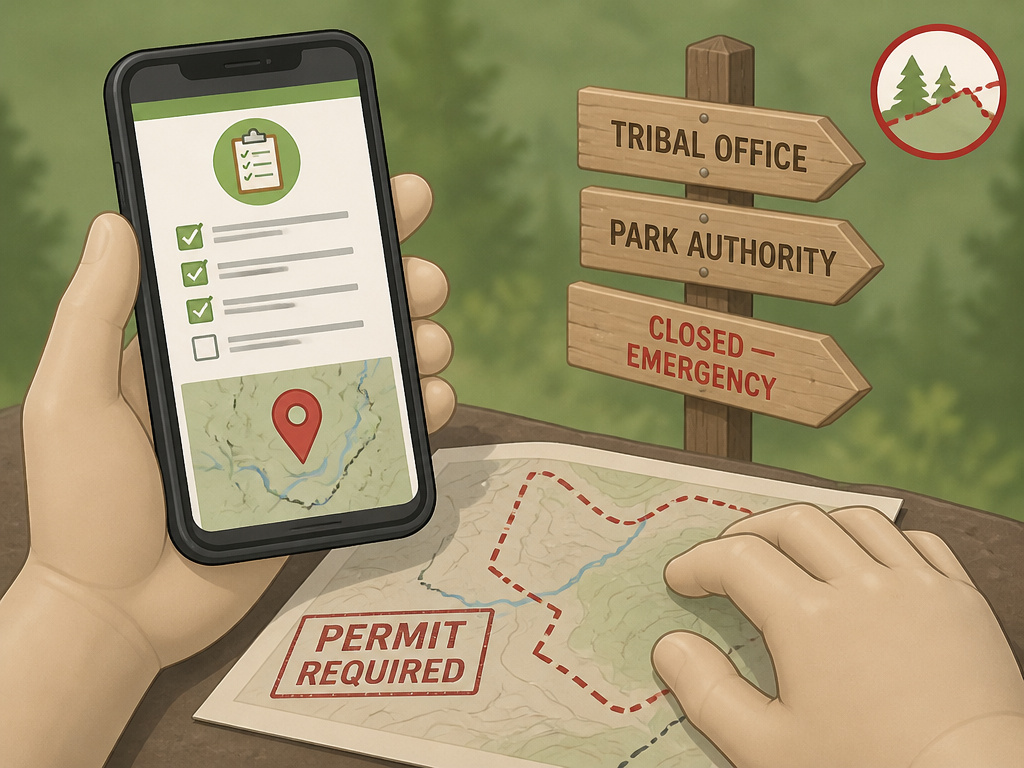
Check with the specific tribe, nation, or park authority, not a general tourism site. Rules and permits vary, and confirming access areas is the step that prevents a wasted trip.
Access isn’t uniform. Different tribes and villages have different rules, regulations, and permit systems.
If you’re weighing whether to join an organized visit, it’s worth understanding the pros and cons of cultural tours before you commit, and knowing the questions to ask before booking a guided tour so you can tell whether the operator has real community relationships or just a van.
Indigenous Tourism BC adds one more condition that overrides normal messaging: during states of emergency, including road conditions and limited health services, communities may request visitors stay away entirely. The province’s page also names Haida Gwaii specifically as a unique and delicate ecosystem with distinct visitor-capacity concerns.
A community asking you not to come is not a tourism failure. It’s a boundary. Respect it.
Frequently Asked Questions
Can I take photos in Indigenous communities?
What should I wear when visiting Indigenous communities?
YMAC advises avoiding tight or revealing clothing, and notes that pants or skirts falling below the knee are generally fine. It also advises being mindful of local environment and weather and dressing accordingly. That’s one representative body’s guidance; protocols vary by region and community.
Do I need a permit to visit a Tribal Nation or Indigenous community?
Sometimes, sometimes not. AIANTA notes that a permit or pre-booking is needed in some cases and not in others, and that rules and permits vary between tribes and villages. Confirm access areas with the specific community before you travel.
What is Sorry Time, and how does it affect my trip?
Sorry Time is the mourning period following a death, and it includes funerals, which YMAC notes often take place on a Friday. People may need to travel several days. YMAC advises avoiding planning meetings, surveys, and similar activities during these times and being prepared for cancellations.
Is it okay to visit sacred sites?
How do I find the right person to contact?
Ask the relevant Prescribed Body Corporate, tribal government, or tourism authority who holds responsibility for the specific area you plan to visit. YMAC notes that different people have cultural responsibilities over different parts of Country, so a single regional contact may not cover your destination, while Indigenous Tourism BC advises following Indigenous governance and communities collectively.
Before You Go
The thing I’d actually do this week: before you book anything, send one email to the tribal government, band office, or park authority for the specific place you’re going, and ask three questions. Who holds responsibility for this area? Is there a permit or pre-booking requirement? Are there dates I should avoid?
That email is quick to send. It’s also the difference between a visit that’s welcome and one that becomes a story the community tells about careless tourists.
One concession worth stating plainly. Everything above comes from written guidance published by Indigenous organizations and government agencies. Every one of those sources says some version of the same thing: this document is not the final word. Indigenous Yukon notes its guidelines will evolve and change. YMAC states its guide should not replace direct advice from the relevant language group or PBC. AIANTA notes that different tribes and villages have different rules.
Which means the answer to “what should I do” is almost always “ask the people who live there.” The written rules get you to the right question. They don’t get you to the answer.
Practical wisdom beats perfect theory. And in this case, the practical wisdom belongs to the community, not to me.
