
How to Cross the US-Canada Border by Car: Step-by-Step
This post contains affiliate links. As an Amazon Associate, we earn from qualifying purchases.
To cross the US-Canada border by car, you need proof of citizenship or lawful status for everyone in the vehicle, a verbal declaration at primary inspection, and a plan for the crossing itself. US lawful permanent residents entering by land directly from the US need only a valid green card. Everyone else generally needs a passport.
That last sentence is where most trip planning goes wrong, and it’s worth slowing down on. Two federal sources describe the same traveller differently, and which one you follow changes what goes in the glovebox. That is why knowing how to cross the US-Canada border by car matters.
The rest of this walks the document rules by traveller type, the crossings that are actually slow right now, and the parts of a secondary inspection that no packing list mentions.
Key Takeaways
- US green-card holders entering by land or water directly from the US need no passport — a valid green card or equivalent proof of status is enough, per IRCC.
- A US passport card works for land and ferry crossings only. It is not valid for air travel into Canada.
- Cannabis is illegal at the border in every form, including CBD products, even though it’s legal inside Canada.
- Saint-Bernard-de-Lacolle is under redevelopment with delays expected until Winter 2027. Route around it if you can.
- Monetary instruments of CAN$10,000 or more trigger reporting paperwork. Officers may count your cash in your presence.
Which Documents Do You Actually Need at the Canadian Border?
Start with who’s in the car, because the how to cross the US-Canada border by car answer changes by status and by mode of arrival.
For US citizens, the practical answer is a valid US passport book. The US Embassy is blunt about it: US citizens flying into or within Canada generally must present a valid passport book. The passport card is a narrower tool, valid only for crossing the land border or traveling by ferry.
Canadian citizens get a softer rule from their own government, which recommends a valid Canadian passport as the only reliable and universally accepted document. Travel.gc.ca also warns that airlines may deny boarding to Canadians presenting an Enhanced Driver’s License, a NEXUS card, a FAST card, a citizenship card, a Certificate of Indian Status, or a birth certificate with photo ID.
Canadian citizens crossing by land may present a valid passport, an Enhanced Driver’s License, a NEXUS card, a FAST card, a citizenship card, a Certificate of Indian Status, or a birth certificate paired with government photo identification. Airlines may refuse boarding on any of those except the passport, which is why the passport remains the recommended document for air arrivals.
US lawful permanent residents are the group where the rules genuinely diverge. IRCC states that green-card holders entering Canada by land or water directly from the US or Saint-Pierre-et-Miquelon need only their valid permanent resident card or equivalent proof of status. No passport.
By air, that allowance disappears. Green-card holders flying in need a valid passport from their country of nationality plus the green card.
If you’re a Canadian permanent resident, you need a valid PR card or PR travel document when arriving by commercial vehicle. In a private vehicle, a PR card or other accepted documents will do.
| Traveller | By land from the US | By air |
|---|---|---|
| US citizen | Passport book or passport card | Passport book required |
| US green-card holder | Green card only, no passport | Passport plus green card |
| Canadian citizen | Passport, EDL, or NEXUS | Passport strongly recommended |
| Canadian PR | PR card or accepted documents | PR card or PR travel document |
The Passport Question That Two Federal Sources Answer Differently
Travel.gc.ca recommends a valid Canadian passport for Canadians because it’s the only universally accepted document. IRCC’s own rule page confirms US green-card holders can enter by land or water without one.
Those aren’t contradictory, but they’re easy to read as if they are. The recommendation is about what’s safest across every mode and every airline. The rule is about what’s legally sufficient at a land port of entry.
If you’re a green-card holder driving up from Buffalo or Detroit, the green card is enough. If you’re flying, bring the passport.
Worth knowing before you start: Arriving via a third country changes the requirement. The no-passport allowance for green-card holders applies specifically to land and water arrivals directly from the US or Saint-Pierre-et-Miquelon.
NEXUS: Where the Two Sources Split
NEXUS is the clearest example of a document that behaves differently depending on how you use it.
The US Embassy says NEXUS card holders may enter Canada through certain airports and return via specific pre-clearance airports. Travel.gc.ca lists NEXUS among the documents that may cause airlines to delay or deny boarding.
Both are describing the same card. The difference is mode. NEXUS is reliable at land crossings and at the airports that participate in the program. On an airline that isn’t fully aligned with the program, it can cause friction.
For most drivers, this is a non-issue. NEXUS lanes at land crossings are the whole point of the card, and they’re the reason some travellers apply.
What Happens at Primary Inspection, Step by Step
Primary inspection is shorter than people expect and more consequential than people plan for when they think about how to cross the US-Canada border by car.
- Pull up to the booth and have documents ready for everyone in the car. Handing over a stack one at a time slows the line behind you and invites follow-up questions.
- Answer the officer’s verbal declaration. You’ll be asked your citizenship, where you’re going, how long you’re staying, and what you’re bringing in. Short, direct answers work best.
- Declare goods and any monetary instruments of CAN$10,000 or more. Skipping this is what turns a routine stop into a seizure.
- Expect the possibility of a referral to secondary. CBSA lists random inspection as an explicit reason for referral, so a clean traveller can still be pulled.
Before you start: Two hazards catch people at the booth. First, undeclared firearms and ammunition are illegal to transport across the border, and the US Embassy notes that Americans face criminal charges, jail time, or a permanent ban for prohibited items even when the mistake is accidental. Second, cannabis in any form, including CBD products, is illegal at the border regardless of Canadian domestic law.
If a referral happens, the officer will direct you to a secondary area. That’s not an accusation. CBSA states plainly that secondary inspections are a normal part of the process for anyone crossing, including Canadian citizens, permanent residents, and visitors.
What Can CBSA Officers Actually Do at Secondary Inspection?
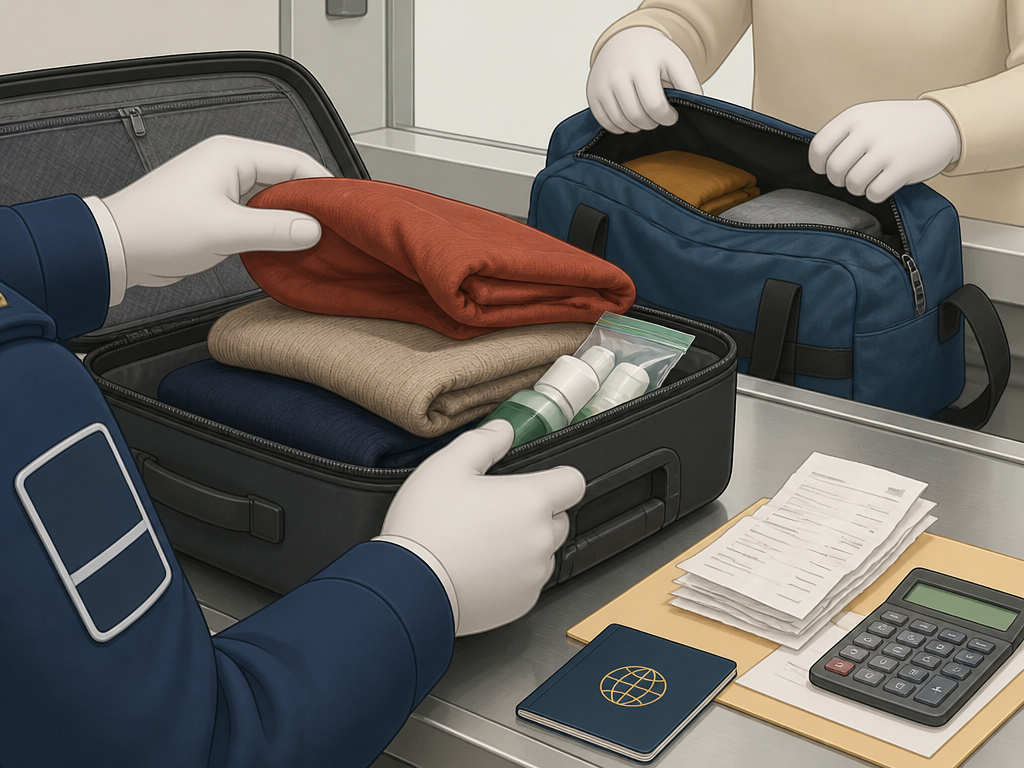
More than most travellers realize, and the list is longer than the standard packing checklist covers.
Officers may inspect personal digital devices. They may count your cash or travellers cheques in your presence. They may confirm the guardianship of children travelling with you. They may ask for evidence of the money you have available to fund your visit, detailed information about your plans, and your luggage and goods for examination.
They may also process duty and tax payments on the spot, complete paperwork to support your entry, and determine your admissibility to Canada.
CBSA is explicit that referrals are not made on the basis of race, nationality, religion, age, or gender. Random inspection is listed as one of the reasons a referral can happen.
What most people get wrong: Assuming a secondary inspection is about suspicion. It’s often about paperwork, duty calculation, or a random pull. The officer is processing, not accusing.
One practical note that saves time: you are responsible for opening, unpacking, and repacking your own luggage during an inspection. Keeping your goods accessible and your receipts handy speeds the whole thing up.
Keep receipts for accommodation, purchases, and any vehicle repairs or parts bought during the trip. They serve as evidence of how long you stayed and what the goods are worth.
How Long Are the Wait Times, and Which Crossings Are Slow?
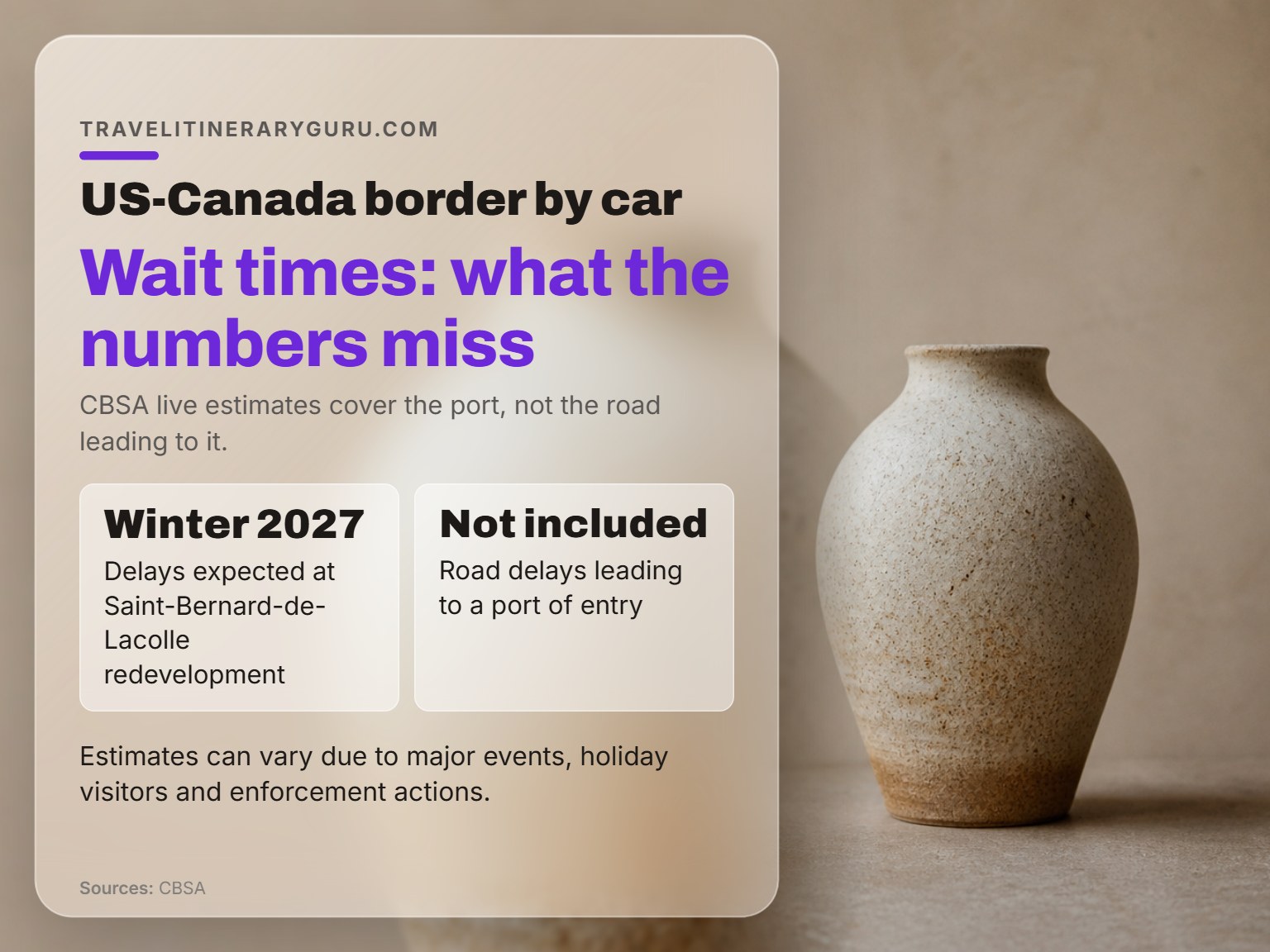
Wait times are volatile, and the published number doesn’t cover everything.
CBSA’s border wait time page shows live estimates for the busiest land crossings, timestamped per port. On a sample reading, the Ambassador Bridge showed no delay at all. Those numbers change fast.
Two caveats matter. First, CBSA notes that estimates can vary due to major events, holiday visitors, and enforcement actions such as drug or firearm seizures. The number is an estimate, not a guarantee. Second, the page does not include delays on the roads leading to a port of entry. You can see a short wait at the booth and still sit in traffic for an hour getting there.
The named disruption right now is Saint-Bernard-de-Lacolle, where the primary inspection line is under redevelopment. CBSA expects delays until Winter 2027 and strongly encourages travellers to monitor traffic and adjust their route.
Easy to miss: The wait-time page covers the port, not the approach. Check traffic conditions before the border separately, or you’ll plan around a number that doesn’t describe your actual drive.
| Crossing | Region | Note |
|---|---|---|
| Saint-Bernard-de-Lacolle | QC/NY | Redevelopment, delays to Winter 2027 |
| Peace Bridge | Fort Erie/Buffalo | Check live wait times before travel |
| Rainbow Bridge | Niagara Falls | Check live wait times before travel |
| Ambassador Bridge | Detroit/Windsor | Sample reading showed no delay |
Travelling With Children, Medication, and the Paperwork Nobody Prints
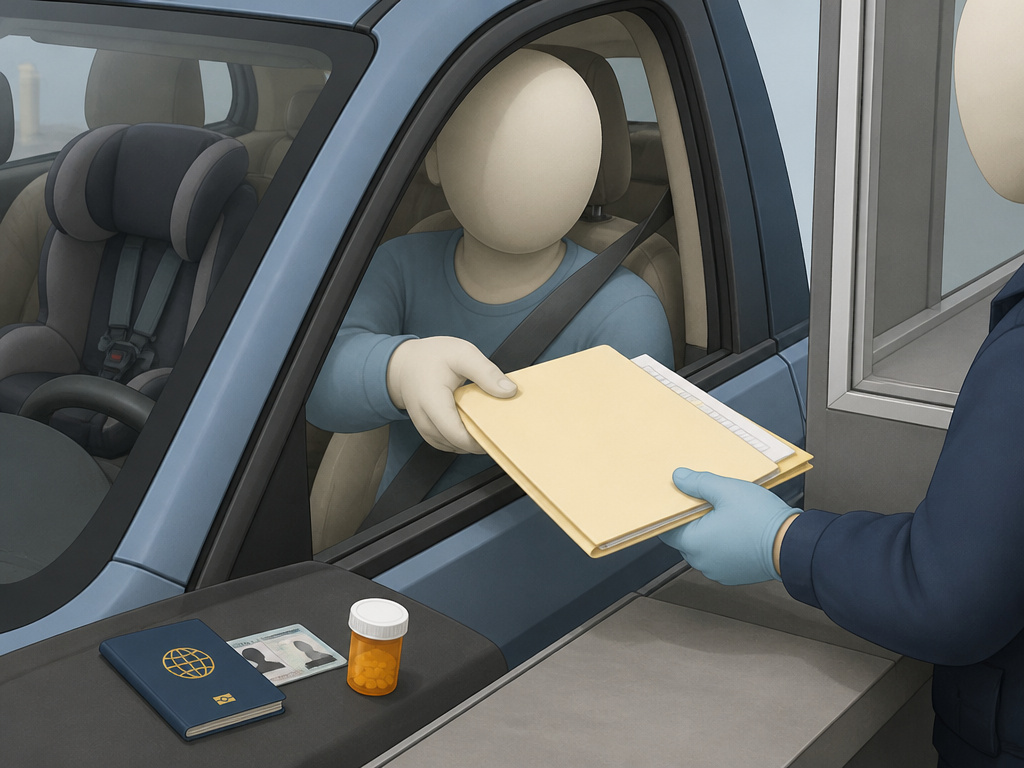
Custody paperwork is the single most common gap I see in cross-border trip planning, and it’s the one that stalls a car at the booth.
Parents who share custody should bring copies of the legal custody documents. Travel.gc.ca recommends a consent letter for all cross-border travel when a child is travelling alone, with one parent or guardian, in the care of friends or relatives, or with a group. The US Embassy gives the same advice for anyone travelling with a minor without full custody.
When travelling as a group of vehicles, parents or guardians should arrive at the border in the same vehicle as the children. Adults who aren’t parents or guardians should carry written permission from the parents, including addresses and phone numbers where they can be reached.
The US Embassy encourages Americans to review their travel document’s expiration date and apply for or renew their U.S. Passport or passport card well before travel. The US Embassy specifically encourages Americans to review their travel document’s expiration date and apply for or renew their U.S.
Skip this if: You’re a Canadian citizen with a valid passport, no children in the car, no medication, and no monetary instruments over CAN$10,000. Your prep list is short. Everyone else, read the section above.
The Parts of Border Prep That Happen Before You Leave Home
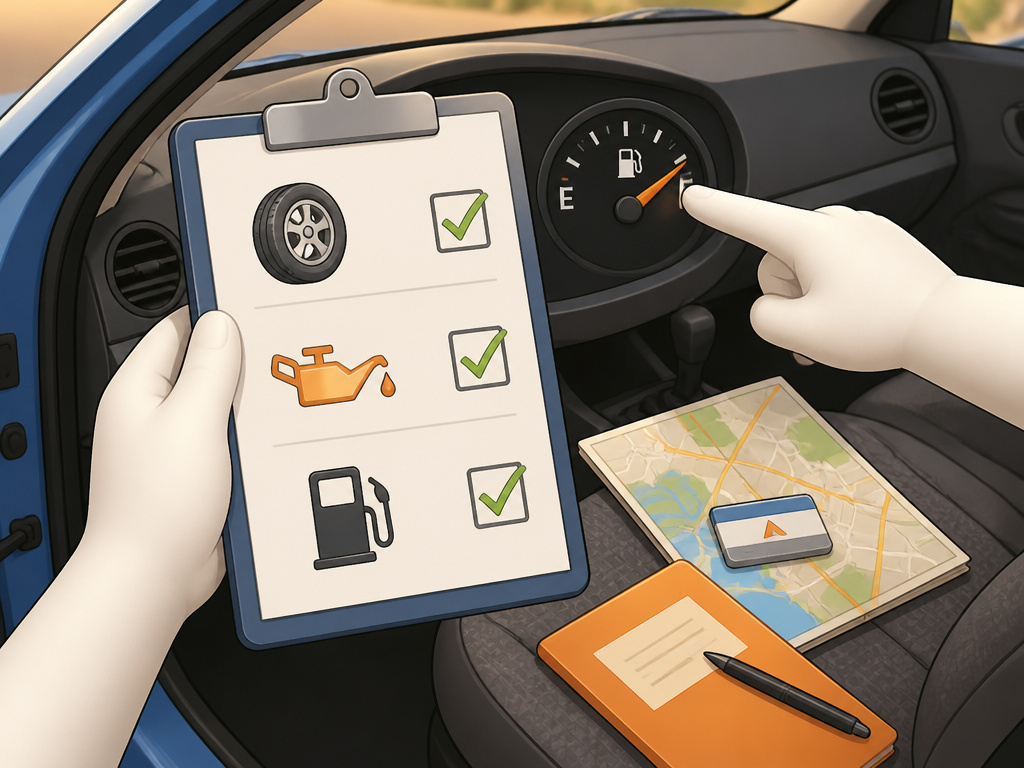
A border crossing is the last 20 minutes of a much longer drive, and the prep that matters happens days earlier.
A basic pre-trip check on tires, fluids, and brakes is worth doing before a long drive to the crossing.
Fuel planning matters more than people expect on cross-border drives, so fill up before you cross northbound. Fill up before you cross northbound.
If your route involves tolls, know how you’re paying them before you’re at the booth.
Check whether the rental agreement permits cross-border travel at all.
Two more items worth handling before you leave.
Frequently Asked Questions
Do I need a passport to drive from the US to Canada?
US citizens need a passport book or passport card for land crossings. US lawful permanent residents entering by land or water directly from the US need only a valid green card or equivalent proof of status, per IRCC. Canadian citizens can use a passport or several alternative documents, though a passport is recommended.
Can I use my US passport card to fly into Canada?
No. The US Embassy states that passport cards can only be used to cross the land border or for travel via ferry. They are not valid for air travel into Canada.
Is cannabis legal at the Canadian border?
No. The US Embassy states it is illegal to bring cannabis across the border, including edible cannabis, cannabis extracts, and items containing CBD. Canadian domestic legality does not change the border rule.
How much cash can I bring into Canada?
Monetary instruments of CAN$10,000 or more trigger reporting paperwork at secondary inspection. Officers may count your cash or travellers cheques in your presence. The threshold is CAN$10,000, not US$10,000.
What happens if I’m sent to secondary inspection?
You’ll be directed to a separate area for further processing. Officers may inspect your vehicle, luggage, goods, and personal digital devices. They may ask for evidence of funds, detailed travel plans, and paperwork supporting your entry. CBSA describes secondary inspection as a normal part of crossing the border.
How early should I check border wait times?
Check them the morning of travel, and again about an hour out. CBSA notes that estimates vary due to events, holidays, and enforcement actions, and the page does not include delays on the roads leading to the port of entry.
The Bottom Line
The single rule that matters most: match your documents to how you’re arriving, not to what you’ve heard at a dinner party. Green card by land, passport by air. Passport card for land and ferry only. NEXUS for the crossings and airports that honor it.
One specific threshold worth committing to memory: if anyone in the car is carrying monetary instruments of CAN$10,000 or more, declare it. The paperwork at secondary takes minutes. The alternative doesn’t.
Fair warning on the routing side. Saint-Bernard-de-Lacolle is under redevelopment through Winter 2027, and CBSA is openly telling travellers to monitor traffic and adjust their route. If that crossing is on your map, build a backup into the plan.
And one concession: everything above assumes you’re arriving directly from the US. If your route runs through a third country first, the green-card-no-passport allowance doesn’t apply, and the document rules tighten back to the standard set. Check that detail before you book anything that touches a third border.
