
How to Choose Between Thailand and Vietnam for a First Asia Trip
This post contains affiliate links. As an Amazon Associate, we earn from qualifying purchases.
To choose between Thailand and Vietnam for a first Asia trip, check your passport and your travel month before anything else. Thailand grants 30 visa-free days to 60 countries from 15 September 2026; Vietnam’s two 2025 resolutions each grant 45 days to 12 countries, and Vietnam’s main exemption covers 24 countries in total. Rough Guides, SoloNomads, Holidays to Asia and Visit Thailand Today all call Thailand the easier first trip.
Those two variables in the how to choose between Thailand and Vietnam for a first Asia trip are locked before you book a single flight. The rest, from beaches to nightlife to how far you move, is a preference you can trade away once you know the constraints. The four checks below run in order, and the first one wipes out whole itineraries on its own.
What follows: the passport table, the rainfall normals that decide your month, the categories every guide agrees on, the ones where they quietly don’t, and the first-Asia answer I give more often than either country.
Key Takeaways
- Check your passport first. Thailand’s 30 visa-free days cover 60 countries from 15 September 2026; Vietnam’s two resolutions each grant 45 days to 12 countries, and Vietnam’s main exemption covers 24 countries in total, while US, Canadian, Australian and Indian passports need an e-visa.
- October is the trap month. Da Nang takes 658 mm, the wettest figure in this whole dataset, while Ko Samui’s worst month is November at 444.6 mm.
- Thailand wins ease, beaches and nightlife. Rough Guides, SoloNomads, Holidays to Asia and Visit Thailand Today all say so.
- Vietnam wins on scenery and daily cost. Ha Long Bay, Ninh Binh and the Ha Giang loop have no Thai equivalent, and Vietnam runs cheaper by a margin nobody agrees on.
- Give it three weeks if you want both. SoloNomads rates a 3-week combined route, and February is the closest overlap in the two dry windows.
How to Choose Between Thailand and Vietnam for a First Asia Trip, in Four Checks
Four checks settle it, and only the first one is fixed before you book.
Thailand grants 30 visa-free days to citizens of 60 countries and territories from 15 September 2026. Vietnam’s exemption rests on two resolutions: 44/NQ-CP of 7 March 2025 and 229/NQ-CP of 11 August 2025, each covering 12 countries for 45 days, with 229/NQ-CP valid to 2028. Neither resolution names the United States, Canada, Australia or India.
Passport first, because it’s the one variable you can’t negotiate with. A US or Canadian passport enters Thailand without a visa and needs Vietnam’s e-visa, which settles the argument before weather enters the room.
| Passport | Thailand | Vietnam |
|---|---|---|
| UK, Germany, France, Netherlands, Japan, Russia | 30 days visa-free | 45 days visa-free |
| South Korea | 90 days visa-free | 45 days visa-free |
| US, Canada, Australia, India, China | 30 days visa-free | E-visa required |
| Singapore, Malaysia | 30 days visa-free | 30 days visa-free |
Vietnam’s own government sources describe the 45-day list two different ways, and that matters if you hold either passport. The Ministry of Foreign Affairs table puts Belarus at 30 days. The National Authority for Tourism page puts Belarus in the 45-day group. Both are Vietnamese government sources. Confirm with an embassy before you book.
Thai and Vietnamese citizens get 30 days in each other’s country on an ordinary passport, so a border hop is genuinely easy.
Work through the four checks in this order, because each one narrows the next:
- Passport. Skip it and you’ll build a three-week Vietnam route, then discover you need an e-visa approved before you fly.
- Month. Skip it and you’ll book a Gulf island in November, when Ko Samui is at its wettest.
- Route shape. Skip it and you’ll burn a day of a ten-day trip on a 1,650 km move you didn’t need.
- Budget. Skip it and you’ll compare two daily figures that were never measured the same way.
I’ve booked a non-refundable first night exactly once. A delayed flight ate it, and I’ve booked flexible arrival nights ever since.
The Two Things to Sort Before You Fly
Thailand’s TDAC arrival card is free and filed online before you land. Vietnam has its own digital arrival form. Neither is difficult, and both catch people who book flights first and read the entry rules second.
Power is the other one. A Thailand travel adapter needs Type A and C pins, and the EPICKA Universal Travel Adapter covers both without a second plug. Vietnam adds round-pin Type D sockets in older buildings, so a Vietnam power adapter with a round-pin option beats a flat-pin-only unit. The Ceptics World Travel Adapter Kit carries that plug as well.
If you buy one adapter for both countries, make it the EPICKA. Check availability before you fly, because airport shops charge far more.
The Rain Numbers That Break the “Thailand Is Dry” Rule
Da Nang takes 658 mm of rain in October, more than any other station in this dataset.
That single figure dismantles the tidy version of this comparison. Thailand’s dry season is real, and so is central Vietnam’s soaking. What the summary versions skip is that both countries have a wet corner during the other one’s dry window.
| Station | October | November | December |
|---|---|---|---|
| Da Nang (WMO) | 658 mm | 486 mm | 272 mm |
| Hanoi (WMO) | 126 mm | 48 mm | 24 mm |
| Ho Chi Minh City (WMO) | 240 mm | 128 mm | 41 mm |
| Bangkok (TMD) | 288.7 mm | 44.6 mm | 11.6 mm |
| Chiang Mai (TMD) | 123.8 mm | 40.9 mm | 14.1 mm |
| Ko Samui (TMD) | 294.9 mm | 444.6 mm | 263.1 mm |
The WMO figures are the 1991 to 2020 normals that Vietnam’s weather service supplies to the World Meteorological Organization. The Thai figures are the same normals from the Thai Meteorological Department. Different agencies, same baseline years, so the columns line up honestly.
Notice what Bangkok and Hanoi do in December. Bangkok drops to 11.6 mm and Hanoi to 24 mm. Both are excellent. Notice what Da Nang does in the same month: 272 mm, still wetter than Bangkok’s entire October.
The Gulf-Coast Exception Nobody Flags
Ko Samui’s wettest month is November at 444.6 mm, and that’s the month most guides call Thailand’s best. The Gulf islands run a different monsoon from the Andaman coast, so Phuket and Krabi are drying out while Samui is at its worst. Phuket Airport’s October, at 370.5 mm, is the wettest Thai October in this set, and it’s still drier than Samui’s November.
Easy to miss: The Gulf coast and the Andaman coast have opposite seasons. Book a “dry season” Thailand trip in November on the Gulf side and you’ll spend it watching rain come sideways off the water.
Central Vietnam’s Four-Month Soak
Da Nang’s September to December total is 1,810 mm, the single wettest window anywhere in this dataset. Its annual normal of 2,399 mm means roughly three-quarters of the year’s rain lands in four months.
Hanoi, by contrast, gets 1,628 mm across the whole year and only 195 mm in September. That’s the regional split in one comparison: Vietnam’s north is drying out in October and November while the centre is flooding.
Ease, Beaches and Nightlife: Three Categories the Sources Settle
Rough Guides, SoloNomads, Holidays to Asia and Visit Thailand Today all hand Thailand the same three categories.
Ease goes to Thailand without much debate. Rough Guides calls it easier to navigate. SoloNomads points to one hub city, a well-worn route and a visa-free stay for most passports. Holidays to Asia says Thailand edges it as the gentler introduction, but both work beautifully as a first trip. Getting around follows the same pattern, and Visit Thailand Today notes that domestic flights, overnight trains, minivans and ferries connect everywhere a visitor goes.
Beaches are the widest gap. Thailand has two coastlines with opposite monsoons, so there’s a dry beach somewhere in every month, and the islands sit a ferry apart. Vietnam’s beaches are single bases, not island-hopping.
None of that makes Vietnam the wrong call. It makes Vietnam the better call for a different trip shape, and the method for weighing two countries against each other is the same one you’d use when choosing between two countries with different visa rules and different rainy seasons.
Food, Adventure and Solo Travel: Where the Guides Split
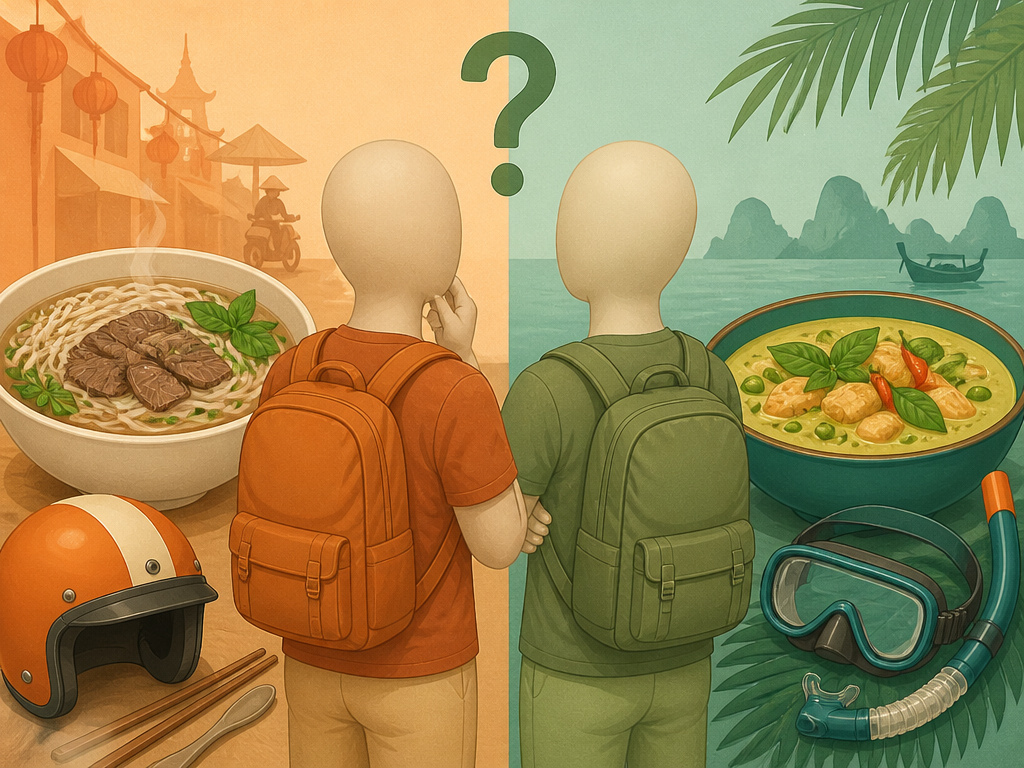
Solo travel is a tie on one source and Thailand on another. SoloNomads says both are easy for solo travellers, including women. Rough Guides picks Thailand.
- Adventure: SoloNomads calls it a tie, split by terrain, mountains and caves in Vietnam, diving and islands in Thailand, while Visit Thailand Today gives Vietnam the win on drama.
- Solo travel: a tie on SoloNomads, Thailand on Rough Guides.
The honest summary is that food, adventure and solo travel are close enough that they shouldn’t decide your first Asia trip. Passport and month should.
Why Doesn’t Anyone Quote the Same Daily Budget?
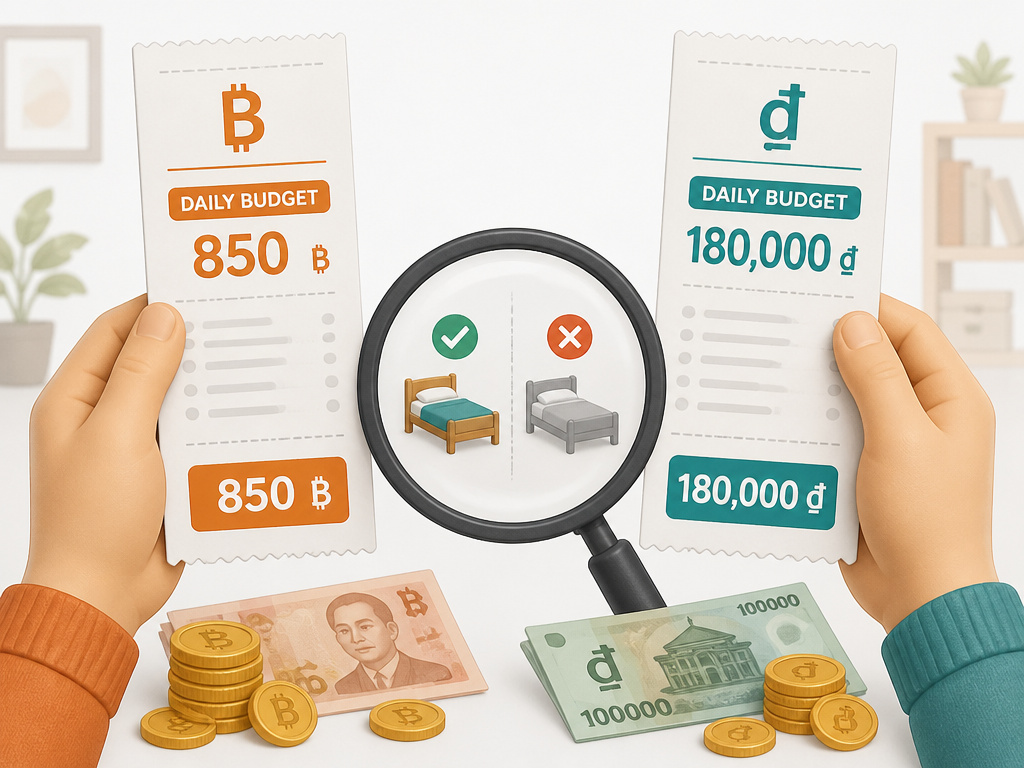
Vietnam is cheaper on most sources, though they measure it differently and Holidays to Asia calls the two broadly comparable.
Rough Guides puts Vietnam cheaper overall on its own daily figures. SoloNomads says Vietnam looks a little cheaper on its numbers, then admits the two budgets are measured differently and calls the gap rough. Visit Thailand Today is the boldest, putting Vietnam 10 to 20% cheaper day to day. Holidays to Asia goes the other way entirely and calls the two broadly comparable, arguing the itinerary matters more than the country.
Why the Two Budgets Aren’t Measured the Same Way
SoloNomads measures Vietnam including a dorm bed and Thailand before accommodation, which is exactly why its own comparison arrives with a caveat attached. Visit Thailand Today puts Vietnam 10 to 20% cheaper day to day. Both can be true. City against city and trip against trip are different questions.
A daily budget figure is only useful if you know what’s inside it. Ask whether the bed is included before you compare two numbers, or you’re comparing a hotel bill to a bar tab.
I plan mid-range by default and my luxury advice is thin, so take the resort-end numbers from someone who actually books them.
Where this goes sideways: Island stops in Thailand run 20 to 40% above the mainland on SoloNomads’ figures. A ten-day island plan eats the gap you were counting on.
Three Weeks Is the Number That Keeps Appearing
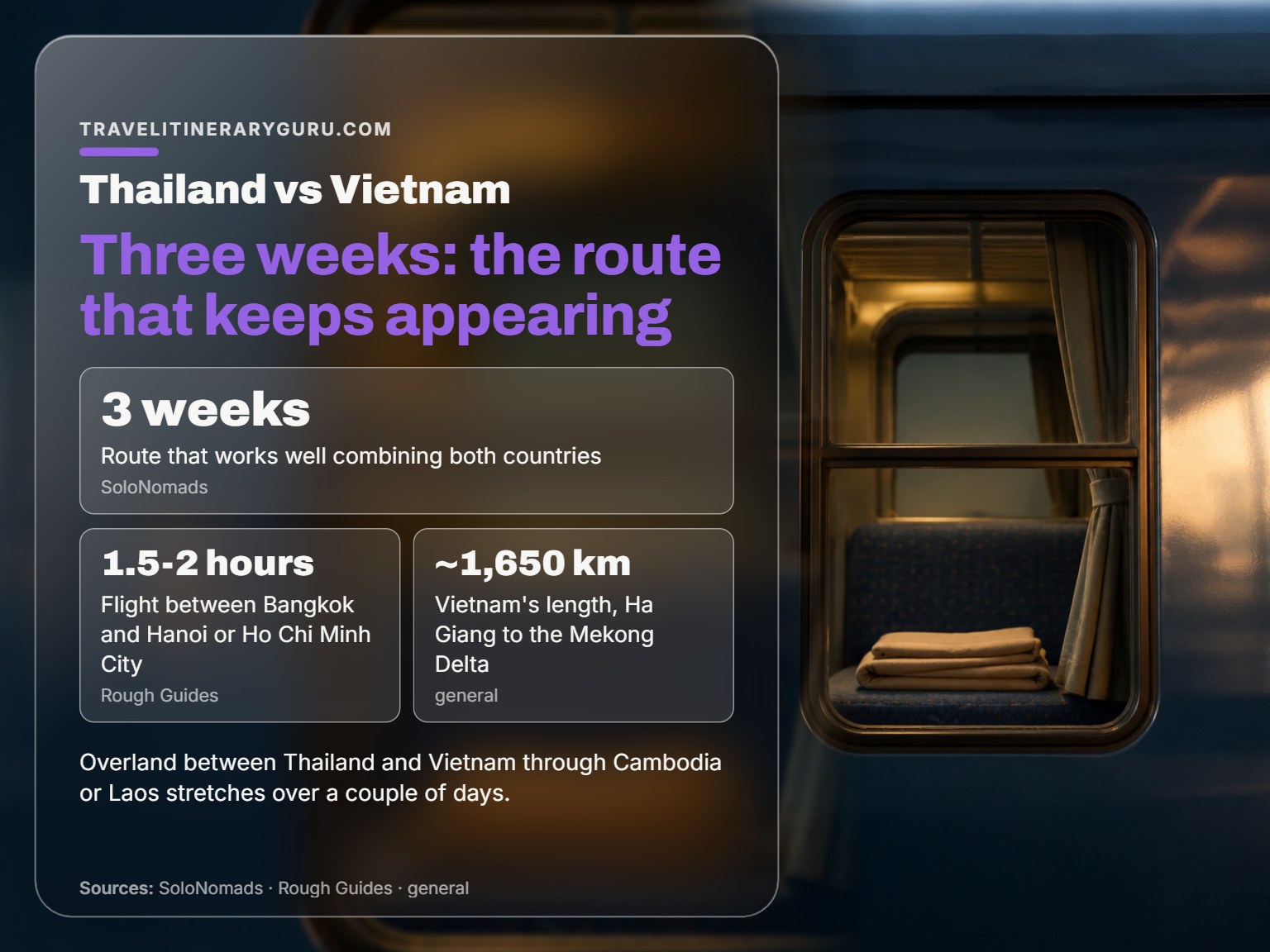
SoloNomads rates a 3-week route as the sweet spot for combining both countries, and describes a version that starts in Bangkok, takes the overnight train to Chiang Mai, flies south to Koh Phangan, then continues to Hanoi for Ha Long or Lan Ha Bay, Ninh Binh and Hue.
Rough Guides notes that flying between Bangkok and Hanoi or Ho Chi Minh City takes about 1.5 to 2 hours, while going overland through Cambodia or Laos stretches over a couple of days.
Vietnam is 1,650 km from Ha Giang to the Mekong Delta, which is why most routes run one direction instead of looping back. Thailand works as hub and spokes, with Bangkok connecting to Chiang Mai and both coasts. Weighing a Bangkok to Chiang Mai itinerary against a Hanoi to Ho Chi Minh City itinerary is really a question about how much ground you want to cover.
The classic route endures because it’s a single line rather than a spiderweb. Bangkok to Chiang Mai to Laos to Hanoi to Saigon never doubles back, and every overland leg teaches you something you’d have flown over.
I stopped building Asia routes around overnight buses after a “VIP luxury” sleeper from Vientiane to Luang Prabang. The photo showed lie-flat pods. The reality was a reclined seat next to a stranger’s elbow, a karaoke DVD playing until midnight, and a driver treating mountain switchbacks as a personal challenge. We arrived at 6 a.m. Wrecked. Anything over eight hours now gets a train or a short flight.
Bangkok trip length and Hanoi trip length are separate calculations, and both depend on how much you want to move. SoloNomads suggests Vietnam suits a trip of two weeks or more, while Thailand suits one to two weeks in a tighter loop.
Worth knowing before you start: The road is the real risk in both countries. The World Health Organization estimates 25.4 road deaths per 100,000 people in Thailand and 17.7 in Vietnam, and in Thailand most of the dead are on motorbikes. Riding without the right licence voids most travel insurance.
Three Friends Asked Me This and All Three Went to Taipei
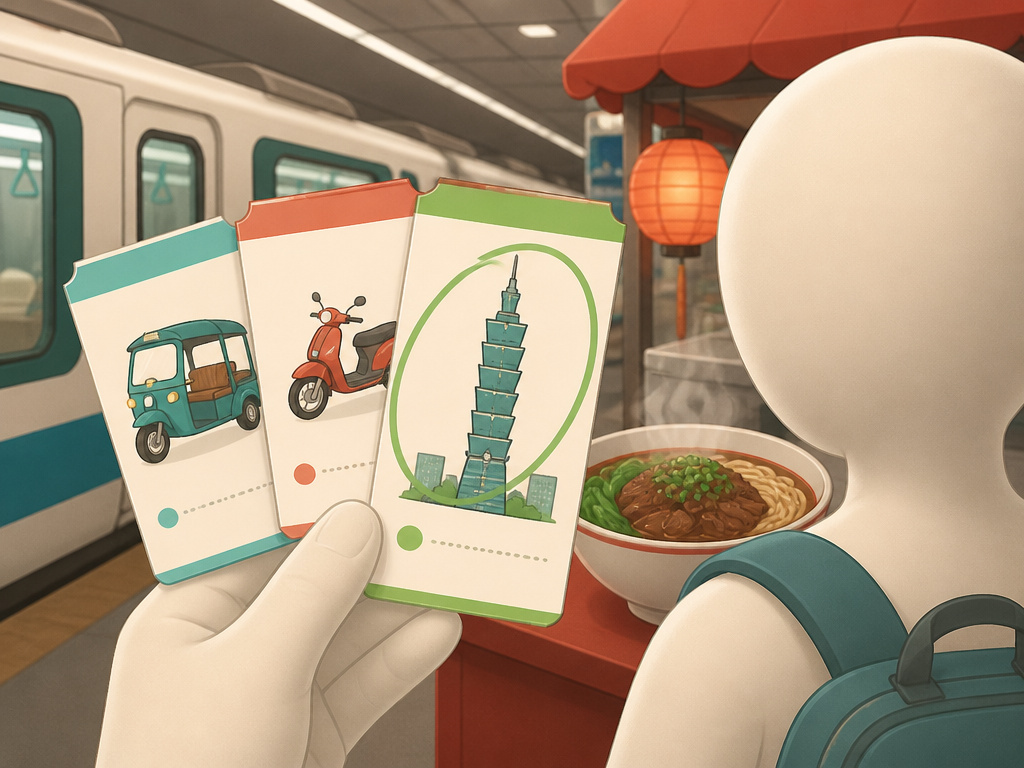
When someone asks how to choose between Thailand and Vietnam for a first Asia trip, I usually say neither. Start in Taipei.
Taipei is cheaper than Bangkok on the ground, the MRT is clean enough to eat off, and a bowl of beef noodle soup at a random stall near Lin Dong Fang beats most of what you’d pay triple for elsewhere in the region. Taiwan also spoils you for the rest of Asia. Convenience-store food is edible, the night markets are safe at 11 p.m., and nobody is trying to talk you into a tuk-tuk.
Taiwan makes a softer first landing, and that’s the whole argument. Thailand or Vietnam then becomes the second trip instead of the trial run. Three people I know did it in that order and none of them regretted it. Fair warning: this advice is unpopular with people who already booked Bangkok.
Skip this if: you’ve got a month or more and you want the classic Bangkok-to-Saigon line. Taipei is a detour, and four weeks is better spent on the one-direction route.
Frequently Asked Questions
Do I need a visa for Thailand and Vietnam?
It depends on your passport. Thailand gives 30 visa-free days to 60 countries and territories from 15 September 2026. Vietnam’s 45-day exemption covers 24 countries across two resolutions. US, Canadian, Australian, Indian and Chinese passports get Thailand visa-free but need Vietnam’s e-visa, applied for only at evisa.gov.vn.
Which is cheaper, Thailand or Vietnam?
Vietnam, on every source. The size of the gap is where they split. Visit Thailand Today puts it at 10 to 20% day to day. SoloNomads calls it a small margin measured two different ways. Holidays to Asia says the itinerary matters more than the country.
What’s the best month for both countries?
February is the closest overlap. SoloNomads rates Thailand’s whole-country dry window as mid-December to about 20 February, and Vietnam’s late-February-to-May stretch as the best compromise across all three regions. Plan around Tet, when transport fills up and plenty of places close.
How long do I need in each country?
SoloNomads suggests two weeks or more for Vietnam and one to two weeks for Thailand. A 3-week combined route covers both without rushing either one.
Is Thailand or Vietnam better for a first trip?
Thailand, on Rough Guides, SoloNomads, Holidays to Asia and Visit Thailand Today. Vietnam suits a first trip just as well if you have two weeks or more and want a longer, more varied country rather than a tighter loop.
The Bottom Line
One trigger settles most of this. If your passport is on Vietnam’s 45-day list and you have two weeks or more, book Vietnam and stop reading comparisons. If your passport needs the e-visa and you have ten days or fewer, Thailand wins by default, because the admin is lighter and the route is shorter.
Here’s the concession. None of it matters if you’re travelling in October. Da Nang takes 658 mm that month and Ko Samui takes 294.9 mm, so the month overrides the passport in a way the summary guides rarely admit.
One thing to do this week: check your passport against Vietnam’s exemption list and the e-visa portal before you book anything else. That’s a ten-minute job, and it eliminates half the decisions on this page.
