
How to Choose a Solo-Friendly Hostel: Safety First
This post contains affiliate links. As an Amazon Associate, we earn from qualifying purchases.
To choose a solo-friendly hostel, verify six things before you book: a room between the 2nd and 6th floors, working smoke and carbon monoxide detectors, 24/7 staffed reception, locks on doors and windows, a location near transit and food, and reviews from travelers like you. Skip ground-floor rooms and anything with balcony access.
That list is short on purpose. The hard part isn’t knowing what to check. It’s that the two most-cited university safety guides disagree on how to choose a solo-friendly hostel, and neither one is wrong.
Harvard’s global support team says second through sixth, because a ladder truck can get to a second-floor window and a sixth-floor one is a stretch. Same decision, two different numbers, two different threat models. You’ll pick based on which risk worries you more at 2 a.m.
What follows walks through the checks in the order you’ll actually make them: floor and room type first, then building safety, then the booking mechanics that separate a smooth arrival from a 1 a.m. Phone call to a reception desk that closed at 9.
Key Takeaways
- Weigh the 2nd–6th vs. 3rd–6th floor. Princeton says 3rd–6th, Harvard says 2nd–6th; both agree ground floor and balcony rooms are the ones to avoid.
- Ask for the room number quietly. If the front desk announces it out loud, Harvard’s guidance is to request a different room.
- “24-hour reception” on a listing is a claim, not a fact. Confirm it in writing before you pay.
- Read reviews by solo travelers, not the overall score. A strong overall score built on group bookings tells you nothing about a solo stay.
- If you feel unsafe, leave. Harvard’s line is blunt: don’t remain in the accommodation.
Which Floors Are Actually Safest in a Hostel?
Ground floor and first floor are the two floors to rule out first. Princeton’s guide to selecting overseas accommodation is direct about it: avoid ground- or first-floor rooms and any room with balcony access. Balconies and ground-floor windows are the two easiest points of entry, and a ground-floor room is the one a passerby can see into.
Above that, the advice splits. Princeton’s reasoning for the third through sixth floors is that they’re less appealing to a burglar and still within reach of emergency services. Harvard’s guidance puts the range at the second through sixth, framed around the same trade-off: high enough to make a break-in awkward, low enough that most fire truck ladders reach it.
Rooms on the second through sixth floors balance two risks at once. They sit above the easy ground-level entry points that burglars target, and they stay within the reach of most fire truck ladders. Rooms above the sixth floor remove the second advantage entirely.
Here’s the part that gets lost. The floor you pick is a trade between a break-in risk and an evacuation risk, and the two guides weight those differently. If you’re in a city where property crime is the bigger concern, Princeton’s higher floor makes sense. If you’re somewhere with older buildings and questionable fire escapes, Harvard’s lower end is the safer bet. Neither answer is universal.
| Floor | Princeton view | Harvard view |
|---|---|---|
| Ground / 1st | Avoid | Avoid |
| 2nd | Not specified | Recommended range |
| 3rd–6th | Recommended range | Recommended range |
| 7th and above | Not specified | Above ladder reach |
What Fire and Safety Features Should You Verify Before Booking?
Building codes vary by country and even within a country, so a feature you confirmed in one city doesn’t carry over to the next. Harvard’s booking guidance says this plainly, and it’s the reason a generic how to choose a solo-friendly hostel impression isn’t enough.
The National Park Service hostel lodging standards give you the most concrete checklist available, because they’re numbered and auditable. Standard #24 requires single-station hard-wired smoke detectors compliant with NFPA standards. Battery-operated detectors have to be tested monthly and their batteries replaced at least yearly. Standard #22 requires emergency lighting and exit lights on emergency circuits, operational at all times, with exits marked and unobstructed.
Those standards apply to NPS concession hostels specifically. They’re still the right questions to ask anywhere. Does the room have a smoke detector? Is there a carbon monoxide detector? Where’s the fire extinguisher? Harvard’s list adds the in-room safe to that group.
Worth knowing before you start: A smoke detector with a dead battery looks identical to a working one until you test it. Press the test button the moment you walk in, not after you’ve unpacked.
The NPS document also covers things you’d never think to check until they matter. Standard #29 requires night-locked access doors to have signage showing lock hours and directions to the nearest door that stays open. Standard #45 requires safety evacuation cards on room doors and in corridors. If you arrive at a hostel and there’s no card telling you where the stairs are, that’s a signal about how seriously the place takes the rest of it.
How Do You Vet a Hostel Before You Pay?
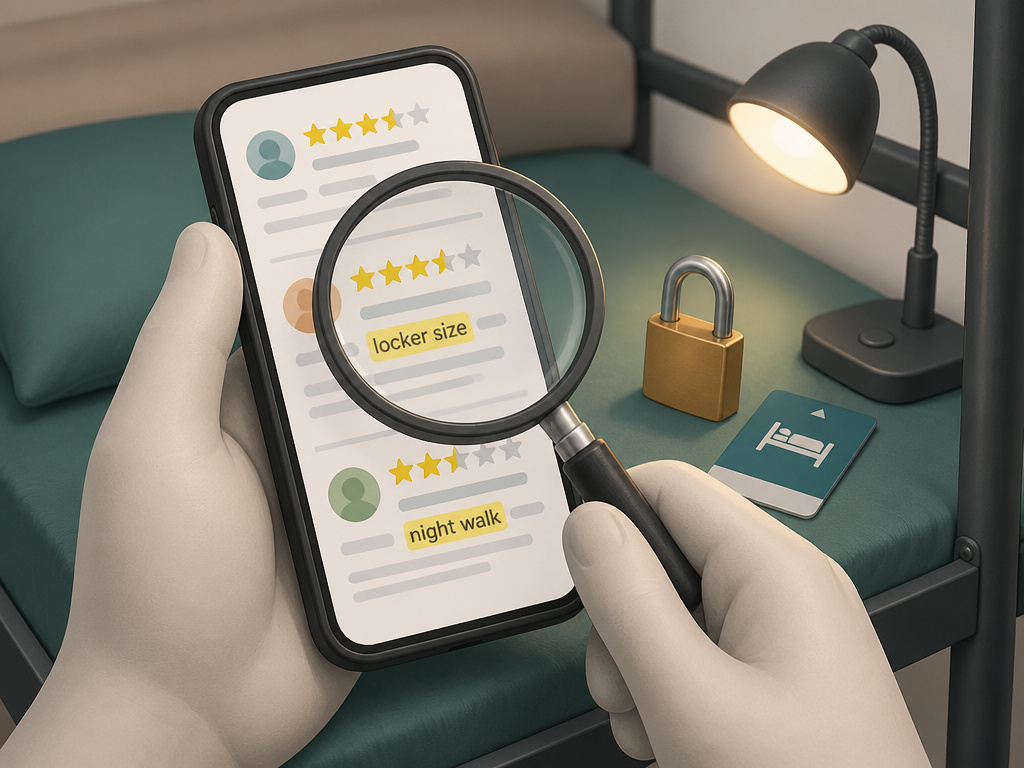
Reviews are where most people stop, and they’re the weakest filter if you read them wrong. Harvard’s advice is to read them thoroughly enough to understand the amenities, services, and property rules, and to avoid properties with few or no reviews. That last part matters more than the star average.
The better move is to filter for reviewers who match your situation. A hostel with a strong overall score built on group bookings and party reviews tells you almost nothing about what a solo stay feels like. Look for the reviews that mention lighting, reception hours, locker size, and whether the reviewer felt comfortable walking back at night.
A single complaint about noise is noise. Several reviews mentioning the same unfriendly front desk is a theme.
Reading for social atmosphere and reading for safety are the same skill applied to different keywords.
Why the Best Location Advice Flips in High-Risk Destinations
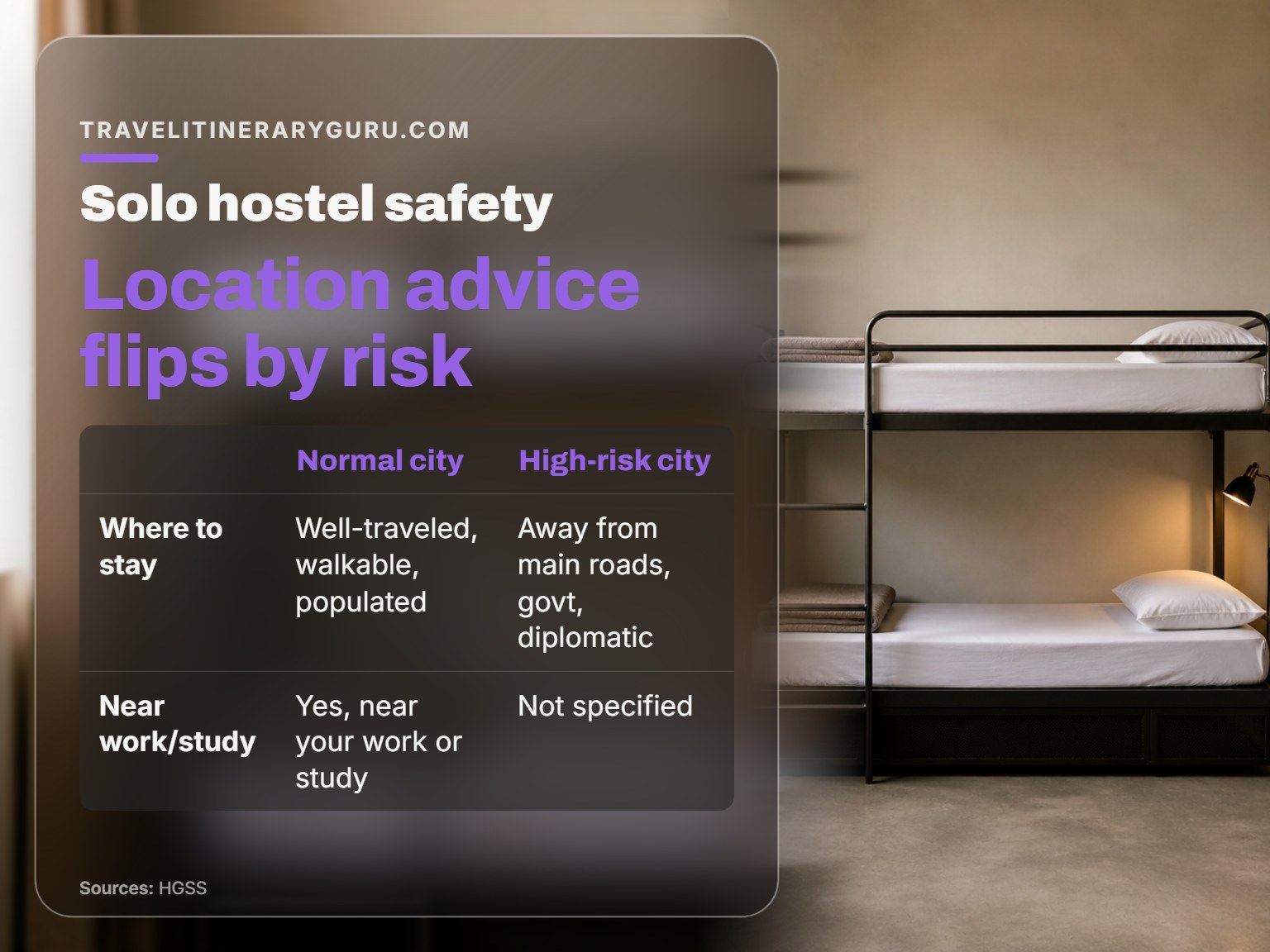
The standard location rule is simple: book somewhere well-traveled, walkable, and populated, near your work or study, with reliable access to transit, medical services, and food. Harvard’s guidance says exactly that, and it’s good how to choose a solo-friendly hostel advice for the vast majority of trips.
Then it inverts. Harvard’s own guidance adds a caveat for high-risk destinations: if you’re traveling somewhere with a high risk of conflict or terrorist activity, choose accommodations away from main roads, government buildings, and diplomatic buildings. The same guide that tells you to stay near the action tells you to move away from it when the threat model changes.
Where this goes sideways: Booking a hotel next to a landmark in a high-risk city. Landmarks, government offices, and diplomatic buildings are the targets, and proximity to them puts you inside the perimeter when something happens.
The two pieces of advice only look contradictory. In a normal city, foot traffic and street lighting are your protection. In a high-risk city, the buildings that draw crowds are the buildings that draw attacks. Same principle, opposite conclusion.
A neighborhood that’s fine at 6 p.m. In one city is a different place at midnight, and the review that says “great area” was probably written by someone who never walked it after dark.
What Should You Confirm With the Hostel Before You Arrive?
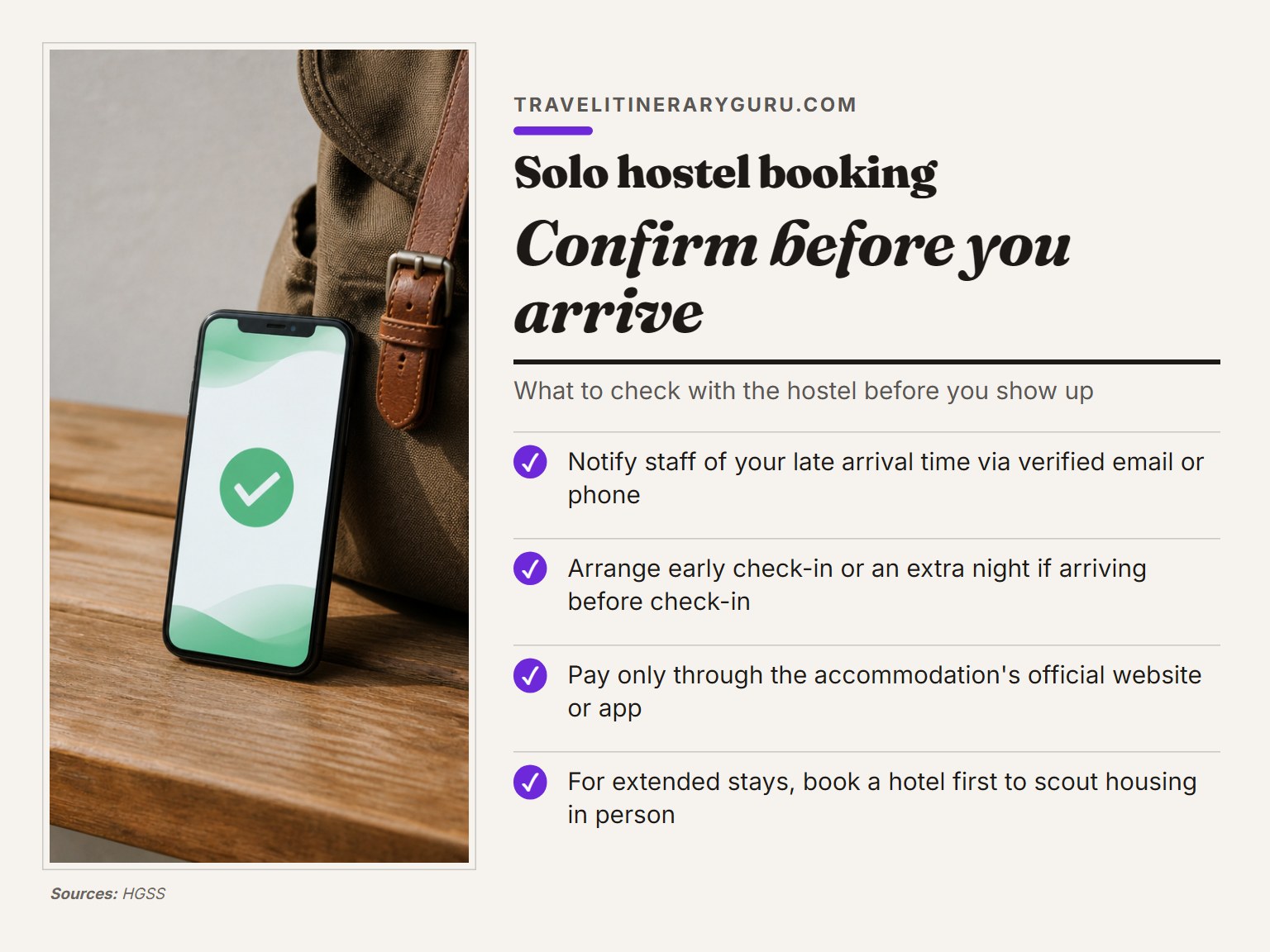
Late arrival is where the standard book-and-show-up procedure falls apart. If reception is unstaffed overnight, you’re standing outside with your bag at 1 a.m. And no way in.
Harvard’s guidance is to contact staff directly, through official and verified email addresses and phone numbers, and to notify them of your planned arrival time. This is the single most common way a budget booking turns into an expensive night in a hotel lobby.
| Situation | What to confirm | Why it matters |
|---|---|---|
| Arriving late at night. | Reception hours in writing | Unstaffed desks lock you out |
| Arriving before check-in | Early check-in or extra night | Bags have nowhere to go |
| Paying a deposit | Official site or app only | Third-party payment is a scam vector |
| Extended stay | A hotel for the first few nights | Lets you scout housing in person |
The payment method matters too. Both Harvard and Princeton flag the scam risk on properties you haven’t seen. Harvard’s advice is to pay directly through the accommodation’s official website or app and to communicate only through verified contact details. Princeton goes further: view the accommodation in person before paying a deposit, and have a short-stay hotel fallback planned in case the property doesn’t match the listing.
Skip this if: You’re booking a chain hostel with a staffed 24/7 desk and a verified payment portal. The direct-contact rule matters most for independent properties and marketplace rentals.
That fallback plan is the part most solo travelers skip. Booking a hotel initially for an extended trip isn’t wasted money. It’s the cost of seeing the place with your own eyes before you commit a month’s rent to it.
Which Room Type Fits a Solo Stay?
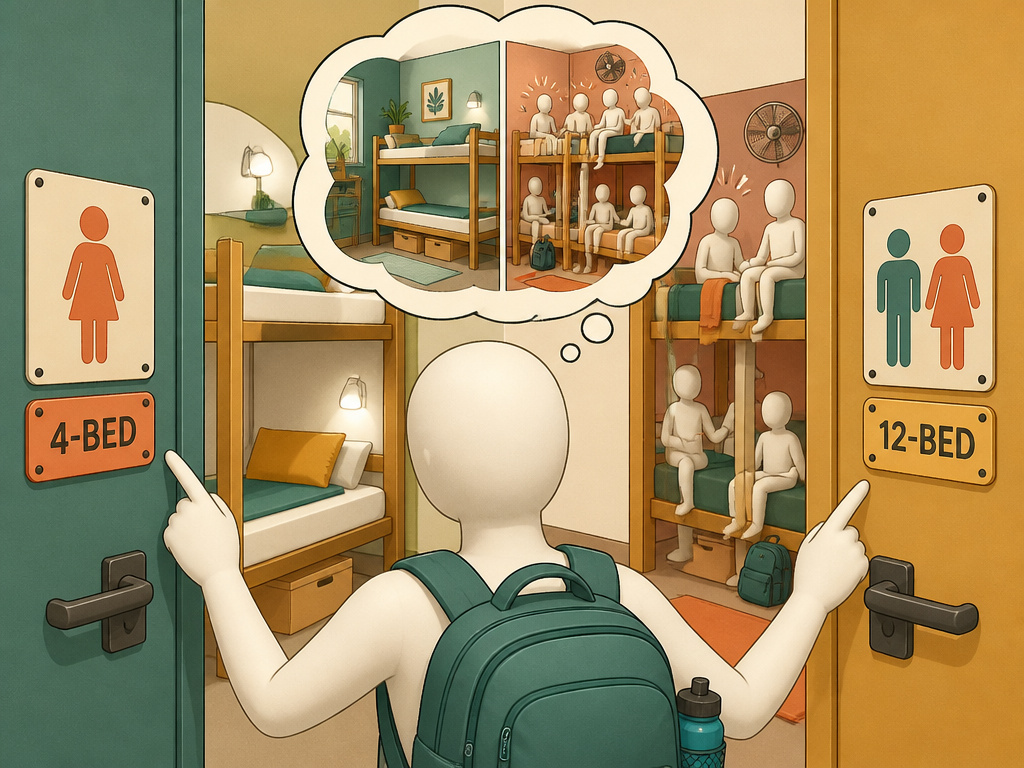
Dorm size changes the whole experience, and the numbers are smaller than people assume. Smaller dorms mean less noise, more privacy, and a better shot at actually talking to your roommates.
Hostelz treats female-only dorms as the easy starting point for a first solo trip, while Harvard advises checking local laws and norms around gender-based room-sharing, which vary by country. Female-only dorms are the easy starting point for a first solo trip, and they’re more available than people think. If a women-only room is the thing that makes the trip happen, check availability by country before you pick the country.
Here’s where the guides disagree, and it’s worth naming. Harvard’s guidance says to avoid sharing apartments, bathrooms, or other common spaces with strangers. Community and platform sources treat mixed dorms as a normal social default, and some solo travelers specifically choose small mixed dorms when they want a quieter crowd. Both positions are defensible, and the right one depends on what you’re actually comfortable with. Harvard also flags that laws and norms around gender-based room-sharing vary by country and need checking.
You get more privacy and a different kind of safety profile, at the cost of the built-in social contact a dorm gives you.
Common mistake: Booking a large dorm to save money on a first solo trip. The savings are real; so is the noise and the total absence of anyone to eat breakfast with.
What to Check the Moment You Walk In
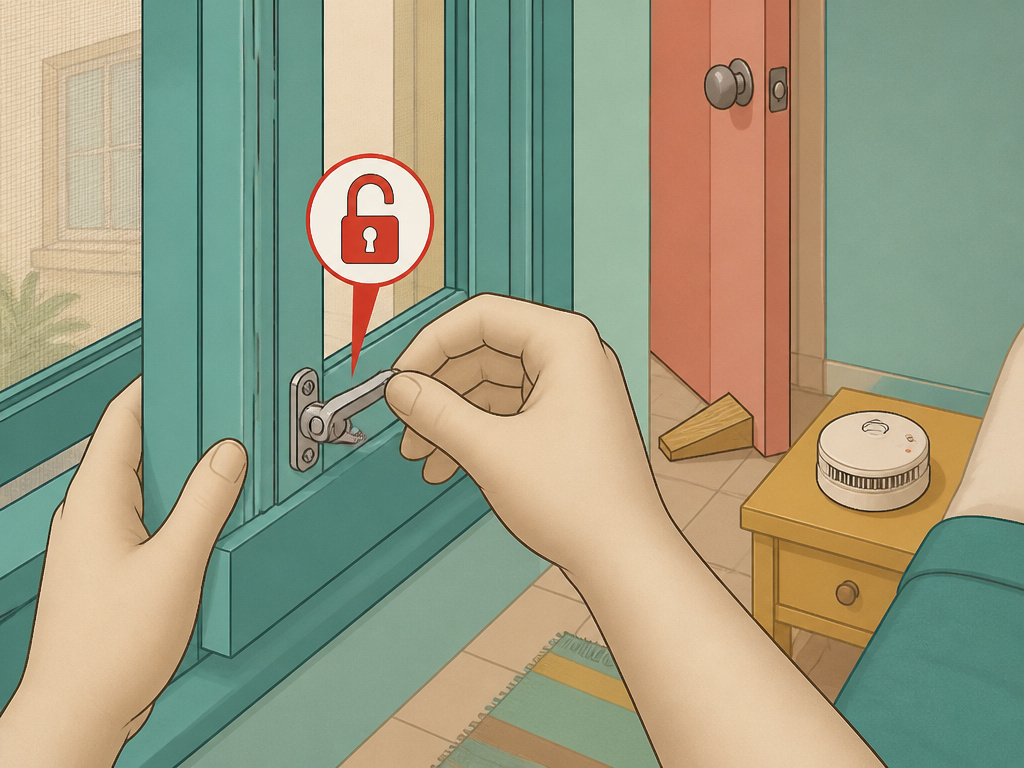
The room scan takes about two minutes and catches the problems that reviews can’t. Block the door open, then check the bathroom, under the bed, and behind the curtains. Test the door and window locks. See if the phone works. Look for smoke and carbon monoxide detectors. Harvard’s arrival checklist is that specific, and it exists because the things that go wrong usually go wrong in the first hour.
Then walk the exit route. Find the emergency evacuation doors and the stairs, and note which way they open. If the room number gets announced at check-in, ask for a different room. If you don’t have an in-room safe, ask about a hotel safe and whether it covers loss, and get a receipt for anything you store there.
A few small things travel well and cost almost nothing. Harvard suggests a door wedge as an extra layer under the deadbolt, while Hostelz recommends using the provided lockers for passports, cash, and electronics. A battery-operated portable smoke detector covers a room that doesn’t have one. A portable theft alarm clips to a bag. None of these replace a properly run hostel, but they cover the gap when you’re not sure.
Easy to miss: The window lock. Plenty of hostel windows open for ventilation and never get locked again. If yours doesn’t latch, ask to move before dark, not after.
Frequently Asked Questions
Are hostels safe for solo travelers?
They can be, and the deciding factor is the property, not the category. Pick a hostel with staffed reception, working locks, and a location near transit and food, and the risk drops sharply. The failures cluster around late arrivals, unstaffed desks, and walking back alone at night, and all three are things you can plan around before you book.
Should I book a female-only dorm?
If it’s your first solo trip, it’s the lower-risk starting point and roughly a third of hostels offer one. Availability varies a lot by country, so check before you commit to a destination. Hostelworld notes that some solo travelers prefer small mixed dorms when they want a quieter crowd, while Harvard advises avoiding sharing common spaces with strangers.
How do I know if a hostel’s neighborhood is safe?
Read reviews written by solo travelers and look for mentions of lighting, walkability, and how people felt coming back at night. Then check the area yourself using street-level mapping tools before you book. If you’re heading somewhere with a high risk of conflict or unrest, Harvard advises distance from main roads and government buildings, while Hostelworld advises women to stay on main roads and move in small groups.
What if the hostel doesn’t match the listing?
Report it to the staff, the host, or the platform you booked through, and ask for a different room or a full change of accommodation. This is why you research a backup option before you arrive. If the place doesn’t match what you paid for, having a second address already vetted turns a crisis into an inconvenience.
Is it worth paying more for a private room in a hostel?
It depends on whether you’ll actually use the common areas. A private room in a social hostel gives you quiet nights and a built-in way to meet people. A private room in a quiet hostel gives you neither the social contact nor the savings, which is the worst of both.
The Bottom Line
One rule most guides skip: if you can’t get a straight answer about reception hours in writing before you pay, that’s your answer. Book somewhere else. The properties that run a tight operation tell you their hours without being asked, and the ones that don’t are the ones that leave you outside at midnight.
The floor question is the one to settle first, because it’s the choice you can’t undo at check-in. If property crime is your bigger worry, take Princeton’s third through sixth floors. If fire egress worries you more, take Harvard’s second through sixth. Both guides agree on the part that matters most: no ground floor, no balcony room, and no room where the door doesn’t lock.
Start with a single overnight somewhere close to home before you commit to a two-week trip. The confidence came from the small step, not the big one.
And if you walk in and something feels wrong, leave. That’s not drama. It’s the cheapest correction available, and it beats spending a week telling yourself you’ll get used to it.
