
How to Choose a Ghost Tour: History or Theatre?
This post contains affiliate links. As an Amazon Associate, we earn from qualifying purchases.
To learn how to choose a ghost tour, read the listing language before you read the reviews: a history-led walk describes subject matter like a fire, a fever year, or a burial ground, while a scare attraction describes sensations like how often people scream. Most listings bury whether the route is street-level or indoors, and that single detail changes the experience more than the theme does.
Two completely different products get sold under the same two words, and the booking page rarely tells you which one you just bought. That gap between what a listing promises and what an evening actually delivers is where the how to choose a ghost tour question usually gets answered too late.
What follows is how to read a listing the way an operator reads one: the language that signals product type, the duration bands and what they mean for your legs, the format questions nobody asks until they’re standing on a sidewalk at 9 p.m., and the operator claims that should make you close the tab.
Key Takeaways
- Read the listing for subject matter, not adjectives. A walk that names a prison or a burial ground is selling history. One that names how frightening it is selling theatre.
- Ask whether the route is indoors or street-level. Side Quest Cities calls this the thing listings most often bury, and it changes the evening more than the theme does.
- Treat any guarantee of a paranormal sighting as a signal, not a feature. Bar Harbor Ghost Tours states plainly that it cannot guarantee sightings; two practitioner sources treat guarantees as disqualifying.
- Check the age floor before you book. Tours split into family-designated and 21+ categories, and Bar Harbor does not recommend its ghost tour for children under 8.
- Book early for October weekends. Tours in the Williamsburg area run year-round, but peak spooky season fills fast.
The Listing Tells You Which Product You’re Buying
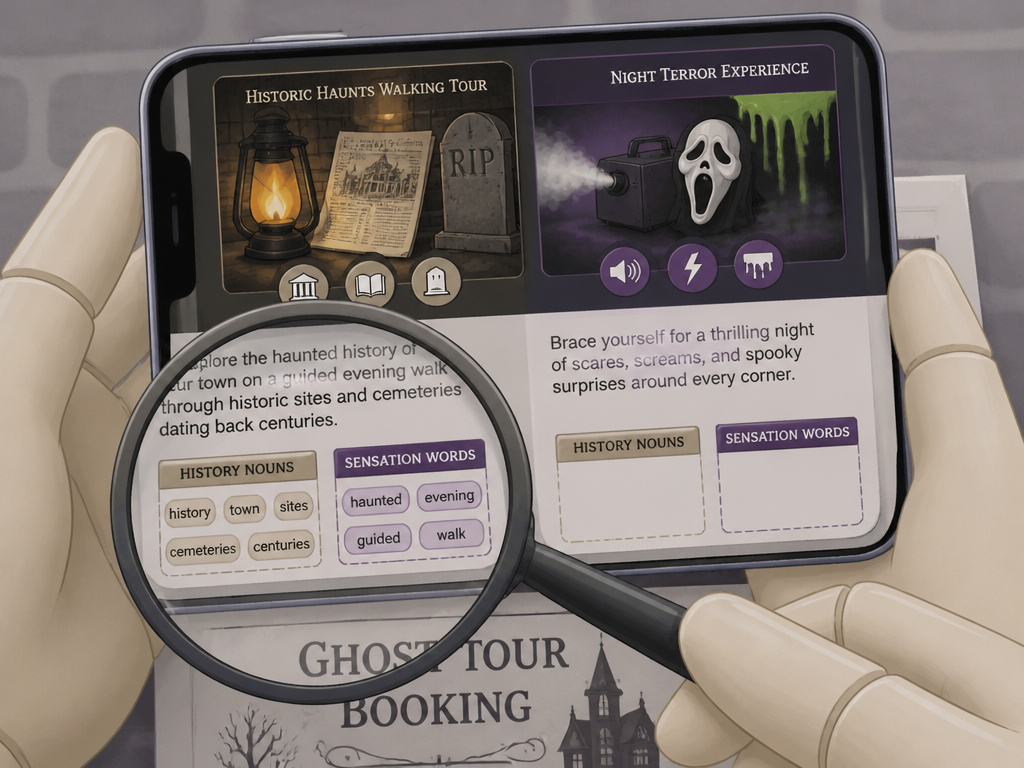
Side Quest Cities makes the sharpest version of this point: two completely different products are sold under the words “ghost tour,” and the listing rarely tells you which one you’re booking. One is social history delivered after dark by someone who knows the archive. The other is costumed theatre with a fog machine.
Both are legitimate ways to spend an evening. American Ghost Walks frames the choice as a matter of preference, saying it’s okay to like both, while Side Quest Cities is blunter, treating the history-led version as the only one worth booking if the city was the point.
The tell is in the nouns. A history-led walk describes subject matter: a fire, a fever year, a prison, a burial ground. A scare attraction describes sensations: how frightening it is, how often people scream, whether you will jump. Read the first paragraph of any booking page and sort the words into those two buckets. It takes only a moment.
A history-led ghost walk uses the supernatural as a way into material that is genuinely difficult: epidemics, executions, war, poverty, and what cities did with their dead. The ghost stories are the folklore that grew around real events, and the walk treats them as evidence of how a place processed its own history.
American Ghost Walks frames the same split as a matter of preference rather than quality: it’s okay to like both. Side Quest Cities is blunter, treating the history-led version as the only one worth booking if the city was the point.
What the Costume Signals
If a tour is marketed like a Halloween haunted house, expect it to be more gruesome. American Ghost Walks says exactly that, and adds the practical warning: don’t be surprised when they go into uncomfortable details on real deaths.
That’s not a knock on the format. It’s a warning about mismatch. If you’re traveling with a teenager who reads true crime for fun, fine. If you’re not, the marketing told you what you were buying and you didn’t read it.
How Long Does a Ghost Tour Actually Last?
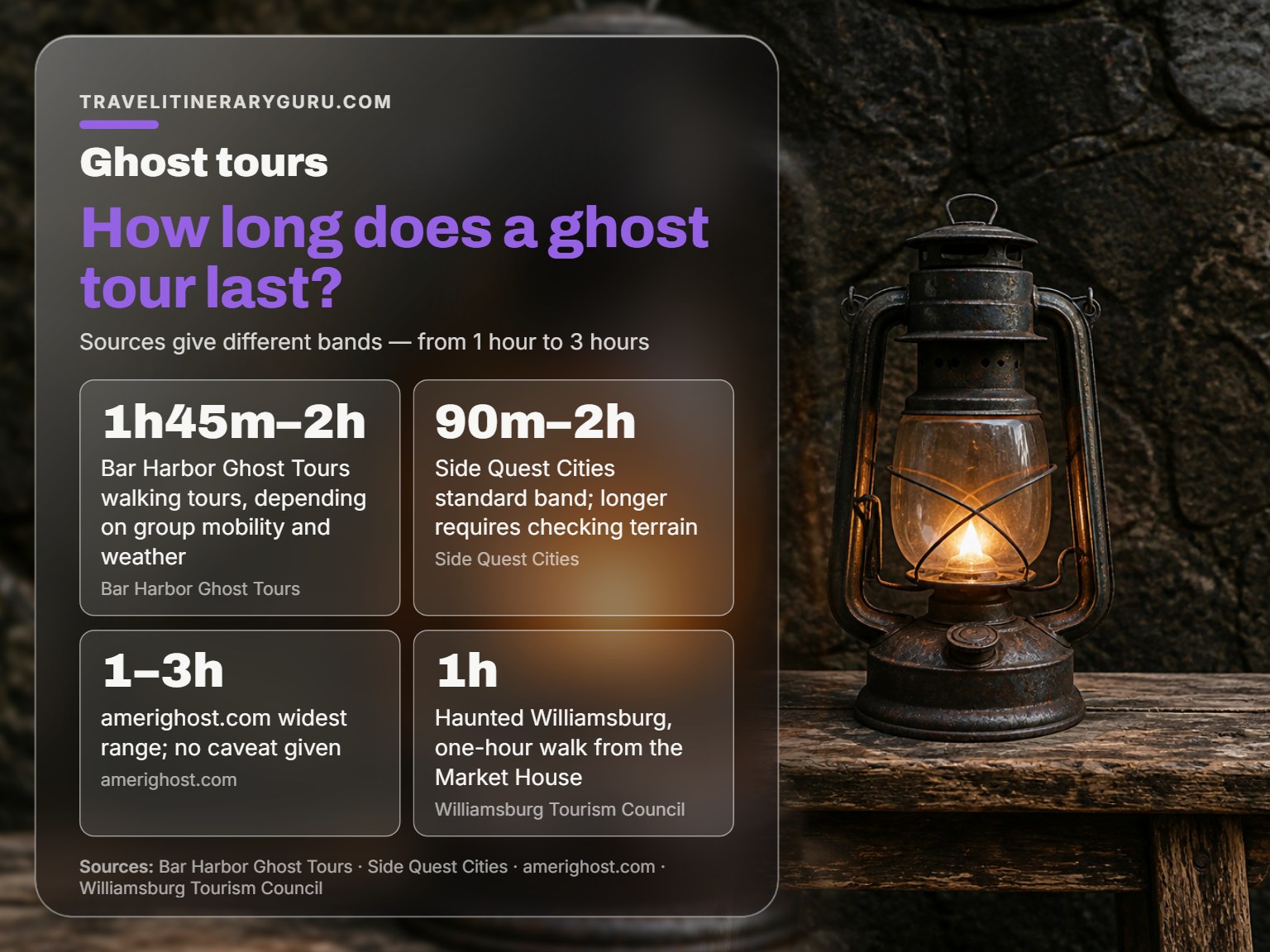
Duration depends on the operator, and the sources don’t agree on a single band. Bar Harbor Ghost Tours puts its walking tours at about 1 hour 45 minutes to 2 hours, and names the variables: group mobility, weather, and group interaction with the guide. Side Quest Cities gives 90 minutes to 2 hours as the standard band and flags that anything much longer requires checking walking distance and terrain. Amerighost.com gives the widest range of the three, at 1 to 3 hours.
That last number is the one to treat carefully when you compare a how to choose a ghost tour. Three hours is possible, but Side Quest’s caution applies: verify terrain and distance before you commit to it.
| Source | Stated Duration | Caveat Attached |
|---|---|---|
| Bar Harbor Ghost Tours | 1h 45m to 2 hours | Depends on group mobility and weather |
| Side Quest Cities | 90 minutes to 2 hours | Longer requires checking terrain |
| amerighost.com | 1 to 3 hours | No caveat given |
| Williamsburg Tourism Council (Haunted Williamsburg) | 1 hour | Some interior spaces not ADA-accessible |
| Williamsburg Tourism Council (Yorktown Candlelight Tour) | 90 minutes | Not offered on Sundays |
The Williamsburg figures show how much a single operator’s catalog can vary. Same tourism council page, same city, and the tours run from one hour to two. The Extreme Ghosts of Williamsburg Tour runs about two hours in a small, intimate group and teaches you to use a PSB7 Spirit Box and dowsing rods. The Haunted Williamsburg tour is a one-hour walk that begins at the Market House and goes inside historic buildings.
Two hours versus one hour is not a rounding difference. It’s the difference between a stop before dinner and the whole evening.
Worth knowing before you start: Bar Harbor Ghost Tours notes that its walking tours have few, if any, opportunities to sit down, because the route travels through public spaces. If mobility is a concern, tell the operator ahead of time — they can’t control the benches along a public route.
Which Variable Actually Changes Your Evening?
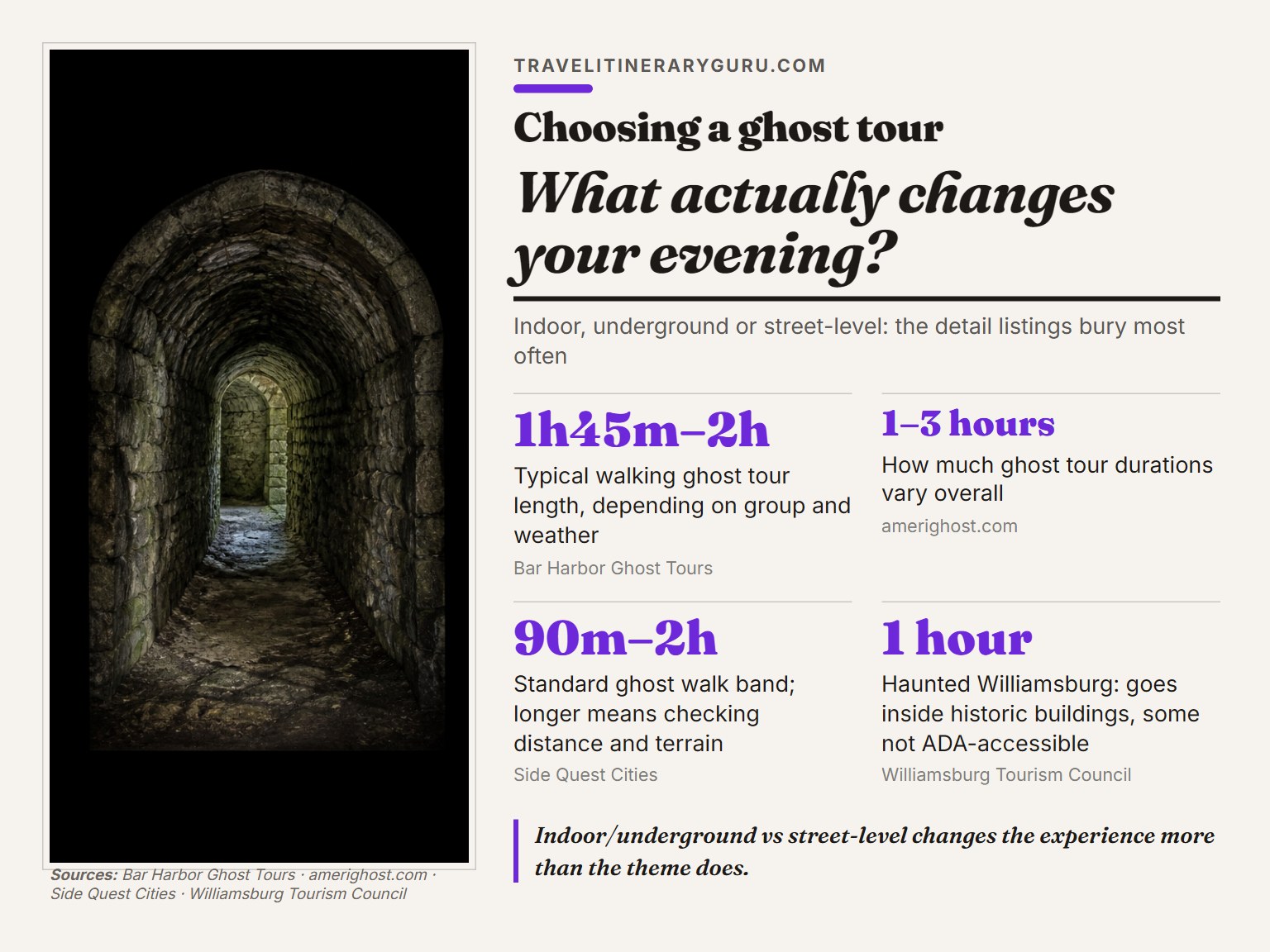
Everything else about a ghost walk is fixed. The route is public streets. The stories are, in most cities, broadly shared across operators. Side Quest Cities puts it plainly: the only genuine variable is the person telling them.
Indoor, Underground, or Street-Level
Side Quest Cities calls the indoor/underground versus street-level split the detail listings most often bury, and says it changes the experience more than the theme does.
The range of practice is wide. Bar Harbor Ghost Tours goes inside the 1932 Criterion Theatre most evenings, per that venue’s schedule, and enters no other buildings. The operator states directly that it is not a ghost hunting experience. Williamsburg’s Haunted Williamsburg tour goes inside historic buildings, and the tourism council notes that some interior spaces are not ADA-accessible.
Compare that to Edinburgh’s underground vaults evening tour, which goes into the chambers beneath the Old Town rather than staying on the street. Same category, same two-hour shape, completely different physical experience.
If you have a mobility concern, a claustrophobia issue, or a kid who needs to move, this is the question that decides your booking. Ask it before you pay.
Is a Guarantee of Seeing a Ghost a Good Sign?
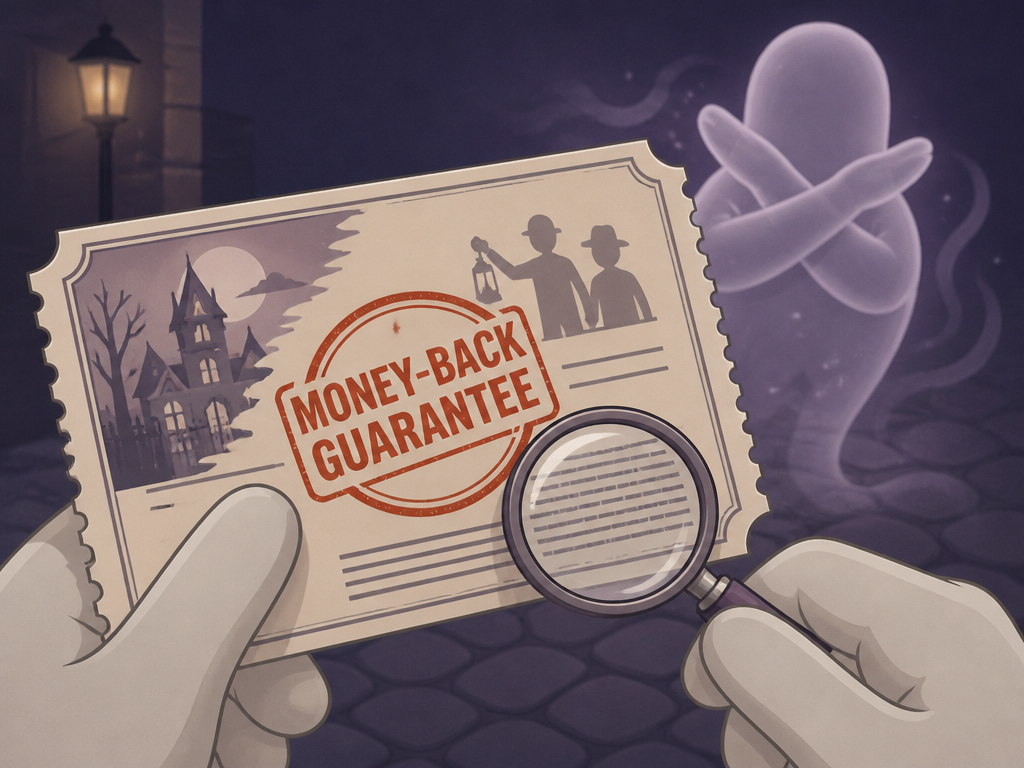
No. Most of the sources treat guarantees with suspicion, though not all agree: amerighost.com and Side Quest Cities warn against them, while Ghost City Tours offers a money-back guarantee.
Bar Harbor Ghost Tours refuses to guarantee anything: “we cannot guarantee this will happen for everyone… Spirits were live people at one time and may just not want to show themselves every night.” The operator also notes it is not uncommon for one person in a group of twenty-five to get a picture of a spirit while no one else does.
Amerighost.com goes further, treating the guarantee itself as a red flag: be wary of any company offering guarantees about seeing ghosts, because no one can really guarantee a paranormal experience will occur on any given night. Side Quest Cities agrees, saying an operator willing to imply otherwise has told you where they sit on the history-to-theatre spectrum.
Ghost City Tours sits on the other side of this. It offers a money-back guarantee: love your tour or get a full refund. Read that carefully, though. It’s a satisfaction guarantee, not a sighting guarantee, and those are different promises.
Common mistake: Reading “money-back guarantee” as “guaranteed sighting.” One guarantees you’ll enjoy the evening. The other promises something no operator controls.
Do You Need to Book Ahead, and for Which Nights?
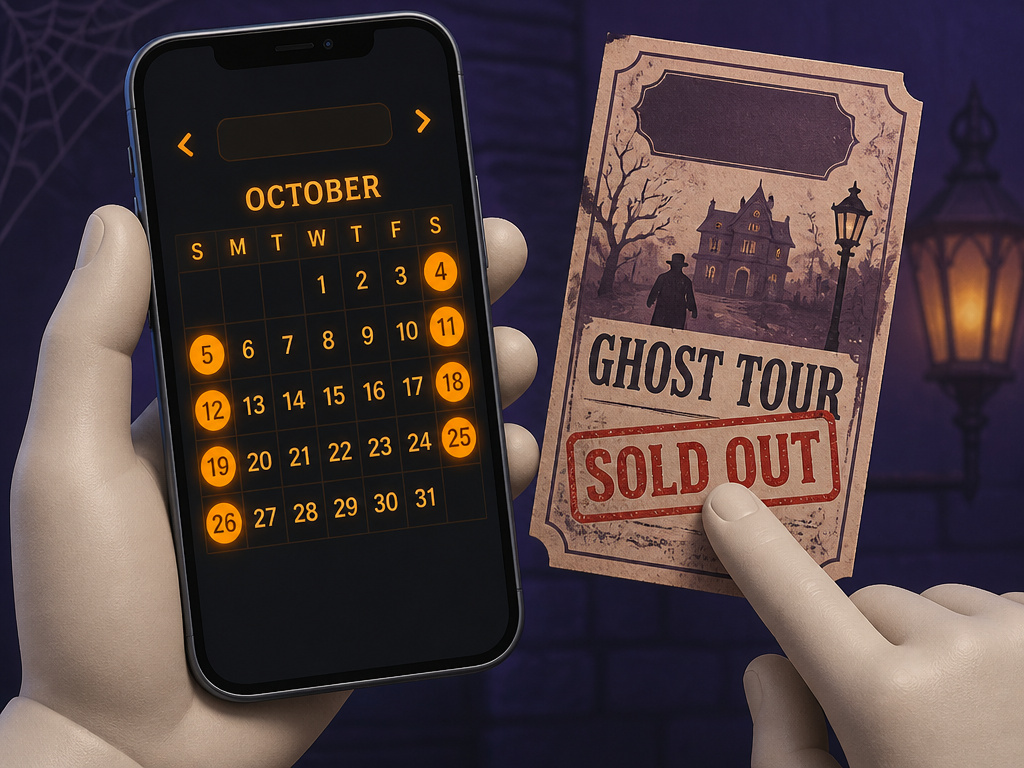
Book in advance for October weekends. That’s the clearest scheduling advice in the sources, and it comes from the Williamsburg Tourism Council: ghost tours in that area operate year-round, but book ahead, especially for weekend tours in October during peak spooky season.
Ghost City Tours says its tours sell out daily and recommends booking to guarantee a spot. That’s an operator talking about its own inventory, so weigh it accordingly, but the underlying point holds for any popular city in October.
American Ghost Walks adds a wrinkle worth knowing: Halloween-season demand pulls operators from other categories, like architectural and food tours, into adding ghost product with what it calls entry-level stories. If you’re booking in October, you’re more likely to encounter a tour from a company that doesn’t normally run one.
The Repetition Problem
If you’ve done several ghost walks and found them repetitive, Side Quest Cities has a diagnosis: you kept booking the same product. A folklore or mythology walk is a genuinely different one. The distinction is clean — a folklore walk is about a storytelling tradition, the body of myth a culture built and kept. A ghost walk is about specific places and what is supposed to have happened in them.
Dublin’s mythology and folklore walking tour is built entirely around Ireland’s storytelling tradition rather than hauntings, runs about two hours, and holds 5.0 out of 5 across 1,165 reviews. Nobody on it is trying to frighten you.
How to Read Reviews Without Getting Fooled

The sources disagree here, and the disagreement is useful.
Amerighost.com states flatly that online reviews can be manipulated and are not always the best indicator of tour quality, while Side Quest Cities argues reviews are useful if you read them for specificity about the guide. Its recommendation: ask hotel concierges and front desk clerks, and ask taxi or Uber drivers, who hear about the local tours good and bad.
Side Quest Cities takes the opposite position, but with a condition. Reviews are useful if you read them for specificity about the guide. A large review count with nothing specific about the guiding is a weaker signal than a small one where people name what the guide actually did.
Both can be right. A manipulated review section tends to be generic — lots of stars, no named details. A genuine one names the guide and what they did. Read for the second thing and the first problem mostly solves itself.
The review counts themselves are a mixed bag. New Orleans’ ghost, voodoo and vampire walk holds 4.5 out of 5 across 13,521 reviews. Prague’s ghosts and legends of the Old Town runs 4.7 across 2,875. Edinburgh’s underground vaults tour holds 4.8 across 653. Those are real numbers from a source that checked them, but a small review count and a large one aren’t the same instrument.
The part nobody mentions: A huge review count on a ghost tour may reflect the city’s visitor volume rather than the tour’s quality.
Match the Tour to the Person, Not the City
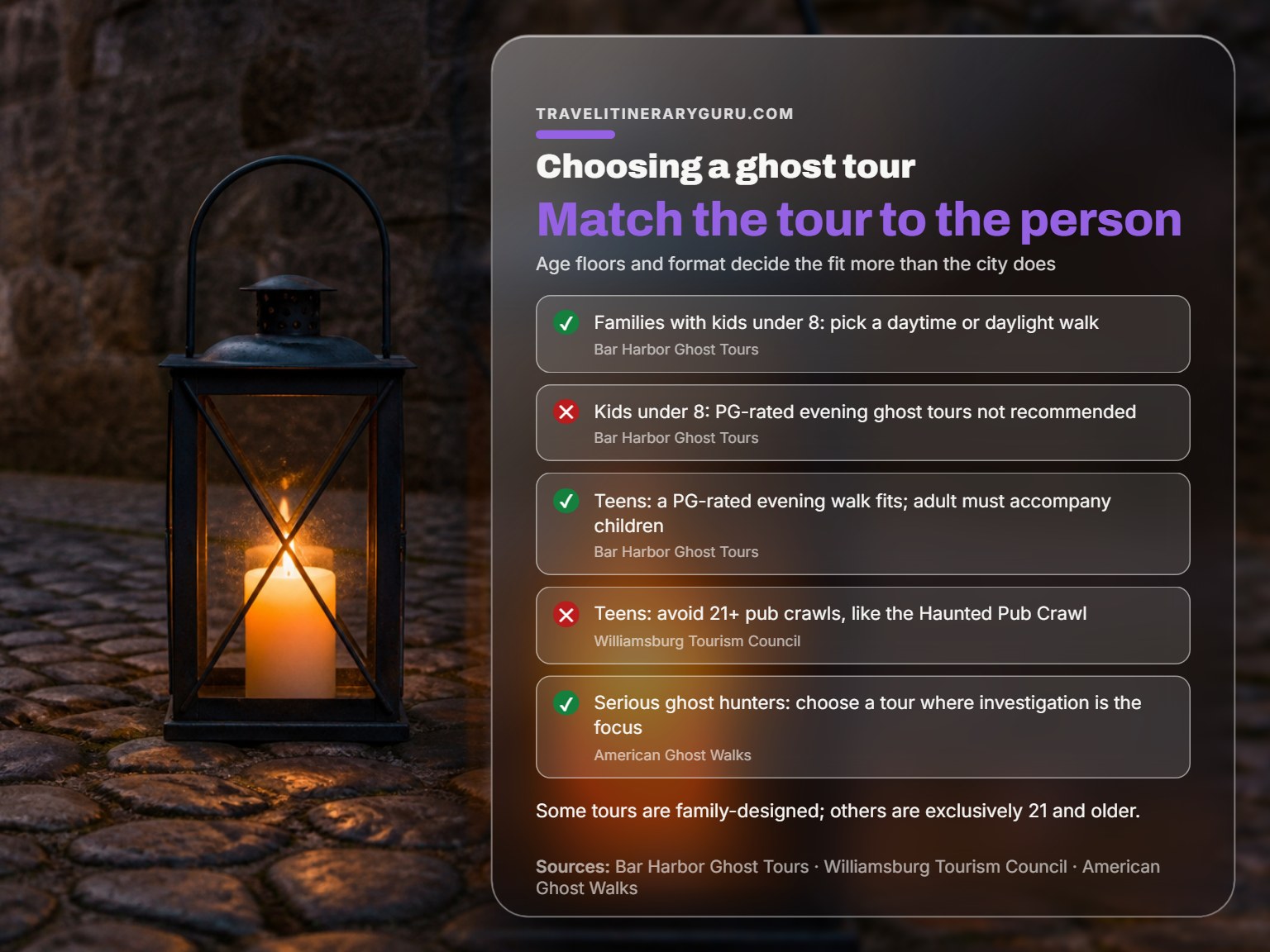
Age floors and format matter more than most booking pages admit, and the Williamsburg Tourism Council documents the split cleanly: some tours are designed with families in mind, others are exclusively for those 21 and older.
Bar Harbor Ghost Tours rates its ghost tour PG and requires an adult to accompany children, and does not recommend it for children under 8. For kids who scare easily, the operator suggests the Wabanaki Spirit Walk instead, which is geared toward families with small children and is much less scary in the daylight.
That last detail matters. American Ghost Walks notes that ghost stories run at all hours of the day, not just in darkness. A daytime version of a ghost tour is a real option, and for younger kids it’s often the better one.
| Traveler Type | Best Fit | Avoid |
|---|---|---|
| Family with kids under 8 | Daytime or daylight walk | PG-rated evening tours |
| Family with teens | PG-rated evening walk | 21+ pub crawls |
| Adults only, no interest in ghosts | Pub crawl format | History-led walks |
| Serious ghost hunters | Investigation-focused tour | Walking tours with no equipment |
| Limited mobility | Van tours, indoor formats | Street-level walks with no seating |
The pub crawl row deserves a note. Colonial Ghosts’ Haunted Pub Crawl in Williamsburg is a 21+ tour with stops at haunted locations including the Public Hospital and the Wren Building. Savannah’s Haunted Pub Crawl is a two-hour walking tour, also 21+.
If you want to compare formats more broadly, the tradeoffs between a walking tour vs bus tour are worth understanding before you commit to a long evening on your feet.
Who’s Actually Telling the Story
Guide skill is the variable that matters most, and amerighost.com gives the most actionable version: find out how long the company has been around, or reach out and ask who their best guides are and which night they work.
Side Quest Cities makes the same point differently. The route is fixed, the stories are shared, and the only genuine variable is the person telling them. If you’re choosing between two operators covering the same ground, you’re choosing between two people.
That reframes the whole decision. You’re not buying a route. You’re buying a couple of hours with one person’s version of a city.
Where Sourcing Comes From
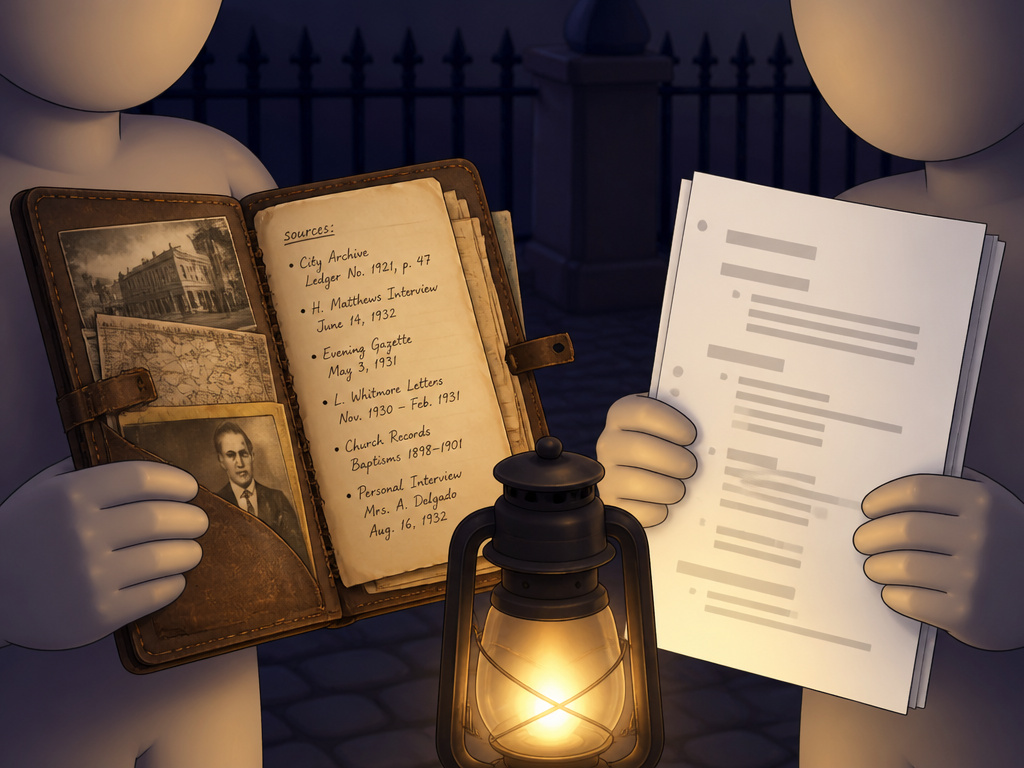
Bar Harbor Ghost Tours documents its own method: personal interviews, archives, and historical societies and museums, updated continuously. That’s a specific claim you can evaluate. A tour company that names its sources is telling you something a company that doesn’t, isn’t.
Ghost City Tours makes a related argument from the marketing side: some operators rely on recycled scripts and jump scares while others invest in original research and storytelling. Its own framing is that the difference between a good ghost tour and a great one isn’t the ghosts themselves but the history behind them.
Frequently Asked Questions
How long should a ghost tour last?
Most operators run between 90 minutes and 2 hours. Bar Harbor Ghost Tours states 1 hour 45 minutes to 2 hours for its walking tours. Side Quest Cities gives 90 minutes to 2 hours as the standard band. Amerighost.com gives 1 to 3 hours, but treats the longer end as an outlier worth checking terrain for.
Are ghost tours scary?
That depends entirely on which product you booked. A history-led walk uses the supernatural as a way into difficult material, and the scares come from real events. A scare attraction is built around sensations and jump scares. American Ghost Walks notes that tours marketed like a Halloween haunted house will be more gruesome, so read the listing before you decide.
Can I bring my kids on a ghost tour?
Many tours are family-designated, but age floors vary. Bar Harbor Ghost Tours rates its tour PG, requires an adult to accompany children, and does not recommend it for children under 8. The Williamsburg Tourism Council notes that some tours are exclusively for those 21 and older, so check before booking.
Do ghost tours actually show you a ghost?
No operator can promise that. Bar Harbor Ghost Tours states it cannot guarantee sightings will happen for everyone. Amerighost.com warns against any company offering guarantees about seeing ghosts. If a listing implies a guaranteed sighting, treat that as information about the operator’s priorities.
Should I book a ghost tour in advance?
Yes, especially for October weekends. The Williamsburg Tourism Council recommends booking ahead for weekend tours during peak spooky season. Ghost City Tours says its tours sell out daily. Weeknight tours in shoulder season are easier to book on shorter notice.
Are ghost tours accessible for people with limited mobility?
It varies, and you should ask directly. Bar Harbor Ghost Tours notes its walking tours have few or no seating opportunities because they travel through public spaces, and asks guests with mobility concerns to notify the operator ahead of time. The Williamsburg Tourism Council notes that some interior spaces on the Haunted Williamsburg tour are not ADA-accessible.
The Bottom Line
Here’s the part nobody tells you. The single most useful thing you can do is email the operator and ask two questions: which night is your best guide working, and does the route go indoors or stay on the street.
One practical note from years of booking these: budget for the tip. A “free” walking tour is pay-what-you-wish, and a good guide has earned more than a token.
Then close the laptop and go. An evening on a dark street with someone who knows the archive is worth more than another evening of comparison shopping.
