
How to Avoid Taxi Scams at Airports: Step-by-Step
This post contains affiliate links. As an Amazon Associate, we earn from qualifying purchases.
You avoid taxi scams at airports by using only official taxi stands, designated rideshare pick-up areas, or pre-arranged transportation services. PANYNJ states that anyone who approaches you inside the terminal is not authorized to pick up passengers, while Swedavia allows only drivers with a pre-booked car in the arrivals hall and KAA bans drivers from the arrivals hall entirely, telling pre-arranged passengers to meet their driver outside the gate. Learning how to avoid taxi scams at airports means confirming the price and payment method before you ride.
That last sentence is the one that gets skipped. A price you agreed to in the app or at a contracted stand is enforceable. A price quoted by a man who walked up to you at baggage claim is not backed by an airport contract or a fare cap, which is the how to avoid taxi scams at airports question in practice.
What follows is the specific version: how to spot an official taxi stand in five different countries, what a fare cap actually covers, and the one situation where the standard advice fails completely.
Key Takeaways
- Only official taxi stands, designated rideshare areas, or pre-arranged services are authorized to pick you up at PANYNJ airports. Anyone who approaches you inside the terminal is not.
- Swedavia-contracted taxis at Arlanda cap the fare within a marked zone, but the cap stops at the zone boundary and meter prices resume outside it.
- Kenya’s taxi fares are negotiated, not capped. KAA licenses the operators, but you and the driver agree the price at the start of the trip.
- Pre-book for night arrivals. Swedavia recommends it because taxi shortages happen at high-demand times, and an empty stand late at night is when the standard advice fails.
- Keep the receipt. It is the only document that carries the car registration number, the taxi company, and the driver code.
What Does an Official Taxi Stand Actually Look Like?
Airport signage is the first filter, and it is more specific than most travelers expect.
Swedavia tells passengers at Stockholm Arlanda to follow signs reading “Taxi, Approved Taxi.” The contracted companies are located directly outside the arrivals hall at Terminal 5 and outside Terminal 2. Madrid-Barajas signs taxi ranks outside the arrivals area at every terminal, and Aena’s official taxis are white with a red stripe and the coat-of-arms of Madrid City Council on the doors.
Airport taxi stands are marked, signed, and located outside the arrivals area at every major terminal. Contracted operators park there under an agreement with the airport authority, and that agreement usually carries a price cap, a licensing requirement, or both. A taxi parked at Terminal 4 or SkyCity likely does not have a Swedavia contract in place.
The livery check has limits. Kenya Airports Authority licenses reliable and insured taxicabs, and some licensed taxis must be painted yellow. KAA states plainly that not all licensed taxis are painted yellow. So a yellow car is not proof of a license, and a non-yellow car is not proof of a scam, which is why when you compare a how to avoid taxi scams at airports approach, the livery check alone is not enough.
Here is the part that catches people. A taxi physically sitting at the airport is not the same as a taxi authorized to pick up at the airport. Swedavia notes that taxis found at Terminal 4 or SkyCity likely do not have a contract with Swedavia. Same airport, different terminal, no fare cap.
Why Does the Driver Inside the Terminal Not Have a Contract?
The in-terminal solicitor is the single most consistent red flag across every source I checked, but the rules behind it differ by country.
Port Authority of New York and New Jersey operates JFK, LaGuardia, and Newark, and its position is absolute: anyone who approaches you inside the terminal is not authorized to pick up passengers. LaGuardia’s own page says the same thing in blunter language. Do not accept rides from individuals soliciting inside the terminal.
Swedavia carves out one exception. Only drivers who have a pre-booked car are allowed in the arrivals hall to meet passengers. A driver offering a taxi inside the terminal does not have an airport contract. Kenya Airports Authority bans drivers from the arrivals hall entirely and tells pre-arranged passengers to look for their driver outside the arrivals hall gate.
| Airport Authority | In-Terminal Solicitation | Pre-Booked Driver Rule |
|---|---|---|
| PANYNJ (JFK, LGA, EWR) | Not authorized | No exception stated |
| Swedavia (Arlanda) | Banned unless pre-booked | Pre-booked cars allowed in hall |
| Aena (Madrid-Barajas) | Avoid in-terminal offers | Use the appropriate taxi rank |
| KAA (Kenya) | Drivers banned in arrivals | Meet driver outside the gate |
The practical takeaway from that table: if a stranger walks up to you and offers a ride, they are not authorized to pick up passengers or do not have an airport contract. Either way, you are the one holding the risk.
Common mistake: Assuming a pre-booked driver will meet you inside the arrivals hall. At Kenyan airports, drivers are not allowed inside the hall at all. Look for your driver outside the arrivals hall gate, not at the baggage carousel.
How Do You Confirm the Price Before You Get In?
Free price setting applies to taxi rides in Sweden, which sounds like open season until you understand the comparative price system.
Every Swedish taxi company must state comparative prices for all journey types. The comparative price is calculated on a typical journey of 10 kilometres that takes 15 minutes. It is displayed in large black digits on a yellow background, and the highest comparative price the car applies must be shown in extra-large digits.
That display is your negotiation tool. You do not have to take the car that is first in line. Read the yellow sign on the car you actually want.
For an airport transfer, I use a pre-booked airport transfer whenever the arrival lands after dark, because the price is locked before I leave home and there is no conversation at the curb. Fair warning: that only works if you book with a company the airport actually recognizes.
Madrid works on a different model. The Fixed Rate applies 24 hours a day, every day of the year for services departing from the Adolfo Suárez-Barajas passenger terminals and arriving outside the M-30 ring road with a distance of less than 9 km. Once the 9 km mark is passed, the taximeter calculates the fare from there.
Kenya runs on negotiation. KAA states that the price is negotiated between passenger and taxi driver at the start of the trip. There is no cap. KAA states that the price is negotiated between passenger and taxi driver at the start of the trip, which is why knowing the estimate before you travel matters more there than anywhere else on this list.
Where this goes sideways: Agreeing a fixed price that never appears on the meter. Swedavia requires that a fixed price be entered and visible in the taxi meter before the journey starts, and the meter must stay activated throughout. A driver who agrees a price but does not enter it visibly in the meter before the journey starts has not met Swedavia’s requirement.
What Does the Fare Cap Actually Cover?
Caps are the most misunderstood protection in airport taxi travel. They are bounded, and the boundary is where the trouble starts.
Swedavia-contracted taxis at Arlanda have a maximum fare within the designated zone. For journeys within that area, Swedavia’s own pages list conflicting maximum fares for 1 to 4 passengers, SEK 825 on one page and SEK 800 on another, so treat the exact cap as something to confirm at the stand. The same source page also lists SEK 800 for 1 to 4 passengers and SEK 1,275 for 5 to 8 passengers travelling to one address. The two figures for the 1 to 4 passenger band do not match, so treat the exact cap as something to confirm at the stand rather than a number to quote at a driver.
After you have left the marked zone, regular taxi meter prices apply. The cap is a zone protection, not an airport-wide guarantee. Here is why it falls apart on the ground: the cap is a zone protection, and after you have left the marked zone, regular taxi meter prices apply.
| City | Fare Model | What Ends the Protection |
|---|---|---|
| Stockholm (Arlanda) | Capped within marked zone | Crossing the zone boundary |
| Madrid (Barajas) | Fixed Rate, 24/7/365 | Passing 9 km or the M-30 ring road |
| New York (LGA) | Metered, TLC regulated | Nothing; meter runs the whole trip |
| Kenya | Negotiated at trip start | Nothing; no cap exists |
LaGuardia runs on a metered model regulated by the NYC Taxi and Limousine Commission. Taxi trips from LaGuardia receive a $1.00 peak time surcharge on weekdays from 4:00 p.m. To 8:00 p.m. ET. One fare pays for all passengers going to the same place, and the limit is 4 passengers for cabs and 5 for minivans.
Which Airports Have the Weakest Protections?
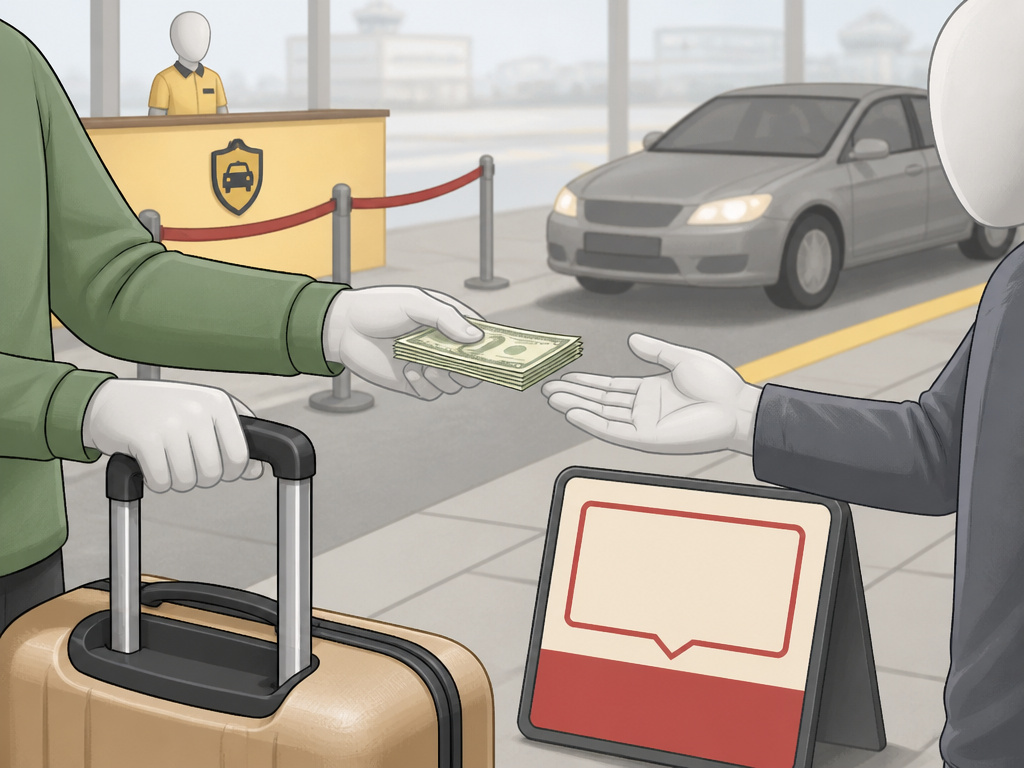
Kenya is the outlier, and it is worth naming directly.
KAA licenses reliable and insured taxicabs and transfer companies, and taxis are allowed to wait at designated ranks. But the fare model is negotiation, and the same authority that licenses the operators also states that the price is negotiated between passenger and taxi driver at the start of the trip. KAA licenses reliable and insured taxicabs, but the fare model is negotiation.
The KAA mitigation is structural rather than regulatory. Several companies have desks located at the airport domestic and international arrivals halls, and KAA encourages airport users to use the official taxi for their security. Several companies have desks located at the airport domestic and international arrivals halls, and KAA encourages airport users to use the official taxi for their security.
This is also where the travel scams pattern repeats itself across regions. The pattern repeats itself across regions: an operator without an airport contract exploits the gap between what you expect and what the local system actually enforces.
What most people get wrong: Treating a license as a price guarantee. In Kenya KAA licenses reliable and insured taxicabs, but the price is negotiated at the start of the trip.
What Do You Do When There Are No Taxis?
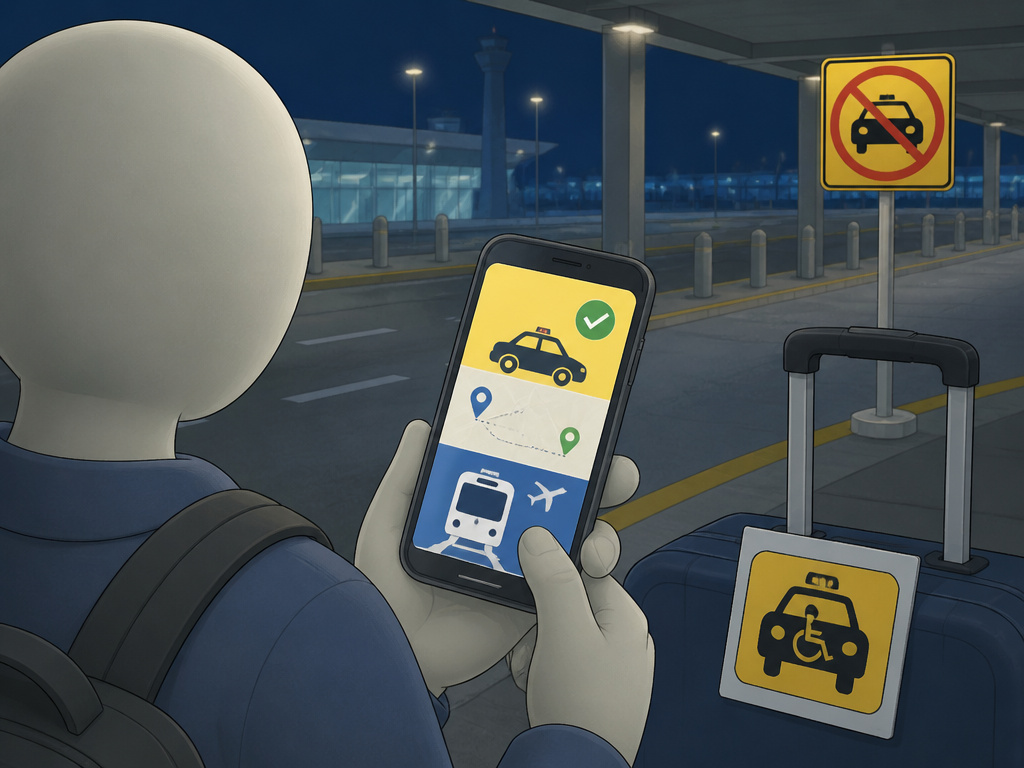
The standard advice assumes a taxi is waiting. Sometimes the stand is empty.
Swedavia recommends pre-booking a taxi when travelling from the airport at night, because there might be a shortage of taxis at certain times due to high demand. That is the situation the standard advice does not cover. An empty stand late at night is exactly when the standard advice fails.
If you have a Färdtjänst card in the Stockholm region, contact Färdtjänst and order as usual. Without a card, contact the taxi rank officer outside each terminal, who will order a car. Accessible taxis can be ordered to and from Arlanda, and if you need a larger vehicle or special equipment such as a child seat, ask the taxi host.
At LaGuardia, wheelchair-accessible taxis can be requested through the Accessible Dispatch program or by using apps like Curb or ARRO. Accessible taxis are priced the same as regular taxis, are available for street hails, and are marked with a wheelchair symbol.
The backup plan that costs nothing is the airport train where one exists. When the stand is empty and the hour is late, an airport train is a fixed-route alternative.
The Receipt Is the Only Document That Matters
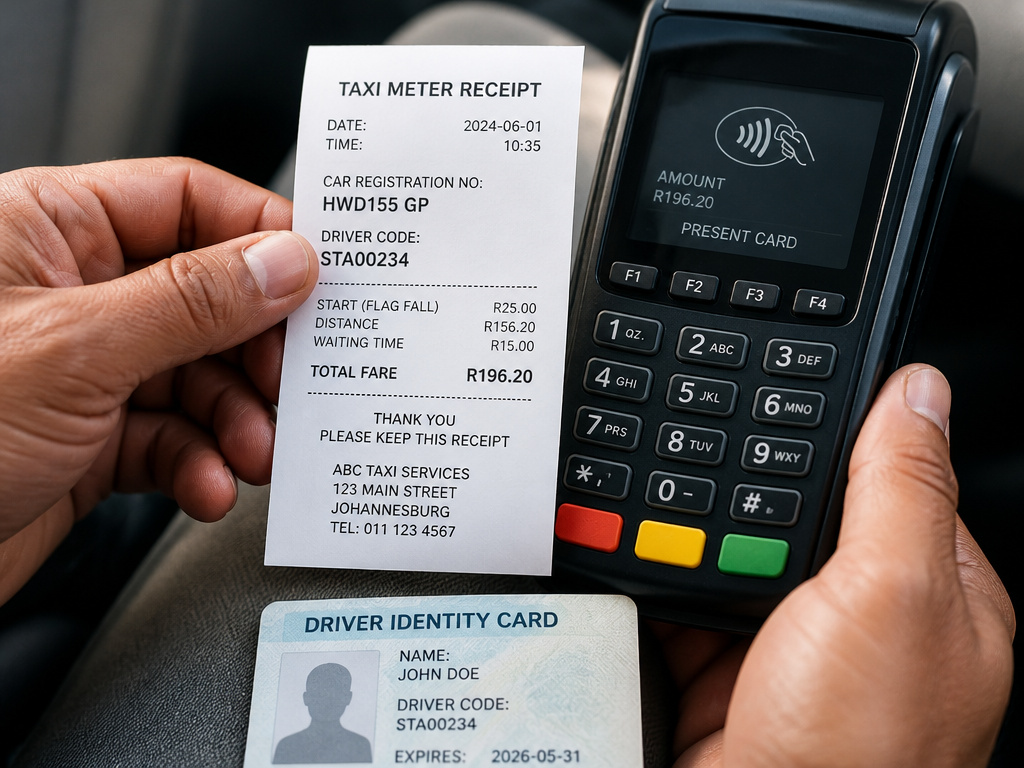
Receipts are useful if you have left something in the car or need to file a complaint about your journey.
Swedavia requires that you receive a taxi meter receipt at the end of your trip. The receipt must state the car registration number together with details about the taxi company and driver, including the driver code present on the taxi driver identity card. If you pay by card, you should receive both a delivery note for the card amount and a receipt from the taxi meter. Save it, because it is useful if you left something in the car or need to file a complaint.
The complaint path starts with the taxi company’s dispatch center, not the airport. Madrid asks passengers to request a receipt in the event of a complaint. LaGuardia directs compliments, complaints, and lost property to 311 or the NYC Taxi and Limousine Commission website. Tipping at LaGuardia is not required but is appreciated and encouraged.
Easy to miss: A receipt without the driver code is not much use. The receipt must state the car registration number together with details about the taxi company and driver. Ensure that you receive a taxi meter receipt at the end of your trip.
Frequently Asked Questions
Can I just take the first taxi in line at the airport?
In Sweden, no. Free price setting applies to taxi rides, and you do not need to take the car that is first in line. Choose the company and car that suits you, and read the comparative price display on the car before you get in. At other airports, confirm the price and payment method before you ride.
What should I do if a driver approaches me inside the terminal?
Walk away and go to the official stand. PANYNJ states that anyone who approaches you inside the terminal is not authorized to pick up passengers. LaGuardia says not to accept rides from individuals soliciting inside the terminal, and Aena tells passengers to avoid people offering taxi services inside Madrid-Barajas terminals.
Is a fixed price safer than a metered fare?
Fixed price is only safer if it is entered and visible in the meter before the journey starts. Swedavia requires exactly that, and the meter must stay activated throughout the trip. If you have received a fixed price, it should be entered and visible in the taxi meter before your journey starts.
How do I get a wheelchair-accessible taxi at the airport?
At LaGuardia, request one through the Accessible Dispatch program or use apps like Curb or ARRO. Accessible taxis are priced the same as regular taxis and are marked with a wheelchair symbol. At Arlanda, accessible taxis can be ordered to and from the airport, and Färdtjänst card holders in the Stockholm region order through Färdtjänst as usual.
What if the taxi stand is empty when I land?
Pre-book instead of hoping. Swedavia recommends pre-booking a taxi for night travel from Arlanda because shortages happen at high-demand times. If you have not pre-booked, ask the taxi rank officer outside the terminal at Arlanda, or use an airport train where one runs.
The Bottom Line
Here is the threshold that changes everything. Swedavia recommends pre-booking a taxi when travelling from the airport at night, because there might be a shortage of taxis at certain times due to high demand. An empty stand late at night is not a safety net.
The first thing to do this week, before your next trip: open your booking confirmation and check whether a transfer is included. If it is not, and you are landing at night, book one now. That single action removes the entire category of risk this article describes.
One concession, because the advice is not universal. In Kenya the fare is negotiated, so the capped-fare logic I lean on in Stockholm and Madrid simply does not apply. There, the protection is the company desk inside the arrivals hall and a price agreed before you move. Different country, different defence.
Look — the mechanics differ by airport, but the instinct does not. Official stand, confirmed price, receipt in your pocket. Practical wisdom beats perfect theory every time.
