
How to Stay Safe While Hiking Alone: Solo Trail Rules
This post contains affiliate links. As an Amazon Associate, we earn from qualifying purchases.
To stay safe while hiking alone, you need four things working together: a trip plan held by a real person who isn’t on the hike, a pace you can talk through, water treated before you drink it, and a decision rule for when to stop moving. Solo hiking removes the person who would notice you’re in trouble, so the plan has to do that job instead.
That last part is the whole difference. On a group hike, someone else catches the wobble in your step before you do. Alone, you are the only sensor in the system, and you’re the least reliable one, because the thing measuring your condition is the thing getting worse. That is why knowing how to stay safe while hiking alone matters.
The federal guidance on this is thinner than you’d expect. The National Park Service says plainly that it’s safer to hike with a companion, then adds that if you prefer to go solo, take extra measures to be prepared. The Forest Service goes further and just says don’t go alone. Neither agency writes a solo protocol. That gap is what this covers.
What follows: the trip-contact setup that beats a PLB, the water and heat numbers that actually matter, the descent decision where two authorities disagree outright, and the one condition that overrides every navigation plan you made.
Key Takeaways
- Name a real person, not a form. A PLB or SOS tracker does not eliminate the need for a Trip Emergency Contact, and a trip-intentions form lodged online is not a substitute for a human holding your details.
- Drink 3 to 4 quarts a day on hot hikes, and stay off the trail between 10 a.m. And 4 p.m. — the Forest Service’s own heat window.
- Treat every stream. Giardia lamblia can cause intestinal issues weeks after you drink, and boiling for one minute or filtering to 1 micron is the NPS baseline.
- Nightfall, injury, or near-exhaustion means stay put. Those three conditions override every navigation plan, per the Forest Service.
- You can talk, you’re going the right speed. That’s the NPS pace test, and it’s the best solo self-check there is.
Why Solo Hiking Needs a Different Plan, Not Just a Better One
The standard safety list assumes someone is walking next to you. Tell a friend your route, carry the ten essentials, check the weather, bring a map and compass, don’t rely on your phone, turn back if conditions turn. Every one of those is correct. None of them is how to stay safe while hiking alone.
Here’s the mechanical difference. A group self-corrects. The NPS tells groups to let the slowest hiker set the pace and to put that person near the front, which keeps everyone together and surfaces problems early. Alone, there’s no slowest hiker to notice. There’s no one to say your speech is slurring. Dehydration and heat exhaustion sneak up on you, in the NPS’s own wording, and there’s no second set of eyes to catch it.
So the solo plan has to replace the missing person with something that doesn’t get tired. That’s the trip contact, and it’s the piece most solo hikers get wrong.
How Do You Leave a Trip Plan That Actually Gets Used?
Leave your plan with a specific person who is not on the hike, give them your route, your vehicle and parking spot, your expected return time, and the names of anyone with you, and tell them to contact the park if you don’t return within a reasonable timeframe. That’s the NPS and Forest Service version, and it’s the minimum.
The Australian Bushwalking Manual, published by Bushwalking Victoria, is blunter about what that plan is worth. A Trip Intentions Form lodged on a website or in a box is not a substitute for a real person holding the full details of the trip. And a personal locator beacon or SOS tracker does not eliminate the need for a Trip Emergency Contact.
A beacon summons help to a location. A trip contact knows what you were doing, where you meant to be, what you’re wearing, and when you should have been back. Search and rescue teams use that context to narrow the search before the helicopter ever lifts.
That’s the distinction worth internalizing. The device answers “where.” The person answers “who, what, and since when.”
I see the beacon-as-plan mistake constantly in trip planning, and it’s a planning failure, not a gear failure. People buy the satellite messenger and consider the safety box ticked. The device is a rescue tool. The contact is a prevention tool. You need both, and the contact costs nothing.
The Forest Service wants that contact to know the trail you plan to follow, when you’ll return, the vehicle you’re driving and where you plan to park, and how many people are going with you. If you’re solo, that last detail is “one,” and your contact should know it, because a solo overdue hiker is a different search than a group that’s merely late.
What the Trip Contact Should Actually Do
Give them a written itinerary, not a text message you’ll both forget. Then give them a trigger.
- Call the park if you’re not back by the agreed time. Not “if you’re worried” — a clock.
- Know your vehicle and parking location. The Forest Service asks for this specifically because the trailhead lot is the first place searchers check.
- Know your route and turnaround point. If you told them you’d turn back at a named junction, they can tell searchers where the search narrows.
- Have the park’s contact number before you leave. Cell service in the Smokies is extremely limited, so your contact needs a landline path to the park, not a text to you.
For solo trips specifically, the Bushwalking Manual calls a Trip Emergency Contact essential rather than merely recommended. That’s the strongest language any of these sources uses about anything.
How Much Water Do You Actually Need Alone?
Plan for 3 to 4 quarts per day on a hot hike, per the Great Smoky Mountains National Park guidance, and treat that as a floor rather than a target. The NPS Hike Smart page frames it the same way: think about how much water you’ll need for the day and plan ahead to prevent dehydration or heat-related illness when you compare a how to stay safe while hiking alone.
Solo, the water math changes because you can’t share. A group can share bottles and ration. You carry your own water, and you carry the consequence of running out. There’s no one to hand you water when you run low.
The Forest Service heat window is the other number to hold: avoid hiking between 10 a.m. And 4 p.m. On hot days. If you’re on a trail during those hours, find a shady spot and stay there until the temperature cools. For a solo hiker, that’s not a suggestion about comfort. It’s the window when heat illness is most likely to develop, and you’re the only one who’ll notice it developing.
Drink as you’re thirsty, and eat. The NPS recommends trail mix, nuts, and granola bars to keep energy up, because hiking drains you fast and dehydration and heat exhaustion sneak up quietly. A solo hiker who bonks with no one to carry the pack is in a genuinely different situation than one who bonks in a group.
Worth knowing before you start: The talk test is your pace gauge. If you can hold a conversation while walking, you’re traveling at the right speed. If you can’t, you’re working too hard, and alone there’s no one to tell you to slow down.
Treat Every Stream, Every Time
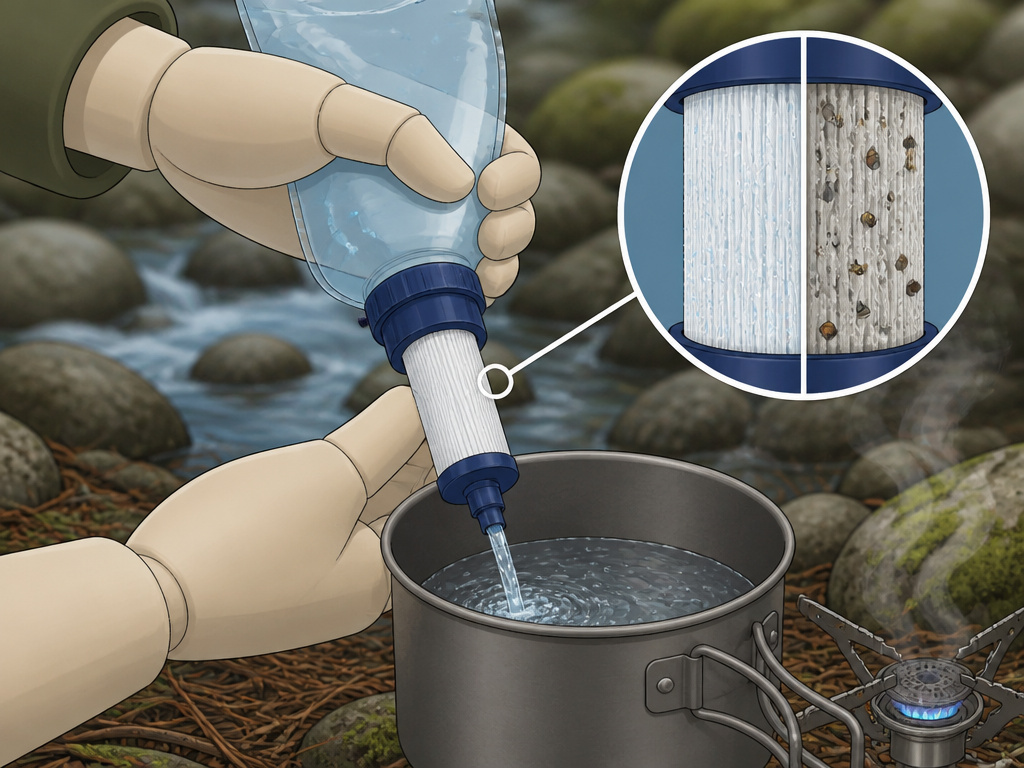
Boil stream water for one minute, or filter it to remove particles as small as 1 micron. Those are the two safest treatment methods per the NPS, and they’re the standard for a reason: Giardia lamblia, the protozoan the park warns about, can cause intestinal issues weeks after you drink it.
Weeks. That’s the detail that catches people. You don’t get sick at the stream. You get sick at home, three weeks later, and you spend a while trying to remember what you ate. A solo hiker who gets hit by that mid-route is in real trouble, because the symptoms include the kind of intestinal distress that makes walking miserable and dehydration likely.
Filter selection matters less than filter rating here. A filter rated to 1 micron removes particles as small as 1 micron, which is the NPS baseline for treating stream water. A filter rated coarser than that doesn’t. Check the spec before you trust it.
The NPS park page also points to a hiking first aid kit as part of the baseline loadout, and for solo trips the kit should include rehydration salts. You can’t afford to lose a day to dehydration you could have treated.
What to Carry When There’s No One Else Carrying It
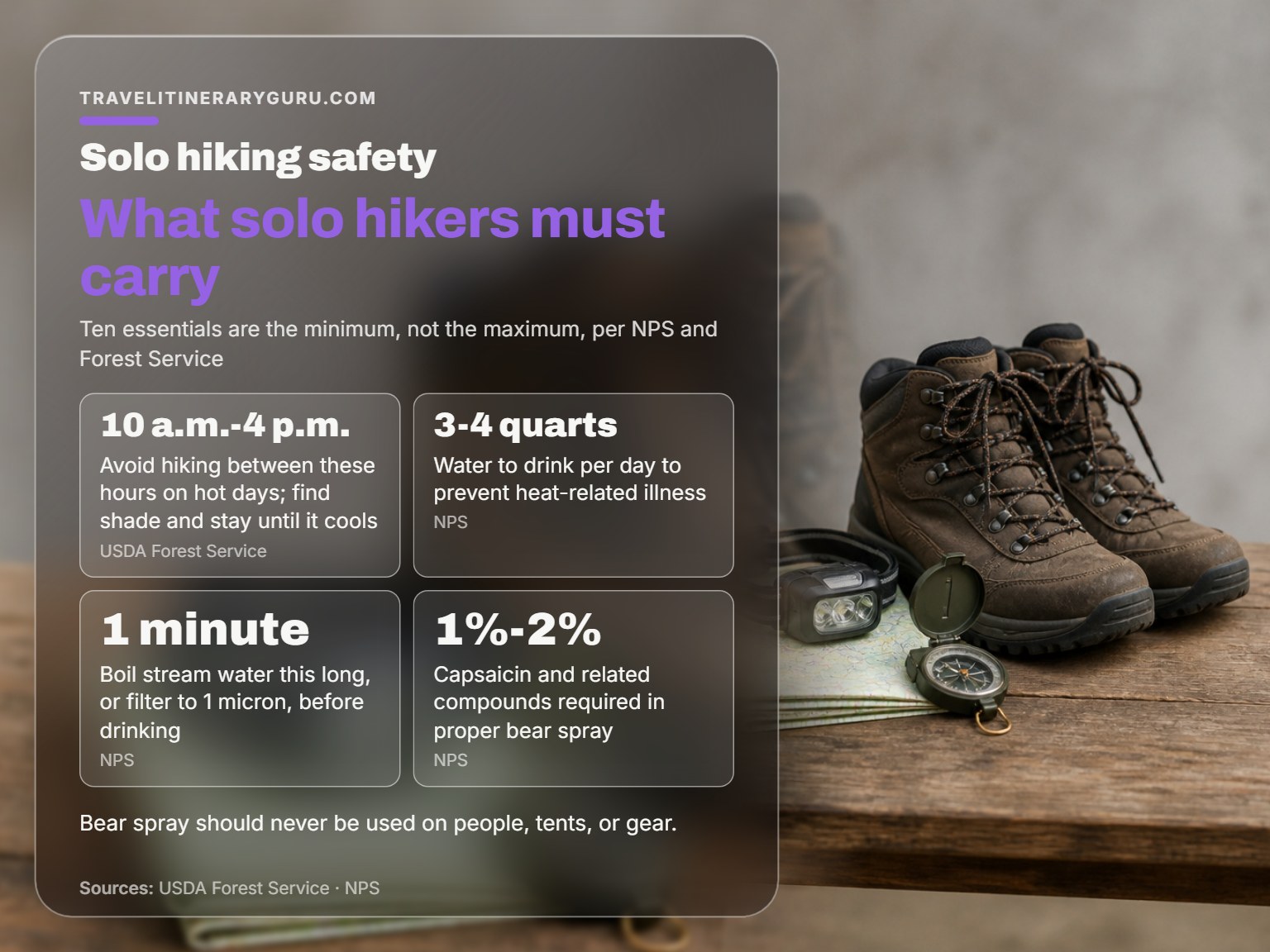
Carry the ten essentials as a minimum, per both the NPS and the Forest Service, and remember that more supplies may be necessary depending on how long you’re out. The ten essentials are the floor, not the ceiling, and solo hiking pushes you toward the ceiling.
The Forest Service adds specifics worth naming. Carry a compass you actually know how to use, because a GPS device sometimes doesn’t receive a signal or its battery fails, and cell phones likely won’t work for the same reason. Carry appropriate maps and study the terrain and your route before you go. Wear sturdy boots, layer your clothing, and bring extra socks in case the ones you’re wearing get wet.
That extra-socks line is not filler. Wet feet on a solo hike are a slow problem that becomes a fast one. The NPS hypothermia guidance is built on the same logic: put rain gear on before you get wet, avoid cotton because it holds water, consider wool because it keeps you warm even when wet, stay out of the wind, and change into dry clothes as soon as you can.
For the gear that replaces a partner, a few categories matter more solo than in a group:
- A headlamp, always. Phone flashlights are not reliable, per the NPS, and if you’re moving after dark you need both hands.
- A reliable power bank so your phone stays alive as a camera and emergency tool, not as your navigation.
- A backpacking GPS device if you want the redundancy, knowing it can fail and the compass can’t.
- Bear spray where it’s legal and appropriate, which is a real consideration in bear country.
If you’re carrying bear spray, the NPS is specific about what qualifies: a commercial product labeled as bear spray, registered with the Environmental Protection Agency, and containing 1% to 2% capsaicin and related compounds. And it should never be used on people, tents, or gear. That last rule matters more solo, because there’s no one to tell you’re about to do something stupid with it.
Will a Satellite Device Replace Your Trip Contact?
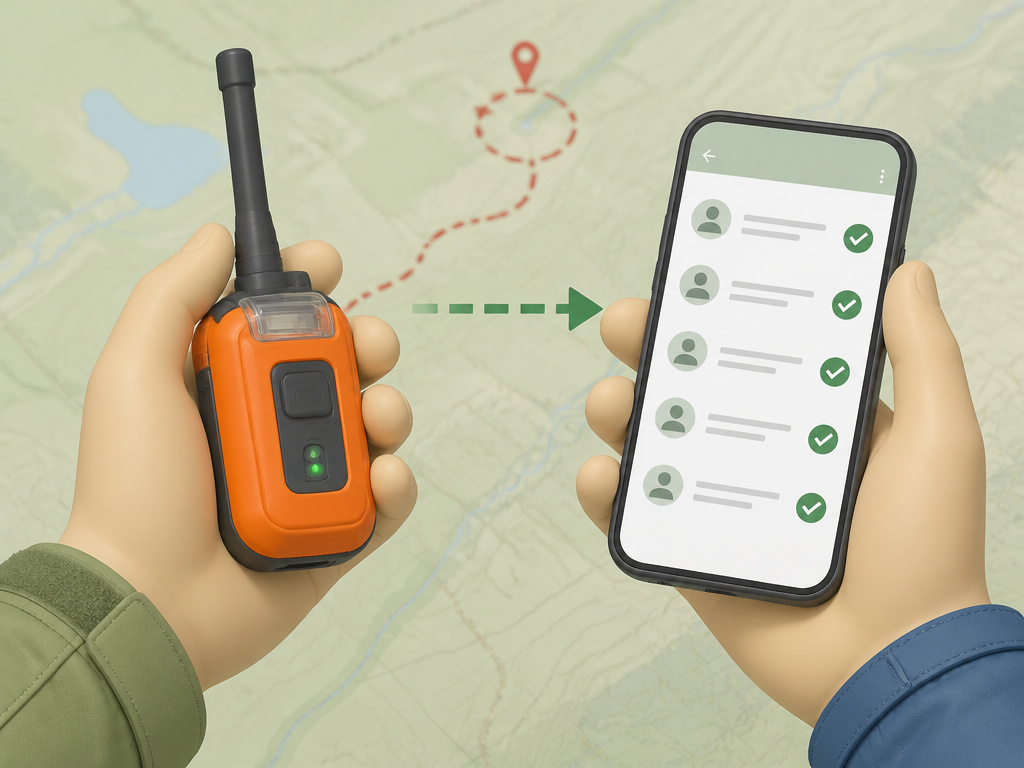
No. This is the one place where the sources actively disagree with common practice, and the disagreement is worth stating plainly.
The NPS Hike Smart page treats beacons and personal locator beacons as a recommended part of a safety plan, and the park pages name PLBs as the alternative to a cell phone, while the Bushwalking Manual holds that a PLB or SOS tracker does not eliminate the need for a Trip Emergency Contact. That framing implies the device can carry a meaningful share of the safety load. The Bushwalking Manual pushes back directly: a PLB or SOS tracker does not eliminate the need for a Trip Emergency Contact, and a trip-intentions form is not a substitute for a real person holding the details.
Both positions have a logic to them. The device works when you can’t. The person works before you need the device. They’re not competing tools so much as sequential ones.
| Tool | What It Does | What It Can’t Do |
|---|---|---|
| PLB or SOS tracker | Summons rescue to a location | Know your route or turnaround point |
| Trip-intentions form | Logs your plan somewhere | Confirm you actually left or returned |
| Trip Emergency Contact | Holds full details, raises alarm | Reach you if you’re unconscious |
The row that matters is the third. A device can’t decide you’re overdue. A person can.
When Sources Disagree: Descent and Staying Put
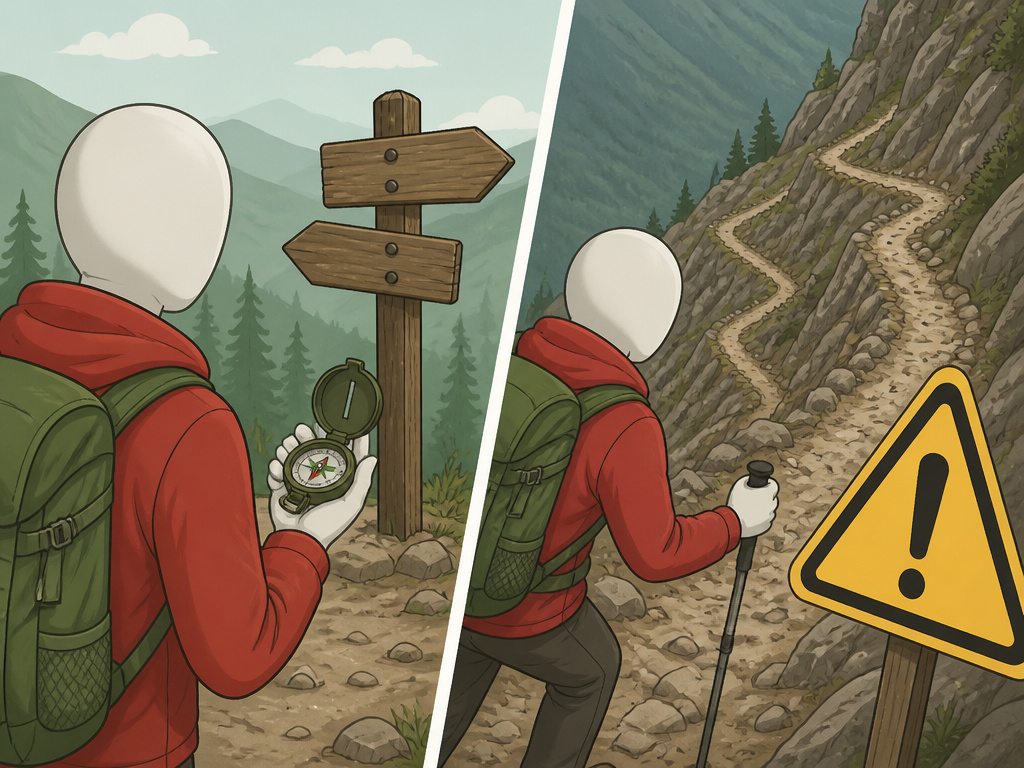
Two genuine conflicts run through the official guidance, and a solo hiker should know both sides rather than assume one is right.
On descent, the Stanford EHS hiking fact sheet prescribes switch-back descent on steep slopes. The Forest Service, in its lost-hiker guidance, says that as a very last resort you can follow a drainage or stream downhill, a direct-downhill route the Stanford sheet effectively warns against. The Forest Service flags it as very dangerous. Stanford’s position is the conservative one; the Forest Service’s is the emergency fallback, and it’s labeled that way.
On staying put versus moving, the Forest Service is emphatic: stay put if you’re not very, very confident in the route, and don’t move at all until you have a specific reason to take a step, while the Stanford sheet instructs lost hikers to observe their surroundings and try to reorient with map and compass. The Stanford sheet, by contrast, instructs lost hikers to observe their surroundings and try to reorient with map and compass, which implies active navigation. Different failure models. The Forest Service is guarding against disorientation. Stanford is guarding against standing still when a small correction would fix it.
My read, and it’s a read rather than a rule: the Forest Service position is the safer default for a solo hiker, because the failure mode it prevents, wandering deeper while lost, is the one that turns a bad afternoon into a multi-day search. If you have a specific, concrete reason to move, move. If you don’t, don’t.
What Overrides Every Navigation Plan You Made
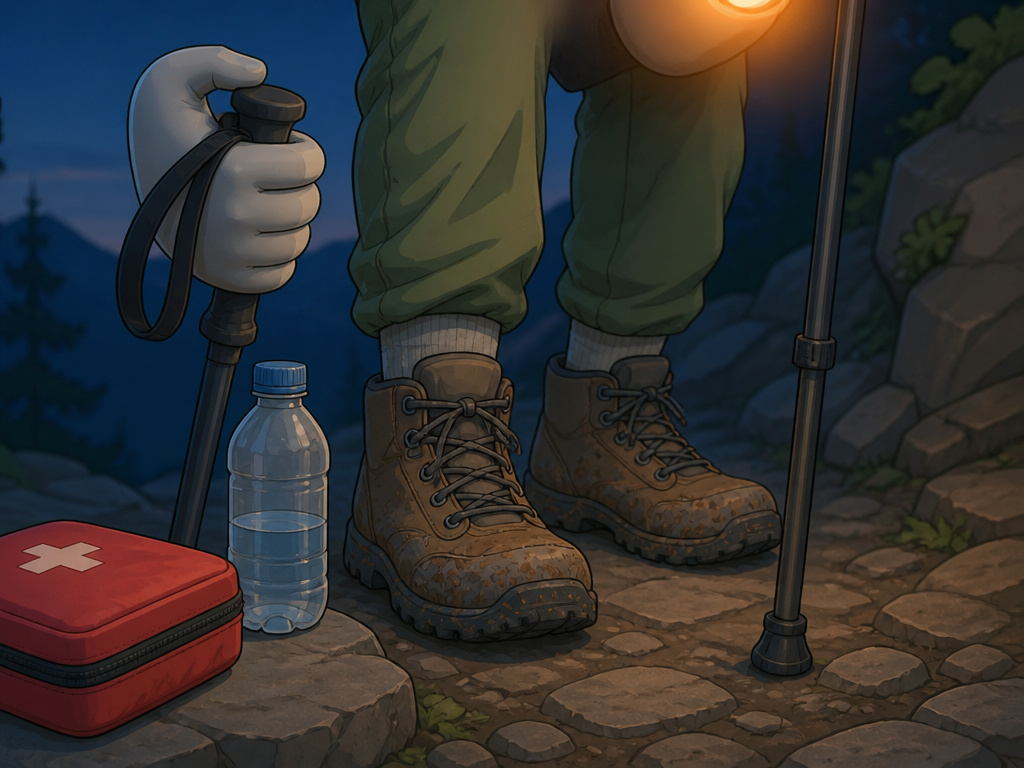
Nightfall, injury, or near-exhaustion. Those three conditions mean stay in place, per the Forest Service, and they override the route, the schedule, and your confidence.
This is the rule solo hikers break most often, because the instinct is to push for the car. The Forest Service logic is that panic is your greatest enemy and that moving while impaired compounds the problem. If it’s dark, you’re hurt, or you’re running on empty, the trail you can’t see is more dangerous than the spot you’re standing in.
The related rule is to stop and fix small problems while they’re still small. If you ignore your body and keep pushing, the pain or illness gets worse and recovery gets harder. A small problem you ignore can compound into a much bigger one. Solo, that chain runs faster, because there’s no one to redistribute weight or slow the group for you.
Where this goes sideways: Pushing for the trailhead after dark on a familiar route. Familiarity is not visibility. The Forest Service lists nightfall as a stay-put condition precisely because the risk of falls and wildlife encounters climbs after dark, and your memory of the trail is not a substitute for seeing it.
Snakes, Edges, and Water Crossings
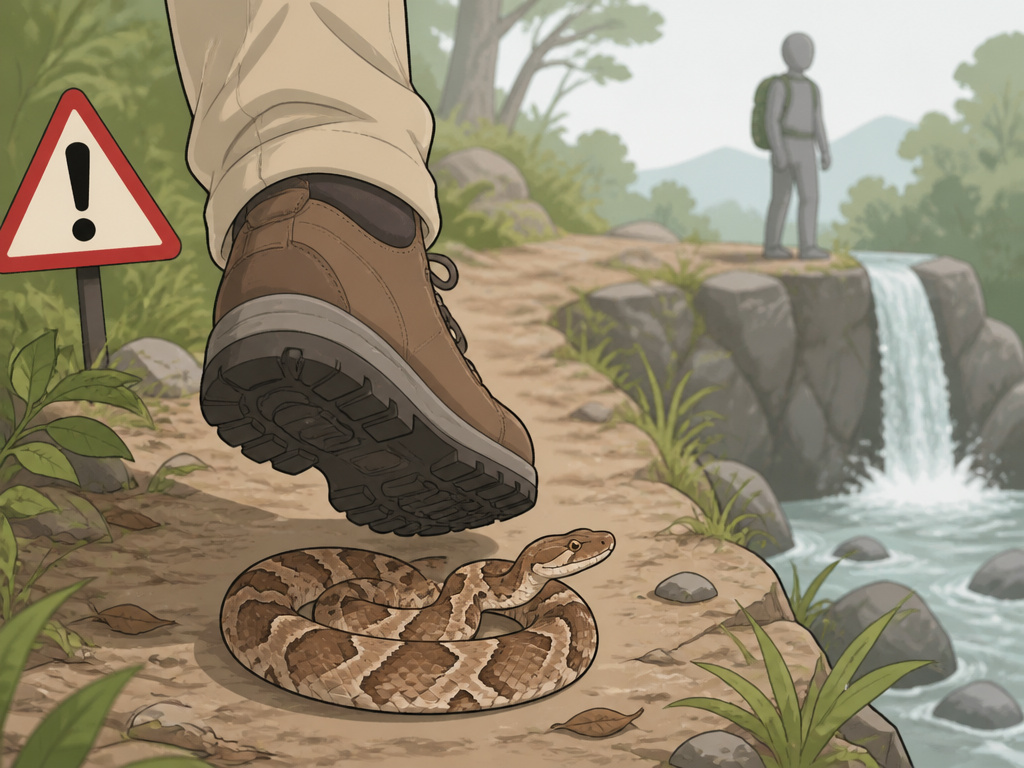
Stay on the trail to avoid venomous snake bites, per the NPS. The Smokies are home to two venomous species, the northern copperhead and the timber rattlesnake, and while bites are rare, the park notes that no fatalities from snake bites have been reported there. The practical takeaway is to be careful about where you put your hands and feet, which is harder to do when you’re alone and improvising a route.
Never walk near the edge of a waterfall, because wet rocks are extremely slippery. The NPS is direct that climbing on rocks near waterfalls is extremely dangerous and can lead to a fatal fall or drowning. Solo, a slip near water has no one to pull you out.
Do not cross streams during icy conditions, flooding, moving or white water, or any time you can’t be certain of the water depth. That’s the NPS rule, and it’s absolute. A solo hiker who falls in a cold, moving stream has no one to pull them out, and the party that would have helped is the one you left at the trailhead.
How Do You Prepare Before You Even Leave?
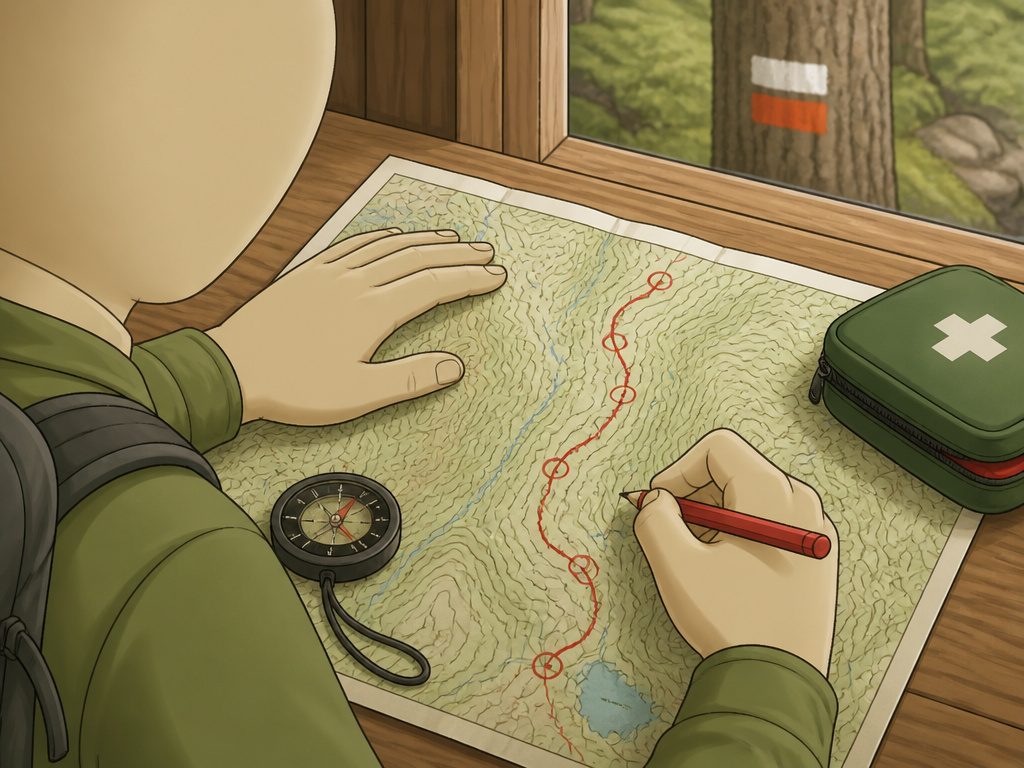
Don’t overestimate your abilities. The NPS asks you to assess your experience level, how much weight you can comfortably carry, how long you can carry a full pack, whether you’re physically fit for the specific hike, and whether you’re going alone. That last question is the one that changes the answer to all the others.
If you’re going solo, take extra measures to be prepared, since you’ll be traveling alone. That’s the NPS framing, and it’s the honest one. Solo isn’t a harder version of the same hike. It’s a different hike with a different margin.
For the trip itself, a solo-friendly destination is one where the trails are marked and maintained, the park has a known safety page, and the terrain matches your actual fitness rather than your aspirational fitness. Marked trails are the single biggest risk reducer available, because staying on them is what keeps you found.
Two things worth doing before you go, both grounded in the sources: study the terrain and your planned route so you know where you’re going and how you’ll return, and develop an emergency plan for what you’ll do if you become lost or injured. The NPS suggests considering CPR and basic wilderness first aid, especially for backcountry trips. For a solo hiker, that’s not a nice-to-have. You’re the entire response team until someone reaches you.
Easy to miss: Trail signs are sometimes vandalized or stolen. The Forest Service says this outright. So the sign at your junction may not be there, and the diamond blazer on the tree may be the only marker you get. Learn to read blazes, not just signs.
Frequently Asked Questions
Is it actually safe to hike alone?
It’s safer with a companion, and both the NPS and the Forest Service say so. The NPS adds that if you prefer to go solo, you should take extra measures to be prepared. The honest answer is that solo hiking is a managed risk, not an eliminated one, and the management is the trip contact, the water treatment, the pace discipline, and the stay-put rule.
What’s the single most important thing a solo hiker should do?
Leave your plan with a real person who isn’t on the hike, and give them a trigger for when to call the park. The Bushwalking Manual is explicit that a PLB doesn’t replace this and that a form on a website isn’t a substitute. Search and rescue teams use the details in that plan to narrow where they look.
Do I need a satellite device if I have a trip contact?
They do different jobs. A PLB or SOS tracker summons help to a location, and the NPS treats beacons as a recommended part of a safety plan. A trip contact knows your route, your vehicle, your expected return, and your turnaround point. The device can’t decide you’re overdue. The person can.
How much water should I carry on a solo hot-weather hike?
Plan for 3 to 4 quarts per day, per the Great Smoky Mountains guidance, and treat it as a floor. The NPS says to plan your water for the day and prevent dehydration or heat-related illness. Solo, you can’t share, so the buffer you’d normally split with a partner is entirely on your back.
What do I do if I get lost alone?
Stop, stay calm, and stay put, per the Forest Service. Panic is your greatest enemy. Go over how you got there and what landmarks you should be able to see, and don’t move until you have a specific reason to take a step. If it’s nightfall, you’re injured, or you’re near exhaustion, stay in place regardless of what the map suggests.
Should I hike alone in bear country?
You can carry bear spray where it’s allowed, and the NPS says hikers are permitted to carry it for wildlife protection. It must be a commercial product labeled as bear spray, EPA-registered, with 1% to 2% capsaicin and related compounds. Never use it on people, tents, or gear. Bears in parks are wild and unpredictable, and while attacks on humans are extremely rare, encounters deserve caution.
Before You Go
One rule most solo-hiking guides skip: your trip contact should know your turnaround point by name. Not “somewhere past the falls” — an actual junction, an actual landmark. If you’re overdue, that one detail is what tells searchers where to start narrowing the map, and it’s the difference between a focused search and a wide one.
The first thing to do this week is boring and quick. Write the itinerary, name the person, and tell them when to call the park. Do it before you buy the beacon, not after, because the person is the part that works when the device is still in your pack.
Fair warning on the limits of all this. Everything above assumes you can still walk, think, and make a decision. If you’re injured badly enough that you can’t move, the plan shifts entirely to the beacon and the contact, and that’s exactly why both exist. The advice here is about preventing that scenario, not managing it.
And if you’re a woman hiking alone, my perspective here is genuinely limited. I can give you the trip-planning framework, but the specific safety considerations women face on solo routes are better described by women who’ve walked them. The general protocol here is the floor for everyone. It isn’t the whole picture for everyone.
