
How to Plan Free Time on a Group Tour: Step-by-Step
This post contains affiliate links. As an Amazon Associate, we earn from qualifying purchases.
You can learn how to plan free time on a group tour by reading the day-by-day itinerary before you book, confirming the group size, and asking the tour director what is actually reachable in the hours you have. Most operators build free afternoons in on purpose. You just have to find them first.
That itinerary line matters more than any how to plan free time on a group tour question. Intrepid Travel’s own guidance tells travelers to read the trip itinerary thoroughly and scope out where and how much free time is built in. Their “Vietnam Discovery” trip carries two full days in Hoi An. Their “Premium Morocco in Depth” fits free time around included activities instead.
Same company, opposite structure. That gap is where most travelers get surprised.
What follows: how to read a tour schedule for the free hours it hides, how to check group size before you commit, and the one prep question that decides whether you book ahead or wait until you land.
Key Takeaways
- Read the day-by-day before booking. Operators bury free time in different places, and Intrepid’s Basic adventure tier tends to include the most of it.
- Ask the group size first. A small-group tour and a large coach tour are different trips with the same brochure.
- Consult the tour director before buying tickets. EF Ultimate Break strongly recommends this because directors often plan additional activities and know the daily schedule better than you do.
- Budget for the extras. TrovaTrip states plainly that informal gatherings are not included in the trip cost, and travelers pay out of pocket.
- Leave one afternoon empty on purpose. Intrepid Travel says filling every second of free time might not be the best idea, while On The Go Tours frames planning ahead as essential for making the most of your travel experience.
How Much Free Time Does Your Itinerary Actually Promise?
Free time on a group tour is a line item, and like every line item it can be inflated. The word “free” on a tour page can mean a long unstructured block in a town center or it can mean a short gap between a museum and a bus.
Free time on a guided tour refers to unscheduled hours inside the published itinerary, when no included activity, transport, or group meal is planned. Operators vary widely in how much they build in and where it falls, so the day-by-day schedule is the only reliable source for what a specific trip actually provides.
Intrepid’s “Basic” adventure tier tends to include the most free time of their tiers. That is a structural choice, not a marketing one. Basic trips strip out included meals and paid entries, which means the hours those activities would have consumed come back to you as open time.
Premium trips run the other direction. On “Premium Morocco in Depth,” free time is fitted around a full slate of included activities. Nothing is wrong with that trip. It is simply a different animal, and a planning method built for one tier will fail on the other.
The line in the itinerary you should circle
Look for the phrase “at leisure” or “free afternoon.” Then count backward. If the previous day ends with a late group dinner and the next morning starts with an early departure, your free afternoon is shorter than it reads.
I have made this mistake in the other direction. Years back I assumed a group tour meant everyone moved as one unit for the entire trip, and I planned around that assumption. A client pointed out that splitting off for a few hours was not just allowed but expected. I have built free time into every itinerary I have touched since.
That single correction changed how I read tour pages. Now I read them looking for the gaps, not the highlights.
Check the Group Size Before You Check the Price
Average group size is the most under-asked question in tour booking. A large coach tour and a small walking tour can share the same destination list and the same photographs. They are not the same trip.
Group size changes how to plan free time on a group tour. A small group dispersing into a town square is a group with options. A large group dispersing is a crowd with a meeting point.
| Group Size | What Free Time Feels Like | Best For |
|---|---|---|
| 8-12 travelers | Easy to split, easy to regroup | Independent wanderers |
| 13-20 travelers | Two or three sub-groups form naturally | Mixed preferences |
| 21-30 travelers | Meet-up logistics eat the free hours | Travelers who like company |
Ask the operator directly. If they cannot give you a number, that is your answer.
Intrepid Travel advises researching free-time ideas through traveler stories, social media, and other trips going to the same area. That advice works better in a small group. In a large one, the same research gets filtered through many opinions before anyone leaves the hotel lobby.
What to Ask Your Tour Director (and When to Ask It)
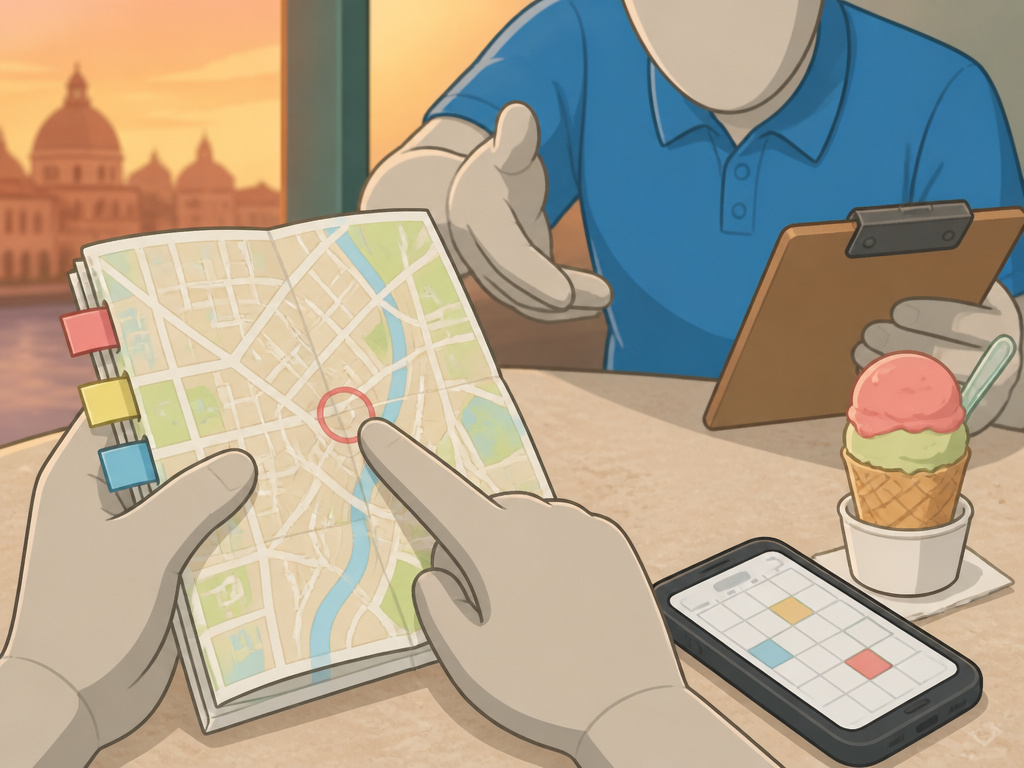
Eskapas Travel advises consulting the tour director at the start of the tour or the night before, because they will outline the next day’s free time options. That is the right window. Too early and they do not know the group yet. Too late and the good tables are booked.
Ask for specifics, not categories. Eskapas suggests asking for personal recommendations on where to find the best gelato, a quiet garden for a stroll, or a scenic spot for sunset. Those are the questions a director can actually answer well.
Common mistake: Buying tickets for an add-on activity before you have spoken to the tour director. EF Ultimate Break strongly recommends the opposite, because directors often plan additional activities and will have a better idea of the daily schedule while on tour.
Here is the part nobody tells you. The director is also your best source for what not to do. A free afternoon is not enough time for a museum far outside town, and the director knows it.
Where the sources disagree on pre-booking
Two credible operators give opposite advice, and both are worth hearing.
EF Ultimate Break says talk to your tour director before purchasing tickets for additional activities. Their reasoning is that the daily schedule is not fully knowable until you are on tour.
Eskapas Travel says use a quiet evening at home to research your destination and bookmark a few ideas, arguing that a short wish list prevents decision fatigue on the ground.
Neither is wrong. The reconciliation is timing. Research at home, book nothing. That way you arrive with options and no sunk cost.
Optional Tours vs Solo Wandering: How to Split the Days
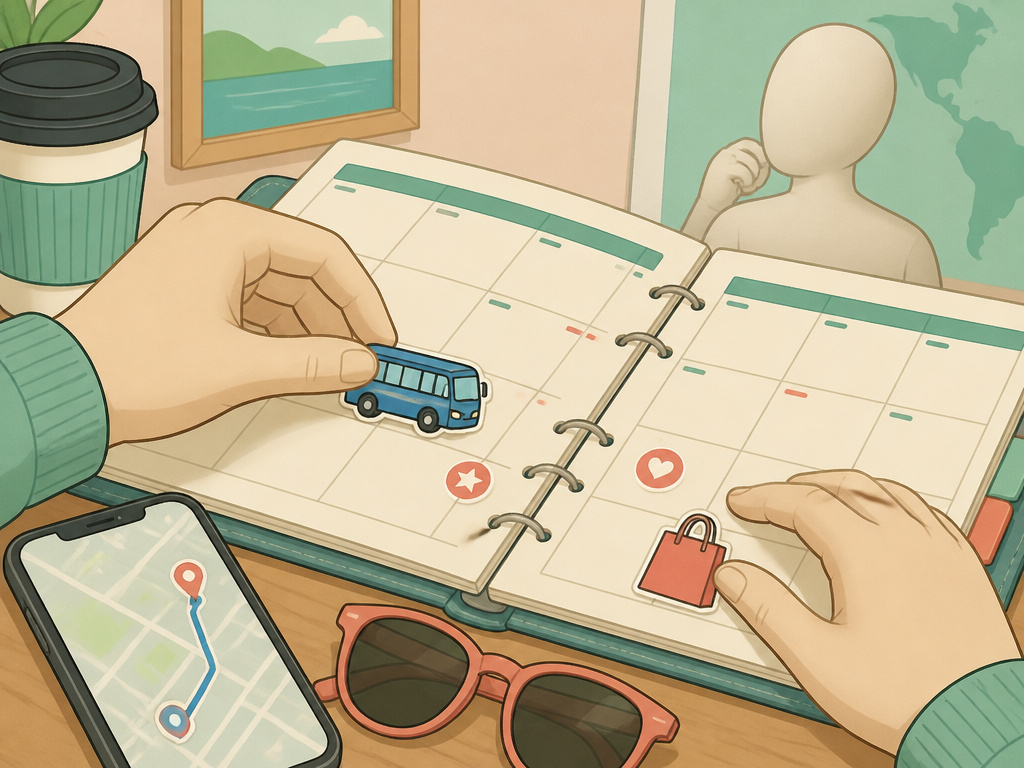
The real skill is not choosing one or the other. It is sequencing them so you are not choosing between a paid excursion and a nap on the same afternoon.
Eskapas describes optional tours as designed to complement the main itinerary, offering structured, hassle-free ways to go deeper into a specific interest. They are also organized with transport and tickets arranged, which is the part that saves you hours.
Their suggested balance is worth copying: pick an optional tour for day three, then earmark the free time on day five for personal shopping and relaxation. The tour gets a day. You get a day.
| Free-Time Option | What You Get | What It Costs You |
|---|---|---|
| Optional tour | Transport, tickets, a guide | The unstructured hours |
| Solo wandering | Total flexibility | Your own logistics |
| Informal group meet-up | Company, lower pressure | Out-of-pocket costs |
That third row catches people. TrovaTrip states clearly that informal gatherings are not included in the Trova cost, and travelers pay out of pocket for any activities outside the itinerary.
Where this goes sideways: Assuming “optional” means “included.” On TrovaTrip trips, hosts attend optional activities free, but it increases the overall cost of the trip, and hosts cannot attend at all unless they selected the activity at the trip-request stage. Ask which activities are covered before you build a day around one.
The Free-Time Ideas That Actually Hold Up
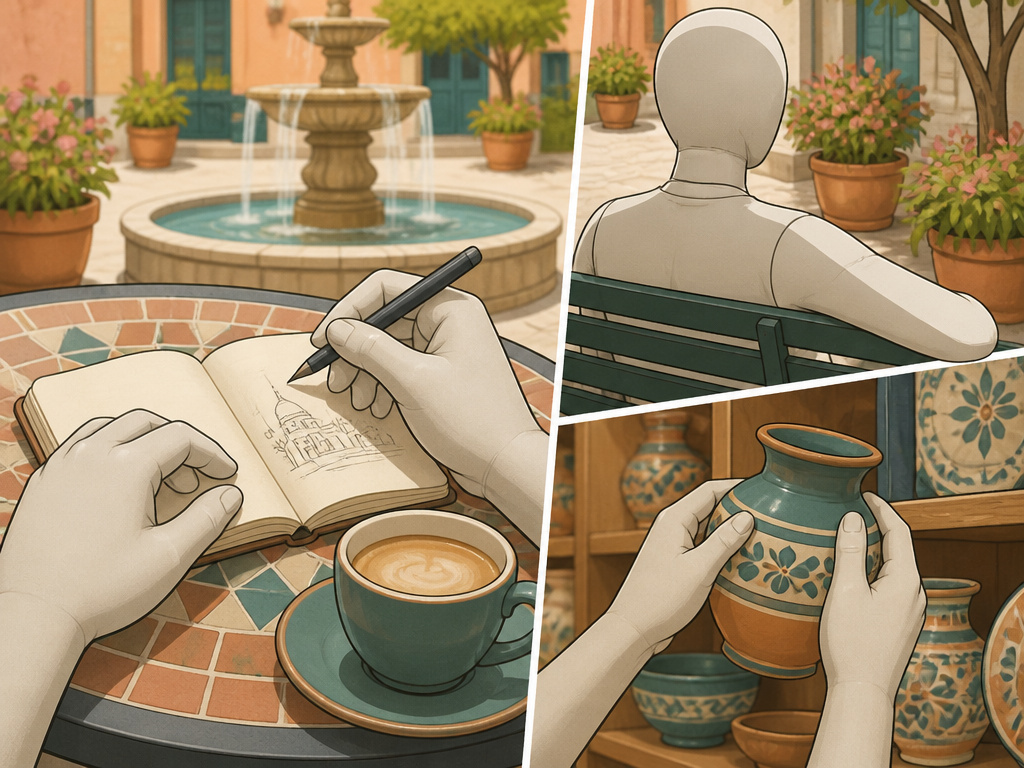
Low-effort immersion beats a rushed checklist. Intrepid suggests wandering streets or supermarket aisles, watching the world from a cafe or park bench, and popping into shops, galleries, or museums. None of that requires a reservation.
The trip-specific examples are better than the general advice. On Intrepid’s “Sabah Adventure,” the day before the Mt Kinabalu hike, travelers could take a gentle stroll along a nearby nature trail through lowland tropical forest or visit the Botanic Garden. On the “Morocco Real Food Adventure,” a free afternoon in Fes could go to the Ain Nokbi district to watch potters at work.
Notice what those have in common. Both are close to where you already are, both take a couple of hours, and neither needs to be booked in advance.
Eskapas adds a move I have stolen outright: find a sanctuary spot. A plaza fountain, a hotel terrace, a park bench. Sit there. Watch daily life happen. That is a legitimate use of a free afternoon.
When free time should look like nothing
Intrepid says it plainly: there is nothing wrong with free time looking a little closer to down time or nap time.
On The Go Tours frames the same hours differently, calling planning ahead essential for making the most of your travel experience. That is a productivity framing, and it is not wrong either.
Here is where I land. Eskapas describes a group tour as a marathon, not a sprint, and says pacing yourself ensures you enjoy every moment, while On The Go Tours frames planning ahead as essential for making the most of your travel experience. Pacing yourself is the whole game. If you spend every free hour chasing a highlight, you will hit day nine exhausted and skip the thing you actually came for.
How Do You Handle Free Time When the Group Wants Different Things?
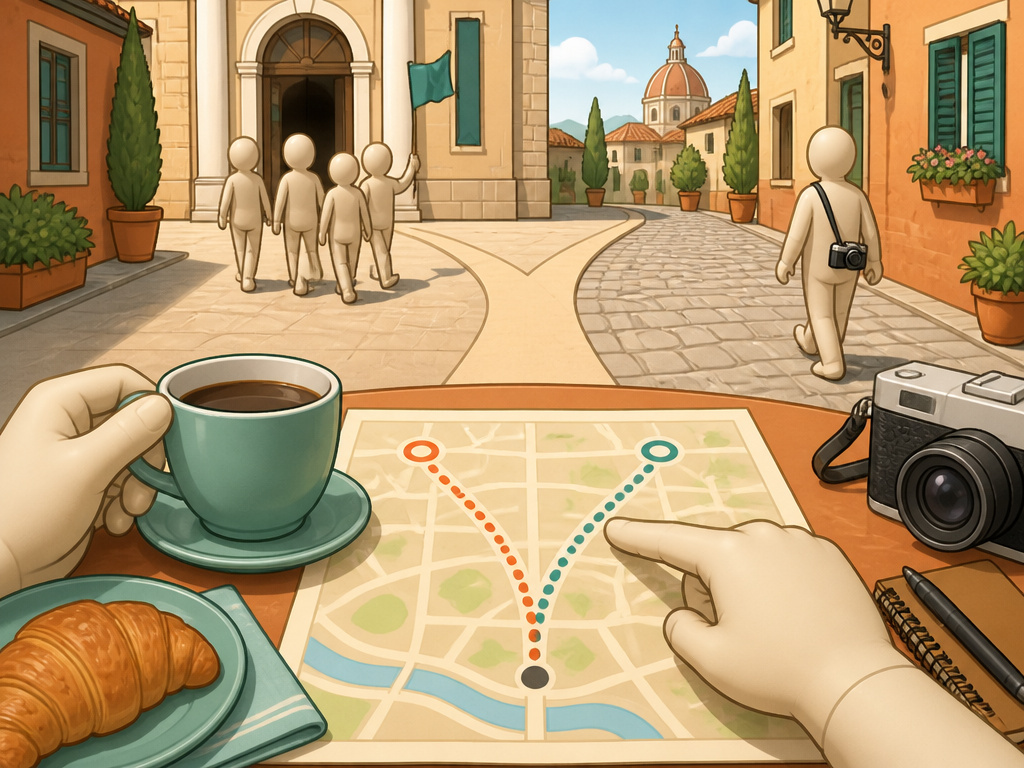
You split. That is the answer, and it is not a failure of group cohesion.
TrovaTrip tells hosts to respect individual choices and acknowledge that travelers may have different preferences for how they spend free time. That guidance is aimed at hosts, but travelers should read it the same way. Your free afternoon is yours.
Meeters takes the group-planning angle: involve everyone in the trip planning, ask each person what they want to do, and offer flexible alternatives. A guided tour for the people who want structure, free exploration for the people who do not.
What most people get wrong: Treating free time as a group decision. TrovaTrip notes that going on your own to an optional activity may be a good way to get recharge time, though it may not provide the best experience for your travelers. Both things are true. Take the solo afternoon and rejoin for dinner.
If you are the one organizing, sync over breakfast. Eskapas suggests exactly that: see if others want to join a specific activity before you commit to a plan. It costs five minutes and saves an hour of waiting in a lobby.
Why the “Plan Every Hour” Approach Backfires
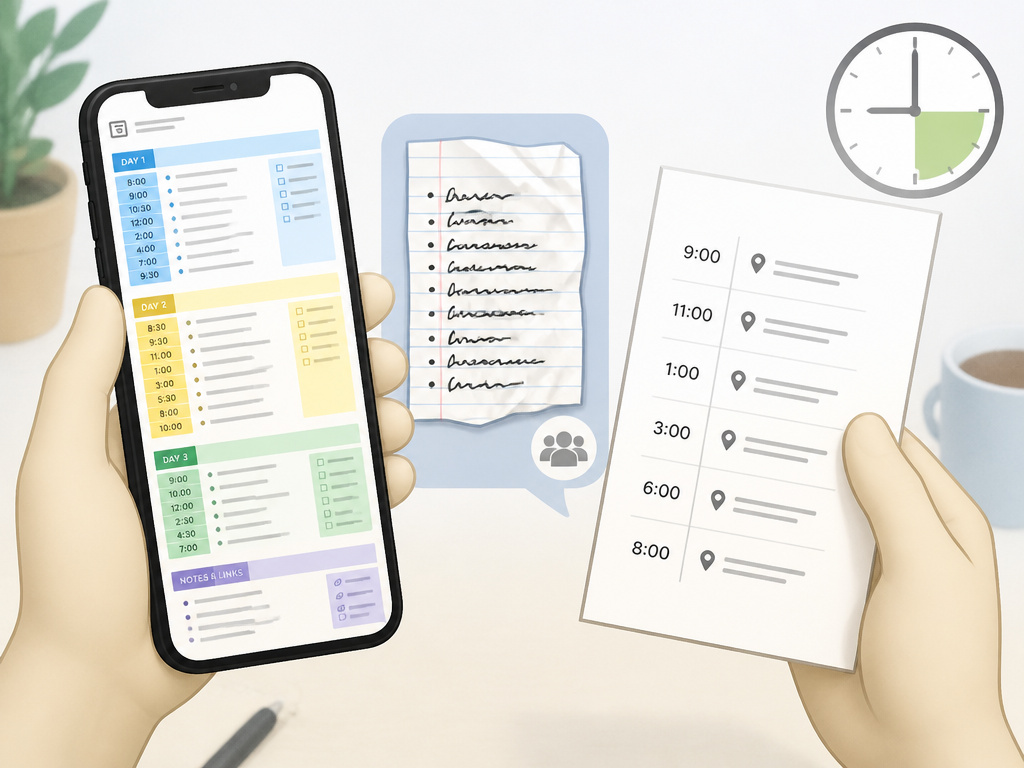
Planning ahead has real value. On The Go Tours argues it helps you avoid overcrowded tourist spots by finding lesser-known but equally fascinating locations, and that is true.
The failure mode is different. It is the plan that leaves no room for the thing you did not know about.
I once built a shareable itinerary in Notion for a group trip, complete with links, commentary, and a color-coded schedule. Nobody opened it. The version that actually got used was a screenshot of a hand-written list in the group chat.
I now send a one-page PDF with times and addresses only. No commentary. People read it, and I stopped pretending anyone wanted my long context notes.
That is the practical version of Meeters’ point that balance may require trial and adjustment during the trip itself. You cannot plan the adjustment. You can only leave room for it.
Frequently Asked Questions
How much free time should I expect on a group tour?
It depends on the operator and the tier. Intrepid Travel’s “Basic” adventure tier tends to include the most free time of their tiers, while a trip like “Premium Morocco in Depth” fits free time around included activities. Read the day-by-day schedule before you book, because the brochure will not tell you.
Should I book free-time activities before the tour starts?
EF Ultimate Break strongly recommends talking with your tour director before purchasing tickets for additional activities, while Eskapas advises researching destinations and bookmarking ideas at home beforehand. EF Ultimate Break strongly recommends talking with your tour director before purchasing tickets for additional activities, because they often plan additional activities and know the daily schedule better once the tour is running.
Is it rude to skip the group during free time?
No. TrovaTrip advises hosts to respect individual choices and acknowledge that travelers may have different preferences for how they spend free time. Free time is designed for autonomy, not for mandatory togetherness.
What if I am too tired to explore?
Rest is a valid use of the hours. Intrepid says there is nothing wrong with free time looking closer to down time or nap time. Eskapas frames the same idea as listening to your energy level: if you are weary, take a nap, read by the pool, or have a quiet drink.
Do optional activities cost extra?
Usually yes. TrovaTrip states that informal gatherings are not included in the Trova cost and travelers pay out of pocket for activities outside the itinerary. Ask which activities are covered before you plan a day around one.
The Bottom Line
One rule most tour pages will not spell out: if your itinerary has very little free time across a trip of a week or longer, you are booking a coach tour with a walking component, not an exploratory one. Check that before you pay, not after.
Your first move this week is a single question to the operator: what is the average group size, and where does the free time fall on the day-by-day? If they cannot answer both, keep looking.
This all changes if you are booking a specialist trip where the point is the guided access, not the wandering. A trek with a permit window or a food tour with reserved tables is a different calculation, and free time is not the metric that matters. Know which trip you are buying.
The magic is in the mix: some anchors, at least one of them optional, and some afternoon with nothing on it at all.
