
How to Handle Lost Luggage at the Airport: Step-by-Step
This post contains affiliate links. As an Amazon Associate, we earn from qualifying purchases.
Most delayed bags turn up. Yours probably will too. That doesn’t make the first hour at the carousel any less disorienting, and knowing how to handle lost luggage at the airport doesn’t change what you need to do before you walk out of that hall.
To handle lost luggage at the airport, report it to your airline’s baggage services desk before you leave the reclaim hall, keep the file reference they give you, and file a formal claim within the airline’s stated window; for American Airlines domestic flights, the delayed-bag report is due within 4 hours of arrival.
The clock matters more than most travelers realize. Walk out of the reclaim hall without filing, and at some airports you can’t walk back in. The how to handle lost luggage at the airport question involves two different things, the report you file at the desk and the claim you file afterward, and mixing them up costs people weeks.
Here’s what actually happens, airport by airport, airline by airline, with the deadlines and reference numbers you’ll need.
Key Takeaways
- Report before you leave the reclaim hall. At Heathrow, once you’ve exited you cannot return, retrieval has to be arranged through your airline.
- A Property Irregularity Report is not a claim. Ryanair states this explicitly; the PIR tracks your bag, and a separate claim has to be filed.
- File within the airline’s window. American Airlines domestic delayed-bag reports are due within 4 hours of arrival; international reports are due before you leave the airport.
- The loss threshold varies by carrier. US DOT says most airlines declare loss between 5 and 14 days; Delta uses 21 days.
- You’re owed the bag fee back. If a bag is declared lost or significantly delayed, DOT rules require the airline to refund what you paid to transport it.
What to Do in the First 30 Minutes
Find the airline’s baggage services desk before you do anything else. At many airports, the airline has a desk in the baggage reclaim hall where you can report lost luggage and get a missing bag report. Heathrow’s guidance on how to handle lost luggage at the airport is blunt about the sequence: report the bag missing to your airline as soon as possible, and do it before you leave the hall.
Heathrow advises using the baggage enquiry telephones in arrivals to contact a team member, and if there’s no one at the desk or you’ve already left the airport, call your airline instead. Don’t stand at an empty desk hoping someone returns.
Airlines manage checked baggage from check-in through arrival. The airport operator’s role at the reclaim stage is limited to directing passengers to the carrier’s desk and, at some airports, running a separate lost-property service for items misplaced inside the terminal rather than in transit.
What you’re filing is a missing bag report. At Ryanair, that produces a Property Irregularity Report with a 10-character file reference at the top, the format looks like STNFR12345, where STN is the airport code. American Airlines issues a 13-character file ID when you file. Either way, that reference is how you track the bag, and you’ll need it again if the bag doesn’t turn up.
Keep the paper. Photograph it. Email yourself a copy.
Which Airport Desk Handles What
Airport and airline responsibilities split differently depending on where you are, and getting this wrong sends you to the wrong counter.
At Heathrow, the airport is clear that all baggage is managed by the airlines from check-in to arrival. The airport’s role is directional, pointing you to the carrier’s desk, providing enquiry phones, and handling items you personally misplaced inside the terminal rather than bags that went missing in transit.
At Jomo Kenyatta International in Nairobi, the Kenya Airports Authority draws the line differently. KAA Security runs the lost-and-found service, with the office in the arrivals building. But KAA also states plainly that your airline is responsible for tracing and returning your bag. If you left something on the aircraft itself, that routes to the airline, not to airport lost-and-found.
| Airport | Who handles lost-and-found | Who traces your bag |
|---|---|---|
| Heathrow (LHR) | Airline desk in reclaim hall; airport enquiry phones | The airline |
| JKIA (NBO) | KAA Security, arrivals building | The airline |
| Most US airports | Airline Baggage Service Office | The airline |
| Most EU airports | Airline Lost Property Desk | The airline |
The pattern in most guidance: the airline traces the bag, and the airport handles things that never entered the baggage system. Report to the airline first.
Filing Deadlines That Actually Cost People Money
Deadlines are where lost-baggage claims quietly die. American Airlines requires domestic delayed-bag reports within 4 hours of arriving at your destination, and within 12 hours if you used Bags VIP Luggage Delivery. For international flights on AA, the report is due upon arrival and before you leave the airport.
Damage reports run on a different clock. AA wants a damage report filed before you leave the airport, or within 6 hours of receiving your bags for domestic flights. For international itineraries, you have before leaving the airport or within 7 days of receiving the bags.
Worth knowing before you start: The 4-hour AA window is measured from arriving at your destination. If you leave the airport and file the next morning, you may have missed it.
The US DOT’s broader position is simpler: file a baggage claim with your airline as soon as possible. That’s the regulator’s framing, and it doesn’t override the specific windows each carrier sets. The DOT’s guidance is to file as soon as possible, while each carrier also sets its own specific windows.
Here’s the part nobody mentions: the report you file at the airport and the claim you file afterward are separate legal acts. Ryanair says this outright, reporting lost, delayed, or damaged baggage at your arrival airport does not constitute a baggage claim, and a claim has to be submitted separately. Delta requires a baggage claim form before any reimbursement can be issued. American Airlines wants an online claim submitted once the bag has been missing for 5 or more days, using the 13-character file ID you got at the airport.
When Does a Delayed Bag Become a Lost Bag?
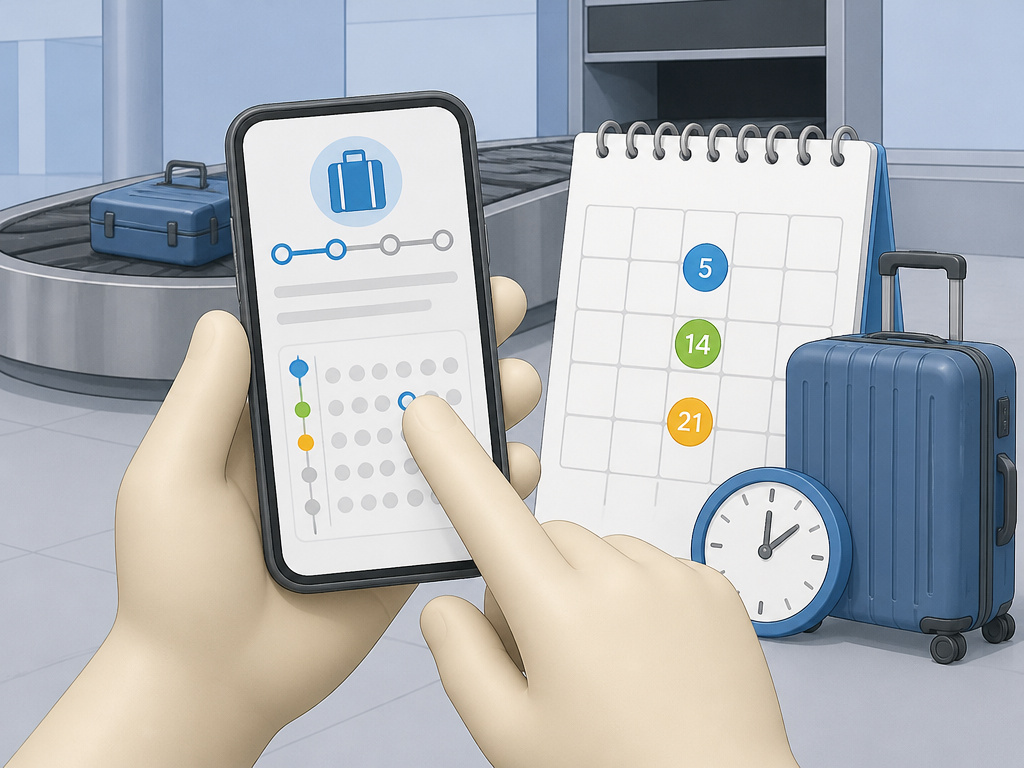
This is where the sources disagree, and it matters for how long you wait before escalating.
The US DOT says most airlines declare a bag lost between 5 and 14 days after the flight, and it notes this varies by carrier, by itinerary type, and by whether more than one airline is responsible for the routing. Delta’s published threshold sits outside that band: if your checked bag isn’t found within 21 days of arrival, Delta treats it as likely lost and a representative contacts you to discuss settlement.
American Airlines sits closer to DOT’s range. At 5 or more days missing, AA asks you to submit an online claim using the file ID, and its Central Baggage Resolution Office issues a final decision by email after that.
| Airline / Source | Loss threshold | What happens next |
|---|---|---|
| US DOT (industry range) | 5 to 14 days | Varies by carrier and itinerary |
| Delta Air Lines | 21 days | Representative contacts you about settlement |
| American Airlines | 5+ days | Submit online claim with 13-character file ID |
DOT also holds a lever here. If an airline unreasonably refuses to consider a bag lost after it’s been missing for an unreasonable period, the carrier could face enforcement action from the department. That’s the regulator’s stated position, not a threat you can personally invoke.
The part nobody mentions: Delta’s 21-day threshold is longer than DOT’s stated industry range of 5 to 14 days. If you’re flying Delta and your bag is missing on day 10, you’re still inside Delta’s window even though DOT’s range suggests most carriers would have declared it lost already.
What You’re Actually Owed
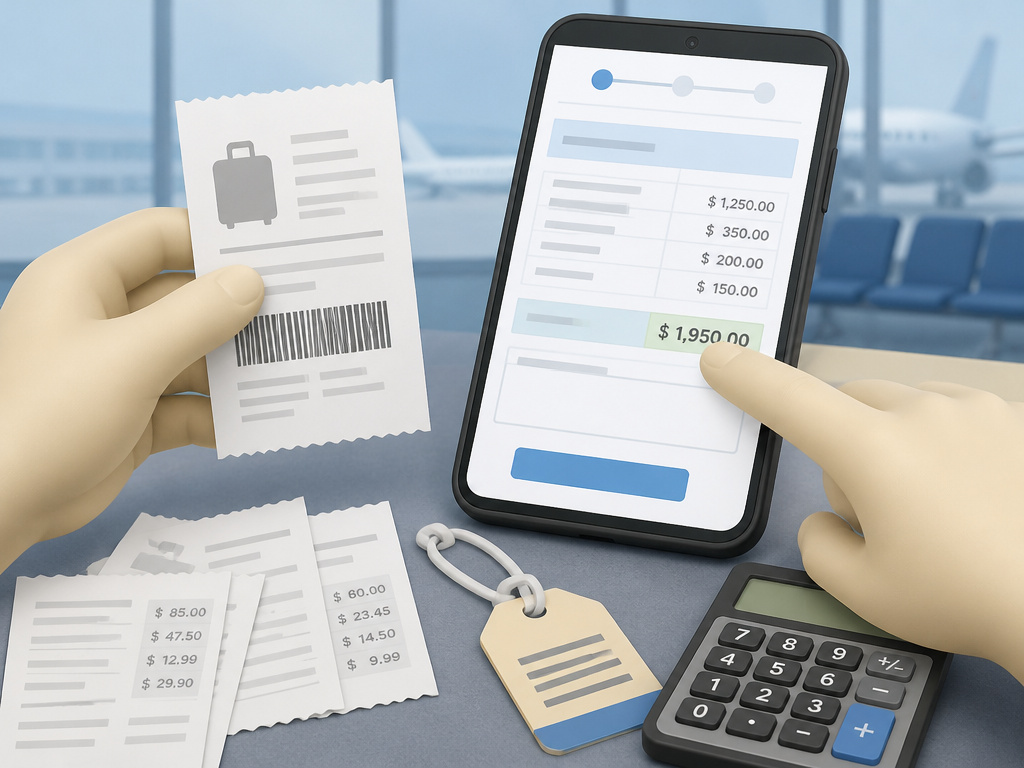
Money, in principle. The rules vary depending on whether you flew domestic or international.
The maximum domestic baggage liability per passenger is $4,700.
For international flights covered by the Montreal Convention, the maximum baggage liability is 1,519 Special Drawing Rights, which DOT converts to approximately $2,175.00 US per passenger. Delta notes that SDRs convert to US dollars at the rate in effect on the mishandled bags settlement date.
On delayed bags, DOT has taken a specific position: airlines may not set arbitrary daily interim-expense caps. DOT’s own example is that a carrier cannot cap reimbursement at $50 per day. Airlines are required to compensate passengers for reasonable, verifiable, and actual incidental expenses incurred while bags are delayed, subject to the maximum liability limits.
Delta’s version of this is that each claim is reviewed individually, considering necessity and reasonableness of replacement items purchased, timing and location of purchases, duration of the delay, and documentation provided. Delta asks for itemized receipts showing merchant name, purchase date, items purchased, total amount, and payment method.
Keep receipts. DOT requires airlines to compensate for reasonable, verifiable, and actual incidental expenses.
Damage to Wheels, Handles, and Straps
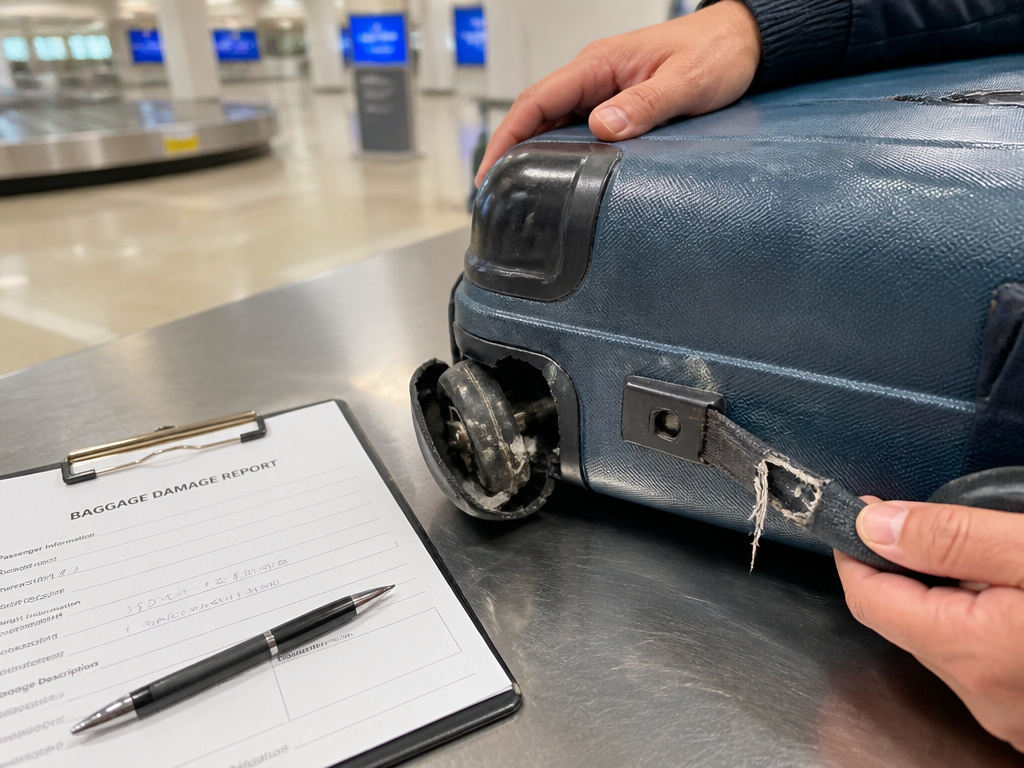
Airlines can’t exclude liability for damage to wheels, handles, straps, and other components of checked baggage, per DOT. They’re not required to cover fair wear and tear, and Delta states it assumes no liability for preexisting damage, including minor cuts, scratches, and broken zippers from overpacking.
The distinction between “damage” and “wear and tear” is where most disputes live. A wheel that snapped off in transit is damage; fair wear and tear from ordinary handling is not covered.
Get the damage on record before you leave the airport. American Airlines wants a damage report filed before you leave the airport for both domestic and international itineraries, or within 6 hours of receiving the bags for domestic flights, or within 7 days for international flights. Delta directs passengers to the Baggage Service Office to submit a claim before leaving.
Where this goes sideways: Filing a damage report at the desk but skipping the formal claim afterward. Delta requires the claim form before any payment is issued. Delta requires the claim form before any payment is issued.
If You’ve Already Left the Airport
You can still recover the bag, but the process changes.
Heathrow’s guidance is direct: if there’s no one at the desk or you’ve already left the airport, call your airline instead. Don’t return to Heathrow unless your airline has told you to do so. If you do come back to collect the bag in person, you’ll need proof of arrival, a boarding pass, itinerary, or baggage tag, plus an identity document. UK residents on domestic flights can use a UK driving licence; otherwise, bring an identity document such as a passport. You may need to go through security again.
Bags can be collected at Heathrow between 06:00 and 22:00, but Heathrow notes this can change due to operational issues, so speak to your airline before returning.
At JKIA, the fallback is different. KAA says you can ask at any KAA information desk or customer service point, or email [email protected]. The airline is still responsible for tracing and returning the bag, so the airport contact is a channel, not the resolver.
If you’re flying internationally and the bag is recovered, your airline will also ask you to complete a customs form. If travelling internationally, your airline will also ask you to complete a customs form.
What to Do While You Wait
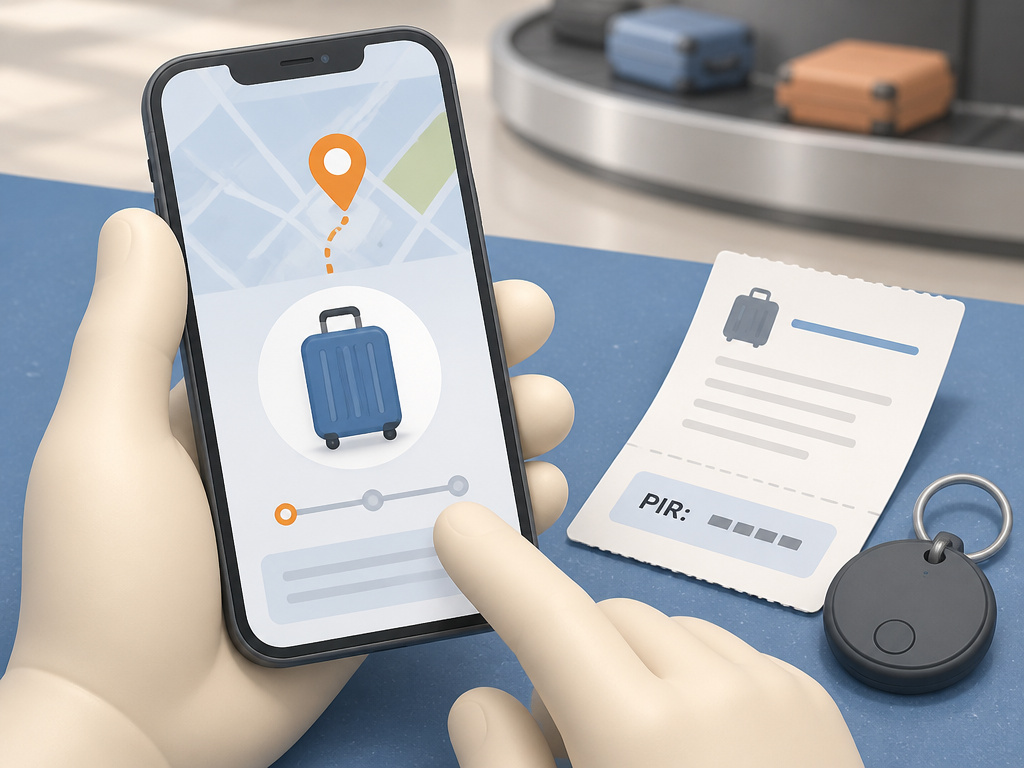
Track the bag using the file reference you were given. Ryanair’s PIR reference lets you check whether there’s any update on the tracing. American Airlines accepts a shared AirTag or Find My network accessory link at the time you file, which can speed location. If you travel with AirTags for checked bags, sharing the link with the airline at filing is a small step that occasionally shortcuts the search.
A luggage tracking device won’t replace the airline’s tracing, but it gives you a data point when the airline’s system says “no update.” A tracking device gives you a data point when the airline’s system says “no update.”
For international itineraries, a GPS luggage tracker for international travel can give you a second signal when the airline’s tracing shows no update.
Keep your bag ID tags until you’ve physically retrieved the bags. DOT advises this specifically because you may need to show them to security when leaving the baggage-claim area.
If the bag is declared lost and you need to file a claim, the airline may require receipts or other proof for valuable items that were inside. Start collecting those from wherever you keep them.
Frequently Asked Questions
How long before a delayed bag is declared lost?
It depends on the airline. US DOT says most airlines declare a bag lost between 5 and 14 days after the flight. Delta uses 21 days as its threshold. American Airlines asks for an online claim once the bag has been missing 5 or more days. Check your specific carrier’s policy.
Is a Property Irregularity Report the same as a baggage claim?
No. Ryanair states this explicitly: reporting the bag at the arrival airport does not constitute a baggage claim, and a claim has to be submitted separately. Delta requires a baggage claim form before reimbursement. Treat the airport report as documentation and the follow-up claim as the actual request for compensation.
What if I already left the airport without filing a report?
Call your airline. Heathrow’s guidance is to contact the carrier directly if you’ve left the terminal or the desk is unattended. At JKIA, you can also reach KAA via information desks or [email protected]. Filing later may still be possible, but report to your airline as soon as possible.
Do I get my checked bag fee back if the bag is lost?
Yes. DOT rules say a consumer is entitled to a refund if they paid a baggage fee and the baggage has been declared lost or significantly delayed. Airlines are required to refund fees paid to transport a bag that was lost. Speak with the airline’s baggage service office to start that process.
What counts as a “reasonable” incidental expense on a delayed bag?
DOT requires airlines to compensate for reasonable, verifiable, and actual incidental expenses, and prohibits arbitrary daily caps like $50 per day. Delta reviews each claim individually, weighing necessity, reasonableness, timing, location, and documentation. Itemized receipts with merchant name, date, items, and payment method are what get reimbursed.
Can the airline refuse to cover damage to wheels or handles?
No. DOT states airlines cannot exclude liability for damage to wheels, handles, straps, and other components of checked baggage. They aren’t required to cover fair wear and tear, and Delta excludes preexisting damage such as minor cuts, scratches, or broken zippers from overpacking.
Before You Go
A useful thing you can do is keep your bag ID tags until you’ve retrieved your bags, since you may need to show them to security when leaving the baggage-claim area. DOT’s own tip is to keep those tags until you’ve retrieved the bags, and the reason is practical: you may need to show them at security when leaving the claim area.
If you didn’t file before leaving, call your airline as soon as possible. Call the airline the same day. Don’t wait for morning.
And if the bag genuinely disappears for good, the airport report is only the start. You’ll need the file reference, the itemized receipts, and a willingness to follow up more than once. The US DOT baggage liability guide is the document to bookmark, it’s the regulator’s own summary of what airlines owe you, and it’s the reference you’ll want when a claim gets denied for reasons that don’t match the rules.
