
How to Plan a Visit to Olympic National Park
This post contains affiliate links. As an Amazon Associate, we earn from qualifying purchases.
To plan a visit to Olympic National Park, pick your home base first, because the park covers 922,650 acres and no road crosses it. Travel between areas runs from a half hour to four hours or more. Decide which of the four ecosystems you actually want, then build the days around drive times rather than a checklist.
That acreage figure is the whole problem in one number. Olympic is a big park with a small road network, and the distance between the mountains and the coast is not a scenic detour. It’s the trip.
What follows is the practical version: the exact drive times out of Port Angeles, where the lines form and when, what the fees actually cover, and the rental-car decision that can leave you stranded in a dead zone.
Key Takeaways
- Base yourself in two places, not one. Rangers recommend splitting lodging between the Port Angeles side and the west side (Forks, Kalaloch, or Quinault) to cut driving.
- No entrance reservations exist. The park’s FAQ page confirms you don’t need one to get in, while the Plan Your Visit page notes that reservations can be made for Hoh, Kalaloch, Fairholme, Mora, Sol Duc, and Staircase campgrounds and popular wilderness camping areas, and lodging books out in summer.
- The park is cashless. Bring a card, because cash won’t get you through an entrance station.
- May and September beat July. The park is still busy, but the entrance lines at Hurricane Ridge and the Hoh are shorter.
- Skip rental cars that open with a cellular signal. Hoh Rain Forest and the beaches have little to no reception, and a car that needs a signal to start won’t.
Why Olympic’s Size Changes Every Plan You Make
The first thing that breaks a new visitor’s itinerary is the assumption that a national park is a place you drive into and then drive around. Olympic isn’t. There are no roads that cross it, which means every move between ecosystems is an out-and-back on Highway 101 or a spur road off it.
Highway 101 runs around most of the Olympic Peninsula, and it’s one lane in each direction. That detail matters more than it sounds. A 45-minute drive on a two-lane road with a logging truck in front of you is not the same 45 minutes as a highway drive, and the park’s own guidance says to give yourself extra time, especially if you’re catching a flight out of Seattle-Tacoma International.
The trip was fine. The spreadsheet was art. Olympic is the rare park where the how to plan a visit to Olympic National Park instinct is actually correct, because the drive times are the itinerary.
The park contains four major ecosystems: subalpine, coast, temperate rain forest, and lowland forest. Each sits in a different corner of the peninsula, connected by Highway 101 and a handful of spur roads. No single road crosses the park, so visitors travel out to one area, return, and drive to the next.
That’s the structural fact under every other decision. If you want mountains and rain forest in the same day, you’re signing up for four-plus hours in the car.
How Long Does It Take to Drive Between Park Areas?
Drive times out of Port Angeles are published by the park, and they’re the single most useful planning tool available. Port Angeles is the standard north-side base, so the table below is what most first-timers are actually working with.
| Destination | Drive Time from Port Angeles | Best For |
|---|---|---|
| Hurricane Ridge | 45 minutes | Mountain views, alpine trails |
| Lake Crescent | 30 minutes | Easy access, Marymere Falls |
| Sol Duc Valley | 1 hr 15 min | Sol Duc Falls, hot springs |
| Mora (coast) | 1 hr 15 min | Rialto Beach, tidepools |
| Hoh Rain Forest | 2 hr 15 min | Hall of Mosses, old growth |
Read that table twice. The Hoh is a two-and-a-quarter-hour drive each way from Port Angeles, which is a full day once you add the how to plan a visit to Olympic National Park entrance queue and a trail. If you’re planning a 2-day Olympic National Park itinerary, you cannot do the Hoh and Hurricane Ridge on the same day without spending most of it behind the wheel.
The fix is the one rangers suggest: split your lodging. Spend the first night in Port Angeles for Hurricane Ridge, Lake Crescent, and Sol Duc, then move west to Forks, Kalaloch, or Quinault for the Hoh and the coast. It sounds like more logistics. It saves hours.
Where this goes sideways: Booking one hotel for a four-day Olympic trip. You’ll drive the same two-lane stretch of Highway 101 four times, and the last day you’ll be too tired to stop at anything on the way back.
What Can You Actually See in Half a Day, a Full Day, or Three?
The park publishes suggested itineraries by available time, and they’re honest about the trade-offs. Half a day from Port Angeles gets you Hurricane Ridge, Lake Crescent, and the Sol Duc Valley. That’s three stops, two of them short drives, and it works.
A full day makes all three ecosystems technically possible. The park’s own wording is that you “won’t have too much time to spend at each,” which is a polite way of saying you’ll be driving past things. Two to three days is where Olympic starts to feel like a park instead of a commute.
| Time Available | What Fits | Reality Check |
|---|---|---|
| Half day | Hurricane Ridge, Lake Crescent, Sol Duc | Tight but doable from Port Angeles |
| Full day | All three ecosystems, briefly | Mostly driving, little trail time |
| 2-3 days | All three plus extras | The realistic minimum |
The four-ecosystem framing matters here. The park asks visitors to sample subalpine, coast, temperate rain forest, and lowland forest, and most people only how to plan a visit to Olympic National Park for the first three. Lowland forest is the one that gets skipped, and it’s the easiest to fold in on a travel day.
If you’re traveling with kids, the shorter trails are where to aim: Hall of Mosses is 0.8 miles, Spruce Nature Trail is 1.2 miles, and Ancient Groves is 0.5 miles. Those are real walks, not hikes, and they fit into a half day without wrecking anyone’s mood. A family national park trip lives or dies on that math.
Why Do the Entrance Lines Form at Hurricane Ridge and the Hoh?
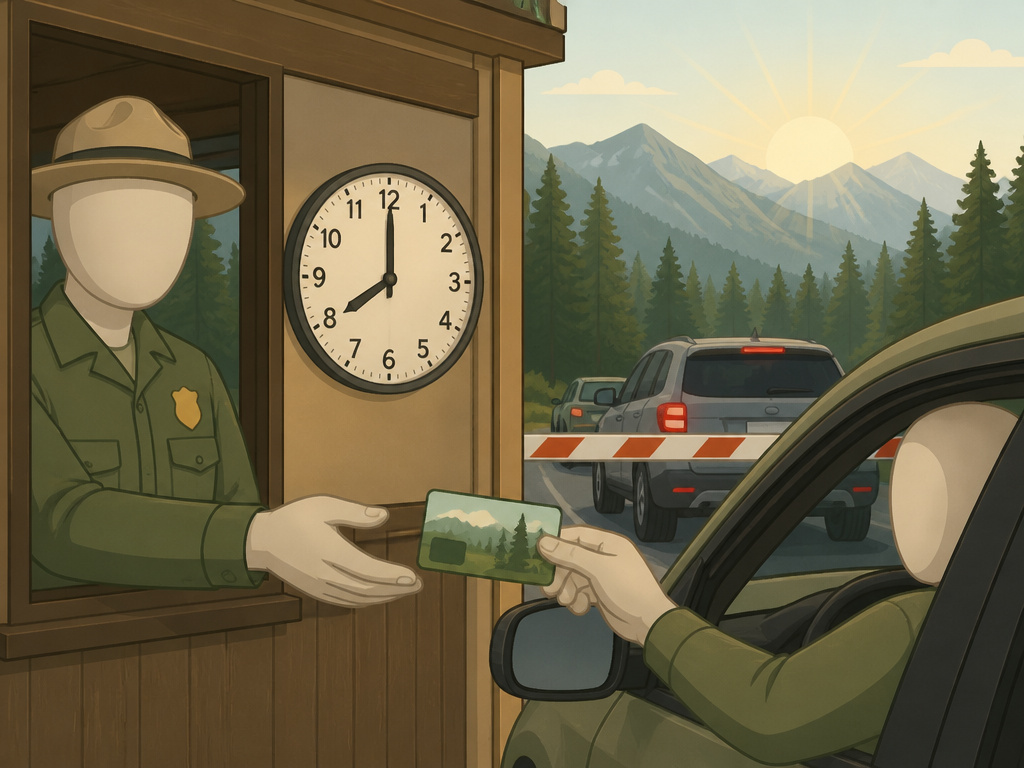
Summer lines are the park’s most predictable feature. Hurricane Ridge and the Hoh Rain Forest both queue in summer, especially on weekends, and waits run an hour or two just to get through the entrance. The park is open 24 hours, so the fix is timing rather than avoidance.
Arrive early or late. That’s the whole trick, and the park says so directly. At the summer solstice you get daylight from 5am to nearly 10pm, which is a wider window than most visitors use. The 8am crowd and the 11am crowd are the same crowd.
May and September are the park’s own recommendation for shorter lines. The park is still busy in those months, but the queues thin out, and you get the same trails with a fraction of the parking pressure. Ruby Beach and Rialto Beach parking is genuinely difficult in summer, and it’s merely annoying in the shoulder months.
Worth knowing before you start: The Hoh Rain Forest is very busy from May through September, and long waits at the entrance booth are common. Arriving before 8am or after 4pm is the difference between a trail and a parking lot.
If you’re working around school calendars, a summer visit is still workable. You just have to accept that the popular trailheads will be full by mid-morning and plan accordingly.
What the Entrance Fees Cover (and What They Don’t)
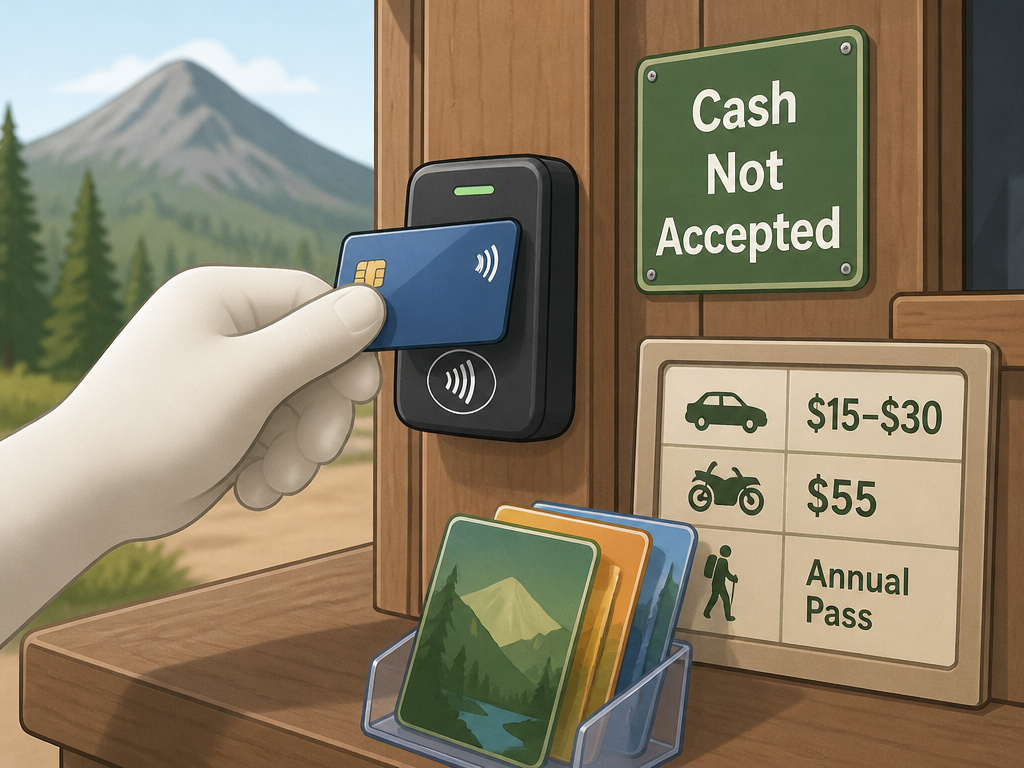
The entrance pass structure is simpler than most people expect, with one rule that catches visitors off guard: the park is cashless. Cards only at the entrance stations.
| Pass Type | Cost | Notes |
|---|---|---|
| Standard entrance pass | $15–$30 | Covers your vehicle and all passengers |
| Olympic Annual Pass | $55 | Good for one year from month of purchase |
| America the Beautiful | $0–$250 | Free or discounted for seniors, military, disability, 4th graders |
If you drive in, your pass covers everyone in the car. If you walk or bike in and you’re 16 or older, you need your own pass. Kids under 16 don’t need one at all. That’s the whole fee structure at the gate.
Overnight costs are separate. Camping in an established campground runs $15–$24 per night depending on location and season. Wilderness permits are $8 per person per night plus a $6 per permit fee, with a maximum group size of 12 in most places. Youth 15 and under are free but still count toward group size.
That’s worth knowing if you’re deciding between an annual pass and a day pass on a multi-visit year.
The Reservation Question, Answered Properly
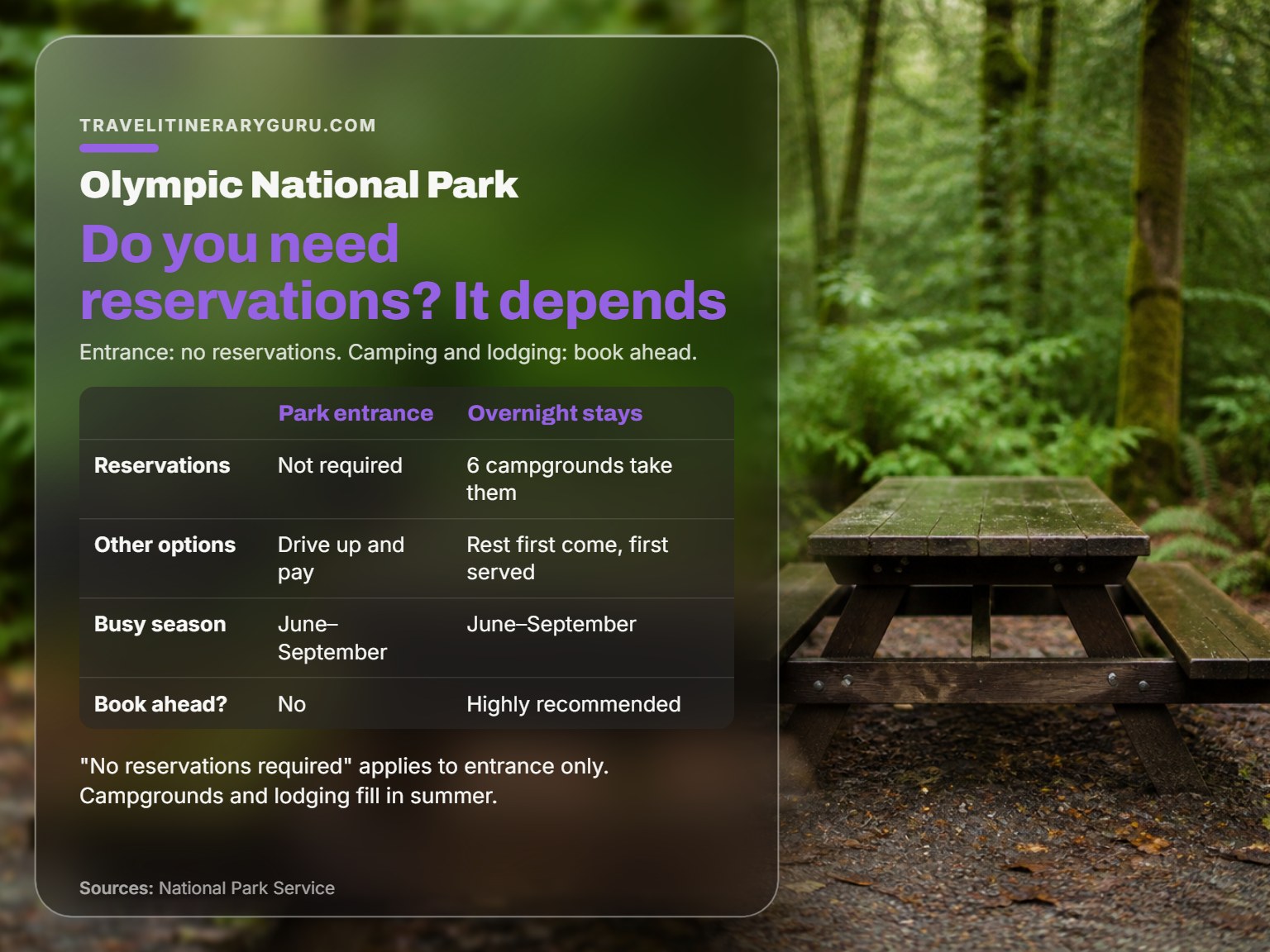
This is where sources look like they disagree, and the confusion is worth untangling. The park’s FAQ page says plainly that you don’t need reservations to visit Olympic National Park. The Plan Your Visit page notes that reservations can be made for Hoh, Kalaloch, Fairholme, Mora, Sol Duc, and Staircase campgrounds.
Both are correct. They’re answering different questions.
Entrance to the park requires no reservation. You drive up, pay, and go in. Overnight stays are a different category: six campgrounds take reservations, popular wilderness camping areas take reservations, and everything else is first come, first served. Lodging inside the park is available seasonally at Lake Crescent Lodge, Log Cabin Resort, and Sol Duc Hot Springs Resort, and year-round at Kalaloch Lodge. The park recommends booking those well ahead.
If you’re planning to camp, the reservation window is the thing to watch, and the mechanics are worth reading up on before you commit to dates. The same logic applies to booking national park campgrounds anywhere in the system.
Easy to miss: “No reservations required” applies to entrance only. Campgrounds and lodging fill in summer, and the park says so on a different page. Read both before you assume you can wing it.
Getting There Without a Car Is Harder Than It Looks
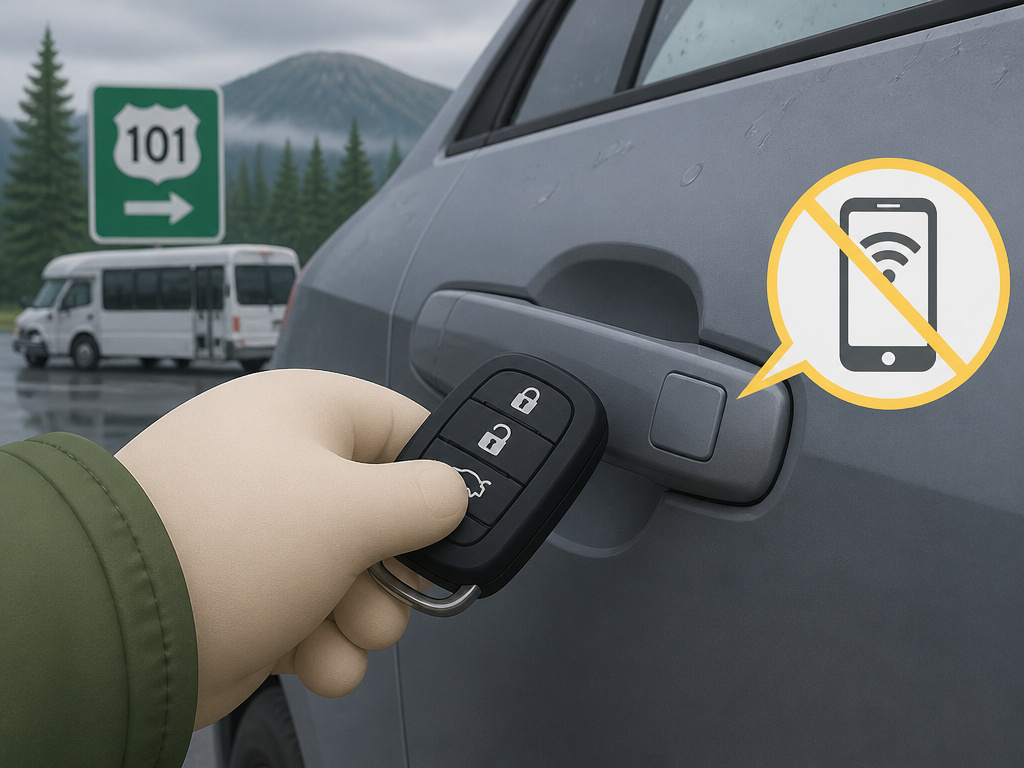
The closest major airport is Seattle-Tacoma International, and most of Olympic is not accessible by public transportation. That’s the honest version. Rental cars are the default answer, with one specific exception the park calls out.
Cellular access is spotty throughout the park. The Hoh Rain Forest and the beaches have little to no reception. Rental cars that open or start via a cellular signal are a bad choice here, because you can find yourself standing next to a car you can’t open. The park says this directly, and it’s the kind of failure that ruins a day.
Once you’re on the peninsula, Highway 101 is the spine. The park’s Olympic National Park directions and transportation page covers ferry routes, bus lines, and the seasonal shuttle. From May until September 1, Clallam Transit runs a shuttle from downtown Port Angeles to Hurricane Ridge, first departure at 8am and last return at 5:30pm. That’s a real option if you’d rather not drive the ridge road.
Two things can stop you cold. The Hood Canal Bridge closes periodically for boat traffic, and rush hour around Seattle and Tacoma is intense enough that the park warns about it separately. If you’re catching a flight, build in slack.
If you’re coming from out of state, the broader Pacific Northwest travel guide for first-time visitors covers the regional logistics that don’t fit in a park-specific plan.
What Changes Between October and May
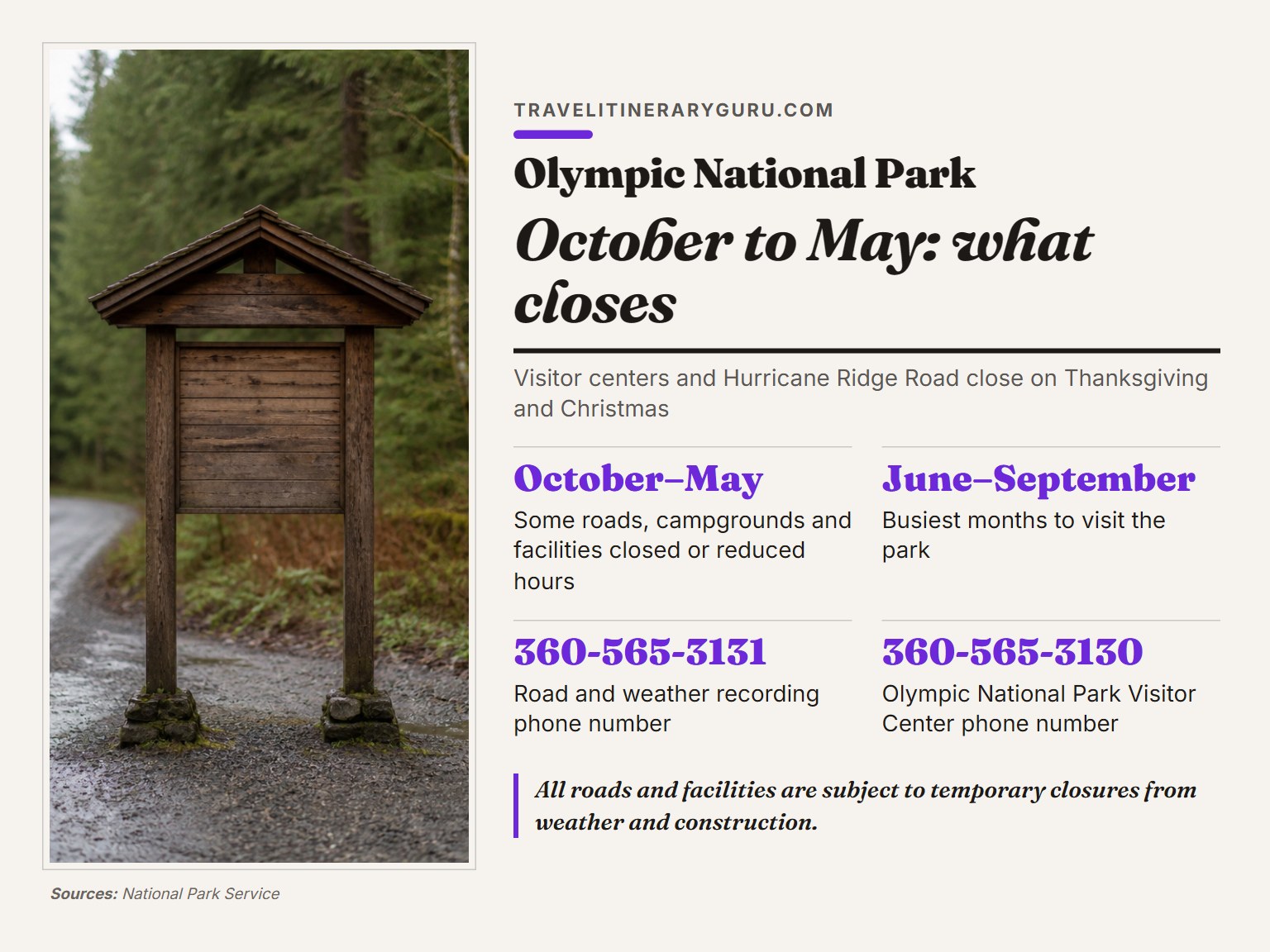
The park’s operating rhythm is seasonal in a way that’s easy to underestimate. June through September is the busy window, with most roads and facilities open and full programming running. From October through May, some roads, campgrounds, and visitor facilities close or run reduced hours.
Visitor centers and Hurricane Ridge Road close on Thanksgiving and Christmas. Other roads and facilities stay open weather permitting, which is the operative phrase. All roads and facilities are subject to temporary closures from weather and construction, and the park tells you to check current conditions before you go.
The two phone numbers worth saving: 360-565-3131 for the road and weather recording, and 360-565-3130 for the Olympic National Park Visitor Center. In fall and winter, checking road conditions before you leave isn’t optional.
The park’s Olympic National Park operating hours page is the current source for what’s open, and it’s updated more often than any third-party guide.
Wildlife Rules That Actually Matter
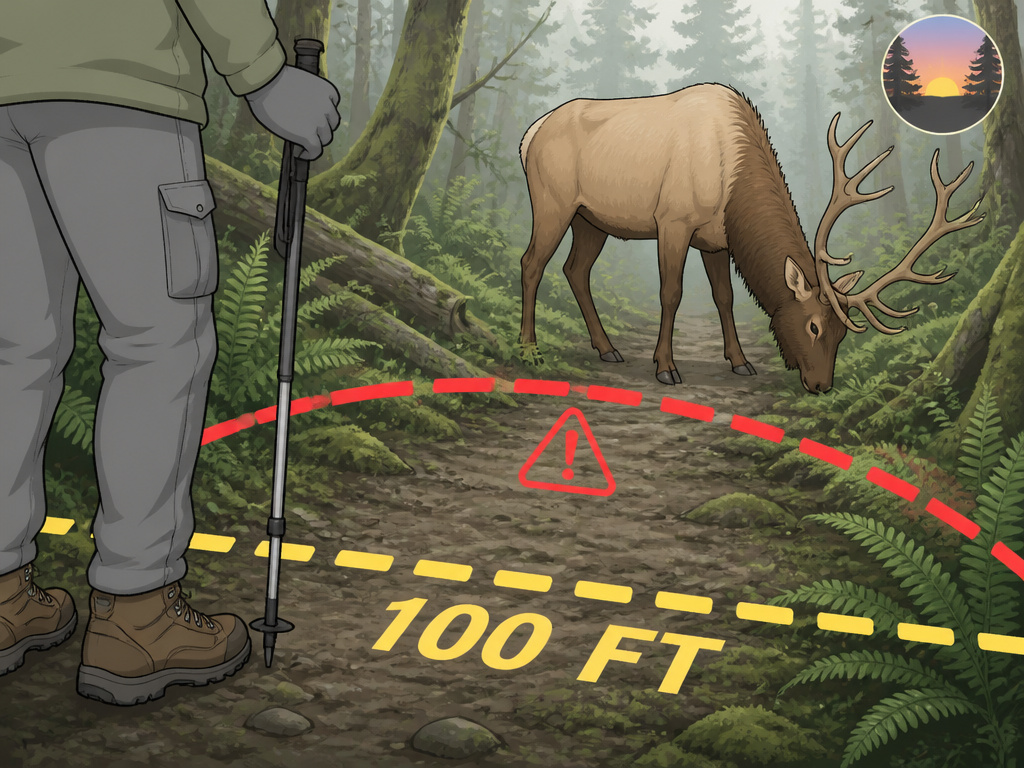
Stay at least 100 feet from all wildlife. That’s the park’s number, and it applies to the elk you’ll see grazing near roadsides as much as anything else.
Roosevelt elk are observed year-round at the Hoh Rain Forest, and dawn and dusk are when you’ll see the most. Elk can be aggressive when defending calves and during the rut in September and early October. A bull elk in rut is not a photo opportunity. It’s a large animal that has decided you’re a problem.
The park’s NPS Olympic National Park visit planner hub pulls together the wildlife guidance, the wilderness trip planner, and the calendar of events in one place. Worth a bookmark before you go.
Do You Need a Self-Guided Plan or a Guided Tour?
For a park this size, self-guided is the right default. The road network is straightforward, the trails are well marked, and the park publishes enough detail to plan without a guide. The one place a guide helps is wilderness backpacking, where route-finding and permits get genuinely complicated.
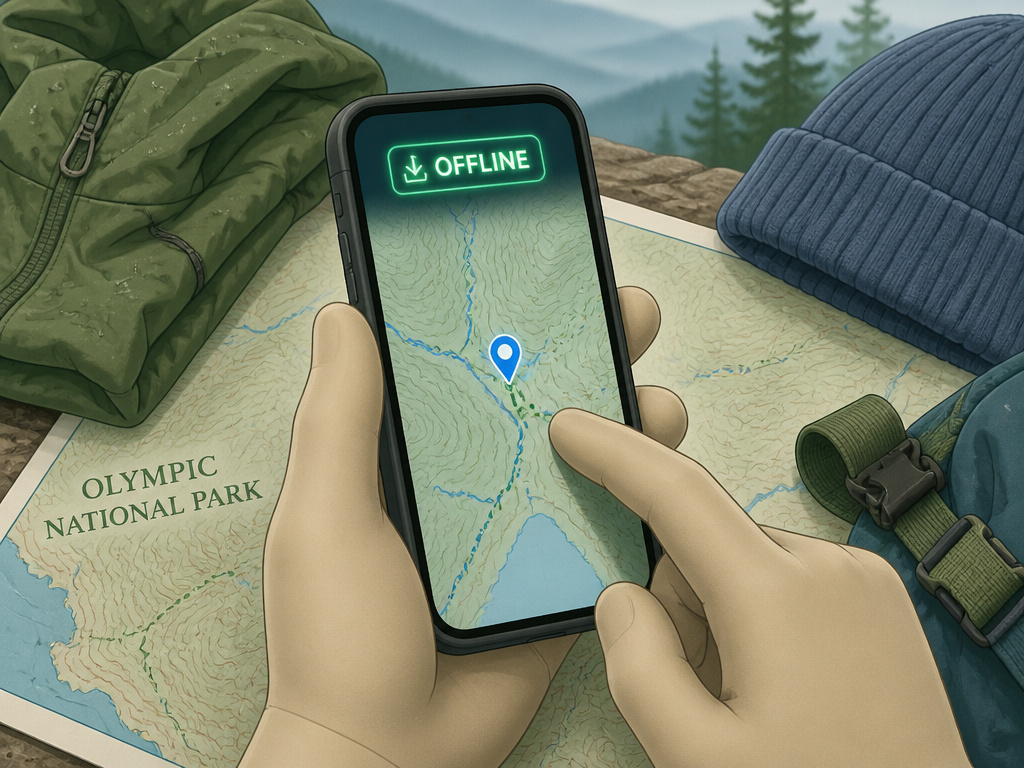
What you do need is an offline map. Download the park area before you leave cell range, because the Hoh and the beaches will not have signal when you need to check a junction. A self-guided national park tour is only as good as the map you can actually open.
Gear-wise, the park’s weather shifts fast and the ecosystems demand different layers. Rain forest and coast are wet; Hurricane Ridge at 5,200 feet is cold and exposed. A national park hiking gear list built for variable conditions beats a generic one.
If you’re combining Olympic with a longer road trip, the NPS Olympic National Park trip ideas page has the multi-day options laid out by ecosystem, which is the cleanest way to structure three or more days.
Frequently Asked Questions
Do I need a reservation to enter Olympic National Park?
No. The park confirms that no reservations are required for entrance. You drive up, pay the entrance fee, and go in. Reservations apply to overnight stays: six campgrounds take them, popular wilderness camping areas take them, and lodging inside the park fills fast in summer.
How long does it take to drive from Port Angeles to the Hoh Rain Forest?
Two hours and 15 minutes, per the park’s published drive times. That’s each way. Add an hour or two for the summer entrance queue and you’re looking at a full day for the Hoh alone, which is why splitting your lodging between the north and west sides of the park saves so much time.
Can I visit Olympic National Park without a car?
Mostly no. The park says most of Olympic is not accessible by public transportation. The exception is the Clallam Transit shuttle from downtown Port Angeles to Hurricane Ridge, which runs from May until September 1, with the first departure at 8am and the last return at 5:30pm.
What is the best time of year to visit Olympic National Park?
June through September is the most popular window and everything is open. May and September are the park’s own recommendation for shorter lines, since the park is still busy but the entrance queues thin out. October through May brings closures and reduced hours on some roads and facilities.
Is the park cashless?
Yes. Entrance stations don’t accept cash, so bring a card. Entrance passes run $15–$30 for a standard vehicle pass, the Olympic Annual Pass is $55, and the America the Beautiful pass ranges from free to $250 depending on eligibility.
How far should I stay from wildlife?
At least 100 feet from all wildlife, per the park. This matters most with Roosevelt elk, which are aggressive when defending calves and during the September and early October rut. Dawn and dusk are the best viewing windows, and the Hoh Rain Forest has elk year-round.
The Bottom Line
One rule decides whether your Olympic trip works: if your plan has you driving more than two hours in a single direction on any given day, you’ve picked the wrong base. Move your lodging instead of your itinerary.
Start with the icons, then go deeper. Book one night on the Port Angeles side for Hurricane Ridge, Lake Crescent, and Sol Duc, and one on the west side for the Hoh and the coast. Check the road and weather recording at 360-565-3131 the morning you drive, because closures happen and the park’s own guidance says to verify before you go.
I get why people try to do Olympic in a single day from Seattle. The park is 922,650 acres with no cross-road, and it will not be rushed.
Fair warning: the spreadsheet instinct is correct here. Build the drive times in first, leave the afternoons loose, and the trip will feel half as long as it is.
